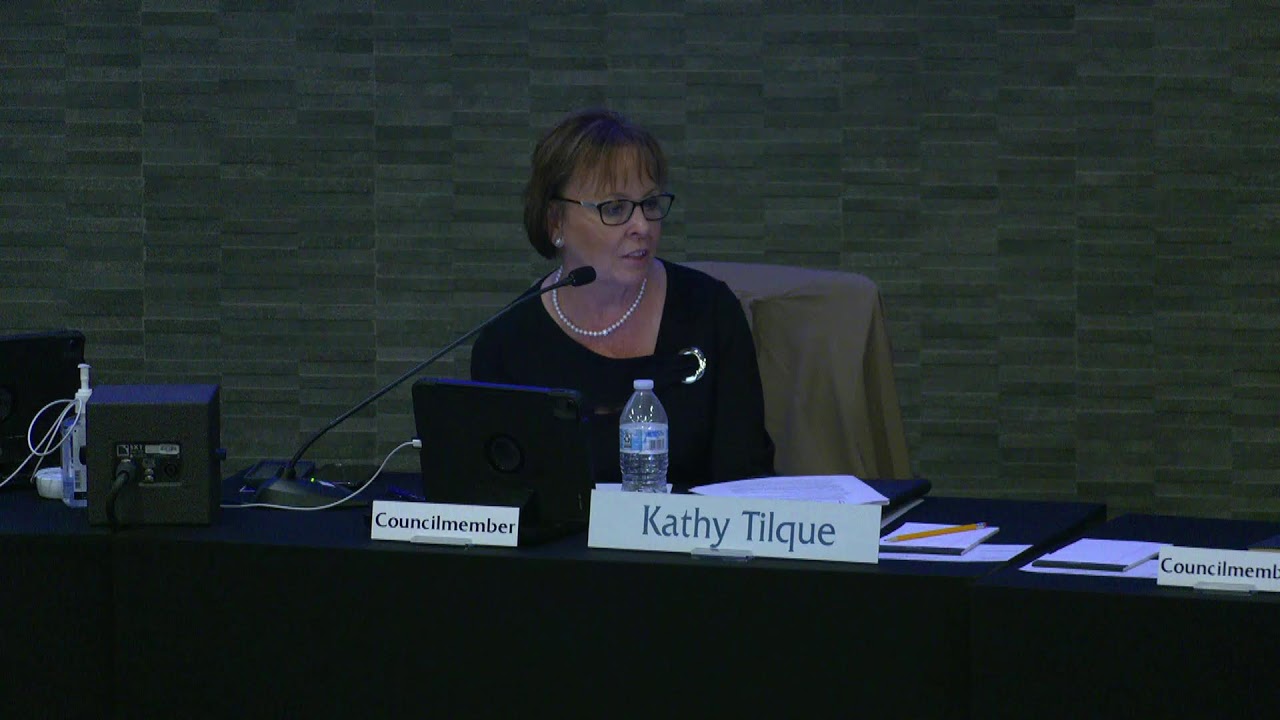
Gilbert defers contentious commuter rail ordinance to November after procedural challenge
Gilbert town council meeting marked by significant community opposition to Morrison Ranch industrial park development, ethics complaint controversy regarding developer influence, and procedural disputes over commuter rail ordinance, with strong resident concerns about growth, corruption, and loss of town character.
Gilbert Council Tables Rail Ordinance Amid Procedural Revolt and Fervent Opposition to Morrison Ranch Industrial Park Proposal
At its September 6, 2022 meeting, the Gilbert town council encountered rare procedural turbulence and sustained community anger over development, growth, and governance, shelving a contentious commuter and light rail ordinance and hearing dozens of residents oppose a massive industrial project adjacent to Morrison Ranch neighborhoods. The session also surfaced an unresolved ethics complaint against Council Member Scott September—who attended virtually after battling COVID—with public speakers accusing the council of burying allegations of developer corruption and improper campaign funding.
Key Speeches
"I question whether or not I should even speak tonight as much of the conduct as individuals and as a governing body I see on this side of the dais suggests that you're here to satisfy your own agendas under the guise of being in the best interest of the people." — Ryan Handelsman, Gilbert resident
"When I first noticed a lot of the frivolous decisions the council was approving when it comes to zoning requests and expansion of high density housing, etc., I chalked it off as politicians simply not looking past the election term. Yet as new information continues to surface, what I would previously call and describe as careless action I reference more often than not is potentially corrupt." — Ryan Handelsman
"The only two parties that stand to benefit from a lot of these decisions are the developers that are requesting making the requests for these zoning changes and the people sitting beside you on that dais. It's obvious that a lot of your seats have been paid for by developers." — Ryan Handelsman
"Ethics complaint filed for failure to maintain highest standards of integrity and honesty, which is the ethics policy. A town attorney writes a letter to you folks and he states enough info exists in police report for council to consider allegations from ethics complaint. He makes a recommendation: 'I recommend that the town council carefully review ethics complaint and police report and determine whether or not sufficient evidence exists to substantiate a violation of the code of ethics.' Mayor Peterson, Yung Koprowski, Kathy Tilke, and Scott Anderson all went against the town attorney's recommendation." — Brandon Riff, ethics complaint filer
"You guys should be here to support and defend the citizens of Gilbert, and it sounds to me like you're more interested in defending your reputation. You wonder why there were signs all over the place, people are upset about corruption—this is why. People want transparency. People want to be listened to and heard and understood and respected." — Brandon Riff
"Instead of that nice mixed-use community that was proposed, somebody came and said let's just put a big warehouse there because we need jobs. Obviously, that would have gone nowhere. My hope is that when the proposal to carve up Morrison Ranch—the last quarter-mile of it—and turn it into industrial use, turning its back to Morrison Ranch, it turns back to the 20-plus years of development and promises that the developers and the town has made to creating a cohesive community, that you will equally quickly reject it out of hand. It just makes no sense." — Brian Mosley, Morrison Ranch resident
"It's taking the industrial use from 16–18 percent to over 90 percent. The largest industrial park in Gilbert, some of the biggest buildings in Gilbert, just getting bigger and bigger, lined up against all of our homes. Where we were promised the Morrison Ranch business park and where the town agreed to it, and where there's going to be connecting trails that connect into our community. Instead, it's being proposed this giant industrial park with one of the largest buildings potentially being a million square feet." — Brian Mosley
"We are grateful to some vigilant neighbors who have alerted us to the massive industrial park that is being planned for the land right next to our home, which is between Elliott and Warner and Power and Wrecker. After living eight years in various parts of New York and New Mexico, we were thrilled to finally put down roots in Gilbert. We bought our home in Morrison Ranch because of the well-cared-for neighborhood and family-centered community it provided." — Stephanie Evans, Elliott Groves resident
"It's disappointing that the entire neighborhood wasn't given any notice of these plans. After attending the virtual neighborhood meeting hosted by the developers' lawyers, I am more than sick to my stomach about what is being planned. Would you feel it's appropriate to erect 17 absolutely monstrous concrete boxes to fill millions of square feet of land right next to a neighborhood of 460 homes?" — Stephanie Evans
"This proposed industrial nonsense is completely out of line with what Gilbert truly stands for. This is a complete disregard, in my mind, for the livelihood of the Morrison Ranch community and quite frankly the entire town. There is no town within this great nation which has anything industrial in size to this magnitude embedded and proposed so closely to residents' homes." — Lonnie Chison, Morrison Ranch resident
"I read this: 'The town shall not assess a new tax or new fee without a referendum.' This is nothing about assessing current taxes, current fees, current bond money. Nothing. It's an end-around. This is not what any reasonable person would expect. It is not. I think it's horrible that it's been presented this way. This parlays into the feeling that the residents feel that they're being spoken down to. They feel that they're not being heard." — Jim Torgeson, council member-elect
"I would tend to agree with the council member that if it's a process issue that Council Member Hendricks has, we can always postpone this and look at it a different time. But what I heard at the study session was all seven of us agreed to the amended ordinance." — Council Member Scott Anderson
"Fairness could not be had if I'd be asked to make a judgment, a fair judgment, when the person who's being accused will not even be able to testify per council advice, which by the way is his constitutional right. But the fairness issue is much more important. Any one of us here in this audience would want a fair consideration. The rule of law demands it." — Council Member Scott Anderson, responding to ethics complaint criticism
"I did not pay any attention to any advice that was given to me. I agonized for days over a decision on the ethics complaint that was filed on Council Member September. To me, the paramount issue is fairness." — Council Member Scott Anderson
Timeline
-
Communications from Citizens (12 speakers): Ryan Handelsman, Heather Armstrong, Brandon Riff, Brian Mosley, Stephanie Evans, Lonnie Chison, and Caroline Loader spoke against growth, corruption, development, and the proposed commuter rail and Morrison Ranch industrial park. Handelsman and Riff directly attacked the council's handling of the ethics complaint against Council Member September. Loader delivered a lengthy critique of unsustainable growth despite water shortages and climate change concerns. Armstrong and Evans focused on Morrison Ranch. Handelsman alleged developer donations to Yung Koprowski and September, and claimed September had stolen campaign signs. Riff noted that the town attorney had recommended ethics review and that the council had voted against that recommendation; he also alleged that a donor to Yung Koprowski shared the applicant name for the Morrison Ranch project, fueling his suspicion of corruption.
-
Council Member Response: Scott Anderson and Mayor Peterson responded, defending the council's decision to defer the ethics complaint to the criminal process rather than conduct an independent ethics review. Scott Anderson emphasized fairness and the rule of law. Peterson stressed that the council could not and would not be seen impugning the Gilbert Police Department or Maricopa County Attorney's office.
-
Consent Agenda (Items 1–10): Passed 7–0 without objection.
-
Liquor Licenses (Items 11–12): Public hearing opened, no speakers, closed. Passed 7–0.
-
Commuter Rail Ordinance (Item 12a—Major Procedural Dispute):
- Council Member Hendricks challenged the procedural legality of the ordinance on the agenda, noting that three council members (Vice Mayor Yentes, Hendricks, and Tilke) had requested an ordinance prohibiting both local participation and local tax money use for passenger and commuter rail. The revised ordinance published in the packet addressed only one of the two points, she argued, and thus was not the item the three had requested.
- Mayor Peterson noted that the original request was for a public hearing, not a specific ordinance.
- Tilke stated she had proposed the revised version at a study session and had given it to Vice Mayor Yentes for feedback before publication, and that the study session discussion led to modifications she felt comfortable with.
- Hendricks maintained that the proper procedure required the three council members to all agree on the version before publishing, or the revised version to be agendized separately by the mayor or all three requesting members. She stated that allowing the revised ordinance violated open meeting law and town procedural rules.
- Town Attorney Chris Payne told the council that Hendricks raised legitimate procedural concerns, though perhaps not technically an open meeting law violation. Payne recommended that the three council members reach consensus on which version to bring forward, noting that staff cannot publish multiple competing versions.
- Scott Anderson and Mayor Peterson both agreed the item should be tabled to allow the three members to coordinate.
- Public Comment on Rail (4 speakers):
- Aaron Accurso: Urged council to start from the original ordinance and work down from there.
- Jack Platak: An ASU student supporting light rail, noting the long travel time by current bus routes (2 hours 38 minutes vs. 34 minutes by car) and urging adoption of commuter and light rail to improve walkability and provide transportation alternatives.
- Ann Hawkins: Opposed light rail, citing resident concerns about homelessness, crime, and financial unsustainability; noted that rail stations would bring negative effects contrary to Gilbert's character.
- Jim Torgeson (Council Member-Elect): Delivered a sharp critique of the revised ordinance, saying it bore no resemblance to what Vice Mayor Yentes had proposed. He accused the council of presenting a false choice to residents and of disrespecting the public by asking them to trust an institution that "shows a complete lack of respect" for their ability to read and understand. He called for the council to table the item and return to the original proposal.
- Seth Tips: Offered nuanced support for infrastructure investment, acknowledging that suburbs require subsidies and that a car-only strategy would not solve Gilbert's long-term transportation and affordability challenges, though he warned against simply adding more lanes.
- Vote: Council voted 7–0 to table the item to the November 1, 2022 meeting, pending consensus among the three requesting council members on which ordinance version to advance.
-
Long-Term Storage Credit Exchanges (Item 13):
- Lauren Hickson, Water Resources Manager, presented the town's proposal to grant the town manager authority to exchange long-term storage credits one-for-one with no monetary exchanges (other than administrative fees) where the exchange results in a hydrologic benefit.
- Scott Anderson praised the proactive management and noted that Gilbert has nine times its annual potable water demand in stored credits—the second-largest balance in the Phoenix Active Management Area. He and Hickson discussed the broader water portfolio (Colorado River, Salt and Verde, groundwater, reclaimed water) and the importance of having "wet water" backed by credits.
- Vote: Passed 7–0.
-
Veterans Advisory Board Bylaws, Funding, and Policy (Items 14, 15, 17):
- Les Presmek, Veterans Advisory Board chair and former Gilbert planning commissioner and vice mayor, presented the three related items: bylaws, funding/fundraising policy, and fundraising authorization.
- Presmek emphasized that the board has been raising money independently for 18 years (through the Veterans Day Committee and partnerships with HD South) and sought formal structure to ensure all funds stay with the board and veterans programs rather than rolling into parks and recreation or the general fund.
- He outlined three strategic pillars: events (Veterans Day, Memorial Day), the USS Arizona nuclear submarine (keel laying hoped for Pearl Harbor Day, commissioning in ~4 years), and veteran wellness and family support.
- Council Member Tilke noted the board's focus on wellness and connecting veterans with resources. She also solicited board help finding veterans for a high-school 9/11 ceremony.
- Scott Anderson expressed pride in the board's accomplishments since its formal establishment in summer 2020 during the pandemic, praising the professionalism and mixed composition (6 veterans, 1 civilian).
- Vote: Passed 7–0 for all three items.
-
Council Member Comments:
- Scott Anderson addressed perceptions of animosity among council members during debates. He clarified that disagreements on dais are not personal and noted his friendships with Tilke, Mayor Peterson, and Vice Mayor Yentes. He shared a story about a trash truck fire he witnessed and praised the well-coordinated emergency response by solid waste and fire personnel.
- Council Member Tilke reiterated that council discussions are issue-focused and that she and Scott Anderson hold no personal animosity despite public debates.
- Mayor Peterson announced Corning Incorporated's new 317,000-square-foot optical cable manufacturing facility at Park Lucero East (near Gilbert and Germain roads), projected to create 250 jobs and open in 2024, supported by a long-term relationship with AT&T. She also announced the opening of the Lindsay Traffic Exchange on the 202 the following week and invited the public to a 9/11 memorial event on Sunday at 50 East Civic Center Drive at 6 p.m.
Opposition
Morrison Ranch Industrial Park—Residents Against:
Number of speakers: 4 (Brian Mosley, Stephanie Evans, Lonnie Chison, Caroline Loader all mentioned or explicitly spoke against the project); additional speakers (Ryan Handelsman, Brandon Riff) referenced the proposal and the ethics concerns surrounding it.
Main concerns:
-
Incompatibility with existing character: The project contradicts 20+ years of town and developer promises to build a cohesive mixed-use community (Morrison Ranch Business Park) with connecting trails, roads, retail, and employment opportunities serving the neighborhood.
-
Zoning contradiction: Project would shift industrial use from 16–18 percent to over 90 percent in the character area, concentrating it in the last undeveloped quarter-mile of Morrison Ranch and directly adjacent to 460+ residential homes.
-
Scale and proximity: Proposed 4 million-square-foot industrial park with 17 concrete warehouse buildings up to 55–65 feet tall positioned directly next to neighborhoods; residents noted that Banner Gateway Medical Center (61 feet) is comparable in height and stands alone—massing 17 such structures would be unprecedented for the area.
-
Traffic, noise, and pollution: 1,000 truck loading docks would generate semi-truck traffic and noise 24/7 in immediate proximity to single-family homes, schools, and churches.
-
Lack of community notice: Most residents learned of the proposal only after vigilant neighbors alerted them; only homes within 300 feet received formal notice, leaving the broader neighborhood uninformed until late in the process.
-
Breach of community trust: Residents had purchased homes in Morrison Ranch specifically on the basis of the town's and developers' public representations (website, town general plan, developer websites) that the area would remain a cohesive, mixed-use community with retail, trails, and employment opportunities, not a massive industrial warehouse zone.
-
Broader growth concerns: Speakers (Caroline Loader, Ann Hawkins, Lonnie Chison) articulated frustration with Gilbert's rapid urbanization, loss of rural character, and unsustainable growth despite water shortages and climate constraints.
Commuter Rail Ordinance—Residents Against:
Number of speakers: 2 (Ann Hawkins, Jim Torgeson—though Jim Torgeson primary concern was procedural).
Main concerns:
-
Character loss: Gilbert is morphing from a town to a city; rail brings urban density, chain restaurants, big-box stores, and homogenization with other Phoenix suburbs (Chandler, Tempe, Queen Creek).
-
Unsustainable growth: Arizona and the Phoenix region face water shortages and are cutting water supplies, yet cities continue building. Bringing commuter rail will only accelerate development and consumption.
-
Financial burden: Rail infrastructure is expensive and poorly utilized; one speaker suggested providing annual Prius purchases to the 1 percent of residents who would use transit would be more cost-effective than rail.
-
Safety and social issues: Rail brings risk of high-speed accidents with vehicles, potential derailments into neighborhoods, and historically correlates with increased homelessness and crime.
-
Disrespect to residents: Jim Torgeson accused the council of presenting a revised ordinance that bears no resemblance to what was requested, insulting residents' intelligence and ability to read.
Ethics Complaint—Public Opposition to Council Decision:
Number of speakers: 2 (Ryan Handelsman, Brandon Riff).
Main concerns:
-
Corruption allegations: Developers have heavily funded Council Members September and Yung Koprowski ($40,000+ to September). The council votes to approve zoning and density increases that benefit those donors, creating the appearance (or reality) of quid pro quo.
-
Campaign sign theft: Multiple witnesses allegedly saw Council Member September steal opponent campaign signs on election day. An ethics complaint was filed; the police report documented this. Rather than independently investigating ethics code violations, the council deferred to the criminal process.
-
Procedural obstruction: The town attorney recommended ethics review; Mayor Peterson, Scott Anderson, Yung Koprowski, and Tilke voted against it. The council claimed the criminal case must conclude first, but the Maricopa County Attorney's office has a six-month backlog—conveniently extending past the end of September's current term.
-
Conflict of interest: A donor to Yung Koprowski shares the name of the applicant for the Morrison Ranch industrial park, raising suspicion of quid pro quo.
-
Lack of transparency: The council refuses to discuss or investigate ethics allegations in public, instead deferring to law enforcement. This silence is interpreted as a cover-up and signals that the council prioritizes reputation over integrity and public accountability.
-
Breach of ethics code: Council members are supposed to put citizens first, maintain highest standards of integrity, and be transparent; the decision to avoid ethics review violates the spirit of the code.
Most Compelling Arguments:
- Morrison Ranch residents: The contradiction between 20+ years of public and developer representation (mixed-use community) and the current proposal (90% industrial) is stark and documented. Residents did not move into Morrison Ranch to live next to a mega-warehouse district.
- Brandon Riff (ethics): The town attorney explicitly recommended ethics review; the council voted against that recommendation on a narrow 4–3 party-line split, creating the appearance of a cover-up and raising questions about whether developer money influences council votes.
- Jim Torgeson (procedure): The revised ordinance is substantively different from what three council members requested; publishing it without re-agendizing violates basic procedural norms and is disrespectful to residents trying to participate in governance.
Organized Groups:
No formal organizations identified in transcript, but residents appeared to have coordinated informally (e.g., "vigilant neighbors," attendees of developer neighborhood meeting).
Support
Commuter Rail—Speakers in Favor:
Number of speakers: 2 (Jack Platak, Seth Tips).
Main arguments:
-
Transportation alternatives: Jack Platak, an ASU student, emphasized the long transit times via current bus routes (2 hours 38 minutes vs. 34 minutes by car) and argued that light rail and commuter rail would make Gilbert more walkable and provide alternatives to car dependency, especially for residents without cars or facing high gas prices.
-
Infrastructure sustainability: Seth Tips noted that suburbs historically do not generate sufficient property tax revenue to maintain infrastructure; adding lanes without improving public transit is fiscally unsustainable and will lead to debt. Some form of public transportation investment is necessary to support long-term quality of life in Gilbert.
-
Affordability: Public transit reduces reliance on cars, lowering costs for residents struggling with car payments and gas prices.
Most Compelling Argument:
Platak's first-hand experience with current transit (2+ hours) and Jim Torgeson implicit acknowledgment that suburban car-dependent models require subsidy suggest there is a case for transit investment—though public comment did not explore rail's specific feasibility or ridership projections.
Organized Groups:
None identified.
Project Details
Morrison Ranch Industrial Park Proposal
- Location: Between Elliott and Warner roads, Power and Wrecker roads, in Morrison Ranch residential area (near Gilbert, Arizona).
- Applicant / Developer: Not named in transcript; Brandon Riff referenced "the applicant" and alleged that the applicant name matches a donor to Yung Koprowski.
- Proposed development: 4 million-square-foot industrial park with 17 concrete warehouse buildings up to 55–65 feet tall; 1,000 truck loading docks.
- Current zoning → Proposed zoning: 16–18% industrial → over 90% industrial.
- Impact: Adjacent to 460+ residential homes in Morrison Ranch and Elliott Groves subdivisions.
- Status: Early-stage public comment phase; not voted on at this meeting. Proposal contradicts 20+ years of town general plan and developer representations that the area would remain mixed-use.
- Case number: Not stated in transcript.
- APN: Not stated in transcript.
Commuter Rail / Light Rail Ordinance
- Case/Item number: Item 12a, Code of Gilbert Amendment.
- Original request: Three council members (Vice Mayor Amy Yentes, Council Member Lauren Hendricks, Council Member Kathy Tilke) requested on August 2, 2022 that an ordinance prohibiting (1) local participation and (2) local tax money from funding passenger rail and commuter rail be agendized.
- Revised ordinance: Published ordinance addressed only one of the two points (tax money), omitting the local participation prohibition.
- Status: Tabled 7–0 to November 1, 2022. Three requesting council members must reach consensus on which version (original or revised) to advance.
- Controversy: Council Member Hendricks challenged procedural legality; Town Attorney Payne agreed procedural concerns existed.
Vote Breakdown
Commuter Rail Ordinance (Item 12a) — Tabled
- Final: 7–0 to table (continue to November 1, 2022).
- All council members voted to table: No dissent.
- Intent: Allows three requesting council members to coordinate on a single ordinance version.
Long-Term Storage Credit Exchanges (Item 13) — Approved
- Final: 7–0.
- All voted yes.
Veterans Advisory Board Bylaws, Funding, and Policy (Items 14, 15, 17) — Approved
- Final: 7–0 for all three items.
- All voted yes.
Consent Agenda (Items 1–10) — Approved
- Final: 7–0.
- All voted yes.
Liquor Licenses (Items 11–12) — Approved
- Final: 7–0.
- All voted yes.
Ethics Complaint Motion (Not formally voted; deferred in prior meeting)
Per the brief analysis: Mayor Peterson, Council Member Scott Anderson, Council Member Yung Koprowski, and Council Member Kathy Tilke voted against ethics investigation (approximately 4 members). The motion did not appear to be revisited at this September 6 meeting; the council reiterated prior decision to defer to criminal process.
Individual votes on commuter rail and other September 6 items: All council members present voted uniformly (7–0) on all substantive items. Vice Mayor Amy Yentes attended virtually; Council Member Scott September attended virtually.
Outcome & Next Steps
Morrison Ranch Industrial Park:
- Status: Not voted on; remains in early public-comment phase.
- Next steps: Residents have indicated intent to attend future council and planning meetings to voice opposition. No formal application or hearing date set in transcript.
- Council response: None stated; the proposal was not an agenda item for council action.
Commuter Rail Ordinance:
- Status: Tabled 7–0.
- Decision: Three council members (Yentes, Hendricks, Tilke) will coordinate to determine whether to advance the original ordinance (prohibiting both local participation and local tax money for rail) or a revised ordinance (addressing only tax money).
- Next hearing: November 1, 2022.
- Condition: Staff will not publish competing versions; all three members must agree on a single ordinance before publication.
Ethics Complaint (Scott September):
- Status: Unresolved; council previously voted to defer to criminal investigation.
- Town Attorney recommendation: Chris Payne had recommended ethics review; Mayor Peterson and three council members voted against independent investigation.
- Current status: Referred to Maricopa County Attorney's office (approximately 6-month backlog).
- Council position: Fairness demands that the accused (Council Member September) be able to testify; his legal counsel has advised against testimony during ethics proceedings, so ethics review is deferred until criminal case concludes.
Economic Development:
- Corning Incorporated announcement: 317,000-square-foot optical cable manufacturing facility at Park Lucero East (near Gilbert and Germain roads, south of the 202 freeway). Expected to create 250 jobs. Opening planned for 2024. Supported by long-term relationship with AT&T.
Other Announcements:
- Lindsay Traffic Exchange on the 202 freeway opening the following week.
- 9/11 Memorial event on Sunday, September 11, 2022 at 50 East Civic Center Drive, 6 p.m., hosted by Gilbert Fire and Police Departments.
Controversies & Context
Ethics Complaint and Corruption Allegations
The meeting exposed simmering community distrust of developer influence on council decisions. Two public speakers (Ryan Handelsman and Brandon Riff) alleged that:
- Campaign donations: Council Members September and Yung Koprowski have received substantial developer donations ($40,000+ to September), creating the appearance of quid pro quo.
- Campaign sign theft: Council Member September allegedly stole opponent campaign signs on election day; the police report was documented and the town attorney recommended ethics review.
- Council cover-up: Rather than conduct an independent ethics investigation, Mayor Peterson and Scott Anderson, Yung Koprowski, and Tilke voted to defer the matter to the criminal process, citing "fairness" to the accused. Public speakers interpreted this as a cover-up designed to run out the clock until September's current term ends (Maricopa County Attorney backlog: ~6 months).
- Quid pro quo suspicion: A donor to Yung Koprowski shares the name of the applicant for the Morrison Ranch industrial park, raising suspicion that developer money influences zoning decisions.
Council response: Mayor Peterson and Scott Anderson emphasized that:
- Fairness and the rule of law demand that the accused have a fair opportunity to testify; his legal counsel has advised against testimony during ethics proceedings.
- The council cannot and will not impugn the integrity of the Gilbert Police Department or Maricopa County Attorney's office by reviewing cases before they complete investigation.
- Individual council members (Scott Anderson, Tilke, Yentes) disagreed on the ethics matter but have no personal animosity.
Context: This is not the first ethics complaint filed; the tension suggests a broader perception among residents that developer money influences council zoning and density decisions, and that the council is not independent or transparent.
Morrison Ranch Industrial Park and Growth Concerns
The proposal sparked fierce resident opposition, with speakers invoking two decades of town representations that the area would remain a mixed-use community with trails, retail, and employment. The shift from 16–18% industrial to over 90% is stark and concentrated in a quarter-mile adjacent to 460+ homes. Residents accused the council of breaking faith and prioritizing developer profit over community character.
Broader growth concerns (articulated by Caroline Loader, Ann Hawkins, Lonnie Chison) centered on:
- Loss of rural character and rapid urbanization.
- Unsustainable consumption (water, resources) despite shortages and climate change.
- Influx of apartments, warehouses, and chains homogenizing Gilbert into a sprawling Phoenix suburb.
- Rail bringing urban density, homelessness, and crime.
Council response: No direct response to Morrison Ranch at this meeting; the proposal is not yet an agenda item. However, Mayor Peterson's announcement of Corning's 317,000-square-foot facility (250 jobs, 2024) suggests the council's support for industrial/manufacturing development as economic growth.
Commuter Rail Ordinance: Procedural Dispute and Process Concerns
Council Member Hendricks raised an unusual procedural objection: the ordinance published for hearing was substantively different from what three council members had requested. The original request specifically mentioned two prohibitions (local participation and local tax money); the published ordinance addressed only one. Hendricks argued this violated open meeting law and town bylaws requiring either (a) re-agendizing by all three members or (b) re-agendizing by the mayor.
Town Attorney response: Chris Payne conceded there were "potential procedural concerns" but did not rule definitively that open meeting law was violated. He recommended the three council members reach consensus.
Council response: Mayor Peterson and Scott Anderson agreed to table the item. Vice Mayor Yentes appeared confused by the omission of the original version. The decision to table was unanimous.
Context: This suggests process concerns are taking precedence over substance. Council Member-Jim Torgeson accused the council of deliberately presenting a watered-down ordinance to residents, insulting their intelligence. His critique implies a pattern of procedural disrespect that fuels resident anger and accusations of corruption.
Debate Over Council Decorum and Personal Relationships
Council Scott Anderson clarified (at the close of the meeting) that debates on dais are not personal. He noted friendships with Tilke, Peterson, Yentes, and described the council as composed mostly of friends who disagree on issues but do not harbor animosity. He shared a story about a trash truck fire to lighten the mood and praise solid waste personnel.
Context: This suggests the council is aware of perceptions of animosity and is attempting to counter the narrative that personal conflicts drive votes or decisions. However, the unified 7–0 votes on all substantive items, combined with the procedural dispute over the rail ordinance and the split decision on the ethics complaint (4 against, 3 presumed for review), suggest the council is not monolithic and that disagreements may run deeper than Scott Anderson comments suggest.
Duration
- Communications from Citizens: ~50 minutes (12 speakers, 3 minutes each, plus council responses).
- Commuter Rail Ordinance and Public Hearing: ~30–40 minutes (procedural debate, 4 public speakers, council discussion, tabling motion).
- Veterans Advisory Board items: ~20 minutes (board chair presentation, council discussion, vote).
- Other items (consent, liquor licenses, water credits, announcements): ~20 minutes.
- Total meeting: Approximately 2–2.5 hours (transcript does not provide explicit meeting start and end times, but the roll call was at the opening and adjournment was at the end).
Other Notable Items
Corning Incorporated Optical Cable Manufacturing Facility (announced): Mayor Peterson announced that Corning, a leading materials science innovator, is establishing a 317,000-square-foot optical cable manufacturing facility at Park Lucero East (near Gilbert and Germain roads, south of the 202 freeway). The project is expected to create 250 jobs and open in 2024, supported by a long-term relationship with AT&T. This signals the council's support for industrial and manufacturing development as economic growth and jobs creation—a point that underscores the tension with residents opposing the Morrison Ranch industrial park on character and quality-of-life grounds.
Veterans Advisory Board Establishment: The council unanimously approved bylaws, funding policies, and fundraising authorization for the Veterans Advisory Board, formalizing the board's independence and ensuring that all fundraised money stays with veterans programs rather than rolling into the general fund or parks and recreation. The board's strategic pillars include events (Veterans Day, Memorial Day), the future USS Arizona nuclear submarine homeport (keel laying hoped for Pearl Harbor Day), and veteran wellness and family support. This was a relatively uncontroversial, celebratory agenda item reflecting the council's appreciation for volunteer service.