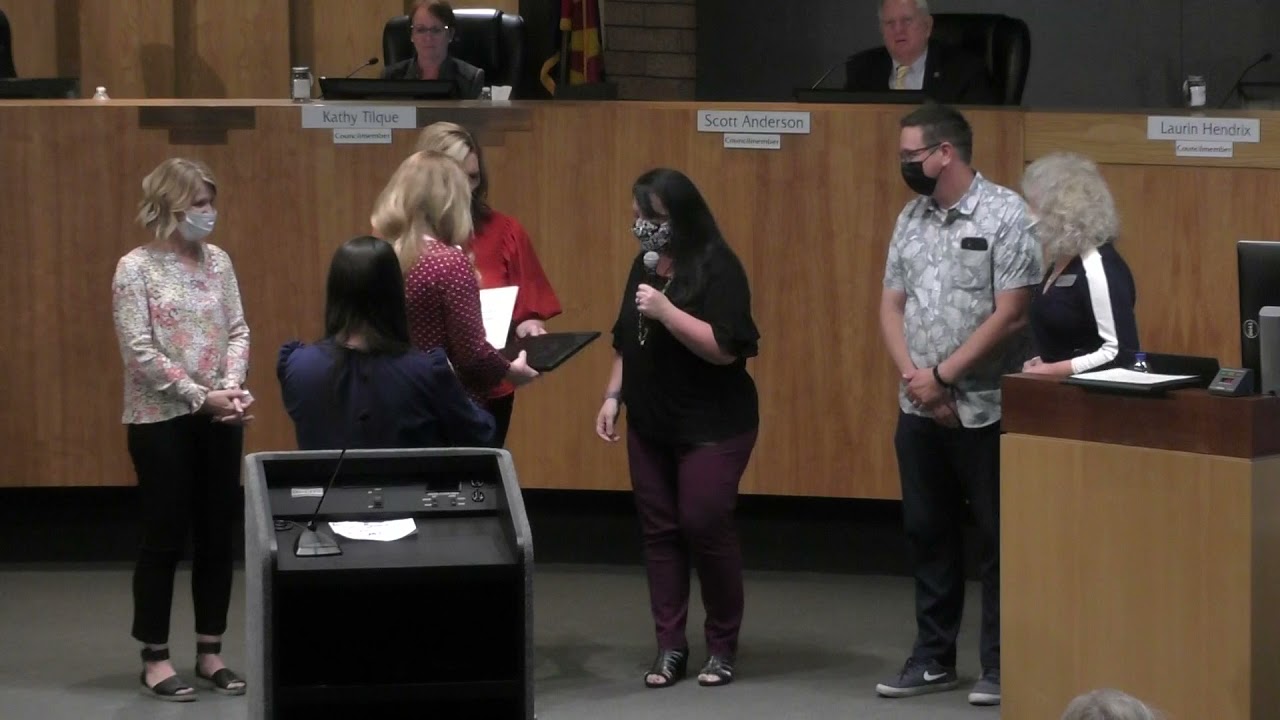
Gilbert Council Faces Go-Kart Track Backlash; Sewer Eminent Domain Project Approved Despite Homeowner Opposition
Gilbert Council meeting featuring significant community opposition to an approved go-kart track development with inadequate studies and eminent domain concerns over a sewer project, raising broader governance and notification issues.
Gilbert Council Hears Rare Public Revolt Over Go-Kart Track Approval and Governance Failures
On April 21, 2021, the Gilbert Town Council convened to a standing-room contingent of aggrieved residents who had gathered to protest a planning commission's surprise approval of a 21-go-kart racing facility in a residential neighborhood and to challenge the council's handling of an eminent domain sewer project affecting 24 homeowners. While the council did not vote on the go-kart project that evening, the testimony painted a picture of systematic deficiencies in environmental review, community notification, and municipal accountability that extended well beyond a single development dispute.
Key Speeches
"If I came to a review board on a proposal with incomplete data and absence of critical constraint data as traffic and parking data I would have been fired… the planning commission made a vote of five to two to approve the design even after acknowledging the incompleteness of the noise study." — Charlie Gerard, retired Intel engineer, Cottonwood Crossing resident
"The noise ordinance is reading the decibel levels inside a home with your doors and windows closed. That's the way it is, not just for our neighborhood but for Gilbert. So basically you're saying if the noise is too loud outside, go inside, close your doors and your windows, and I think that we can kind of admit that in Arizona that's sort of a stretch to kind of ask us to do that." — Sandra Avery, Cottonwood Crossing resident
"I am appealing this decision through the regular avenue through the planning commission, but tonight I am here to complain. With the show of hands, how many of you would like a go-kart track built for 21 gasoline-powered go-karts 250 feet from their bedroom window? The same number that would like it at the planning commission. Yet I have one coming to my house." — Randy Nelson, 1324 South Portland Avenue
"I was just informed this morning that my property, if this goes through, will now be worth at least a hundred thousand dollars less than what it was appraised for one week ago when the appraiser didn't know that this was going on." — Nikki Rieber, two-acre horse property owner, tail end of Cottonwood Crossing
"Why would a future applicant be more important than the 24 residents that are going to be affected by the land grab that this council has approved? I witnessed a very interesting discussion about whether to include gender-affirming benefits to its current plans, costing roughly a hundred thousand dollars. But perhaps you, Mayor Peterson, can explain why a future applicant got more of this council's attention, consideration, and discussion than a decision to land grab property from 24 property owners, long-term residents, at the cost of millions of dollars?" — Leslie Novak, 215 East Hemlock, WWE 1060 sewer project affected resident
Timeline
Santan Adventure Parkway Go-Kart Track:
-
Planning Commission meeting (April 7, 2021): The commission voted 5–2 to approve a 21-go-kart racing facility to operate 15–16 hours daily, 365 days per year in the Cottonwood Crossing neighborhood. Two commissioners voted against the project, citing concerns that the noise study was "hypothetical" and included only a single go-kart simulation. The commission advised residents to report noise violations as they occur, implying lease termination and town takeover would follow violations of the town noise ordinance.
-
Community petition: A petition with 547+ signatures opposing the project was circulated within five days of the April 7 planning commission vote.
-
Applicant/Developer: Castle Golf and Thorntons were identified as the entities behind the project. One resident, Randy Nelson, alleged that a councilmember had resigned to resurface as a spokesman and investor in a company that "miraculous won the RFP."
-
Staff recommendation: Not stated in transcript. The planning commission acted on its own motion; no indication that town staff formally recommended approval or denial.
-
Public comment (April 21 council meeting): Five residents spoke during the "Communications from Citizens" segment, a non-action period. Charlie Gerard (retired Intel engineer from Cottonwood Crossing) opened with a detailed critique of the planning commission's analytical failures. He stated he had sent two videos to the Mayor's office and promised a follow-up. He demanded the council identify a town council sponsor to fund an independent noise study and a traffic/parking study.
-
Council discussion: Vice Mayor Yung Koprowski did not respond substantively to the speakers during the public comment period. Per open meeting law, the council noted it could not respond to un-noticed items beyond thanking speakers or directing staff to review.
-
Vote: No vote on the go-kart project occurred on April 21. The residents indicated they would pursue appeals through established channels; the project appears to remain with the planning commission unless the council takes separate action.
WWE 1060 Sewer Line Project:
-
Project scope: A sewer line affecting 24 property owners. Leslie Novak and Ron Kuhn (speaking on behalf of the affected group) raised eminent domain concerns.
-
Council approval: The sewer project was approved in a prior council meeting (not detailed in this transcript).
-
Public concern: Leslie Novak criticized the council's lengthy deliberation over gender-affirming benefits (~$100,000 future cost) for a hypothetical employee against its approval of a multi-million-dollar land acquisition from 24 existing residents with minimal apparent discussion.
-
Staff engagement: Ron Kuhn stated that town staff (identified as "Jason" or "Greg") have been responsive and are exploring alternative routing options. He expressed cautious optimism that the town would work with residents on feasible alternatives. A website, gilbertwastingtaxes.com, was created by affected residents to document concerns.
-
Next steps: Staff to continue dialogue with affected homeowners.
Opposition
Santan Adventure Parkway Go-Kart Track:
-
Number of speakers against: 4 residents (Charlie Gerard, Sandra Avery, Randy Nelson, Nikki Rieber); Leslie Novak spoke on the sewer project but also referenced broader governance failures relevant to the go-kart dispute.
-
Main concerns:
-
Incomplete noise study: The planning commission acknowledged the noise study was "hypothetical" and based on a single go-kart simulation. No independent, developer-neutral study conducted. No ambient noise analysis (sirens, loudspeakers, music, crowd noise) despite the facility operating 15–16 hours daily.
-
Missing traffic and parking studies: No traffic impact assessment despite Knox Road being a two-lane road (one lane each direction) and residents anticipating circumvention of traffic through residential neighborhoods. No parking study despite the existing lot being frequently full.
-
Proximity to residences and sensitive uses: The facility is 250 feet from Randy Nelson's bedroom window and near a dog park. The project would render backyards unusable during operating hours and prevent opening windows during evening/night hours (8 p.m.–midnight weekdays, 8 p.m.–midnight weekends).
-
Property value depreciation: Nikki Rieber reported her property value had fallen $100,000+ within one week of the announcement, affecting her retirement security and ability to self-fund care in old age.
-
Lack of precedent and peer rejection: Randy Nelson cited that 111 cities across six southwestern states (Texas, Utah, Colorado, New Mexico, Arizona, Southern California) have rejected similar family fun centers; Gilbert would be unique in approving such a facility.
-
Planning commission dereliction of responsibility: Charlie Gerard, a retired Intel engineer with experience managing engineering review boards, characterized the commission's approval as incompetent and abdicated responsibility. The two dissenting commissioners suggested residents report violations post-opening rather than require comprehensive study before approval.
-
Procedural and ethical concerns: Randy Nelson alleged that a councilmember had resigned only to resurface as a spokesman and investor in the company that won the RFP, suggesting a conflict of interest or lack of proper disclosure. He questioned whether any council member had visited Golfland or reviewed YouTube videos of similar facilities before voting to approve.
-
-
Most compelling arguments:
-
Charlie Gerard's framing of the planning commission's action as a violation of basic engineering/project management review standards resonated as a professional, non-emotional critique.
-
Randy Nelson's specific assertion that 111 cities have rejected the use and that Gilbert would be an outlier, combined with the 250-foot proximity to his bedroom, created a stark contrast between town governance and resident impact.
-
Nikki Rieber's quantified property loss ($100,000 within one week) illustrated economic harm to long-term homeowners.
-
-
Organized groups:
-
Cottonwood Crossing neighborhood coalition: 547+ signatures on petition (5 days post-planning commission vote). Charlie Gerard served as the de facto spokesperson and indicated video evidence had been provided to the Mayor's office.
-
Affected property owners: Randy Nelson, Nikki Rieber, and others; appeals process underway through planning commission.
-
WWE 1060 Sewer Line Project Opposition
-
Number of speakers: 2 (Leslie Novak, Ron Kuhn, speaking for a coalition of 24 affected property owners)
-
Main concerns:
-
Eminent domain scope: 24 long-term property owners facing land acquisition with insufficient prior notification or consideration.
-
Council prioritization: Leslie Novak criticized the council's lengthy deliberation on gender-affirming benefits (~$100,000 future employee benefit) relative to minimal discussion of a multi-million-dollar land grab affecting 24 existing residents.
-
Lack of due process/notification: Ron Kuhn and Leslie Novak both noted inadequate prior notification to affected residents.
-
-
Most compelling argument:
- Leslie Novak's rhetorical contrast—questioning why a hypothetical future employee's benefits received more council discussion and consideration than the property rights of 24 current residents—exposed a perceived inversion of priorities.
-
Outcome/Next steps:
- Ron Kuhn reported that town staff (Jason or Greg) are working collaboratively with the coalition to explore alternative routing. A website (gilbertwastingtaxes.com) documents resident concerns. Residents expressed cautious optimism pending further staff review.
Support
No speakers offered support for either the go-kart facility or the sewer project during the public comment period.
Project Details
Santan Adventure Parkway Go-Kart Track:
-
Case number: Not stated in transcript.
-
Applicant / developer: Castle Golf and Thorntons.
-
Attorney: Not stated in transcript.
-
Location / address: Cottonwood Crossing neighborhood, Gilbert, Arizona. Specific parcel address not stated; residents identified proximity to South Portland Avenue and Knox Road.
-
APN: Not stated in transcript.
-
Current zoning → Proposed zoning: Not stated in transcript.
-
Density / units / square footage: 21 go-kart racing vehicles; facility to operate 15–16 hours daily, 365 days per year.
-
Changes from previous version: In 2016, Ben Cooper (identified as a representative of the project or related entity) presented the project to a neighborhood meeting with assurances that go-karts were not on the agenda. Residents state they were unaware of 34 pre-approved uses that subsequently included go-karts.
-
Planning Commission History: Voted 5–2 to approve on April 7, 2021. Two dissenting commissioners (names not provided) cited inadequate noise study and recommended post-opening monitoring rather than pre-opening comprehensive study. The noise study, conducted or commissioned by the developer, included only a single go-kart simulation and no ambient noise (sirens, loudspeakers, music, crowd noise).
WWE 1060 Sewer Line Project:
-
Case number: WWE 1060 (sewer line project designation).
-
Applicant / developer: Town of Gilbert (infrastructure project).
-
Attorney: Not stated in transcript.
-
Location / address: Affects 24 property owners; specific corridor not stated in transcript.
-
APN: Not stated in transcript.
-
Current status → Proposed: Approved by council in a prior meeting; town staff (Jason or Greg) now engaged in exploring alternative routing with affected homeowners.
-
Financial impact: Residents report multi-million-dollar land acquisition cost; town staff reportedly considering rerouting to reduce impact on private property.
Vote Breakdown
Santan Adventure Parkway Go-Kart Track:
- Final: No vote by council on April 21. Planning Commission vote (April 7): 5–2 to approve. Individual names of planning commissioners not provided in transcript.
WWE 1060 Sewer Line Project:
- Final: Approved in a prior meeting (vote details not provided in this transcript). No council vote on April 21.
CDBG Funds and Low-Income Housing Purchase (Item 13) — the only contentious vote at the April 21 meeting:
-
Final: 5–2 to approve.
-
Yes: Mayor Bridget Peterson, Vice Mayor Yung Koprowski, Council Member Scott Anderson, Council Member Lauren Hendricks, Council Member Kathy Telke.
-
No: Council Member Amy Yentes, Council Member [one other; name cut off or unclear in transcript]. The second dissenting vote appears to have been cast but the voter's name was not clearly articulated in the transcript.
-
Abstentions / absences: None noted.
Outcome & Next Steps
Santan Adventure Parkway Go-Kart Track:
-
Outcome: The planning commission's 5–2 approval stands as of April 21. The council did not vote to override, approve, or reject the commission's decision.
-
Resident appeal: Residents indicated they are pursuing formal appeals through the planning commission/town council appeal process.
-
Council engagement: The council acknowledged the concerns under the "Communications from Citizens" portion (a non-action agenda item). Yung Koprowski reminded speakers that the council is prohibited from responding to un-noticed items but indicated comments would be noted and staff directed to review, or the matter could be placed on a future agenda.
-
What to watch:
- Formal appeal filing by residents to the town council.
- Whether town council will sponsor an independent noise study or require additional traffic/parking studies as requested by Charlie Gerard.
- Lease execution and opening timeline for the facility.
- Any investigative reporting referenced by Randy Nelson regarding council member conflicts of interest.
WWE 1060 Sewer Line Project:
-
Outcome: Approved by council in a prior meeting. Town staff (Jason or Greg) actively engaged in discussions with the 24 affected property owners to explore alternative routing and mitigation options.
-
Next steps: Continued staff-resident dialogue; potential design modifications to reduce impact on private property; residents report cautious optimism.
Controversies & Context
Santan Adventure Parkway Go-Kart Track:
The go-kart facility approval became a flashpoint for broader complaints about Gilbert's land-use review process. Charlie Gerard, a retired Intel senior engineer with 31 years of experience managing engineering review departments, framed the planning commission's approval as a violation of basic project-management standards. His credibility as an expert witness to engineering rigor gave weight to the claim that the commission had abdicated its responsibility to ensure adequate data before approval.
The most damaging assertion came from Randy Nelson, who alleged that a Gilbert councilmember had resigned from office only to resurface as a spokesman and investor in the company that "miraculous won the RFP." This raised allegations of conflict of interest and potential corruption, though no evidence or additional detail was provided in the public record during this meeting. Nelson also noted that 111 cities across six southwestern states have rejected similar family fun centers, making Gilbert's approval unprecedented in the region.
Sandra Avery raised systemic governance concerns:
-
Inadequate noise ordinance: The ordinance measures sound inside homes with doors and windows closed—effectively asking Arizona residents to remain indoors. She characterized this as unrealistic and tone-deaf.
-
Lack of community notification: She urged the use of utility bills to notify residents of upcoming zoning changes and development proposals, and criticized the lack of transparency in information sharing (zoning history, RFP steps, process timelines).
-
High appeal fees: Residents must pay $490 to appeal a planning commission decision to the town council, a barrier to lower-income homeowners.
-
Loss of council engagement: Avery, who had been active in 2005–2006 land-use disputes (a proposed water park and ice rink in the same area), noted a stark deterioration in communication and collaboration between council members, the planning commission, and residents. She attributed this to increased concern about "interpersonal, business, financial relationships" that resulted in residents being "pushed to this person and that person" without accountability.
WWE 1060 Sewer Line Project:
Leslie Novak's complaint was politically pointed: she contrasted the council's lengthy, detailed discussion of gender-affirming health benefits (estimated at ~$100,000 annually for a hypothetical future employee with no current applicants) against the council's apparent swift approval of a multi-million-dollar land grab affecting 24 existing residents. She accused Mayor Bridget Peterson of prioritizing the appearance of being "socially forward" over fiscal responsibility and respect for existing homeowners' property rights.
Ron Kuhn, speaking for the affected coalition, reported some progress: town staff were engaged and exploring alternatives. However, the underlying tension—that a development or infrastructure project had triggered eminent domain proceedings with limited prior notification to affected residents—raised questions about the town's adherence to principles of public participation and property-rights protection.
Duration
-
This item (Communications from Citizens segment, including go-kart and sewer complaints): ~18–20 minutes total (5 speakers, 2 minutes each nominally, some overran).
-
Total meeting: ~75 minutes (beginning with pledge of allegiance and invocations, ending with mayor's closing remarks on Volunteer Week). The meeting included recognitions, a public hearing on Item 12 (rubber-stamped 7–0), the contentious Item 13 CDBG vote (5–2), and administrative business.
Other Notable Items
CDBG Funds and Low-Income Housing Purchase (Item 13):
Council Member Amy Yentes cast one of two dissenting votes, citing philosophical objections to federal debt, the "crowding out" of private charitable giving, and the town's role in subsidizing and managing low-income housing. The item was approved 5–2; the second dissenting vote and voter were not clearly identified in the transcript, though context suggests one other council member also opposed or abstained.
Gilbert Parks and Recreation Special Olympics Cheer Team:
Town Manager reported that the Gilbert Special Olympics Cheer Team, consisting of eight athletes (three new), competed in a virtual statewide Special Olympics cheer competition on April 16. The team, coached by Michelle Delansky and Jennifer Myers, won a gold medal in the traditional intermediate category, performing without typical volunteer participants for the first time. Council Member Scott Anderson requested that the team be invited to perform in person at a future council meeting, a request the Mayor indicated could be accommodated in the fall. This recognition underscored council's appreciation for adaptive recreation programs.
Transportation and Infrastructure Bond (Informational):
Vice Mayor Yung Koprowski announced three informational meetings scheduled for April and May 2021 regarding a potential transportation and infrastructure bond: a virtual session on April 28 (6–8 p.m.) and two in-person sessions on May 12 (Southeast Regional Library) and the following Thursday (Public Safety Training Facility). The meetings are intended to preview the 2021 bond proposal; attendance is optional (same information at each venue).
Why Notable
The April 21, 2021 Gilbert Council meeting drew rare, sustained, and highly technical public opposition to a land-use decision (the go-kart facility) that had already been approved by the planning commission. The convergence of three distinct but related grievances—inadequate environmental review (noise, traffic, parking studies), property-rights concerns (eminent domain sewer project), and systemic governance failures (notification, transparency, appeal barriers, council accountability)—created a portrait of a suburban municipality facing pressure from residents who felt excluded, misinformed, and unprotected.
Charlie Gerard's invocation of engineering rigor standards lent credibility to the claim that the planning commission had failed to meet basic due-diligence benchmarks. Randy Nelson's assertion that 111 cities have rejected the same use, combined with his naming of alleged council/investor conflicts, introduced allegations of potential impropriety. Leslie Novak's critique of council priorities—lengthy debate over hypothetical employee benefits vs. swift approval of property takings affecting 24 residents—raised fundamental questions about who the council serves.
Sandra Avery's comparison to 2005–2006 land-use disputes, when council and staff were reportedly far more engaged with residents, suggested a governance drift that council members did not attempt to rebut in real time. The absence of council response (beyond procedural acknowledgment) left the resident testimony on the record, amplifying concerns among the development and land-use professional community about Gilbert's review standards, transparency, and council-community relations.