Cave Creek approves $5,000-monthly consulting contract with Steve Betts for state trust land strategy
Cave Creek town council approved a consulting contract with Steve Betts for state land acquisition strategy amid public criticism about lack of contract specificity and process transparency.
Cave Creek Approves Open-Ended State Land Consultant Agreement Amid Public Skepticism Over Process
The Cave Creek town council voted 7-0 on April 26, 2016 to hire land consultant and attorney Steve Betts at $5,000 per month to pursue acquisition or preservation of 4,000 acres of state trust land adjacent to the town. The approval came only after council added safeguards including termination for any reason with 10-day notice and regular reporting requirements—modifications that acknowledged public complaints that the contract lacked specificity, deliverables, and competitive oversight.
The agreement represents the latest chapter in a two-decade struggle to resolve the fate of state-held lands that form a crucial part of the town's general plan vision for open space preservation. Robert Morris framed the hiring as a strategic moment to act, with favorable political alignment at the state level and a consultant uniquely positioned to navigate both policy and market obstacles. Yet the debate exposed deep divisions about municipal spending accountability and process transparency.
Key Speeches
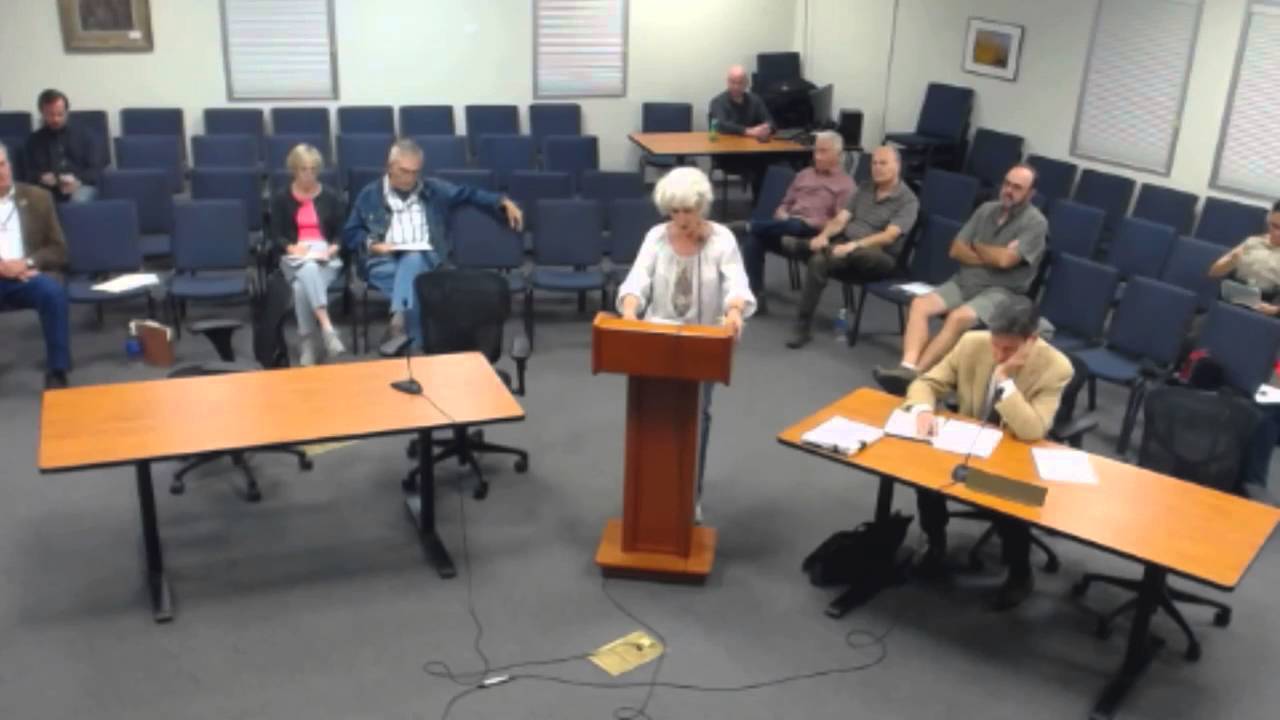
"The agreement with mr. Betts is an open-ended agreement without any defining scope of work or reporting requirements. What exactly is Mr. Betts being required to be hired to do? How much time is required to have him under this agreement? What does he have to do to earn this $5,000?" — Eileen, Cave Creek resident
"The agenda item and contract are not very specific with respect to the objectives of the consulting agreement, the term of the agreement, the method for evaluating Mr. Betts' performance, and the rationale that underlies the monthly payment that the contract is committed to. The RFP system is really much more transparent than a blended consulting agreement." — Kate Smith, Cave Creek resident
"I don't want to give away too much publicly because it's something that I need to talk to you all about in an executive session. Our approach will involve negotiating with our new commissioner Atkinson and Deputy Commissioner Wesley Neal. We have a deal in place with Commissioner Hickman—a very creative deal. A density transfer deal." — Steve Betts, consultant
"We should in a perfect world there is a time for just having a small group of people to get stuff done, knock out the hard parts, and then it's time for all of us to then meet regularly in executive session and go forward as a council because it's going to take all of us working towards this goal as a community instantly all of us motivating our citizens." — Mayor Robert Morris
"If this amendment is made such that this agreement comes back to the council in a restrictive amount of time—one month or two months—prior to decision made in public, I will support it." — Councilmember Tom Augherton
Timeline
- Staff presentation: Town manager and mayor introduced the 4,000-acre state land acquisition initiative and Betts's background in state land law, policy, and land preservation enabling acts.
- Applicant presentation: Steve Betts testified extensively on his prior pro bono work on state trust land reform, his role as transition chair for the current governor's land commissioner appointment process, and his experience as CEO of Sun Core Development. He outlined creative approaches including density transfers, conservation easements, and potential economic development angles to incentivize state interest.
- Public comment: Three speakers (Eileen, Kate Smith, and a commenter later identified) raised concerns about contract vagueness, lack of deliverables, undefined scope of work, no hourly rates or performance metrics, and absence of competitive bidding. Eileen recommended a formal RFP process. Kate Smith noted Betts's state-level credentials did not necessarily translate to community-level analysis expertise.
- Council discussion: Robert Morris delivered a lengthy statement defending the hire, referencing the town's 20-year effort to resolve the state land issue, the Spur Cross Ranch precedent, and the current political opportunity. Kathryn Royer supported the contract and spoke to prior groundwork. Tom Augherton expressed discomfort with the open-ended nature and requested amendments. Cynthia Driskell supported moving forward. Town attorney Tim Brayden defended the spending as necessary to create market value in entitled land. Councilmembers McGuire and Thomas (or a similar member) voiced caution about lack of concrete information but ultimately supported with amendments.
- Amendments: Tom Augherton moved to change termination language from "for good cause reasonably stated" to "for any reason" and to require monthly or bimonthly reporting to council. Robert Morris added an amendment requiring an executive session within 60 days and a return to council in two months. Betts agreed to both amendments and to a 12-month timeframe as an estimate for initial assessment.
- Vote: Final tally 7-0. All council members voted yes: Robert Morris, Kathryn Royer, Tom Augherton, Cynthia Driskell, Joe Freedman, Thomas McGuire, and Dusty Rhoades.
Opposition
Number of speakers against: 3 public commenters raised significant concerns; not all explicitly opposed, but all questioned the contract's soundness.
Main concerns:
-
Lack of deliverables and scope definition. The contract contained no itemized list of what Betts would produce, no performance metrics, and no clear definition of "economic development" or "strategic development" related to land transfer.
-
Open-ended term and compensation. No specified contract length was named in the original agreement, raising concern about unlimited liability; no hourly rates or time commitment expectations detailed.
-
No competitive procurement process. Public commenters questioned why the town did not issue a formal RFP (Request for Proposals), which would have required applicants to define scope, methodology, staffing, costs, and performance evaluation.
-
Disparity between consultant credentials and community-level work. Kate Smith noted that Betts's resume showed state-level and regional experience but lacked documented community-level analysis—a core requirement for the contract's stated local focus.
-
Lack of transparency and public accountability. Speakers worried that the vague language allowed the town to spend $60,000 annually with minimal public oversight and that executives sessions would further limit disclosure.
-
Absence of detailed prior analysis. Eileen questioned whether the town had already obtained the GIS (Geographic Information System) ranking and other due diligence that state law required before approaching the land commissioner, suggesting the contract was premature.
-
Constitutional and legal constraints not addressed. Eileen and others noted that Arizona's Constitution does not recognize conservation as a valid "use" for state trust land, limiting options to sale or release—facts not clearly acknowledged in the contract language.
Most compelling arguments:
Kate Smith's argument that an RFP would force the applicant and council to articulate specific objectives, timelines, hourly commitments, and performance metrics proved persuasive enough to move council toward amendments. Eileen's critique that the town had available legal tools (GIS ranking, formal acquisition requests) not yet deployed suggested the contract might be premature.
Organized groups: None identified. Comments were individual residents.
Support
Number of speakers in favor: None formally; however, Robert Morris, Kathryn Royer, and Town Attorney Brayden effectively advocated for approval.
Main arguments:
-
Unique political opportunity. Robert Morris emphasized that the current state land commissioner and governor's administration were aligned with the town's goals and that Betts had helped appoint both the commissioner and deputy commissioner, providing singular access.
-
Long-term institutional knowledge. Betts outlined two decades of work on state trust land reform, prior pro bono service, and successful involvement in the Spur Cross Ranch density transfer deal—the town's model for this negotiation.
-
Market value creation as prerequisite. Town attorney Brayden argued that state land fiduciaries must maximize return on trust assets; the town's job was to make the 4,000 acres more attractive to the state by demonstrating economic or development value, not merely conservation appeal. Without such work, the state land commissioner had little incentive to move forward.
-
Feasibility of quick assessment. Betts testified that within 12 months, or even less, the council would have a clear sense of whether a viable path existed and whether the state commissioner would engage seriously.
-
Broader economic development angle. Betts suggested that by identifying development interest in adjacent commercial or mixed-use parcels, the town could make the state land more attractive to potential buyers or partners, indirectly benefiting state finances and incentivizing action.
-
20-year institutional commitment. Robert Morris and Kathryn Royer repeatedly invoked the town's long struggle with the issue, the missed Spur Cross opportunity during the 2008 recession, and the moral imperative to act before the remaining contract window (approximately 12-13 years) closed.
Project Details
- Case number: Not stated in transcript.
- Applicant / consultant: Steve Betts, attorney and former CEO of Sun Core Development Company.
- Attorney (for consultant): Not applicable; Betts is himself an attorney.
- Town attorney: Tim Brayden.
- Location / description: State trust land parcels adjacent to Cave Creek, totaling approximately 4,000 acres. Lands are bounded by Carefree Highway to the north and extend south toward Spur Cross Ranch and the federal wilderness area.
- APN: Not stated in transcript.
- Zoning / status: State-owned trust lands, currently unowned by the town; subject to Arizona state land department fiduciary and constitutional constraints limiting use to highest-and-best-value purposes (sale or release).
- Background: The town's general plan designates this corridor as open space. In the 1990s, the town negotiated a "density transfer" agreement with the state land commissioner under which development rights could be transferred from the state parcels to other town lands, allowing the state to monetize the land without direct sale. The recession of 2008 prevented implementation. Spur Cross Ranch, a parallel conservation project, was delayed but eventually succeeded. The town council has approximately 12-13 years remaining under the original annexation/pre-annexation development agreement framework to resolve the state land issue.
- Prior consultant work: Betts testified that he had worked pro bono on state trust land reform legislation, conservation easement concepts, wild horse grazing partnerships with the Navajo Nation, and the original density transfer framework. He served as transition chair for the current governor's land commissioner appointment process and helped recommend both Commissioner Atkinson and Deputy Commissioner Wesley Neal.
- Consulting agreement scope (original): $5,000 per month for "consulting services relating to the talent [state land] economic development and strategic development concerning the transfer of state land." No specific deliverables, timeline, or performance metrics defined.
Vote Breakdown
- Final: 7-0 (approved with amendments)
- Yes: Mayor Robert Morris, Vice Mayor Kathryn Royer, Councilmember Tom Augherton, Councilmember Cynthia Driskell, Councilmember Joe Freedman, Councilmember Thomas McGuire, Councilmember Dusty Rhoades
- No: None
- Abstentions / absences: None noted
Outcome & Next Steps
The council approved the consulting agreement contingent on the following amendments:
-
Termination clause revised from "for good cause reasonably stated" to "for any reason," allowing the council to terminate with 10 days' notice without justification.
-
Reporting requirement added: Steve Betts to provide monthly or bimonthly reports to the council on progress, discussions with state officials, and strategic developments.
-
Executive session scheduled: Council to hold a confidential session within 60 days to outline the negotiation strategy and coordinate council support.
-
Public update within two months: The contract is to come before the council again in open session within approximately 60 days for further discussion and evaluation of initial progress.
-
Timeframe estimate: Betts indicated a 12-month estimate for initial assessment, though he cautioned that state land processes are inherently slow and that a preliminary sense of feasibility might emerge within 6 months.
The town manager and Robert Morris indicated that behind-the-scenes groundwork had been ongoing for several months, including mapping, preliminary discussions with state officials, and evaluation of prior deal structures. Bill Simms, the town manager, was noted as having experience with large municipal deals (e.g., Bank One Ballpark) and was engaged in the effort alongside Betts.
Controversies & Context
Broader council criticism raised by former councilmember:
A substantial portion of the meeting was devoted to public comment by a former councilmember who criticized the current council for recent decisions that he framed as contradictory to campaign promises. Specifically, he cited:
-
$300,000 settlement with former town manager: The council had recently fired the town manager but subsequently settled a lawsuit with him for $300,000. The commenter noted that the previous council (of which he was a member) had been criticized for firing the manager, yet the current council fired the town attorney—who had been with the town almost as long—and then settled the manager's suit. He characterized this as hypocrisy and poor stewardship of public funds.
-
Criticism of consultant hiring: The current council had campaigned on road maintenance and fiscal responsibility but was now hiring an outside consultant to work on state land (the same charge leveled against the prior council when they hired consultants for water master planning). The commenter viewed this as divisive and contradictory.
-
Lack of visible progress on infrastructure: The commenter noted that no slurry seal (road surface treatment) had been applied to Formspring in six months, suggesting misplaced priorities.
-
Call for unity: The commenter urged the council to move past divisiveness, unite the town, and fulfill its core responsibilities rather than pursuing agendas that split the community.
-
Newspaper influence: The commenter hinted that the town's official newspaper (Sonora News) had exercised undue influence over prior councils and suggested that one council member's vehicle was registered out of state in possible violation of town code—an accusation that was not directly addressed in the meeting.
Town response:
The mayor and vice mayor did not directly rebut the $300,000 settlement criticism but instead pivoted to the merits of the state land initiative. Town attorney Brayden offered a legal/policy defense of the spending, arguing that consultant work was necessary to create market value. The council did not address the infrastructure or newspaper concerns substantively.
Constitutional and fiduciary constraints:
Public commenters and Betts himself acknowledged that Arizona's state Constitution restricts state trust land use to "highest and best value" purposes—typically sale or release—and does not recognize conservation as a valid use. This limits the town's options and requires creative structures (density transfers, development partnerships, economic value creation) to make preservation attractive to state fiduciaries. Betts indicated this was part of why the work was difficult and why pro bono efforts had not yet succeeded.
Prior failed or delayed projects:
The Spur Cross Ranch conservation deal was invoked as a precedent—a successful effort that nonetheless took decades and required coalition funding from the county, state, and local property-tax levy. Robert Morris suggested that the state land deal faced similar timing challenges and that the 2008 recession had derailed prior momentum.
Executive session and confidentiality:
A notable tension emerged around the insistence on private executive sessions. While the council framed confidentiality as necessary for serious negotiation, some members worried this would exclude the public from understanding the strategy and rationale. Betts and the mayor explained that premature public disclosure of negotiation positions would weaken the town's hand with state officials.
Duration
- This item: Approximately 90 minutes (substantial testimony from Betts and council members, plus public comment and amendments).
- Total meeting: Approximately 2.5 to 3 hours (inferred from multiple agenda items, including liquor license and pump repair approvals).
Other Notable Items
Silver Shimmer Restaurant Liquor License (Type 12): The council unanimously approved a Type 12 (restaurant) liquor license for Silver Shimmer, located at a Cave Creek address. The applicant had corrected mapping and name issues with the state and staff recommended approval. No public comment or controversy.
Compressor Pump Repair Authorization ($12,050.57): The council unanimously approved payment for emergency repair of a compressor pump at town facilities. Initial repair estimate was $8,812.25; water deterioration required additional repair. Total authorization brought to council due to exceeding $10,000 threshold. No substantive discussion or controversy.