Cave Creek commits to west-side water service timeline after resident pressure mounts
Cave Creek council meeting dominated by public testimony from west-side residents demanding action on years-delayed water service; council committed to establishing timeline with Cahaba Springs developer.
Cave Creek Council Faces Resident Uprising Over Years-Delayed Water Infrastructure; Mayor Pledges Timeline with Cahaba Springs
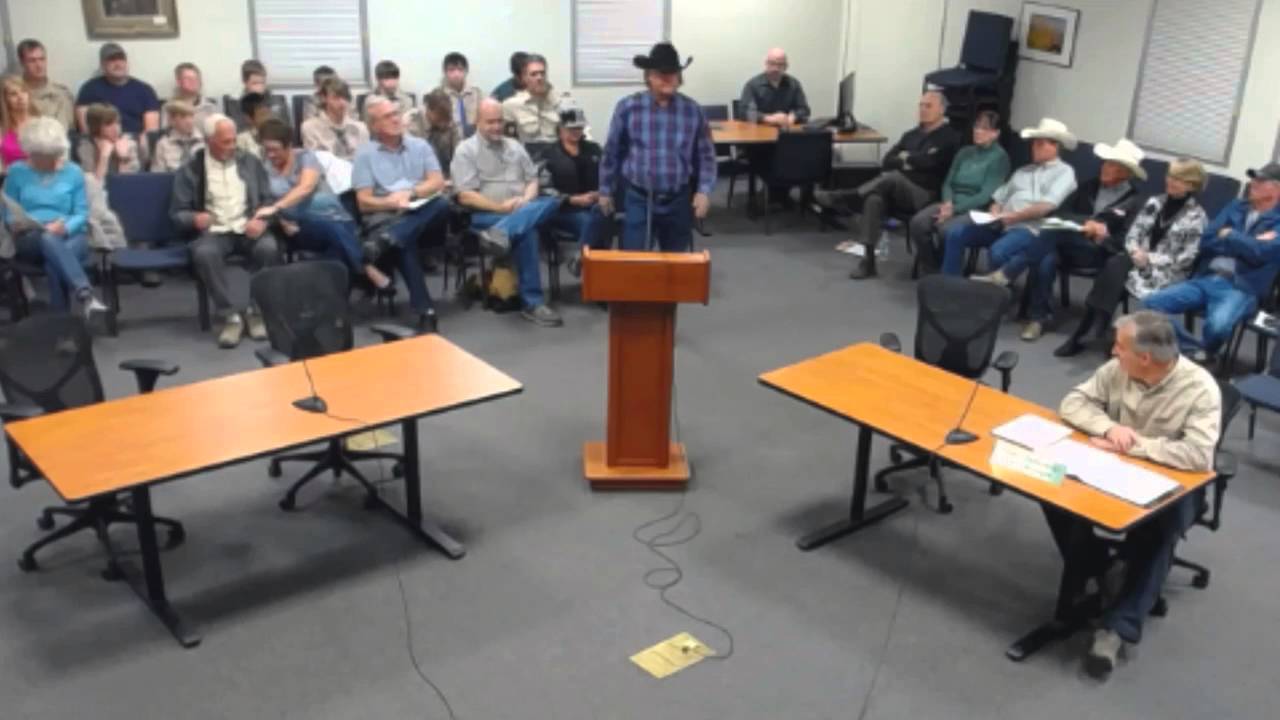
The Cave Creek Town Council meeting of April 25, 2016, became an unexpected forum for sustained public grievance when eight west-side residents testified about a years-long water-service failure that has left their neighborhoods without functioning fire hydrants, forced emergency water hauling, and, in two cases, resulted in burned homes. The council responded with an unusual exception to its public-comment policy, allowing Mayor Robert Morris to commit—on the record—to meeting with Cahaba Springs principal and establishing an "adequate timeline" for water-line connection. No vote was taken on west-side water; instead, the issue was elevated as an enforcement matter against the developer.
The meeting also approved, unanimously and without controversy, Resolution 16-DEC-03 updating the town's water-meter rental fees for construction projects, and heard a presentation from two Eagle Scout candidates proposing beautification of the town's iconic horse statues.
Key Speeches
"We were really told that in March we were going to have water. March we were going to have this line connected down there. They said 2014. They said 2015. They said last July they said September, they said December, they said March of this year. We've had houses burned down. This is not a game. This is safety and fire. This is us having to pay higher water bills because we have to have water hauled in. This is us having to pay higher insurance on our home because there's no water in the fire hydrants to fight fires." — Terry Smith, 26 Street resident
"I have to maintain a sufficient water supply of my tank, but I still don't have a boosting system that will support the suppression system. Recently we had a fire two houses up the street. It was diminished but not completely put out because of lack of water in the hydrant. They doubled my taxes on my new home, and I question why such an increase when we're going to provide only new improvement." — Jim Walsh, 26 Street resident
"We have a lot of lip service and absolutely no action at all. We're basically having to haul water, probably about 40,000 gallons a month to run my business. It's a great financial issue. We've talked about this issue for years and basically just get bored, and it's like we just don't even exist over there. We felt like the lost child." — Gary Becker, 26 Street president
"I woke up with the smell of smoke and there were embers falling on my patio. It was so frightening. I called my neighbor and we all call water trucks, but they've all gone dry or almost dry. My insurance company came out and saw that we did not have water to protect us, and I had to get new insurance policies on each one at a much higher rate." — Kathy Smith, 26 Street resident
"This council has repeatedly said 'oh well, they're going to take care of it' and put us back and put us behind to the point where now it's time for the council to say and I would appreciate it if the council would come out and say Cahaba Springs doesn't have an end date and the town will make sure that it is in by September. Give us a date. We have been put off not months; we have been put off years." — Terry Smith, 26 Street resident
"I have had to tell the town manager to set up a meeting with Mr. Stagg, the principal of Cahaba Springs, and to establish a timeline. Now if the timeline that doesn't seem adequate to meet, I'm going to bring something else before this council. You're absolutely right. We believed in good faith—I believe in good faith. We told you it would happen in short order after the Cahaba Springs got their business all taken care of, got everything set up, that we would do something about it. And I'm with the Mayor on this. We will do something about this." — Mayor Robert Morris
Timeline
- Resident presentations: Eight speakers from west Cave Creek testified over approximately 30–40 minutes. Speakers included Gary Becker (multiple wells, $40,000/month water-hauling costs), Terry Smith (burned homes in neighborhood, 2014–present promises), Kathy Smith (insurance claims, embers from nearby fire), Jim Walsh (fire suppression system installed on false promise of water), JD Smith (15-year resident, pressure pump solution available), and others.
- Public comment period: Formally governed by council rule; Robert Morris announced an exception to allow substantive response, noting "this is what democracy looks like just looking at and the largest organized with the citizens of your community come straight to the elected officials and see how palace [sic]."
- Mayor's commitment: Robert Morris pledged to have town manager convene a meeting with Cahaba Springs principal to establish timeline; no follow-up date scheduled; no enforcement mechanism or deadline for the mayor's own follow-up stated.
- Next item: Consent agenda approvals for 2600 Repeels and other routine matters.
Opposition
Number of speakers against: Zero formal opposition to the council's stated commitment; all eight speakers were residents demanding action, not opponents of the town taking action.
Main concerns raised by west-side residents:
- Timeline collapse: Multiple promises to deliver water (2014, 2015, July, September, December, March 2016) have gone unmet; no developer accountability mechanism visible.
- Fire safety: Two homes have burned; fire hydrants contain no water; emergency response compromised.
- Insurance and financial burden: Residents report doubled property-tax assessments, higher homeowner insurance rates, and mandatory monthly water-hauling costs ($40,000/month for one business operator).
- Broken government promise: Residents cited town building department's earlier assurance that water would arrive "very shortly" as rationale for approving fire-suppression systems; three years later, water absent.
- Equity and neglect: West-side residents questioned why the town finds funds for other infrastructure (landscaping, entryways, horse statues) but not water.
- Developer non-performance: Pipeline infrastructure installed by Cahaba Springs but inert; water line exists but unusable without connection and pressurization.
- Loss of municipal legitimacy: One speaker questioned what benefit west-side residents receive from incorporation if basic utilities are denied.
Most compelling arguments:
- Life safety: The burned homes and the near-miss fire incident (embers on Kathy Smith's patio) provided concrete evidence that the lack of water-system pressurization poses immediate fire risk.
- Repeated broken promises: Terry Smith's itemized list of six separate dates (2014–March 2016) on which water was promised created a credible narrative of systemic non-accountability.
- Quantified financial harm: Gary Becker's statement that he hauls 40,000 gallons/month and Kathy Smith's mention of higher insurance rates provided concrete costs borne by residents.
- Institutional hypocrisy: Jim Walsh's argument that a town with adequate revenue cannot justify delay on a "20, 40, 60, 80 grand" project undermined any claim of budget constraint.
Organized groups: No formal homeowner association or advocacy group mentioned; speakers appeared to have self-organized and attended individually, though several residents live on the same street (26 Street).
Support
No organized support testimony was offered. The Mayor and at least one council member (referred to as "Councilwoman [name]" but not fully identified in transcript) were referenced by speakers as aware of the issue. The council's implicit position—stated by Robert Morris—is that the town should enforce accountability on Cahaba Springs and that it should have acted sooner. No council member offered dissent from the principle that water should be provided.
Project Details
- Applicant / developer: Cahaba Springs (principal named as Mr. Stagg; not further identified in transcript)
- Location: West Cave Creek, primarily 26 Street and adjacent areas on northwest side of town (described as "24, 25, 26" roads and "farthest west and northern corner of the township")
- Infrastructure: Pipeline installed by Cahaba Springs developer; exists but contains no water; runs parallel to or near the location of a previously burned home
- Zoning / entitlement: Not discussed; residents appear to be in unincorporated or recently annexed areas; one speaker referenced incorporation and home-rule questions
- Fire suppression system requirement: Building department required fire-suppression systems in homes because water was promised to arrive imminently; promise has not been fulfilled
- Status of promise: Original promise dated to approximately 2014; repeated delays through 2015 and into 2016; most recent promise of March 2016 delivery failed
Vote Breakdown
No vote was taken on the west-side water issue. Robert Morris made a commitment to convene a meeting and establish a timeline, but this was a mayoral pledge, not a council resolution or formal action item. It was presented as an exception to the town's rule against mayoral response to public comment.
Outcome & Next Steps
The council did not adopt a resolution, enforce a deadline, or formally authorize expenditure to address the west-side water crisis. Instead, Mayor Robert Morris committed to:
- Directing the town manager to set up a meeting with Mr. Stagg (Cahaba Springs principal)
- Establishing a timeline for water-line completion
- Reviewing that timeline and, if inadequate, bringing an enforcement or funding matter before the council
No date was set for the mayoral meeting, no deadline for the timeline's completion was stated, and no follow-up council meeting was scheduled to assess the outcome. The resolution of the crisis is thus entirely dependent on the mayor's initiative and any leverage the town can exert over Cahaba Springs. Whether the town has contractual, regulatory, or financial leverage over the developer is not discussed in the transcript.
One resident's request for a specific date ("by September") was not formally adopted by the council; the mayor's language ("adequate timeline") suggests the standard remains flexible and subject to negotiation with the developer.
Controversies & Context
Multi-Year Infrastructure Failure
Cahaba Springs, a residential development, installed a water pipeline into west Cave Creek but has not delivered water to it. The reasons for the delay are not explained in the testimony or council discussion. Possible causes—financing, permitting, developer insolvency, town-developer dispute, regulatory hurdle—are not mentioned. The pipeline is described as physically present but inert.
Broken Government Promises
The town's building department required fire-suppression systems in homes on the premise that town water would arrive imminently. That promise was made at least three years before this April 2016 meeting and has not been fulfilled. This creates a liability: residents have been forced to install and maintain expensive fire-suppression systems that cannot function (they require adequate water pressure, which a private well and tank cannot reliably provide) in exchange for a promise the town made but cannot keep.
Fire Safety and Loss of Life Risk
Two homes have burned in the area; the recent fire nearly spread due to insufficient hydrant pressure. While the transcript does not state whether the burned homes' losses are attributable to the lack of town water (private wells may have been present), the proximity of the recent fire to multiple residents' homes and the uniformity of well-failure reports suggest that west-side residents are genuinely at elevated fire risk. Kathy Smith's account of embers falling on her patio and neighbors calling water trucks that "gone dry or almost dry" indicates that private well capacity is exhausted or depleted in the area.
Equity and Municipal Finance
Jim Walsh and other residents noted that the town has found funds for other projects (landscaping, gateway monuments, entryway improvements) but claims inability to fund water-line completion. This framing—that the council prioritizes aesthetic amenities over life-safety infrastructure—is difficult for the council to rebut without either producing an explanation of budget constraints or acknowledging that the town has misallocated priorities.
Developer Accountability and Town Authority
The transcript does not clarify the legal relationship between the town and Cahaba Springs. Is the water-line connection a condition of final platting or occupancy? Can the town withhold certificate of occupancy or impose liens? Is the developer in breach of contract? The council's response—to "set up a meeting" and "establish a timeline"—suggests either (a) the town lacks clear enforcement authority, (b) the council prefers negotiation to litigation, or (c) prior agreements with the developer are vague or outdated. No council member articulated the town's legal or regulatory basis for demanding the pipeline be pressurized.
Political Exposure
Mayor Morris's statement—"We told you it would happen in short order after Cahaba Springs got their business all taken care of, got everything set up, that we would do something about it"—is an admission that the council made an implicit or explicit promise and failed to keep it. This acknowledges political liability. His further statement that "I haven't thought about it probably because it always holler died in a while" suggests the issue was deprioritized by the council despite awareness.
Duration
- This item (west-side water testimony and mayoral response): Approximately 40–50 minutes
- Boy Scout presentation: Approximately 10–15 minutes
- Water meter fee resolution discussion and vote: Approximately 5–10 minutes
- Total meeting: Not stated in transcript; estimated 1.5–2 hours based on identified agenda items
Other Notable Items
Boy Scout Eagle Project — Gateway Monument Beautification: Tom Myers and Kevin Myers, Boy Scouts from Troop 215, proposed an Eagle Scout service project to beautify the horse statues on the north and south ends of Cave Creek with desert landscaping, solar lights, and plantings. The scouts plan to use retained plants from the town's bypass project and have committed to approximately 15 hours of work each. The council approved the direction to the town manager to oversee the project; the scouts will return upon completion. No controversy; routine approval.
Resolution 16-DEC-03 — Water Meter Fee Schedule: The council voted unanimously to adopt updated fees for town water meters used in construction projects. The non-refundable establishment fee was increased to $400, and a relocation fee was set at $75. The town manager stated that six meters are rented out to construction projects, and that the existing fee schedule was "old and antiquated." The revised fees were benchmarked against those of other regional municipalities and were characterized as bringing the town "in line with those [in] nearby towns." No public comment; routine administrative matter.