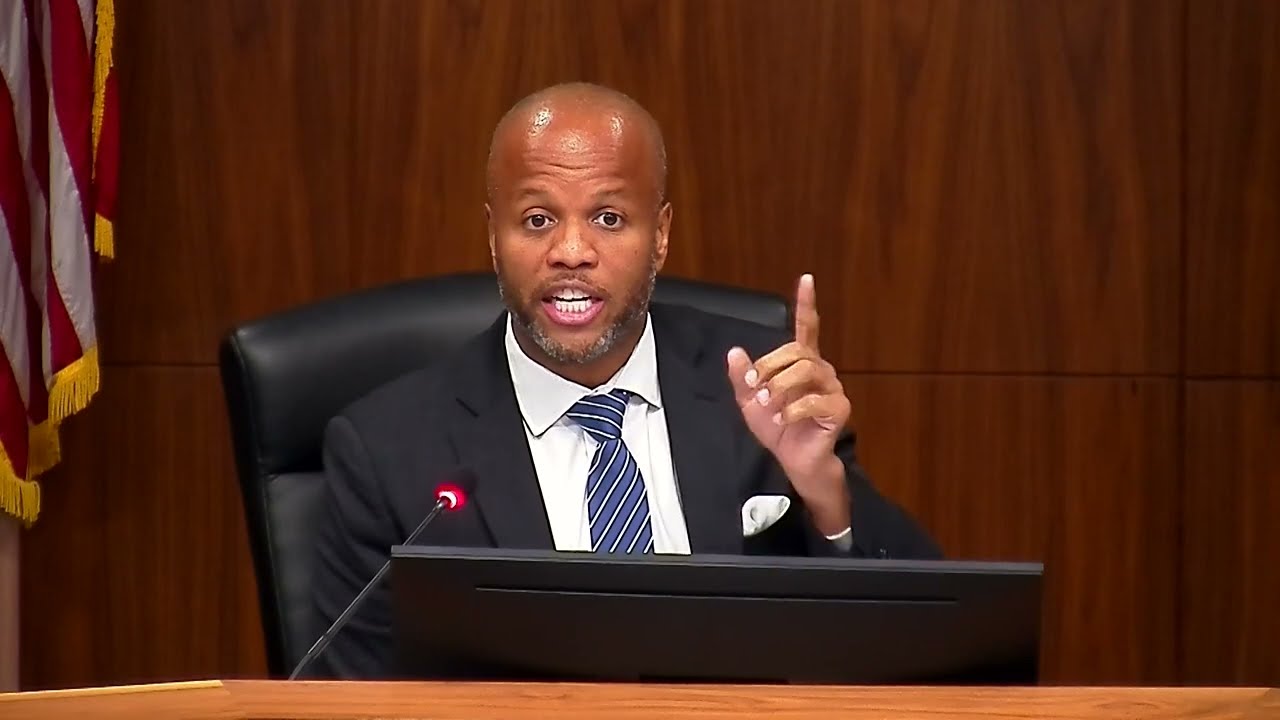
Tempe approves Denell Plaza conveyance to developer; 7-0 vote clears 3,146-acre redevelopment
Tempe City Council approved Denell Plaza property conveyance and renewable energy agreement while hearing extensive public testimony about development transparency, affordable housing, cultural preservation, and public safety concerns.
Tempe Council Approves Denell Plaza Land Conveyance with Commitment to Community-First Design Process
The Tempe City Council voted unanimously on January 19, 2024, to authorize conveyance of approximately 3,146 acres of city-owned property at Denell Plaza to a private local developer, moving forward a complex redevelopment effort that has consumed council attention for seven and a half years. The vote was 7–0, with Council Member Margie Garland participating remotely due to illness. Notably, no conceptual site plans, elevations, or architectural renderings were made public ahead of the vote—a deliberate choice that sparked both criticism and praise from a large and eloquent public comment period.
The developer is local and already owns buildings housing six current businesses on the site, including the culturally significant Yucca Tap Room. The development agreement includes a cultural conservation easement to protect that venue. The city owns approximately 50 percent of the land at the plaza, giving it unusual leverage to shape the final design around affordability and community character rather than maximum density.
Key Speeches
"We fully recognize that it is a cultural hub for our city and one of the places that makes Tempe special. It's getting a cultural conservation easement to ensure that not only will Mr. Hugh and Yucca Tap Room be at the table during this whole process, that they will have a home permanently moving forward." — Council Member Bretta Hajj
"I am here today as the vice chair of Tempe's Arts and Culture Commission and to advocate for the Denell project. It is considered by many to be one of Tempe's greatest showcases of local culture throughout its history. Denell project has featured over 90 different artists. 35% of these artists use their space at Southern Mill as an entry point, putting their work on display and public for the very first time." — Jacqueline Swan, public commenter
"I spent 25 years in commercial design. I'm a 100% firm believer the conceptuals exist on this project and nobody is sharing them with the public. I could be wrong but I'll stake my life on it that there is a master plan and it's not being shared." — Tim Palmer, public commenter
"There have been no presentations of conceptual plans for the property. There really isn't anything—or if there is, it's something that only the developers have. It's not something that was shared with the city, and frankly we're too early in the process for anything meaningful to be put together." — Mike D'Amico, Economic Development Director
Timeline
- Applicant/staff presentation: Economic Development Director Mike D'Amico confirmed no conceptual plans exist and explained that property assembly must be completed before meaningful design can begin.
- Public comment: Thirteen speakers, approximately 35–40 minutes combined. Speakers divided between supporters (artists, cultural advocates, younger residents seeking affordable housing) and existing business owners with concerns about parking and infrastructure.
- Council discussion: All seven council members who voted spoke. Themes included cultural preservation, youth engagement, affordability mandates, long history of unsuccessful redevelopment attempts, and the importance of staying engaged during community input phase.
- Vote: 7–0, with Mayor Corey D Woods, Vice Mayor Doreen Garlid, and Council Members Jennifer Adams, Nikki Amberg, Arlene Chin, Berdetta Hodge, and Randy Keating voting yes. Council Member Margie Garland participated remotely and voted yes. (Note: The transcript records show "7 to zero" with Council Member Davaro's vote status initially unclear due to technical delay, but final tally confirms 7–0.)
Opposition
-
Number of speakers: Three speakers expressed significant concerns or conditions: Richard Norris (Norris Architects, representing the Emerald Door restaurant project at 3332 South Mill Avenue); Brian DeOrio (property owner, Emerald Door); and Tim Palmer (long-time resident and commercial designer).
-
Main concerns:
- Lack of publicly available site plans and conceptual designs makes it impossible for adjacent property owners and pending applicants to design complementary projects.
- Parking requirements for new development may conflict with existing parking allocations under the original covenants, conditions, and restrictions (CCRs); existing businesses fear guests will lose parking.
- Infrastructure, particularly Mill Avenue southbound turning lanes, may require costly redesign or demolition of adjacent projects if not coordinated with Denell development.
- Traffic generation from increased density and mixed-use development on a congested intersection (Southern and Mill) not adequately addressed.
- "Transparency" concerns: speakers alleged that master plans exist but are not shared with the public or community, creating an appearance of predetermined outcomes.
- Density and housing type not yet disclosed; residents unsure whether affordable, workforce, or luxury housing will dominate.
- Risk of displacement of small businesses and cultural tenants if developer prioritizes commercial revenue over preservation.
-
Most compelling arguments: Richard Norris and Brian DeOrio both emphasized that lack of publicly available plans forced them to proceed blindly with adjacent projects; they urged written guarantees from the city or developer. Tim Palmer, a 25-year commercial design veteran, asserted with conviction that conceptual plans "exist on this project" but are being withheld, framing the lack of transparency as a governance failure rather than a genuine early-stage project.
-
Organized groups: None formally identified, though Chris Cervantes spoke on behalf of multiple property/business owners at Denell (Hamid Farah Hardi, Brian DeOrio, and himself).
Support
-
Number of speakers: Ten speakers strongly supported the project: Haley Mills (Tempe Arts and Culture Commission), Jacqueline Swan (Vice Chair, Tempe Arts and Culture Commission), Chelsea Winkle (Arizona Roller Derby), Robert Moore (community advocate), James Edwards (resident seeking neighborhood activation), Chris Cervantes (Can't Mexican Food owner, 24 years at plaza), An Till (neighborhood advocate), Jenevie Vega (homeowner, parent), and Tim Palmer (expressed conditional support despite transparency concerns).
-
Main themes:
- Denell Plaza is a unique, irreplaceable cultural hub that has hosted 90+ artists, generated $664,000+ in local tax revenue per major event, and provided affordable access to arts for working-class Tempe residents.
- Current state of plaza (with only 6 operating businesses out of 54 lots, many vacant buildings) undermines community safety and the cultural mission; redevelopment activation is overdue.
- Affordable housing is critical; younger Tempe residents (exemplified by Vega's 21-year-old son) lack confidence in finding affordable housing and risk being priced out of the city they grew up in.
- Yucca Tap Room and punk/queer cultural spaces have provided belonging and community to marginalized populations; redevelopment must preserve that ethos.
- Denell represents a rare opportunity to build a project "with the community" rather than "for the community"; lack of predetermined plans allows genuine public input.
- Green building, pedestrian connectivity (underpass linking all four corners of Southern and Mill), and public art integration should be design priorities.
- The plaza's resistance to a Walmart supercenter decades ago showed local identity; current redevelopment can reinforce that identity if done thoughtfully.
-
Organized groups: Tempe Arts and Culture Commission members (Swan, Mills); Arizona Roller Derby (represented by Winkle); neighborhood association chairs and residents (Till).
Project Details
- Case number: Not stated in transcript (development agreement process, not standard subdivision review).
- Applicant/developer: Local private developer (name not disclosed in transcript), currently owns buildings housing six operating businesses including Yucca Tap Room, Can't Mexican Food, Emerald Door (pending), and a daycare center.
- Attorney: Sam Rith (Assistant City Attorney), representing the city; developer's counsel not named.
- Location/address: Southwest corner of Southern Avenue and Mill Avenue, Tempe, Arizona.
- APN: Not stated in transcript.
- Current zoning → Proposed zoning: Not stated in transcript.
- Density/units/square footage: Not disclosed; approximately 3,146 acres of city-owned property conveyed. Current plaza has 54 lots, only 26 with buildings, only 6 with operating businesses.
- Changes from previous version: This is the second and final hearing. The first hearing occurred two weeks prior (exact date not stated); no material changes to the ordinance text were noted, but the council emphasized that the development agreement itself will be refined during the community input process now beginning.
Vote Breakdown
- Final: 7–0
- Yes: Mayor Corey D Woods, Vice Mayor Doreen Garlid, Council Member Jennifer Adams, Council Member Nikki Amberg, Council Member Arlene Chin, Council Member Berdetta Hodge, Council Member Randy Keating, and Council Member Margie Garland (remote).
- No: None
- Abstentions/absences: Council Member Darrell Davaro noted as absent at start of meeting but status at time of Denell vote not explicitly stated in final tally announcement.
Outcome & Next Steps
The ordinance authorizing conveyance of the property was adopted. The city conveyed its interest in the land to the private developer at a negotiated price. Critically, no site plans, conceptual designs, or architectural renderings are currently public. Per the council's explicit direction and the development agreement, a community engagement process will now begin. Staff will hold neighborhood meetings and solicit input from residents, business owners, artists, and other stakeholders before the developer submits any formal site plans or design documents. The council indicated they expect to see materials reflecting that input before final approval of designs. The cultural conservation easement protecting Yucca Tap Room and Rodney Hugh's operations is part of the development agreement and will run with the land. Council expressed strong interest in ensuring a high percentage of affordable and workforce housing in the final mix, leveraging the city's 50 percent land ownership. Council also indicated desire to preserve historic signage, architectural character, and connections to the plaza's arts heritage. An underground pedestrian connector linking all four corners of the Southern–Mill intersection was suggested by one commenter and was not rejected by the council. The timeline for submission of conceptual designs and the schedule for additional public hearings were not stated.
Controversies & Context
Transparency and predetermination: The most heated tension was over whether conceptual plans exist but are being hidden from the public. Tim Palmer, a commercial designer, asserted with confidence that master plans exist and challenged the city to share them. Corey D Woods, Council Member Hajj, and Director D'Amico all stated flatly that no designs have been presented to or seen by the city. The mayor and council framed the absence of designs as an advantage—it allows genuine community input rather than rubber-stamping a predetermined scheme. However, Palmer's assertion that "conceptuals exist" and are simply undisclosed remains in the record as an allegation of bad faith, even if unproven.
Parking and infrastructure: Multiple speakers (Norris, DeOrio, Cervantes, Till) raised concern that new density at Denell will exhaust existing parking and create traffic problems, yet no traffic study or parking analysis was presented. The development agreement language on parking was not quoted. This leaves existing businesses at the plaza uncertain whether they will retain guest parking under the original CCRs or whether new code will override those provisions. City staff did not address this directly.
Affordability: Several speakers emphasized the housing crisis and asked whether "affordable" truly means rent within reach of working Tempe families or merely "less expensive than luxury." The council committed rhetorically to a "high percentage" of affordable and workforce housing but did not specify a number or define affordability at the time of the vote. This will be part of site plan review.
Cultural preservation vs. redevelopment: Tension between activists who want to preserve Denell's bohemian, arts-centered character and those (including some council) who see the current underutilized state as a public safety and economic liability. The council attempted to reconcile this by committing to a design process that listens to artists and cultural stakeholders. However, no legal mechanism (beyond the easement for Yucca) was explicitly adopted to reserve space for small arts nonprofits, affordable studios, or live-music venues if the developer opts for higher-margin retail or residential.
Five-lot coordination problem: The plaza's current fragmented ownership (54 lots, many with different owners) has prevented activation and generated calls for police and social services. The development agreement apparently assembles most or all parcels, but exact details of acquisition, holdout provisions, and timeline were not disclosed.
State-level context: No mention was made of state preemption or any state-level restrictions on affordable housing mandates or local land-use authority, though Arizona's history of limiting municipal land-use regulation is relevant background.
Duration
- This item (Denell Plaza): Approximately 90 minutes (staff presentation, 13 public comments at ~3–4 minutes each, council discussion, and vote).
- Total meeting: Approximately 3.5 hours (proclamations, consent agenda, multiple non-consent items, public appearances, and announcements).
Other Notable Items
Renewable Energy Agreement (Item 7C1): Council voted 5–0 to enter into an agreement with Salt River Project (SRP) to purchase renewable energy, advancing Tempe's goal of 100% renewable energy in municipal operations by 2035. Under the agreement, city renewable energy will increase from 35% to 52% by 2026. Corey D Woods stated this reflects the city's commitment to carbon neutrality and the adoption of the International Green Construction Code for future municipal buildings. Vote count was 5–0, with Randy Keating and Davaro absent.
Opioid Recovery Services Grant (Item 8A1): Council voted 6–0 to authorize a grant agreement with Impact Suicide Prevention Center for the Tempe First Responder Opioid Recovery Project. Council Member Davaro led discussion, praising coordination between police, community health teams, and wraparound services to connect individuals with opioid use disorder to treatment at point of hospital admission. Vote was 6–0, with Randy Keating absent.
Public Safety and Homelessness Concerns: During the public comment period (Item 6), Kelly Choyou reported significant increases in drug activity, discarded syringes, and encampments in the Papago Preserve area. She stated that over 6,000 pieces of trash, 300+ uncapped syringes, and makeshift fires had been documented in a quarter-mile area over 8 months. She reported women in her community no longer feel safe walking without pepper spray and a knife. City staff (Gabe, Chris, Marco mentioned by name) were praised but noted as understaffed. No council action or formal staff response was recorded; the matter was implicitly referred to staff review.
DUI Enforcement Complaint: Mario Martinez alleged that he was wrongfully arrested and prosecuted for DUI by Tempe Police Officers James Watts and Cody Concklin despite a negative breathalyzer test. He claimed the arrest was based on physical impairment from a hip replacement and ruptured appendix, not intoxication, and that prosecutor Alan Witt pressured him to plead guilty to an opioid charge despite medical evidence proving he had not used illegal drugs. Martinez called on Corey D Woods to investigate. City Attorney Sonia Roth agreed to review the matter and noted she has authority over the prosecutor's office. Corey D Woods indicated further follow-up would occur.
Housing Enforcement and Three Unrelated Persons Policy: An Till documented persistent lack of enforcement of the city's policy limiting unrelated persons in single-family homes. She identified several rental properties occupied by fraternities and other multi-occupant groups, causing overflow parking, noise, street deterioration, and the installation of commercial dumpsters in residential areas. Till requested the city either enforce the existing policy or update it. No council action was taken; the matter was referred to staff.