Tempe advances voluntary density-bonus program offering height incentives for 25-75% affordable housing units
Tempe City Council and Development Review Commission presented a comprehensive development bonus program offering density incentives for affordable housing tied to General Plan 2050, while addressing unfavorable state legislation mandating administrative-only design review.
Tempe Advances Citywide Density Bonus Program for Affordable Housing, Eyes 1,400+ Acres for Infill Development
Tempe's City Council and Development Review Commission moved forward on May 20, 2025, with a comprehensive voluntary development bonus program designed to unlock affordable housing across 7,154 multifamily-zoned properties and more than 1,400 acres of city land. The initiative, grounded in the voter-approved General Plan 2050 adopted last March, would incentivize developers to dedicate 25–75% of units as affordable housing for 30 years in exchange for density, height, and parking relief. The framework drew unified support from council and commission members, though debate surfaced over the program's focus on rental rather than owner-occupied housing and the need for meaningful outreach to low-wage workers in the service, police, and education sectors.
Key Speeches
"I appreciate you talking about the fact that this is consistent with the general plan that was passed by voters last March. Secondly, the notion that we're talking about freeing up an additional 1,400 plus acres in this city for increased density. As that general plan 2050 talked about, we are anticipating over the next roughly 30 years an additional 72,000 people who will probably relocate to the city of Tempe." — Mayor Corey D Woods
"I love this plan and as the mayor said, I think it's another option that we have for affordable housing. We talk about it and now we're doing something additional. I think this is really important. I also think it's important for us to do something like that's also keeping local control for you know making sure that we make these decisions in the city of Tempe for our residents because we know what we want in our city um and other people don't." — Vice Mayor Doreen Garlid
"My concern is though that we are ignoring the significant lack of affordable single family housing um either detached or attached town homes and so on and so forth. that uh might be more something that a young couple perhaps with a child are looking for and also happen to fall into this economic situation because of their careers and such." — Commissioner Miller
Timeline
-
Applicant presentation: Community Development Director Jeff Tamuel Levich introduced the development bonus program framework, with Deputy Director of Planning Ryan LC and principal planners Michelle Dulki, Diana Kaminsky, and Jacob Payne presenting specific components.
-
Staff recommendation: Staff recommended the framework move forward for draft development and public outreach to begin in late summer 2025, with scenario examples and revised draft guidelines to be presented at a future council work-study session before formal ordinance hearing process in late 2025 or early 2026.
-
Public comment: No members of the public provided comment during this joint council-DRC meeting.
-
Council discussion: Mayor Corey D Woods framed the program as one of three legs in an affordable-housing stool, alongside the Hometown for All program (launched January 2021) and a $32 million housing bond approved by voters in November 2024. Vice Mayor Doreen Garlid emphasized local control and raised a specific question about why the 30-year affordability period should not extend in perpetuity, given that developers receive density bonuses forever. Nikki Amberg advocated for robust outreach to teachers, police, firefighters, and restaurant workers—the lowest-income workers who would benefit most. Council Member Hajj pressed staff on whether similar programs exist elsewhere in Arizona or the nation and whether the program would actually be used or merely create additional regulatory burden. Commission Chair Johnson requested scenario case studies comparing projects with and without incentives to clarify projected financial benefits. Commissioner Miller expressed concern that the program focuses exclusively on multifamily rental housing and ignores the affordable single-family and townhome market essential for families and wealth-building.
-
Vote: No formal vote was recorded; the meeting was a presentation and input session rather than an approval vote. Council and commission members unanimously expressed support for moving the framework forward to draft and public outreach.
Opposition
-
Number of speakers against: None recorded; no public comment period was held.
-
Main concerns raised by commissioners and council (not opposition, but requests for revision or additional consideration):
-
Single-family affordability gap: Commissioner Miller noted the program excludes detached homes and townhomes, leaving young families and first-time homebuyers without affordable entry points into ownership; this also fails to address school enrollment decline and contributes to urban heat island effect by prioritizing high-density apartment construction.
-
Perpetuity versus 30 years: Vice Mayor Doreen Garlid questioned why affordability is limited to 30 years when developers receive density bonuses in perpetuity, seeking equity in the exchange.
-
Stakeholder outreach scope: Nikki Amberg emphasized the need to include teachers, police officers, firefighters, and restaurant-industry workers in public outreach, not just established homeowners, to ensure the program reflects the needs of those most affected.
-
Comparative analysis gap: Council Member Hajj requested verification that similar programs exist elsewhere and are actually utilized; concern that staff was building a program with no real-world precedent.
-
Project scenario clarity: Council Chair Johnson requested case-study examples showing side-by-side financial projections for projects with and without density bonuses, noting the existing scenarios were difficult to parse without comparative context.
-
ADU integration: Nikki Amberg asked how the program interacts with the city's Accessory Dwelling Unit (ADU) ordinance, approved late 2024 and in effect since January 2025, to avoid redundancy or conflicts.
-
Amenities and heat mitigation: Commissioner Miller raised questions about whether the program would incentivize increased shade, green space, and open-space amenities to offset the urban heat-island effects of high-density development.
-
-
Most compelling arguments: Commissioner Miller's concern about single-family affordability and wealth-building resonated because it addressed a blind spot in the program and tied to broader city goals (heat mitigation, school enrollment) that the multifamily-only approach does not solve. Doreen Garlid equity argument—that developers should accept 30-year affordability if they keep density bonuses forever—was stated clearly and went unchallenged by staff.
-
Organized groups: None identified in transcript.
Support
-
Number of speakers in favor: All council members and commissioners who spoke (Mayor Corey D Woods, Vice Mayor Doreen Garlid, Nikki Amberg, Council Member Hajj, Council Member Hamburg, Commission Chair Johnson, and Commissioner Miller) expressed support or conditional support for moving forward.
-
Main arguments in favor:
-
Alignment with General Plan 2050: Corey D Woods emphasized that the program is grounded in a voter-approved density map adopted March 2024, providing legitimacy and community mandate.
-
Regional housing crisis response: Multiple speakers framed this as one city's necessary contribution to a countywide and statewide affordability and supply crisis; inaction is not an option.
-
Projected population growth: The mayor noted Tempe anticipates 72,000 new residents over the next 30 years; the program ensures adequate housing supply for that growth.
-
Multi-pronged approach: Corey D Woods positioned the bonus program as one of three legs supporting affordability: Hometown for All (voluntary developer contributions since 2021), a $32 million housing bond (70% voter approval, November 2024), and this new bonus program. No single tool solves the crisis; the combination does.
-
Local control: Doreen Garlid emphasized that the program preserves Tempe's authority to make housing decisions for its residents, pushback against state mandates and one-size-fits-all approaches.
-
Income verification and transparency: Corey D Woods highlighted income verification mechanisms to dispel social-media narratives that affordable housing goes to ineligible residents, ensuring public confidence in the program.
-
Simplified, by-right pathway: The introduction of R6 zoning (45 units/acre by right, without public hearing) appeals to council members who want to reduce time and uncertainty for developers while respecting community needs. Corey D Woods noted that when developers propose upzoning or density increases, public opposition is common; a by-right pathway avoids that friction.
-
Focused scope after prior failure: Staff credited the narrowed focus on affordable housing (vs. the 2019 Urban Core Master Plan's broader density-bonus framework, which was tabled in 2021) as essential to getting a workable program adopted.
-
-
Organized groups: None identified.
Project Details
-
Case number: No case number assigned; this was a framework presentation, not a specific project application.
-
Applicant/developer: Not applicable; this is a citywide voluntary program available to all multifamily developers who meet eligibility criteria.
-
Attorney: City Attorney Jonathan Anderson briefly addressed risk-management implications of state HB 2447 (administrative review mandate) but was not the primary legal voice on this agenda item.
-
Location/address: Citywide; 7,154 multifamily-zoned properties identified as eligible, covering 1,400+ acres (approximately two square miles).
-
Current zoning → Proposed zoning: The program applies to properties in existing multifamily districts (R2: 10 units/acre; R3R: limited usage; R3: 15 units/acre; R4: 25 units/acre; R5: 30–35 units/acre). The proposed framework would allow density increases to match or exceed General Plan 2050 designations:
- R2 properties: up to 25, 45, or 65 units/acre
- R3 properties: up to 25, 45, or 65 units/acre
- R4 properties: up to 25, 45, 65, or 80 units/acre
- R5 properties: up to 45, 65, or 90 units/acre
- New R6 district (by right): 45 units/acre
-
Density/units/square footage: The program covers 7,154 eligible parcels across 1,400+ acres. Specific unit counts and square footage depend on individual projects; the presentation included a hypothetical 20-unit infill example with studios, one-bedroom, and two-bedroom units.
-
Affordability tiers and target income ranges:
- 80% AMI: $62,114 annual household income; renters can afford one-bedroom units at 30% of income
- 65% AMI: $50,467 annual household income; renters can afford one- or two-bedroom units at 30% of income
- 50% AMI: $11,647–$39,000 annual household income (service workers, entry-level positions, housekeepers, restaurant staff); renters can afford two-bedroom apartments at 30% of income
- Affordability lock-in period: 30 years (not perpetuity, per Doreen Garlid question).
-
Changes from previous version: This program differs significantly from the 2019 Urban Core Master Plan density-bonus framework, which was tabled in 2021 due to overly broad scope and community opposition. The 2025 version narrows focus exclusively to affordable housing and simplifies the methodology, tying it directly to General Plan 2050 density designations rather than standalone bonus calculations.
Vote Breakdown
-
Final: No formal vote was taken. The meeting was structured as a presentation and input session. Council and commission members provided feedback and direction to staff to proceed with draft development and public outreach.
-
Yes: All council and commission members who commented (Mayor Corey D Woods, Vice Mayor Doreen Garlid, Nikki Amberg, Council Member Hajj, Council Member Hamburg, Commission Chair Johnson, Commissioner Miller) expressed support or conditional support for moving forward.
-
No: None.
-
Abstentions/absences: Individual votes not recorded; Council Member Berdetta Hodge and Council Member Randy Keating are identified as council members in the meeting agenda but did not speak during the presentation. Council Member Jennifer Adams and Council Member Nikki Amberg are also identified as members but are not referenced in the transcript.
Outcome & Next Steps
Approved for draft development and public outreach: Staff directed to begin preliminary draft work in late summer 2025. The council and commission requested:
-
Scenario case studies: Examples of projects comparing financial outcomes with and without density bonus incentives applied, to clarify developer value propositions.
-
R6 zoning examples: Illustrative examples of the new by-right R6 district showing density, design, and development potential.
-
Stakeholder outreach strategy: Meaningful engagement with low-wage workers (teachers, police, firefighters, service-industry employees) in addition to homeowners and community groups; ensure those most affected by affordability have input.
-
ADU integration: Clarify relationship between this bonus program and the existing ADU ordinance; explore opportunities for cross-benefit or alignment.
-
Single-family / townhome component: Staff to investigate feasibility of extending the program to affordable single-family and townhome development within multifamily zones, addressing Commissioner Miller's concerns about wealth-building and family housing.
-
Amenities incentivization: Explore whether program can incentivize open space, shade, and green-area enhancements to mitigate urban heat.
Timeline for adoption:
- Draft code text amendment: Summer 2025
- Council work-study session for feedback on public outreach: Fall 2025
- Formal public hearing and ordinance adoption: Expected late 2025 or early 2026
Controversies & Context
State Preemption and HB 2447
The meeting also addressed state legislation (House Bill 2447) that mandates all subdivision platting, lot combinations, and design review be processed administratively—without public hearings—effective January 1, 2026. Deputy Director Ryan LC expressed concern that the state intentionally removed design review boards and public input from the approval process, creating risk that high-rise buildings or controversial projects could be approved without public testimony or meeting discussion.
City Attorney Jonathan Anderson noted that qualified immunity protections for plan approval generally remain intact under state law, but the fundamental policy question—whether design review should occur in public or administratively—has been removed from local control.
Historical Context: 2019 Urban Core Master Plan Failure
The presentation emphasized that Tempe's prior density-bonus program (part of the 2019 Urban Core Master Plan) was tabled in 2021 because it overreached in scope and was perceived by residents as too aggressive. Staff credited the narrowed focus on affordable housing (vs. broad-based density bonuses) and stronger ties to General Plan 2050 as lessons learned from that failure.
Regional Housing Crisis and State Pressure
Multiple speakers noted that Arizona's Legislature has steadily increased pressure on municipalities to facilitate housing development through state mandates (HB 2297, HB 2110, HB 2447). Tempe's development bonus program is, in part, a proactive local response to avoid even more prescriptive state legislation. Council Member Hajj suggested the program could serve as a model for statewide affordable-housing policy.
Single-Family Affordability Blind Spot
Commissioner Miller's emphasis on single-family and townhome affordability highlighted a structural limitation of the program: it targets multifamily-zoned properties, which typically yield rental apartments, not owner-occupied homes. Miller argued that young families and first-time homebuyers need affordable single-family options to build wealth and stability, particularly in a city facing school enrollment declines. He also linked single-family development to heat mitigation (lower density, more green space, less concrete) and community stability. Staff acknowledged the concern and indicated willingness to explore a companion program for single-family and townhome affordability, but noted that property-rights and transfer mechanisms for owner-occupied deed restrictions are more complex than rental covenants.
Perpetuity vs. 30-Year Affordability Commitment
Doreen Garlid raised an equity concern: developers receive density bonuses in perpetuity (the density goes with the zoning forever), but are only asked to maintain affordability for 30 years. She suggested perpetual affordability would be a fairer exchange. Staff indicated willingness to evaluate longer terms or perpetuity but noted that 30 years is typical for other city development-agreement programs and that longer affordability commitments might reduce developer participation. The issue was left open for further analysis.
Duration
- This item (Development Bonus Program): Approximately 45–50 minutes of presentation and council/commission discussion.
- Total meeting: Approximately 1 hour 56 minutes (from opening remarks to adjournment at 4:56 p.m.). The meeting included two substantial agenda items: the development bonus program (Item 2A) and state legislation updates (Item 2B).
Other Notable Items
House Bill 2110 – Commercial Adaptive Reuse Amendment: State legislature amended HB 2297 (commercial-to-residential conversion program) to increase the citywide baseline of eligible commercial lots from 1–10% to a minimum of 10%, shift calculation from buildings to lots, clarify the 100-foot buffer zone near single-family areas as a limitation on height rather than an absolute prohibition on conversion, and expand mixed-use district eligibility. Effective July 7, 2025 (retroactive to January 1, 2024). City required to adopt cleanup code amendments by July 2025; text amendment anticipated June–August 2025.
House Bill 2447 – Mandatory Administrative Review Process: State mandate requiring all subdivision platting, lot combinations, and design review be processed administratively (no public hearings) effective January 1, 2026. Eliminates public input on administrative approvals. Exempts historic district properties. City Attorney Jonathan Anderson noted qualified immunity protections for plan approval should remain intact. Staff exploring options to allow applicants to combine design components with PD or zoning requests to bring design review into a public-hearing process. Code amendments required before end of year 2025.
Council Member Hamburg made a pointed statement expressing frustration with the state legislature: "This is a perfect example of why they [the Legislature] shouldn't [be mandating local code]. They messed up some stuff last year because they have no idea what they're doing. And yes, I'm going on record of saying this. They have no idea what they're doing and now they're coming back and fixing some problems."
View source transcript ▼
Source: Tempe City Council & Development Review Joint Meeting - May 19, 2025 — May 19, 2025. Auto-generated YouTube transcript; may contain transcription errors.
So bad. This is council. Good afternoon everyone. The Tempe City Council and Tempe Development Review Commission joint meeting. Council meetings can be watched in real time via CoxCable channel 11 at tempi.gov/temp1. Members of the public may also attend the meeting virtually through Microsoft Teams. Item number two here is our presentation items. We've got a couple of things this afternoon. First up, starting with item 2A, development bonus program options for affordable housing.
And welcome everyone. So, so let's just see. I'll let you go. Uh, I'll just let you go here and I'll step back and turn my microphone off. All right. Thank you, Mr. Mayor. Uh, Mr. Mayor, council members, uh, Mr. Chairman, and commission members. Uh, my name is Jeff Tamuel Levich. I'm the community development director. I just want to thank you for being here this afternoon. We have two agenda items we'll be we'll be presenting today uh as you had stated.
The first is a development uh bonus program and this has a with a focus on options for affordable housing. This is something that I know many of you have anticipated uh for some time now. And uh and then we have a second item which will be a brief presentation on state legislation updates which we want you all to be aware of. Um I would like to introduce the team presenting today. Uh deputy director of planning Ryan LC uh principal planners Michelle Dulki, Diana Kaminsky, and Jacob Payne.
Um before I pass this on to Ryan, I'd like to give you a brief summary of sort of how we've gotten here. Um the affordable housing strategy plan. Thank you. The the affordable housing strategy plan was actually initiated uh by the urban core uh plan in 2019. The affordable housing strategy has since helped establish the city's goals and objectives for improving the availability of housing for residents uh of different income levels and lays out strategies to achieve uh housing affordability.
Uh just as a reference uh the Tempe urban core master plan the UCMP was community commu was a communitydriven vision for the future development of Temp's downtown and urban core. Uh the urban culture plan was intended projections and development demands growth projections excuse me. Uh the plan which included the density bonus program was developed through a public process uh incorporating comments and feedbacks from residents, community groups uh and stakeholders.
There were obviously many challenges uh with this plan getting adopted at that time. Uh eventually it was then tabled in 2021. uh based on resident and council feedback, it was clear that the program uh I guess had overreached and was sort of lost focus. Uh this is what led to it ultimately not getting approved. The general plan 2050, another important milestone when it comes to housing in Tempe.
Uh this was a comprehensive 2-year process aimed at gaining community support uh to establish varying density levels throughout the city. The fact that the state legislature continues to apply more and more pressure onto municipalities to implement changes with housing and affordability. Uh all this coupled with the fact that the cost of housing in Arizona has significantly increased making it very difficult for homeowners to to or people to purchase homes and rent homes.
Uh this issue is driven by a combination of factors. Uh one of which is a limited housing inventory and and that's sort of how we got to this point. Uh, at this point I'm gonna pass it over to Ryan Leic to talk about the purpose of the presentation. Thank you, Jeff. Uh, the topics that we intend to cover for this presentation are specifically a review of our affordable housing programs that are related to our community development department that we've uh, closely working with housing elements.
We'll define our development bonus program and those elements. uh we hope to help explain to you uh an approach of a simplified framework for temp and then get into some review response input and what that framework will look like for the next uh coming months as we develop u an outreach effort for this effort. Uh first we'll have uh Michelle go over the um current efforts underway. Thank you Ryan. Make sure everybody can hear me. There you go. Thank you. I appreciate it. Thank you, Ryan.
Um, before we get started, just a reminder that inclusionary zoning is prohibited in Arizona. That's specifically out of Arizona Revised Statute Section 9-46116. And in that law, it prohibits a municipality from adopting any land use regulations, uh, conditions of approval for development, or even fees that are based on providing housing for any particular group or class of people.
But it does allow jurisdictions in Arizona to create incentives for bonus programs uh in order to increase the supply of affordable housing in those jurisdictions. Thank you, Ryan. So, some of the current affordable housing efforts that we have in place now, the hometown for all program, which probably all of you are aware of by now, it started in 2021. The purpose was to create a more sustainable funding stream for affordable housing units.
The contributions are voluntary primarily from developers but some other entities as well. And then the Apache redevelopment area. Uh this has been in effect for about 20 years. Ryan and I were kind trying to come down with an exact date but about 20 years. Um and in this area along Apache Boulevard, the incentive is to develop and redevelop land along this corridor.
And um it offers up to 50% in development fee rebates for projects that provide 10 to 15% of workforce housing units in those areas. And then of course the accessory dwelling unit ordinance that we are all aware of that the city council approved late last year which became in effect at the beginning of this year. It's been popular. We're excited to see the many people in the city that take advantage of this new opportunity for accessory dwelling units.
And then the commercial adaptive reuse to multifamily effort. So this was uh out of house bill 2297. And what that does is it mandates 10% of affordable units um up to 120% AMI. And actually Ryan will be going into this project in more detail further along in our presentation. And then this map is very interesting. So it's looking at housing costs, you know, the percentage of people's income that goes to housing throughout the city.
And if you look specifically at the far right image where you see the darker blue and the more medium blue, so that represents the percent of renter households whose gross rent is 30% or more of the housing of their housing income. The darker blue in particular is interesting because in those areas greater than 50% of those households spend 30% or more of their income on housing with the lighter blue representing 25 to 50% of the renters in those areas spending 30% or more on household costs.
Thank you Michelle. You are welcome. So um last year, last time we all met, uh council and DRC, we kind of had some direction from you all. We discussed the framework of bringing back a development bonus program. Our focus was specifically on affordable housing. So narrowing the scope before there was several different options to consider. Um and very consu concerning that we're picking lowhanging fruit to to do development bonus programs.
And so we wanted to focus on our our most important effort, which was affordable housing. We wanted to simplify the process, simplify the methodology by which you were to uh attain those bonuses and then develop a process and program for for implementation. So today here we're talking about that framework for building temp's bonus program. So what is a development bonus program? It's essentially a voluntary process intended to provide a public benefit i.e. in the form of affordable housing.
the developer or the applicant would receive additional residential density, floor space, building height and provide um what the ex beyond what the existing zoning of the property would allow. So the best example, we've used this uh exhibit several times before, but the basis of a development bonus program is to add additional project value to the site.
So you've you've got the bonus building in height and density enables developer to build and provide additional public benefits through exchange of additional height additional density and then also reduction in parking is another element we're evaluating and with that they're able to provide and dedicate affordable housing as part of the public benefit to the community for the request. Oops, I jumped two pages.
So, the development bonus program, uh, we are proposing that it'll be applied citywide. We're looking at it from objective of how it relates to our general plan. Um, it will be a voluntary program intended for developers to choose whether or not this program is appropriate for them. They may still choose the other processes, but this one is specifically identified to um increase and dedicate affordable housing.
It will uh be incorporated in part of the zoning development code as an ordinance amendment. We'll have to go through that hearing process to amend the code. It's intended to be administrative in nature. This will save time, cost, and provide the developer certainty with the outcome as a result of the process. Developers still can utilize zoning map amendments or PDS. Um, but this process is intended to be in line specifically with our general plan amendment process.
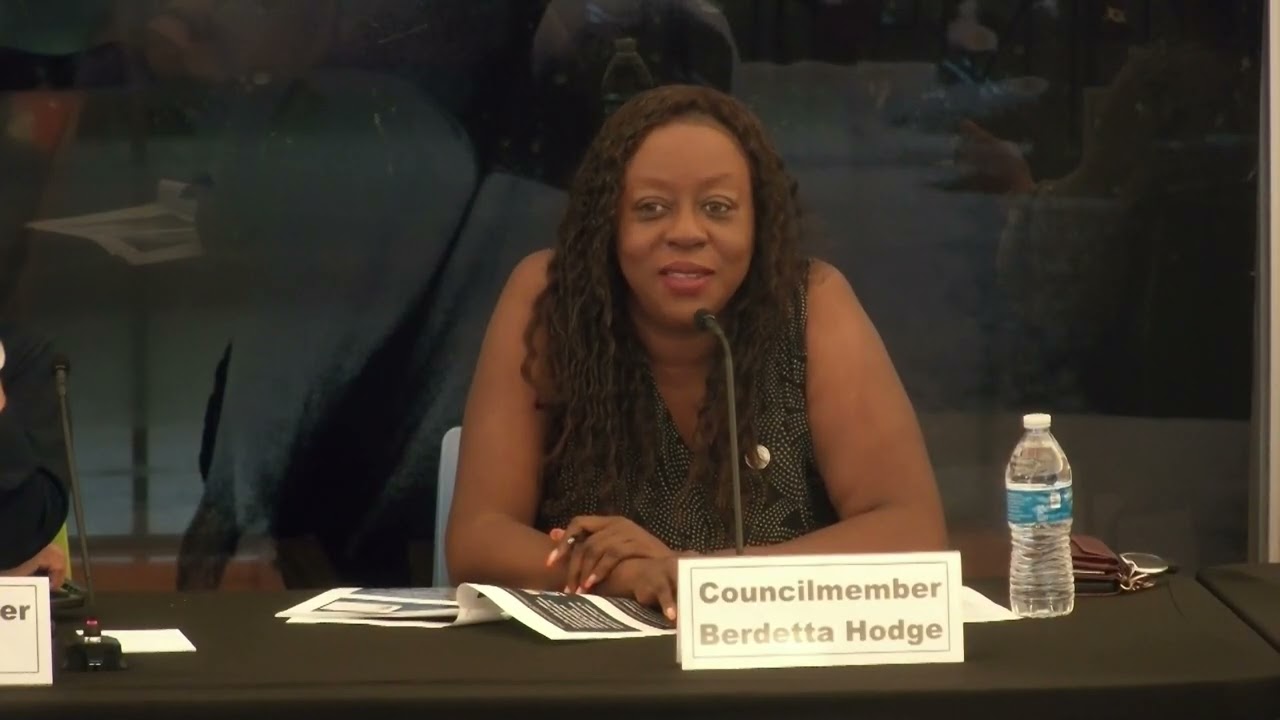
Really quickly, Ryan, uh, Council Hodgej, um, my question is when you talk about the development of the bonus prog um, program, does that include like HUD renters? I mean, like people like with the voucher system, the owners of that, can they be a part of that too or is that separate? Yeah, it it certainly could. Yeah, it doesn't exclude the developers from including other forms of affordable housing like vouchers. Okay.
Um, is that something that we can also relate because that would be I think that would be a senative for more people to do that when we do our housing. I would agree. Yeah. Thank you. So, uh, we took a simplified approach at using, uh, what the developers will have for affordable housing in exchange for the bonus.
We want them to work off of uh building from their maximum allowed density of the zoning district, basically what we call our underlining zoning rights and allow them additional density, additional uh height per the zoning district based on the projected general plan 2050. So our adopted uh development density map that was uh ratified by the voters this last year.
The bonus program will calculate that gained density from the property based on the number of and and look at the number of affordable units based on that additional development based on a area medium income. So you might have different ranges of area in medium income that the developer wants to achieve and by u providing that area medium income they can provide an outcome of either 75% 50% or up to 25% of affordability in those units.
So the one example above is if say you had 100 units and the project allows you to build additional 25 more units um 100 of those or approximately 100 of those units would have have to be um or approximately 20 those 25 additional gained units 75% of those are the ones that will be uh gain certain gained affordable housing units then we've got 50% requirement for up to 51 to 65 AMI and up to 25% % affordable units for the up to 50 range. It keeps on double skipping.
So, Jacob's here to go over specifically our general plan analysis as it relates to these density underlying zoning differences between the general plan and the zoning districts today. Sorry, and I think there was one more slide back there that you passed over. Oh, there it is. The development bonus program, it's intended to dedicate a percentage of affordability. Uh the applicants will receive greater density, heights, reductions in parking.
They need to comply with this map here, which is our general plan 2050. And then the intent and outcome is to receive a dedicated 30 years of affordable housing within that specific project. Great. Thank you, Ryan. Um, so as Ryan mentioned, uh, the premise of this is that we look for sites where the underlying zoning still has some density to gain in the general plan map.
Um, so I'm going to show you kind of what the current catalog of properties in the city of Tempi that are eligible for a program based on um, the way that we're designing it. Um, so this is just a look in total uh of what the breakdown of multif family zoned properties in the city that um have a general plan density that is higher than what their zoning allows for.
So in total we're looking at 7,154 properties that's spread out across the city as I'll show in um some exhibits on the um upcoming slides. And it covers an area over 1,400 acres uh which for context is a little over two square miles. Um, so we're really making this a broad applicability where there's opportunities for affordable housing throughout the city through a program like this.
Um, so starting with R2, which is our lowest density multif family zoning district, um, that allows for 10 units per acre. So those properties highlighted in blue on the map on the right, that shows where u those R2 properties have a general plan density designation that is over 10 units per acre. Um, so as you can see it, uh, for this particular zoning district, it's fairly spread out across the city. Um, the next zoning district that we have is the R3R. This one's a little more uncommon.
U, but there's 732 of those properties that would become eligible for this program. Again, uh, a fair spread geographically across the city of Tempee. Uh and then R3, this is uh the more common of the multif family districts in the city of Tempee with 2,868 individual properties uh noted as eligible for this program covering an area of over 900 acres. So that's a little over one square mile of that total um eligible property.
And as you can see from the map, the distribution of where these are located um is also fairly distributed. R4. Um, this is, uh, one of our higher density multif family districts in the city, up to 25 units per acre. So, this is locating properties with that zoning that would have a general plan designation of higher than that. There's 444 of them. And as you can see, this one is more um, clustered along the Apache corridor and east of ASU's campus.
And then our final multif family district is R5. It's a little hard to see on this map. This is a newer zoning district that was created in 2005. Um, so all the properties that have this were reszoned to it over the last 20 years. Uh, but those identified, there's four of them. Um, it's a little difficult to see, but there's some uh north of the 202, some over on Rio Salado Parkway, some off of Southern Avenue, and then some on Kyne Road. Great. Thank you, Jacob.
So the development bonus program is intended to allow the developer to agree to a signed covenant with the city that guarantees that affordability for 30 years. This affordability would either be assured through a development agreement or a covenant. We'll be working with our city attorney's office on the correct procedures to um guarantee this affordability.
We're also recommending working with our housing division or possibly a third party to help verify and identify those initial affordability levels or income ranges when evaluating for renters, buyers of the units. And then a potential annual self-reporting process that with audits we can verify compliance with those requirements um on an annual basis.
This here is an example of a development standards chart and looking at what changes might impact those development standards from multif family category. So you've got up above there the ranges of density zoning districts R2 all the way to R5 and their current density standards. What the bonus program provides is in compilation to the general plan a potential list of ranges.
So R3 for example, which was the most widespread available density that could increase, there's areas of properties that either with an up to 25, up to 45, or up to 65 donings per acre that would allow a density bonus from that R R3 zoning district. Same with R4. Those ranges are from up to 25 to up to 45, 65 or 80. And then as well with the R5.
In addition to this, we're also proposing a new zoning district R six that by right would allow 45 dwellings per zoning district does not exist in the city of Tempe today. It was a recommendation out of the outcome of the general plan that would be in line with that land use uh density category of up to 45.
And then areas within the city, someone could also request this request the zoning district with a public hearing process and also seek additional affordable housing units within ranges of up to 65 or up to 90 through a public hearing process as an example. In here, we provide some density bonus heights, 40 ft, 60 ft, and 80 ft. and then looking at some reductions in the standards.
Typically, a two-bedroom unit would allow one space per unit as as an example to get reductions in those parking spaces. Of course, we do have other parking requirements in the city transportation overlay district and the downtown and those standards. If those reductions are less than these standards, the the greatest reduction will apply in this case. Then over to our commercial zoning district standards.
There's a couple zoning districts we are focused on to look at providing affordable housing options. That's within our CSS commercial shopping services district and the PCC1 planned commercial neighborhood zoning district. Both those uh density ranges we're looking to propose up to the the maximum we found in our typical commercial centers that require use permit. That's up to 25 dwellings per acre.
were proposing considering that in the CSS and PCC-1 the PCC-1 zoning district were also proposing that there be a use permit process since there were some big differences between um the smaller plan commercial centers and the other PCC2 zones that that already still have a use permit requirement in play. The height bonus would be respective to that potential density increase as well and there would also be parking uh relief offered for for those areas too.
So we are also looking at what type of incentives what what is this going to offer in terms of reduction in costs and Diana is here to kind of explain some of those scenario examples we have. Thank you Ryan. What this really is referring to is the people that are impacted by the decisions that we make with this program.
On the left you see the tan uh image or the or excuse me the tan text is about their income level and what they can afford and the white box is it's a lot of numbers but it's really more about from the development side what is being given up in order to pro provide that affordable housing. So when the Tempe median household income is $77,643 per year annually, what does that mean for somebody who is only supposed to be providing up to 30% of their annual income for housing?
At 80% AMI, that means $62,114. This program would allow us to provide affordable housing for up to 30 years. And this scenario is based on a relatively small development. consider an infill development of about 20 units. So, if there's 20 units being built, what you're looking at in the white uh chart there is the market rate rents for a studio, onebedroom, or two-bedroom unit. It also shows what the monthly and annual rent income is to the property owner.
That's not the income of the tenant, it's the income of the property owner. when you take out the 80% AMI and providing that as affordable housing, it reduces the rent to the to the tenant and then the bottom line shows you the differential in the annual income to the property owner. So this would enable people in certain job industries that make this level of area median income to afford housing in Tempe, but in order to get it at a 30%, they would be able to afford a one-bedroom apartment.
That's the household income and the type of product that would be available with the reduction in in rent for this scenario [Music] one. When we get to scenario two, we're now looking at 65% AMI or $50,467 annually. And what does that mean when they're paying 30% of their income annually? That's the ability to pay $15,000 a year for rent.
So again, looking at the studio, onebedroom and two-bedroom scenario at 65 AMI rent, they would be able to afford a one or twobedroom unit um within that range. And again, at the bottom, it shows you what the the differential in income to the property owner would be in providing a portion of their units as affordable units. Scenario three is probably the most challenging. This is the individuals in our customer service, labor jobs, entry- levelvel positions, housekeepers.
Um, even the top earners in restaurant service and their annual income and providing housing% of their annual income would be $11,647 to provide them with a two-bedroom apartment through this program. And we'd be able to provide that in Tempe for 30 years through the development bonus program. Great. Thank you, Diana. So, our next steps and efforts on this process is to look to develop a preliminary draft and then public outreach. We'll have many stakeholders involved in this process.
Uh the plan is to start in the late summer of this year and then um get feedback on that process steps. Uh further developing some guidelines. uh probably shows some scenario case examples maybe of what a density project might look like compared to the existing zoning and then proposed zoning with those density bonuses and then provide uh draft revisions updates specifically to council.
We'd like to come back to you all on a future work study session to get some feedback as to how that public input and outreach is going and then get final direction on moving forward with the public hearing process for the ordinance which will probably preclude at the end of the year and an early 2026 process. With that, we open up for any input on this item at this time. Thank you. Appreciate it. Just a couple of quick things and I'm going to go to Vice Mayor Garland.
Um there are a number of things that I really like about this. First of all, I appreciate you talking about the fact that this is consistent with the general plan that was passed by voters last March. So for anyone watching at home or anyone sitting in the audience, they can know that off the top. Secondly, the notion that we're talking about freeing up an additional 1,400 plus acres in this city for increased density.
As that general plan 2050 talked about, we are anticipating over the next roughly 30 years an additional 72,000 people who will probably relocate to the city of Tempee. And this is sort of in keeping with our perspective of trying to make sure that we have adequate housing, not just simply for the people who are here now, but for the people who are going to be moving here over the next 10, 15, 20 or even 30 years.
So, I like knowing that we've got over 1417 uh specifically acres that can be then uh used to frankly build more density within our community and add much more uh much more in the way of new housing. I love the R six designation that you're talking about as well, Ryan, from the standpoint of trying to find some additional parcels in this city where people will be able to build increased density by right without having to go through a lengthy sort of process in order to get those rights to do it.
Uh because I mean, look, this might be a little bit controversial, but this sometimes we have challenges with this. When we talk about trying to find ways to uh upzone certain areas or increase density, many times people come forward and say, "I don't want this. I don't want more people. I don't want more traffic.
I'm concerned about congestion." And while I understand that for a lot of folks here who are longtime homeowners or longtime renters in the community, at the same time, we have to make sure that we're not just simply looking towards the present, but also looking very much towards the future.
So, if we're able to find ways to allow people who are in certain portions of the city to frankly build more by right without having to go through a potentially ex uh extensive lengthy process, that's something that I'm very much in support of.
Uh I love the fact that you talked about the income verification as well just to ensure because that's one thing you all so many times hear in the depths of social media of people writing well I don't know what affordable housing means and how do we know the people who are actually living in this affordable housing actually need the affordable housing the fact of the matter is the income verification I think is a very another very important thing to tell folks who might not understand what affordable housing is or might not understand what area median income or AMI is that the people who actually are getting this housing and the folks who we're talking about are folks who actually do have a demonstrated need uh and absolutely deserve to have access to uh safe highquality housing here in the city of Tempe.
And the last thing I'll say before going to Vice Mayor Garland is, you know, this is just sort of one more leg in that overall stool. I remember back in January of 2021 when we first passed the Hometown for All program and there were some folks who said, "Well, this sounds great. like this sounds like a really positive step forward, but I don't think this is going to do everything to solve the affordable housing and supply crisis that we have here in the city of Tempe and throughout the valley.
And back then, I remember us talking about uh hometown for all in of itself, that specific program was not just simply about creating one dedicated revenue stream. It was one process or one leg in that stool. And the council was going to continue to work on other ways to increase the supply of affordable housing in our community.
We obviously had the bond that got nearly 70% of the vote this past November from Tempe voters, which will give us $32 million over the next four years to frankly spend to create more needed affordable housing. But obviously now too with a density uh bonus program on top of that bond and on top of the hometown for all program, it's not just simply one program that actually solves all of these issues. It's all of these things stacked up together that gets us really to where we need to be.
So, I'm really very very happy about this. Looking forward to seeing what the public input is for members of our community, but I think these are all very much positive steps in the right direction. Vice Mayor, thank you, mayor. Um, I love this. Um, I know I've been asking to learn more about this and have this brought back to us for a really long time. I love this plan and as the mayor said, I I think it's another option that we have for affordable housing.
We talk about it and now we're doing something additional. I think this is really important. I also think it's important for us to do something like that. that's also keeping local control for you know making sure that we make these decisions in the city of Tempe for our residents because we know what we want in our city um and other people don't. So I really appreciate that and again I think it's an one great additional option. Um my I have one question though.
Why are why is on slide 19 when it talks about um what the details will be in the contract um why is this not in perpetuity instead of 30 years? I mean, it's 30 years. Why isn't it in per in perpetuity? Good. Good question. Um, we when we evaluated this request and looked at other development incentives like our some of our development agreement programs was 30 years was the was the maximum basis typically that um was asked for in these requirements.
We can certainly look at longer time periods or if um an incentive for um perpetuity is a viable option to consider, we can certainly evaluate that comparing other cities. I look at that is that they are getting the additional building height or additional whatever that they are requesting and they get it forever. It just seems to me that the equal should be that that we have the affordable housing at the same time, the same length. Um that was my only question. Thank you.
Thank you, Council Member Hajj. Then, Council Member Amber. Thank you. Uh I agree with my colleagues. This is a great step in the right direction. My question is probably more about um when we go out for discussion to make sure that we have the right people in the rooms like make sure that we do bring some teachers, police officers, firemen's.
We do bring people from the restaurant industry in because talking to just the common person who already owns a home already at home, we're not really getting the the feel of what's going to happen.
So I just caution that, not caution, I just hope that we bring in the people who are going to be mostly affected by especially when it goes into the the population of the the last one, the lot the seeking of the restaurant owners and the the people who have the lowest part of the income want to make sure that they're they're they have their input in and their buy into what's happening in in the city. Thank you.
And my last question, I know it we're not we're talking about density, but how is this affecting like ADUs if people want to do it and get kind of the same kind of feel for it if they're going to do affordable housing or sort of some kind of lower income on it too? A good question, Council Raj.
Um the this density bonus program is a little bit different in that you know typically this might be project that's an infield development missing middle housing um development where you you working on a smaller piece of land. The ADUs are mostly primarily beneficial to those property owners or homeowners that have existing property today that maybe they feel like they want to invest in their property have an ADU that they can offer for the community for for a supplemental rental income.
This one's more for kind of those, you know, smaller development projects that can take advantage of an infill opportunity for for redevelopment that is, like we said, in in concert with the general plan's projected land use density. Okay. Thank you so much. Thank you, Council Member Amber. Thank you, Mr. Mayor. Um, Ryan, I mean, I think this program sounds great. I guess my question is, you know, is it being utilized anywhere else? Like, is this are we the first people to ever think about this?
Is this being done in any other Arizona cities, any other cities around the United States? And if so, are people actually using it? Because like, is this a lot of work to go through and develop a program like this that's just never going to be utilized? Good question. Um, you know, we've had a lot of conversations um both uh locally and and on the uh statewide initiative efforts.
We know the state is heavily interested on uh bring introducing forward new state legislature for affordable housing programs. So we hope this could be um a potential model effort to kind of influence what that outcome could be because to adopt an ordinance that maybe contradicts what your city what your regulations are. This is the best way to do it in concert with the general plan the land use guidelines as as a guideline to affect those changes for those locations.
We haven't had a specific um development site or or a specific city model that modeled after this as an example, but um we'll certainly look into that to find out if there have been others that have done it this way. But there have been several cities that have dentist density bonus increases just by established percentages. So we're kind of on the forefront of this then is what you're saying possibly. All right, Council Brah.
I guess that would be a followup maybe even with Jonathan right there who can talk go back to this you know to find out if it has been talked about within our city within our state or even in the country. We'll certainly be looking to get his feedback. If we do and we are at the forefront then maybe that's a session we need to be doing at the next not this year but next year when we get it kind of moving.
No, I I would say council member Hajj, I I appreciate those comments because I mean the fact of the matter is what you and Council Member uh Amber are talking about is, you know, we have a regional challenge when it comes to housing affordability and housing supply. It's not just simply a Tempe issue with something throughout Maricopa County and and frankly throughout the entire state of Arizona.
And I really do think that it is imperative that everyone in the region does their part when thinking about things like this. Whether it's talking about housing affordability, whether it's talking about density bonus programs or trying to find ways to um allow for certain parcels to be kind of zoned in sort of in a buy kind of fashion so people can build what they need to build so we can actually meet our housing goals. But as we said, I mean, it's not just simply a Tempe issue.
Uh it's a regional issue that I think all frankly all of our cities and towns need to step up and actually take heat of. But at the end of the day, I'm very very excited about the fact that our council and our staff are trying really to meet this problem head on. So, thank you. Anything else? Yes, Chair Johnson. Thank you. Thank you. Um, so thanks for the the presentation. I think reducing the focus to this one area is very important so you can get some movement on it.
Um I love the the path of communication for looking at example projects um providing that as a method of communicating this because it's um a little difficult. I mean there's a lot of data a lot of numbers in here. So giving that those examples and also examples of the R six. I did have a question on um the scenarios that you painted for us. are those those are basically looking at projects that are equal. Um, and I don't know if I'm I'm hope I can figure out how to explain this.
Um, it would be an a pro a project that would have these uh allowable additional density, additional height, and you're looking at what they would um the income they would get without a reduction in um in rents versus what they would get with a reduction in rents. Is that accurate? Yeah, it's it was able to just look at an example of say a 20 unit um product that has both studios ones and two bedrooms, but it had the allowances on top of it already.
So, I think what what I was confusing me is um is that an accurate reflection of what a developer would be considering and should they look at something without those built-in those incentives applied um versus something with those incentives applied and look at the numbers. You're right. We should probably have some case study scenarios with applying those density bonuses and affordabilities and then what is the affordability rate for that specific right case example. Yeah.
And in the case what we were talking about is we're trying to achieve more house dedicated affordable housing units with the 80% AMI versus the 50% would probably offer less number of dedicated units but because there is a value difference right of of how much that cost savings is between those ranges right something we'll we'll have to show or demonstrate your okay thank you thank you Mr. Chairman. Yes, Commissioner Miller. Uh, first of all, thank you very much.
This is a very good first step and I emphasize first step. It um I have a comment and it appears that what you're focusing on are multifamily and apartments which are going to be essentially occupied by renters. Are we Is that more or less correct? For the most part, yes. Um, which is good because rental properties are a positive and we're building an awful lot of them right now.
My concern is though that we are ignoring the uh significant lack of affordable single family housing um either detached or attached town homes and so on and so forth. that uh might be more something that a young couple perhaps with a child are looking for and also happen to fall into this economic situation because of their careers and such. Um it's important that we do something to include those people because those are going to be the backbone of this community going forward.
Um renters are transients for the most part. They're going to be here for a year, maybe two. Some of them will stay longer, but a lot of them are going to move on or they're going to want to find a home in the community. And if we don't have something that addresses that, there's going to be no way for these people to get on that first rung of of the wealthb buildinging ladder that is so important.
In addition to that, that's they're going to bring children here, which are going to increase um the need for our schools, which right now we're losing children. Um so I think that we're really we have to start looking at that as well. And I think that by doing that and you can increase density in in those areas as well. I mean, four four units uh per acre for a lot of residential. Well, downsize downsize the lot, make it six, make it more affordable, things like that.
Um, I'd like to see I I would like to see something like that brought back to us as well. Um, which also by the way ties into the fact that one of the city's goals is to minimize the heat index that we see going on. Um, building 20 and 30 apartment buildings with a lot of concrete does nothing to mitigate that. In fact, it exacerbates it.
And so I think that if we can address some of those concerns as well, then this goes a long way to actually pushing us even further down the road for, you know, to affordable housing. And I think we'd be doing a great service to not only the community as it is now, but also to the residents of the future. So thank you. Thank you. I I do want to clarify.
I think even though we're focused on multif family zoning areas and typically that usually results in a rental property, we do still have the opportunity to look at the framework of this program for those multif family zonings that could produce um a a fee simple product town home design within those density ranges too. So that's something we're also considering. It's just it would be a different um form of agreement because now you're you're dealing with a property owner agreement.
How does that that property requirement transfer to, you know, future owner? Something we have to look into a little bit more, but we're we're certainly looking into that from from the respective of ownership opportunities as well. Can I have just one quick followup? Um I didn't hear anything about um amenities or increased amenities, increased shade spaces, increased green areas and such. Um would there be an way to increase to incorporate those as well?
Because again, we come back to um making it more attractive, making it more accessible, but also mitigating the mitigating the heat that we're we're generating. I mean, it's not getting any cooler here. Yeah. Yeah. All all those elements are focused on when we do our design review process.
So making sure that we've got adequate open space uh amenity elements those type type of standards and design review processes are incorporated when we were reviewing the development plan for for what's being presented. So yes those can be considered and and enhanced in the future as well. I was going to say could we incentivize them as well when we're looking at this? We'll look into that. Sounds good. All right. Thank you. Uh, anyone else? Either council members, commissioners.
All right, sounds good. Thank you very much. Appreciate the presentation. All right, now we got the next item. Brings me item 2B, state legislation updates. And it looks like it's still Ryan and Jeff. Still this Jeff and Ryan party. So, uh, the first item I want to introduce to you is, uh, the adoption of House Bill 2110.
Uh, this is actually an amendment to a prior house bill from last year, House Bill 2297, which was the introduction of commercial buildings adaptive reuse to multif family development program. Um this uh new house bill was um adopted by emergency clause and has retroactivity. Basically it could apply to those applications that may have been applied for since January 1 of the prior house bill. Um and essentially it'll be effective by July 7th.
So, we're kind of in a rush to get this text amendment updated, but we'll we certainly honoring this process if we have an applicant come forward that um in the meantime, these uh code changes have to do with a lot of cleanup to prior interpretations of how other cities were introducing it into their areas. um for the the code used to the provision used to require that minimum amounts of commercial lots be eligible for adaptive use uh up to 10% city of Tempe adopted 10%.
Some cities for example only adopted 1% of their commercial areas eligible for this. So this is a change in the house bill now to say no cities we're not talking about 1% we're talking about at least 10% of those areas to be dedicated eligible for the commercial. So they want that as the baseline uh standpoint for this program. Um this change also results in a recalculation of how we conduct commercial sites. Used to be based on the total number of commercial buildings.
Now it's based on commercial lots. So kind of a recalibration of of how many numbers are affected by their city citywide. Likely those numbers will decrease. So we have to evaluate those percentages to be in line with the 10% uh number threshold that we've proposed. We'll also uh result in changes to the exclusionary threshold.
There's uh set aside exclusion of up to 10% areas that we think that we want to protect or keep in place that doesn't include the addition of of conversion of commercial to residential. Those have been identified on our maps and we'll have to re-evaluate those to make sure that we're not violating that new 10% threshold of lots instead of buildings. Uh airport exclusion area which primarily has to do with um day and night uh contours of decibel levels of either 60 or 65.
The original adoption had a 60DNL contour exception and now it's been clarified to utilize the more standardized 65DNL contour line which will have a little bit less impact on on our areas of the city.
We also uh need to now include mixeduse districts when evaluating similar heights and densities for an area uh which the the adoption of this provision allows um properties within a onem radius to for example get certain similar height and similar density that could also apply to the mixeduse districts as well. of say for example some of those Apache Boulevard development sites that might be south or north of that area.
Someone could be eligible for adapter reuse that matches those similar densities and heights. The uh there's a limitation um twotory height limitation uh next to single family within 100t restriction area of the property. This meant at the time that any properties within 100 feet would not be eligible for any other height other than two stories. They've now clarified this to mean that it's intended to be a 100 foot buffer zone rather than a restriction.
So if your property is within 100 ft of a residential single family area, you limit that area of the site to to no more than two stories, but you could have property beyond that that could be three or four stories in height. So clarification in how they intended to apply this uh buffer zone with height limitation as well. There's some changes in the definitions for low-income and moderate income housing.
There's a requirement that they have to dedicate 10% of that um area median income and that ranges from 80 to 120. So, um, we're developing a draft code text amendment that will quickly see you guys, uh, hopefully in June and July to and with a wrap-up of August hearing to to get this, uh, formally adopted. Questions on this one? Council member Hamburg. Thank you, Mr. Mayor.
This isn't a question so much as me getting on my soap box because everybody up here knows how annoyed that I am at the state legislature for trying to come in and tell us what we shouldn't be shouldn't be doing with code. This is a perfect example of why they shouldn't. They messed up some stuff last year because they have no idea what they're doing. And yes, I'm going on record of saying this. They have no idea what they're doing and now they're coming back and fixing some problems.
I'm sure we'll probably be doing this every year and we're going to have to change our stuff because they keep changing their stuff. Thank you. Unfortunately, we're having to do some house cleaning. Yes. I don't know if I can follow that. Um, council. Anyone else? No. No. Okay. All right. This uh next house bill item which was been adopted and signed by the governor as well under house bill 2447, administrative review and approval self-certification program.
If you recall, this was a a couple of few years back. Um, this initiative was brought forward to help encourage cities, municipalities to allow greater opportunities for administrative review processes. Those processes typically included how to streamline the subdivision planning process, u, ways to streamline administrative approvals for design review.
And so, u, they developed this framework within the code within ARS9-400.49 49 that allowed the option that the cities may incorporate into their provisions. And at the time we did, the city took advantage of it. We expanded our subdivision plat process to make more administrative approvals. We expanded our administrative design review up to 5,000 square feet for new development. And those were changes that we enacted this year.
Now there's a just one simple change word of striking out may and then now adding shall which has the effect of now requiring cities municipalities to have a completely administrative process for all forms of subdivision platting lot combinations and requires all forms of design review both development plans site plan approval to be an administrative process meaning without public hearings without public meetings we can't take those items forward in a public fashion that you might typically find uh in your typical DRC hearing date.
Um this does impact the DRC. It does impact the city council and what they see from a U combination of application components brought forward. This mandate does go in effect as of January 1st of 2026. Um there are potential some options. We've been discussing with the uh attorney's office that might give us ability to maybe give an applicant an option to include that design component with like a an extensive uh PD or zoning process just so that they could get it approved all at the same time.
But we're required to make these processes uh say for example that city might be having to review administratively a high-rise building uh without a public hearing or public meeting process. It was intended, this bill appears to be very intentional to take out public input, public process from from from this review period. Uh there are still potentials for appeals. Uh the appeals will still happen from city staff to develop review commission and and DRC appeals to city council.
Um so we've got to do a cleanup of our code, look at and evaluate where uh changes need to occur. still looking at, like we said, some options that would afford an applicant to bring those elements on forward to uh to the city council and those those processes. Most likely, what you'll see in your packages now might have more conceptual or illustrative elevations of of the renderings and and projects.
And you what I'd say to you guys is you want to make sure that what they're showing what you guys are approving from a PD or zoning standpoint is what they're actually saying they're going to get approved from a design review standpoint. So imageries uh examples of their projects have to you know certainly be closely evaluated to make sure is is that what we're reviewing to to approve for the request. Um the the self-certification process is still an option for municipalities.
is not being mandated and this happens at the building safety end for for uh registered architects. There is another another cleanup element to this one which was just a mandated to clarify that this now proposed house bill which is cleaning up an old house bill that um properties of historic districts um with designated local government or national registered places are exempt from this process.
So if you have a historic preservation commission, they're still basically able to do design review for those historic properties that have a review of additions or modifications to those properties. They did ask to clarify and they did even tried to put in, oh, can we get an exception for design review boards and they said no. It was fully intentional to remove design review out of that public meeting public hearing process. unfortunately.
So, we'll be coming back to you all before the end of the year to wrap up this text amendment that uh whether you like it or not, it's coming forward. Thank you, Ryan. Appreciate it. Uh yes, Commissioner Miller. I just have one quick question. Have you asked your the city attorney about what the um risk management implications of this might be for city employees who go ahead and make their um now mandated decisions uh completely objectively of course. Uh Mr.
Anderson, I don't know how much you're allowed to answer of that, but he did say the city attorney of which I am not him. Uh thank you, mayor. Uh just generally speaking, every little every situation is going to turn on its own facts, but there are certain uh in the state legislation immunities that uh are generally associated with plan approval and things like that. So those would apply. I believe I haven't seen any intent to preempt that.
So um those are found in a different section of the law. So I don't I don't see any reason those wouldn't continue to apply in the same fashion. So there's generally qualified immunity as we call it. So, okay. Thank you. Anyone else? Commissioners, councel. Okay. Thank you. All right. That brings me to item number three, future meeting topics. Uh, do any members of the council or any commissioners have any future meeting topics they'd like to speak about now? All right.
Seeing none, I'll move on to item number four, upcoming meetings. Uh 4A, Monday, October 20th, 2025 at 4 p.m. Uh location right here at the Tempe History Museum in the Community Room, 809 East Southern Avenue, of course, here in Tempe. And then next up for B would be the next meeting on Monday, June 8th, 2026 at 4 p.m. right here again at the Tempe History Museum in the community room once again at 809 East Southern Avenue here in Tempe.
With that said, with there being no further business, we are adjourned at 4:56 p.m. Thank you, council, and thank you commissioners as well for your service. We're ajourned. [Music]