Tempe approves $10.8M affordable housing deal, source-of-income protection, green building code
Tempe City Council passed significant housing and sustainability measures including a source of income discrimination prohibition ordinance, voluntary green building code, $10.8M affordable housing investment, and launched park ranger program with substantial public testimony on housing crisis.
Tempe Approves Source-of-Income Discrimination Ban, Green Building Code, and $10.8M Affordable Housing Investment Amid Housing Crisis Debate
On December 1, 2023, the Tempe City Council passed three substantial housing and sustainability measures—a source-of-income discrimination prohibition ordinance, a $10.8 million Maricopa County affordable housing intergovernmental agreement, and adoption of the 2018 International Green Construction Code on a voluntary basis—all by 6–0 votes. The meeting ran approximately four hours, with 26 public speakers addressing the council on housing affordability, sustainability, and tenant protections.
The most dramatic debate centered on the tension between environmental sustainability mandates and housing affordability during a regional housing crisis. Speakers and council members disagreed sharply on whether the green building code should be voluntary or mandatory, but council ultimately sided with staff recommendation for a phased approach that prioritizes learning before full implementation.
Key Speeches
On the Green Building Code:
"Equity means that you help the people who are the most vulnerable it doesn't mean raising the bar and promoting luxury housing we're in a housing crisis and we cannot allow people to continue suffering in poverty and homelessness we need you to lower the bar to make Tempe accessible and inclusive to people of all incomes and backgrounds." — David Sakowski, Tempe resident
"I think that the passage of this while I would wish it was mandatory I think that voluntary is exactly where it needs to be and that this Council as you heard in the last comment press staff to ensure that we are playing the hard game of shifting minds and culture at the ground level so this can grow legs." — Kenan Young, Chair, Tempe Sustainability and Resilience Commission
On Source-of-Income Discrimination:
"It is today within the power of this Council to protect Tempe's residents workers students and families alike from displacement and homelessness it is therefore also within this council's power to prevent avoidable deaths in Tempe through a Prohibition on source of income discrimination in housing." — Robert Nichols, attorney and housing advocate
"Being a participant in the housing program doesn't make you less of a person it doesn't mean that we are lazy looking for handouts uneducated with a house full of unruly children I'm asking that you look beyond the source of where the money is coming from that is helping us individuals and families make ends meet and focus more on the benefits." — Monique Hayes, housing voucher recipient and Tempe resident
Council Member Responses:
"I'm probably one of the only council members that going to ever sit in this seat that has been on Section 8 and has been at the point that I know what it feels like to be able to not able to have everyone able to not able to know where your next meal is coming from do not know how you're going to be able to feed your kids so I've been there and I can say that I will never stop fighting." — Council Member Berdetta Hodge
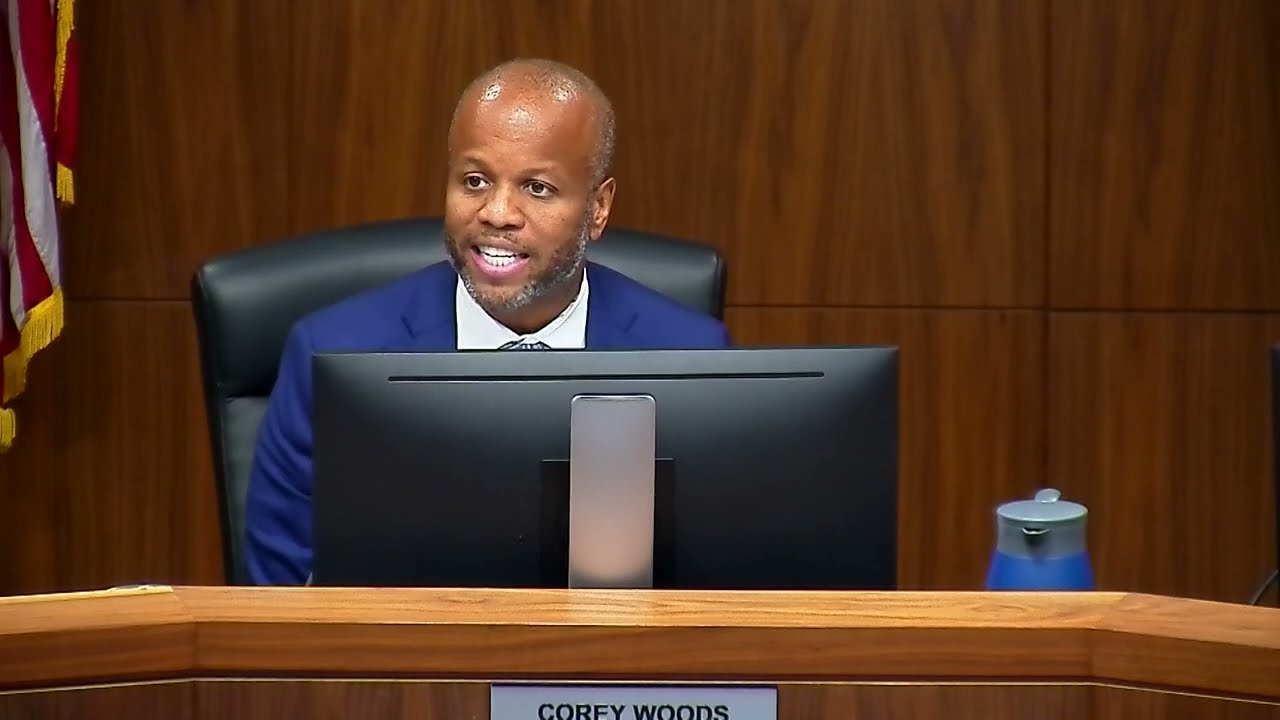
"My perspective a few weeks ago when we first had this conversation my perspective now when it comes to source of income I don't care whether you have cash a check money order Zelle Venmo a housing Choice voucher a BASH voucher it is income and that is payment and the landlord if they have that they are able to get paid and you should not be able to discriminate against people and turn someone away based on the method or the form of payment it's absolutely ridiculous it's absurd and I'm glad that after this evening it's no longer going to take place in the city of Tempe." — Mayor Corey D Woods
Timeline
Item 8C1: 2018 International Green Construction Code Adoption
Applicant presentation (City staff): Eric Iris, Director of Sustainability and Resilience, and Mike Baxley, Deputy Director of Community Development, presented the code with consultant Greg Kinkle of Quest Energy (a Tempe-based firm). Staff emphasized the culmination of a lengthy collaborative process; noted responses to prior concerns including commitment to reach out to school districts, annual reporting to council, and plans to hire a dedicated position for code coordination and energy efficiency. Iris and Baxley stressed that the code applies only to commercial and multifamily buildings, not single-family residences.
Staff recommendation: Voluntary adoption with three-year evaluation period before considering mandatory implementation. Staff noted that some elements (EV charging, solar canopies) may move to mandatory status sooner if justified by outcomes. Baxley stated that a new dedicated position was nearing offer stage and would be operational as the code takes effect.
Public comment: 6 speakers, approximately 18 minutes.
- Support: Barbie Burke (Vice Chair, Tempe Sustainability Commission), Kenan Young (Chair, Commission), Sean Swisher (architect and sustainability commissioner), An Till (resident)
- Opposition/Concern: David Sakowski (Tempe resident), An Till (also raised concerns about pace and commitment)
Key themes:
- Affordability concerns: David Sakowski warned that mandatory green code could increase housing costs and displace residents in the Apache area, the city's most affordable neighborhood. He cited Tempe's highest-in-history housing inflation and noted that over half the city is cost-burdened by rent. He argued that earning $100k+ may be required to qualify for green buildings.
- Climate leadership: Burke and Young emphasized alignment with the city's Climate Action Plan and Tempe's reputation as a regional leader. Young noted that while mandatory would be preferable, voluntary represents appropriate cultural groundwork.
- Implementation and monitoring: Till requested quarterly status updates, a transparent action plan, and regular public communication rather than annual reporting. She noted that Scottsdale adopted the code as mandatory and questioned whether Tempe was being sufficiently ambitious.
- Cost and feasibility: Swisher (architect) argued that voluntary implementation allows testing, staff training, and identification of cost impacts before mandatory adoption. He noted that incorrect code interpretations by officials have wasted hours in other jurisdictions.
Council discussion: Council Member Berdetta Hodge expressed pride in the ordinance and noted that good policy takes time to flush out. She cited the phased approach as a pathway to future mandatory requirements and positioned Tempe as a regional leader. Council Member Randy Keating reiterated that the voluntary phase allows developers and staff to navigate requirements efficiently before full implementation.
Council Member Arlene Darrah emphasized the council's long experience with phased policy approaches yielding better outcomes than "bombastic" quick implementation. She noted that the relationship between council and developers provides leverage to influence sustainable practices. She also pointed out that this item addresses commercial and large multifamily buildings, not single-family housing, and that supply-demand imbalance—not code requirements alone—drives affordability. Darrah highlighted the council's separate $10.8 million affordable housing commitment (Item 8A8) as evidence of simultaneous affordability action.
Mayor Corey D Woods did not address this item directly during council discussion.
Vote: 6–0, passed.
Item 8C4: Source of Income Discrimination Prohibition Ordinance
Applicant presentation: None required; ordinance drafted by city staff in partnership with Council Members Berdetta Hodge and Randy Keating.
Staff recommendation: Adopt ordinance prohibiting discrimination in the sale, rental, or leasing of housing based on source of income, including Section 8 housing vouchers, unemployment benefits, veterans benefits, and Social Security/SSDI.
Public comment: 11 speakers, approximately 40 minutes.
Opposition:
- 1 speaker against: Gail Shunk, private landlord in Tempe.
Main concerns raised by opposition:
- Liability for damages exceeding security deposit: Shunk stated that her primary concern is tenant-caused property damage in excess of the security deposit amount, asking who bears that liability and whether the city of Tempe will compensate landlords.
- Tenant financial risk: She noted that when the Housing Authority pays the security deposit, the tenant has no financial skin in the game and may be less cautious.
- Landlord recourse: Even if a landlord wins a court judgment against a tenant with no assets, enforcement is futile.
- Market signal: She cited that one of the first questions she receives from prospective tenants is "Do you accept Section 8?" indicating strong landlord resistance to voucher-holders.
- Protected class distinction: Shunk noted that occupation is not a protected class and provided examples of lawful tenant screening (e.g., screening out sorority members from a five-bedroom rental, or asking whether applicants are attorneys), implying that source of income should similarly remain a permissible screening criterion.
- Current Section 8 participation: She stated that she currently has one Section 8 tenant and welcomes the program in principle, but wants to protect her property.
Support: 10 speakers.
Main arguments for the ordinance:
-
Prevents homelessness and displacement: Robert Nichols (attorney, Democratic Socialists of America), Monique Hayes (Section 8 recipient), Mavis Moore (formerly unhoused), Maisha Fish (Social Security recipient, formerly homeless), Kieran Sha (volunteer with food programs for unhoused), and Sebastian Del Portio (Unemployed Workers United) all testified that source-of-income discrimination creates artificial barriers to housing, locks low-income and unemployed residents out of the rental market, and expands the homeless population.
-
Affects working people, not just poor: Caitlyn Gerber (National Council for Occupational Safety and Health) noted that minimum-wage workers in Arizona must work 70+ hours per week every week to afford a one-bedroom at fair market rent, and that care workers, teachers, grocery clerks, and other essential workers cannot afford housing without assistance.
-
No evidence of higher damage rates: Del Portio stated that the suggestion that voucher-holders are more likely to cause property damage is unfounded and reflects bias against working-class people. Jack Drummond, a formerly homeless resident now housed for 10 years via the Housing Authority, noted that during the COVID rent moratorium, Section 8 tenants paid consistently while fully employed tenants were more likely to default; landlords subsequently ran out fully employed tenants but retained Section 8 tenants.
-
Moral and civic imperative: Multiple speakers invoked equity, dignity, and the city's responsibility to prevent deaths from heat exposure among homeless populations. Mavis Moore stated: "Nobody should have to choose between food or where you're going to get your next meal or gas or if I'm going to sleep in the park the next day or have a roof over her head everybody should be able to live comfortably."
-
Common-sense first step: Nichols argued that the ordinance is "not radical" and "will not bankrupt Tempe's homeowners." Siran Joshua (homeowner, ASU PhD, professor's spouse) noted that she and her husband could not afford to buy in Tempe today and questioned whether the city can function if all workers are priced out.
-
Implementation and guidance: Del Portio and others requested that the city issue clear guidance on the ordinance's implementation, citing Tucson's success and Phoenix's failure to provide adequate landlord and tenant guidance. They offered to share exemplars.
Organized groups: Unemployed Workers United and Take Back Our Homes campaign coordinated at least six speakers (Sebastian Del Portio, Caitlyn Gerber, Maggie Costa, Stephanie Gonzalez, Evelyn Castillo, and others identified as part of the campaign).
Council discussion: Council Member Berdetta Hodge opened by noting her personal history as a Section 8 recipient and thanking speakers for their testimony. She stated: "I'm probably one of the only council members that [will] ever sit in this seat that has been on Section 8 and has been at the point that I know what it feels like to be able to not able to have everyone able to not able to know where your next meal is coming from... I will never stop fighting... because I've lived this life and I will always continue to fight."
Council Member Randy Keating expressed gratitude to Unemployed Workers United for organizing and sharing real stories, noting that these experiences are often lost in abstract policy discussion. He praised the destigmatization goal: "We're all just real people here doing the best we can." Randy Keating noted that he introduced the ordinance with Berdetta Hodge after observing Phoenix's similar ordinance in April or May, and thanked his staff and Berdetta Hodge for shepherding it through.
Randy Keating also contextualized the ordinance within broader housing crisis response: "Housing prices have skyrocketed all across the country particularly in Arizona particularly in Tempe because everyone wants to be here... I bought my house in 2015 I couldn't afford it today not by a long shot." He framed the ordinance as one of several tools (ADUs, density, downtown core development) and emphasized that "the landlord if they have that [payment] they are able to get paid and you should not be able to discriminate against people and turn someone away based on the method or the form of payment it's absolutely ridiculous it's absurd."
Council Member Arlene Darrah acknowledged the council's spirited behind-closed-doors discussions but noted that this ordinance was "a very easy thing to bring forward" with unanimous support from day one. She stressed that safeguards within the ordinance protect landlords and that the council will refine the policy over time. She invited continued public engagement at a December 13 housing affordability forum at the Tempe Public Library (5:30 p.m.) and emphasized that council members welcome ideas—including trade-offs such as height variances in exchange for affordability funding.
Mayor Corey D Woods stated plainly: "I don't care whether you have cash a check money order Zelle Venmo a housing Choice voucher a BASH voucher it is income and that is payment and the landlord if they have that they are able to get paid and you should not be able to discriminate against people and turn someone away based on the method or the form of payment it's absolutely ridiculous it's absurd."
Vote: 6–0, passed. Vice Mayor Doreen Garlid (note: referred to as "Dorian Garland" in some brief analysis items, but canonical name is Doreen Garlid) was absent.
Item 8A8: Affordable Housing Intergovernmental Agreement with Maricopa County
Applicant presentation: Council Member Arlene Darrah presented on behalf of staff.
Staff recommendation: Adopt resolution authorizing the mayor to execute an intergovernmental agreement with Maricopa County for American Rescue Plan Act (ARPA) funding to construct and develop affordable rental housing.
Public comment: None recorded.
Council discussion: Council Member Darrah noted the significance of the partnership between the county and cities within Maricopa County. She stated: "I know that a lot of people out there and a lot of cities out there actually you know need this from various places but this is a city that is recognized that we do need that affordability especially in the metro area Phoenix metro area so I think this is a great opportunity and glad to see this 10.8 million be given to the city of Tempe that [will] execute on getting it done."
Vote: 6–0, passed.
Park Ranger Program Launch (Announcements/Recognition)
During the City Manager's Reports and Announcements section, City Manager Jason Rosencrantz and Community Services Director Craig Hayden introduced the newly launched Tempe Park Ranger Program. The program consists of 17 authorized positions, with 15 filled as of the meeting date. Rangers began field training during the week of the meeting.
Park Ranger Supervisor Michael Spikes described the program's mission: "The city of Tempe's park ranger program is about being ambassadors to the open space the Flatland parks and preserves within the City of Tempe it's about having a resource for information for education to park patrons and users and it's about enhancing that feeling of Safety and Security within the parks."
Rangers introduced included Tron Koso, Syle, Cole, Williams, Forest, Pike, Link, and Marco (all rangers), with Shelby Meyer as management assistant, Ruben Wilkinson as manager, and supervisor Michael Spikes. The rangers are uniformed and can be reached via the Tempe 311 app or 480-350-4311.
Project Details
Item 8C1: International Green Construction Code
- Case number: Not stated
- Ordinance reference: Chapter 8 (Buildings and Building Regulations), Article 11 of Tempe Administrative Code
- Applicant / developer: City of Tempe (staff-initiated)
- Consultant: Quest Energy (Tempe firm), represented by Greg Kinkle
- Scope: Adoption of the 2018 International Green Construction Code, applied on voluntary basis to commercial and multifamily residential buildings (excludes single-family residences)
- Implementation timeline: Voluntary for three years, with annual reporting to council; potential elements (EV charging, solar canopies) may advance to mandatory status before full code becomes mandatory
- Compliance tracking: Annual report to council on status, communication, collaboration with development community
- Dedicated position: New full-time position for code coordination and energy efficiency management (offer to be extended post-vote)
Item 8C4: Source of Income Discrimination Prohibition Ordinance
- Case number: Not stated
- Ordinance reference: Amendments to Tempe City Code Chapter 2, Section 8 (Human Relations) and Chapter 22, Article 5 (Fair Housing)
- Applicant / drafters: City of Tempe; co-championed by Council Members Berdetta Hodge and Randy Keating
- Protected sources of income: Section 8 housing vouchers, unemployment benefits, veterans benefits, Social Security/SSDI
- Scope: Prohibits discrimination in the sale, rental, or leasing of housing based on source of income
- Effective date: Upon adoption (December 1, 2023, via final vote)
- Implementation: Staff to develop guidance for landlords and tenants; council invited subsequent input on refinement
Item 8A8: Affordable Housing IGA with Maricopa County
- Agreement type: Intergovernmental Agreement (IGA) with Maricopa County
- Funding source: American Rescue Plan Act (ARPA) funds
- Amount: $10.8 million
- Purpose: Construction and development of affordable rental housing for low-income families in Maricopa County, benefiting City of Tempe
- Deadline: December 31, 2026 (compliance deadline)
- Conditions: Continued compliance with agreement terms and conditions
Vote Breakdown
Item 8C1 (Green Construction Code):
- Final: 6–0
- Absent: Vice Mayor Doreen Garlid (referred to in brief as "Jennifer Adams," but canonical name is Doreen Garlid)
Item 8C4 (Source of Income Discrimination Ordinance):
- Final: 6–0
- Absent: Vice Mayor Doreen Garlid
Item 8A8 (Affordable Housing IGA):
- Final: 6–0
- Absent: Vice Mayor Doreen Garlid
(Individual council member votes on these items were not named in the transcript; all votes shown were by voice and reported as unanimous 6–0 with one absence.)
Outcome & Next Steps
Green Building Code (8C1):
- Adopted on voluntary basis effective December 1, 2023.
- City will hire dedicated staff position for code coordination and energy efficiency oversight.
- Annual reporting to council on adoption rates, cost impacts, developer feedback, and development community collaboration.
- Three-year evaluation window (through approximately December 2026) before council will revisit potential mandatory implementation.
- Specific building elements (EV charging, solar canopies) may advance to mandatory status sooner if justified.
- School districts will be contacted separately regarding adoption recommendations for municipal and district properties.
Source of Income Discrimination Ordinance (8C4):
- Adopted effective December 1, 2023.
- Applies to all housing sales, rentals, and leases in the City of Tempe.
- Staff to develop implementation guidance and clarification for landlords and tenants.
- Council will refine ordinance provisions based on outcomes and tenant/landlord feedback.
- Public invited to December 13, 2023 housing affordability forum at Tempe Public Library (5:30 p.m.) for continued discussion.
Affordable Housing (8A8):
- IGA authorized for mayor's signature.
- $10.8 million ARPA funds to support construction and development of affordable rental units.
- City must comply with agreement terms and conditions by December 31, 2026.
- Next council meeting scheduled December 21, 2023.
Controversies & Context
Green Building Code – Mandatory vs. Voluntary Debate: The central tension was whether the code should be mandatory or voluntary. Sustainability advocates and commissioners (Kenan Young, Sean Swisher, Barbie Burke, An Till) pushed for immediate mandatory adoption, citing Scottsdale's 2023 mandatory implementation and Tempe's historical role as a regional climate leader. They argued that three-year voluntary phases represent insufficient ambition and that voluntary adoption has historically failed to move developers absent regulatory requirement.
Conversely, staff and council (Darrah, Berdetta Hodge, Randy Keating, Baxley, Iris) warned that mandatory adoption during a housing affordability crisis risks exacerbating cost escalation. David Sakowski argued that green code requirements disproportionately burden low-income renters and that Tempe risks gentrifying its most affordable neighborhoods (Apache area) if green requirements artificially inflate construction costs. The council sided with staff, positioning voluntary adoption as a learning phase before potential future mandatory requirements.
Housing Affordability vs. Sustainability Requirements: A recurring tension emerged: do environmental sustainability mandates increase housing costs and worsen affordability? Sakowski argued that green buildings require higher rents and exclude low-income residents; Sean Swisher (architect) countered that green technology costs decline as adoption widens and that historic environmental burdens on vulnerable communities can only be remedied by raising standards. Council Member Darrah framed both commitments as compatible—simultaneous $10.8 million affordable housing investment plus green code adoption—but acknowledged that supply-demand, not mandates alone, drives affordability.
Landlord Concerns on Source of Income Discrimination: Gail Shunk raised liability and property damage concerns, arguing that landlords bear uncompensated risk when tenants receiving housing vouchers cause damage exceeding security deposits. The ordinance does not explicitly address liability caps or city indemnification; council did not amend the ordinance in response but invited Shunk and other stakeholders to December 13 housing forum for refinement discussion.
Gentrification and Displacement in Apache Area: David Sakowski specifically warned that green code adoption and other development incentives risk displacing long-term residents in the Apache area, Tempe's historically most affordable neighborhood. No council member directly addressed this concern during the green code discussion, though Darrah's emphasis on simultaneous affordable housing investment may have been intended as a mitigation response.
State Preemption on Rent Control: Council Member Siran Joshua noted that Arizona state law preempts local rent control, constraining the city's tools. She advocated for other protections (income requirement limits, right to counsel in eviction, height variances in exchange for affordability contributions). Council Member Darrah acknowledged these possibilities and invited continued public input.
Duration
- Item 8C1 (Green Construction Code): Approximately 60 minutes (staff presentation, 6 public speakers, council discussion)
- Item 8C4 (Source of Income Discrimination Ordinance): Approximately 75 minutes (11 public speakers, council discussion)
- Total meeting: Approximately 4 hours (recognized opening/pledge, five awards/announcements, park ranger program introduction, seven consent agenda items, multiple utility fee resolutions, professional services and construction contracts, ordinance introductions, and ordinance final hearings)
Other Notable Items
Tempe STATS Initiative (Announcement): City Manager Jason Rosencrantz announced the launch of "Tempe STATS," a data-driven leadership model under Deputy City Manager Greg Reese, focusing on community safety and vision zero. The initiative responds to a weekend street racing incident and includes bi-weekly meetings addressing street racing, impaired driving, and traffic fatalities. Initial meeting reported success; more strategies to follow.
National Recognition for Homelessness Initiatives: City Manager Rosencrantz and Deputy City Manager Greg Reese were recognized for presenting Tempe's human-centered approaches to homelessness at the National League of Cities conference in Atlanta. The presentation focused on data-driven decision-making and resource allocation strategies and was well-received by attendees from other cities.
Council Member Doreen Garlid Elected to National League of Cities Board: Mayor Corey D Woods announced that Council Member Doreen Garlid (referred to as "Dorian" in some brief analysis items) was elected to the National League of Cities board of directors for a two-year term. She will provide strategic direction on NLC's federal advocacy, governance, and membership activities.
Utility Fee Modifications (Items 8A1–8A3): Council approved modifications to wastewater, water, and solid waste service fees, all voted 6–0.
Park Ranger Program Introduction: Thirteen rangers and supervisory staff were introduced by name and background, representing diverse professional experience from security, EMT-paramedic work, botanical expertise, and prior government employment. Rangers are contactable via Tempe 311 app or 480-350-4311.
Attendance & Absences
Vice Mayor Doreen Garlid was absent from the December 1, 2023 meeting. All votes on major items passed 6–0 with her absence noted.