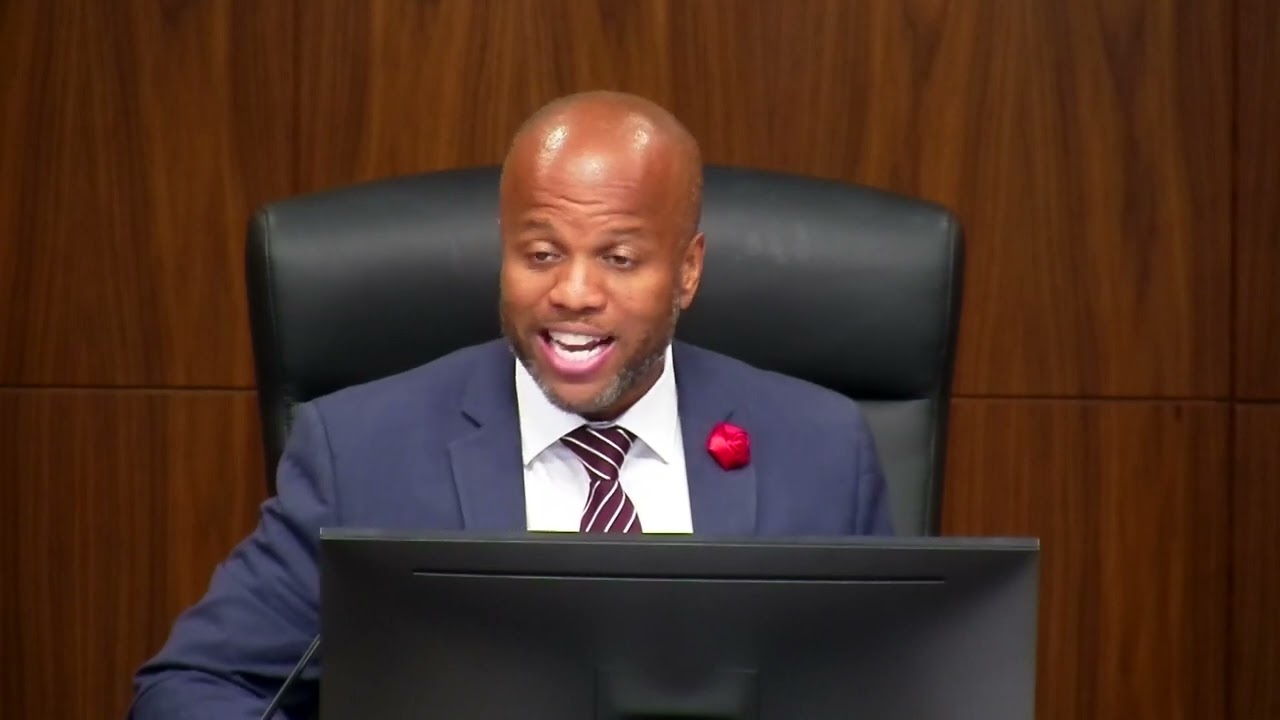
Tempe advances downtown streetscape with Option A design, $7.9M Mill Avenue green infrastructure improvements
Tempe City Council work study session featuring downtown infrastructure improvements prioritizing pedestrian amenities, multi-modal transportation demand management initiative, post-COVID tourism recovery metrics, and initial $1.3B capital improvements program with strong council consensus on enhancement priorities.
Tempe Council Firmly Backs Pedestrian-Centric Downtown Refresh, Commits to Option A Streetscape and Mill Avenue Green Infrastructure
Downtown Tempe is at an inflection point. After years of growth in hotel development, tourism, and special events, the City Council on March 24, 2022 signaled its readiness to aggressively upgrade the aging streetscape and infrastructure that serves the downtown core—but only if that work prioritizes pedestrians, shade, trees, and public life over vehicle throughput. In a rare show of consensus, council members rejected lower-amenity design alternatives and directed staff to advance a more ambitious vision for Fifth Street and Mill Avenue, including silva cell green infrastructure, engineered shade structures at intersections, and protected pedestrian amenities.
The meeting, a work study session at the Harry E. Mitchell Government Center, focused heavily on downtown infrastructure improvements. Marilyn DeRosa, the city's Transportation and Engineering Director, presented three design options for the Fifth Street streetscape—originally framed in 2018 as a trade-off between pedestrian friendliness (Option A), vehicle traffic management (Option B), and vehicle capacity expansion (Option C). At the time, the city had chosen a balanced approach. But the world has changed, DeRosa noted, and so has the council's thinking on climate, shade, and public space.
Key Speeches
"I'm just wondering what we can do to move this up in the proposal and also work with the City of Scottsdale to move them forward." — Mayor Corey D Woods, regarding the Roosevelt Storm Drain project (ranked #11 in the CIP, now to be accelerated)
"I really like option A. I like that because, with the turning and not turning—that's what you're asking?... I would like to see the city the complete city, and every time we make adjustments to our streets, to really be looking at protected bike lanes." — Councilmember Arlene Chin, on Fifth Street design and safety priorities
"No more palm trees. We know palm trees are not even considered to provide shade, and there's also higher maintenance and operation costs. I'd like to see option A." — Councilmember Berdetta Hodge, on tree canopy and species selection
"The downtown area and frankly just Tempe from a tourism standpoint is really rapidly changing. We keep talking about frankly the evolution of our downtown and the entire community. I think that's a story that we're all going to have to tell." — Councilmember Randy Keating, on the need to rebrand Tempe beyond "student town" perception
Timeline
Downtown Streetscape & Infrastructure Item (3C)
- Staff presentation: Marilyn DeRosa reviewed original 2018 design concepts (Options A, B, C) for Fifth Street (Farmer to College); explained that Option A maximized pedestrian space, shade/tree canopy, and parking but required removal of some left-turn movements; Options B and C retained vehicle capacity but with fewer amenities.
- Design options comparison: Option A featured widest sidewalks, most parking, most landscape and tree canopy; Option C added right-hand turn pockets and vehicle capacity at cost of pedestrian amenities.
- Council discussion: Five council members (Randy Keating, Navarro, Jennifer Adams, Arredondo Savage, Berdetta Hodge, Arlene Chin, Cubie) each spoke in favor of Option A or something "more like A"; emphasis on trees, shade, protected bike lanes, intersection art/stamped treatment, brick ribbon homage, and safety for cyclists and pedestrians.
- Mill Avenue improvements: $7.9M over two years proposed; design includes festoon lighting on Fourth/Mill and Sixth/Mill, engineered shade structures at corners, silva cell green infrastructure to improve tree health, brick ribbon sidewalk treatment (replacing full brick pattern), and intersection treatments; phased construction coordinated with electrical/irrigation repairs.
- Directional votes: No formal vote; council consensus to proceed with design closer to Option A and to advance Mill Avenue improvements. Randy Keating and Councilmember Arredondo Savage requested exploration of pedestrian scrambles at Fifth/Mill and Rio Salado/Mill intersections.
Roosevelt Storm Drain Project Acceleration
- Public comment: Darlene Justice (North Tempe Neighborhood Association) urged acceleration of Roosevelt Storm Drain project (ranked #11 in 5-year CIP), noting it benefits both Tempe and Scottsdale and has been delayed for years; flooding on Fillmore Street is the "#1 priority in Tempe to have it mitigated."
- Staff response: Mark Day (Budget Director) identified the project as line item #11; Tom Dunsing confirmed that Tempe, Scottsdale, and Maricopa County share funding (Tempe 25%, County 50%, Scottsdale 25%).
- Council direction: Corey D Woods asked if the project could be moved up. Dunsing replied that if Scottsdale and the County agree, staff can advance Scottsdale and County funding one year earlier, allowing design to begin summer 2023 instead of the scheduled timeline.
- Outcome: Council consensus to proceed with acceleration pending partner agreement.
Opposition
None formally organized. Public commenters (Darlene Justice, Amy Douglas) supported the downtown improvements and cemetery restoration, not opposed them.
Support
- Public comment (2 speakers): Amy Douglas (Tempe Historic Preservation Foundation) requested city partnership to restore W Butte Cemetery landscaping and repair grave markers, with funding from a needs assessment by Logan Simpson. Darlene Justice (North Tempe Neighborhood Association) strongly concurred and urged acceleration of Roosevelt Storm Drain project.
- Council support (unanimous): All seven council members spoke in favor of downtown improvements, with six explicitly endorsing Option A or "more like A" for Fifth Street. Comments focused on trees, shade, maintenance quality, pedestrian safety, protected bike lanes, and visual coordination of plantings.
- Key themes:
- Desire to increase shade and tree canopy beyond current plan
- Commitment to lower-maintenance, high-visibility materials (avoiding chipped/worn green paint on bike lanes, brown palm fronds)
- Support for green infrastructure (silva cells, stormwater integration)
- Need to coordinate tree species and design for visual cohesion
- Emphasis on protected/buffered bike lanes across all projects
- Agreement that downtown "looks tired" and needs aesthetic refresh to match new hotels and events
- Concern about maintenance budgets to sustain improvements long-term
Project Details
- Case number: Not applicable (work study item, not a development proposal)
- Applicant / designer: City of Tempe, Engineering and Transportation Department, in collaboration with Downtown Tempe Authority, merchants, and consultant team
- Location / address: Fifth Street (Farmer to College); Mill Avenue (Rio Salado to University)
- Current conditions: Fifth Street 2018 final design prioritized vehicle capacity; Mill Avenue experiencing deferred electrical and irrigation maintenance, aging brick sidewalks, insufficient shade, deteriorating ficus trees
- Proposed improvements:
- Fifth Street: Option A-style design with expanded pedestrian space, increased tree canopy (species TBD), shade structures at intersections, stamped/artistic pavement treatment at key crossings, protected bike lanes, increased on-street parking, possible pedestrian scrambles at Fifth/Mill
- Mill Avenue: Festoon lighting (Fourth and Sixth), engineered shade canopies at intersections, silva cell green infrastructure (requires sidewalk replacement), brick ribbon sidewalk treatment (retaining bricks as design accent rather than full pattern), phased construction to coordinate with electrical/irrigation upgrades, intersection art/stamped treatments, possible scramble at Rio Salado/Mill
- Budget: $7.9M over two years (FY23-24) for Mill Avenue improvements, included in initial recommended CIP; Fifth Street funding in long-term CIP, construction scheduled to begin summer 2023
- Timeline: Mill Avenue design and phasing planning to begin next fiscal year; Fifth Street design direction due from staff at future work study; both projects to launch construction phases in coming years
Vote Breakdown
No formal votes taken. This was a work study session in which council provided directional guidance. No individual roll-call votes were recorded; consensus expressed through council member comments in support of Option A-style improvements and mill avenue advancement.
Outcome & Next Steps
Staff directed to:
- Reconsider Fifth Street streetscape design to align with Option A vision (maximum shade, tree canopy, pedestrian space) rather than prior balanced approach
- Coordinate with Transportation Director Shelly (implied: Shelly Seiler) and Richard Atkins (City Arborist) on tree species palette and silva cell green infrastructure for Fifth and Mill
- Explore feasibility of pedestrian scrambles at Fifth/Mill and Rio Salado/Mill intersections
- Finalize Mill Avenue improvement phasing and electrical/irrigation repair coordination
- Bring tree palette and landscape design plan back to council before Fifth Street construction
- Accelerate Roosevelt Storm Drain project by advancing partner funding (pending Scottsdale and Maricopa County agreement); design to begin summer 2023 instead of scheduled timeline
- Bring W Butte Cemetery restoration project proposal to May 5 work study for discussion of potential CIP inclusion
Controversies & Context
No significant controversies emerged, but several design tensions were evident:
-
Auto capacity vs. pedestrian amenity: Option C retained all existing left-turn movements and added right-hand turn pockets; Option A removed some turns to create space for trees and sidewalk. Council clearly prioritized pedestrian space and climate resilience over vehicle throughput, a notable shift from 2018 consensus.
-
Tree species and maintenance: Councilmember Navarro urged retention of ficus trees on Mill Avenue and cautioned against "random trees" without visual coordination. Berdetta Hodge explicitly rejected palm trees due to maintenance costs and minimal shade. Staff acknowledged need to coordinate species.
-
Deferred maintenance legacy: The conversation reflected lingering pain from prior years of deferred maintenance that left downtown "tired" and deteriorated. Council members emphasized need to budget for ongoing maintenance of new improvements, not just initial capital.
-
Green infrastructure vs. timeline: Silva cells require sidewalk removal and replacement, potentially delaying projects; staff noted phasing can integrate electrical/irrigation and green infrastructure work simultaneously to minimize disruption.
-
Pedestrian scrambles: Randy Keating requested study of scrambles at Fifth/Mill; Councilmember Arredondo Savage added Rio Salado/Mill. Staff (Shelly Seiler, implied) was receptive but noted scrambles increase pedestrian crossing time and may reduce vehicle throughput. Council expressed willingness to trade vehicle movement for pedestrian safety.
-
Branded campaign to promote work: Budget staff noted a "branding" initiative is underway to publicize the CIP investments across tempe, as community may not see or recognize infrastructure work being done.
Duration
- Downtown infrastructure item (3C): ~60 minutes of presentation and council discussion
- Total meeting: ~4 hours 45 minutes (4:17 p.m. start; meeting ended ~9 p.m.)
Other Notable Items
Tempe Tourism Recovery & Marketing Update (Item 3A)
Michael Martin, interim president and CEO of Tempe Tourism (Tempe Convention & Visitors Bureau), presented post-COVID tourism metrics showing strong recovery: 40–48% increase in room nights (January–February 2022 vs. prior year); new hotel development (Vibe, Omni, West, Canopy, Hyatt Place); shift to leisure/drive markets; $12 return per tourism dollar spent; new Datify analytics platform; dashboard tying tourism to city strategic priorities. Council appreciated social media outreach (Instagram, TikTok stories promoting "things to do this weekend"). New full-service hotels signal market maturation and higher pricing power. Michael highlighted team Tempe partnerships (chamber, DTA, economic development) and local-first initiatives (Local First Arizona marketplace, dta mural at Fifth/Mill, dta project at corner Mill/Rio Salado). Council noted hotels and infrastructure improvements driving perception shift away from "student-only" destination narrative. No significant criticism; positive reception and recognition of work navigating pandemic.
Transportation Demand Management, Transportation Management Association & Mobility Hubs (Item 3B)
Marilyn DeRosa, Robert Yaves (Transportation Planner), Shannon Qatari (Lead Consultant), Jim Townsend (TDM Consultant), and Sasha Jabanovic (Mobility Hubs Consultant, remote) presented three-part initiative to reduce single-occupancy vehicle trips and greenhouse gas emissions. TDM = strategies (bike parking, scooters, curb management, trip planning info) to make existing transit more convenient. TMA = voluntary public-private partnership (external to city, not regulatory) to pool resources for commuter programs. Mobility Hubs = physical locations combining transit, bike share, scooter docks, shade, trip planning, amenities—designed with equity focus on underserved neighborhoods (low income, high poverty, low vehicle per household). Extensive stakeholder outreach showed residents want TDM/TMA/hubs to bridge gap between "top-tier" multimodal infrastructure and convenience/reliability. Council consensus to approve continued development; supplemental funding request for TMA startup. Councilmember Cubie raised concern about over-reliance on car-share in hubs; staff clarified bikes/scooters are primary focus, car-share a supplementary option. She also urged metrics for vehicle miles traveled (VMT) reduction; staff confirmed climate action plan requires VMT tracking. Cubie urged development agreements to include TMA membership for large developments (especially Rio Salado), particularly in high-congestion areas; staff noted voluntary model is preferred but will use "carrot" incentives (e.g., parking reductions for development partners). Councilmember Arredondo Savage emphasized need for education/culture change, particularly in schools, to shift away from driving; praised "freedom" of mobility hubs. Staff indicated updated Transportation Master Plan will feature TDM/TMA heavily.
Initial Recommended Five-Year Capital Improvement Program ($1.3B CIP, $437M geo-bond funded) & Acceleration Strategies (Items 3D & presentations by Tom Dunsing, Mark Day, Wydell Holmes)
Extensive presentation of 150 proposed projects across water, wastewater, parks, public safety, streets, IT infrastructure. Community survey (494 responses) ranked top priorities: homeless services (public and youth), city neighborhood parks, tree canopy/shade, workforce/affordable housing. Notable inclusions: $90M Tempe Municipal Operations Center (TMOK) consolidating traffic ops and priest yard (phases 1–2, FY22–24); $266M in facilities (Hall, Clark Park, fire stations, police substation, community center, permanent supportive housing); $7.9M Mill Avenue improvements (above); $39.9M ARPA funding compressed and maintained; double the downtown improvements funding vs. February request. Nearly all 150 projects in "green" (recommended) or "red" (not recommended); very few in yellow (undecided), a mark of careful budget triage. Wydell Holmes presented "acceleration models" tying CIP to 13 council performance measures: pavement quality index (target 70 by 2028, currently 60; focus on residential streets), homelessness (response, outreach, shelter expansion; point-in-time count down 3% in Tempe vs. +35% county-wide), tree canopy (25% by 2040, using American Forestry equity score to prioritize underserved neighborhoods), carbon neutrality (streetcar expansion, green buildings, EV fleet conversion, resilient energy hubs), transit satisfaction (bus rapid transit, 10–15 min pilot routes, three shelter additions per year—though Cubie urged acceleration beyond 30/year), housing inventory, right-of-way landscape maintenance (aligned with community satisfaction survey), traffic delay reduction (signal timing, infrastructure, active traffic management). Council praised budget team for securing green status for nearly all projects and leveraging ARPA/grants effectively. Councilmember Navarro and Arredondo Savage emphasized need to balance acceleration with maintenance spending to avoid repeat of deferred maintenance crisis; Arredondo Savage flagged tennis facility (year 24) and requested offline discussion of maintenance allocation policy. Consensus to bring bus shelter shade acceleration back for April 21 discussion (Cubie noted 3/year current plan vs. 30/year goal; 400 total needed = 13 years to target at current pace). Councilmember Garland requested Vision Zero infrastructure; approved. Roosevelt Storm Drain acceleration and Double Butte Cemetery restoration (May 5 work study) addressed earlier.
Jenny Norton Day Proclamation (Item 1)
Mayor Corey D Woods read proclamation declaring April 7, 2022 as Jenny Norton Day, honoring 24 years of service on city boards and advocacy for social, economic, and racial justice, human services, affordable housing, and community inclusion. Councilmember Cubie acknowledged close friendship. Unanimous adoption and applause; not a vote but ceremonial recognition.