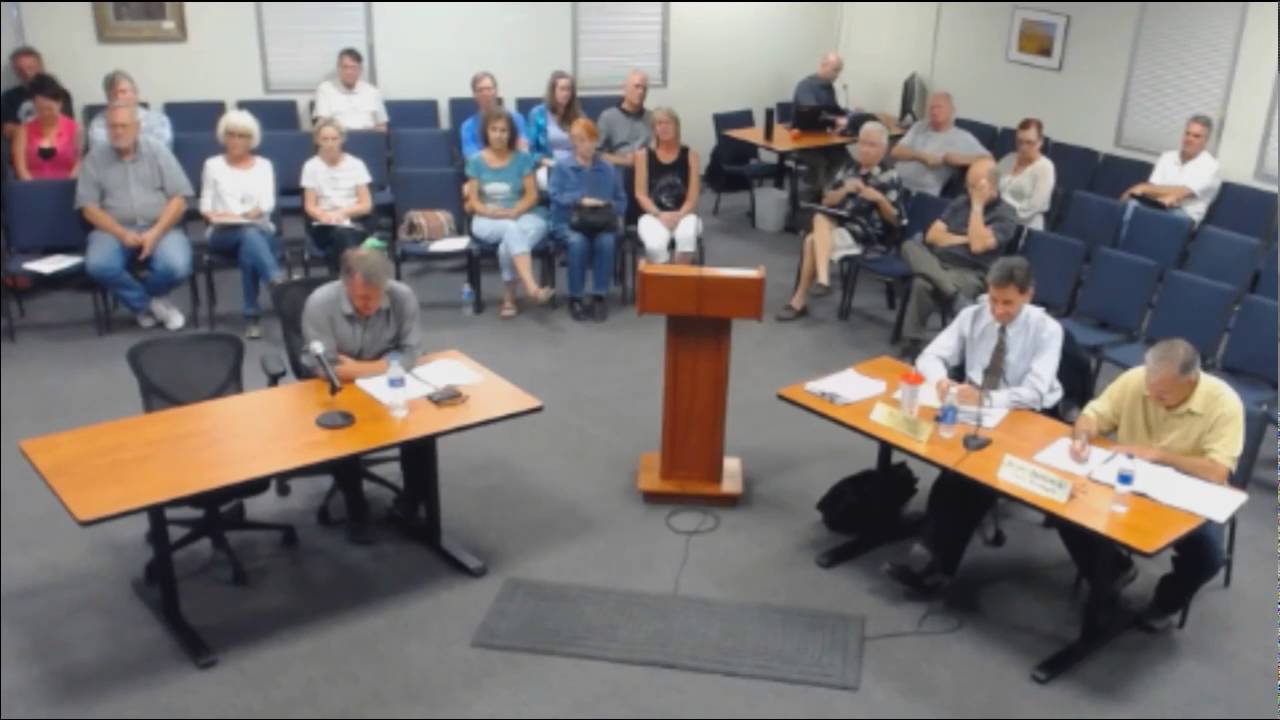
Cave Creek unanimously adopts transfer-of-development-rights ordinance, $60M FY2017 budget
Cave Creek council voted unanimously on transfer of development rights ordinance and budget despite public conflict of interest allegations against Councilman Bunch and citizen concerns about lame duck decision-making.
Cave Creek Council Approves Transfer of Development Rights and Budget Amid Conflict-of-Interest Challenge and "Lame Duck" Criticism
Cave Creek's town council unanimously passed the Transfer of Development Rights ordinance (O-2016-06) and adopted the FY2017 budget (R-2016-14) on July 18, 2016, but not before confronting a formal conflict-of-interest complaint against Councilman Ernie Bunch and sharp public accusations that departing council members were rushing transformative decisions without proper deliberation. The ordinance establishes a mitigation-banking mechanism allowing commercial property owners to acquire development rights from conservation areas to satisfy undisturbed-land requirements—a cornerstone of Cave Creek's effort to preserve Brener Hill and accommodate commercial expansion. The vote was 7–0, but citizen Anna Marcelo's complaint and threat of a referendum highlighted growing tension over governance transparency and the pace of environmental policy-making.
Conflict of Interest and the Bunch Question
Anna Marcelo, citing Arizona Revised Statute 38-503, filed a letter with the town attorney naming Councilman Bunch as having a material financial conflict. Marcelo stated that Bunch owns a house on five acres at 6440 North Lenda Lane with property that "touches actually touches on the Western border" of the proposed open space in the Willow Springs estate subdivision. She argued that the transfer-of-development-rights ordinance would have a material effect on Bunch's property value by discouraging adjacent development and preserving the character of the area.
"It is reasonably foreseeable that a decision vote tonight will have a material Financial effect in market value of his property." — Anna Marcelo, public commenter
Bunch responded directly, denying the complaint's factual premises and questioning Marcelo's math on the distance between his property and the open space:
"I represent the town… my question was why in the world would I do that with more oversight from the town of Cave Creek if they wanted to build anything there would that be smart uh the lady has for years um made accusations of this nature and I don't believe they're viable." — Councilman Ernie Bunch
Town Attorney Timothy Ota issued an opinion clearing Bunch to vote. Ota framed the ordinance as a text amendment rather than a property-specific action, meaning it would not create a conflict unless it dealt with Bunch's particular parcel. He also noted a statutory safe harbor: if at least ten property owners were similarly situated, no conflict existed.
"This is simply a text Amendment it doesn't relate to any specific property at all... if the law were to prohibit that because a text Amendment might affect one of your properties I suspect you're all property owners in the town then you'd all be conflicted." — Timothy Ota, Town Attorney
The council proceeded with the vote, and Bunch voted yes.
The "Lame Duck" and "Guinea Pig" Critique
Marcelo raised a second concern that resonated throughout the evening: that outgoing council members—several of whom did not seek reelection—were making binding decisions about the town's future without adequate public input and review. She referenced past council actions (the 2008 annexation agreement, the revitalization district, the water-company acquisition) as experiments that made citizens "guinea pigs" and invited further scrutiny.
"You are lame duck and you are proposing a second reading to an ordinance that will totally affect this whole town and our quality of life and once again making us guinea pigs I personally will take this to the citizens." — Anna Marcelo, public commenter
Marcelo also questioned the financial legacy of the 2008 annexation agreement, asserting the town incurred $60 million in debt by purchasing a "dilapidated water company" and building a water-sewer plant that most residents would never use. She asked whether the town could recoup the $19.2 million spent on acquisition if the plant had cost only $4–5 million at the time. Town staff clarified the current debt stood at approximately $46 million and that these assets now belonged to the town.
The Transfer of Development Rights Ordinance
The ordinance creates a mechanism whereby commercial properties can acquire "development rights" from designated "sending" parcels (primarily undisturbed or conservation-easement land like Brener Hill) to satisfy the town's stringent landscaped and undisturbed-area requirements. Rather than forcing a developer to meet onerous on-site requirements or abandon a project, the ordinance permits the town to credit a commercial parcel with off-site conservation, allowing for greater flexibility in parking, building footprint, or water use—while the receiving property remains protected.
Town Manager Ian Sims explained the ordinance's practical utility:
"There would be a mechanism in place whereby commercial properties anywhere in town that would require undisturbed area for our ordinance could in fact uh if they did not have the ability to have that undisturbed area either the property was completely Disturbed or this would give some leeway for achieving more natural retention on site which the town prefers to see." — Ian Sims, Town Manager
The ordinance defines "receiving areas" as commercially zoned lands within town limits and "sending areas" as conservation or easement lands. Councilman Bunch asked Sims to clarify concerns raised on a local blog about whether sending areas should be limited to commercial-only properties. Sims confirmed the designation was appropriate because commercial properties were the primary users of the mechanism.
Councilman McGuire sought clarity on the ordinance's scope:
"What we're voting on tonight as I understand is a methodology that allows flexibility to the council we're not voting on any particular piece of property is that correct Mr regard?" — Councilman McGuire
Town staff confirmed the ordinance does not waive zoning requirements or notice-and-hearing protections; it simply creates a pathway to address undisturbed-area compliance that the Planning Commission and Council must approve on a case-by-case basis.
Support: Buffalo Chip and Open Space Advocacy
Buffalo Chip owner Ian Sims testified in favor, noting that the ordinance had enabled his commercial expansion. Sims credited the council with helping him rebuild the Buffalo Chip, though he acknowledged the process was not easy or cost-free.
"I know Mr corwell just did but if you do it again for me I'd really appreciate it… I kind of went Kicking and Screaming into a lot of new areas but I did it because I trust this Council and I think that you represent the people as a whole and so that special interests don't play as big a part in some of these decisions." — Ian Sims, Buffalo Chip owner
Sims praised the Brener Hill conservation easement, which he had granted to the town on his residential property. He spoke to the ordinance's broader value in avoiding residential sprawl:
"I would applaud you if you would do the same with the rest of brener Hill I just think that this Council has the wisdom and the foresight to know that if we as a commercial property uh can do something better for the town hide cars off the roadway provide more parking um not use our precious Water Resources for homes uh not have me have to deal with noise complaints dust complaints bull smell complaints uh from my business that is adjacent to that area I would love it so I support it." — Ian Sims added that Buffalo Chip's expansion was on track for October 1, 2016 completion, with new women's restrooms ("ten of them," he quipped) a major improvement addressing past complaints about shared facilities.
Council Defense of Open Space Investment and Long-Term Governance
Vice Mayor Lamar delivered an extended defense of the council's environmental and fiscal stewardship, invoking the 2008 annexation agreement and the water-company acquisition as necessary investments in town infrastructure and character preservation.
"If you're going to lead you have to have some foresight and you also have to make some Investments… if you were smart and you bought a good home in a right location and you had a mortgage on that home appreciates some value and people would say that's a good investment and that's what we've done with respect to the water company… we learned that lesson in 2008 because there were some of us on Town Council when the big recession hit and everybody was just about to go under." — Vice Mayor Lamar also praised the transfer-of-development-rights mechanism as a "win-win" that provided relief to commercial developers while preserving Brener Hill as a scenic backdrop to town character.
"This is a way that when you have close calls when you have which Ian runs across which the Planning Commission and our staff runs across all the time you have close calls uh we need a little bit more parking we a little bit room we've got an odd configuration they need a little bit of relief… the overarching benefit is that brener Hill is beautiful." — Vice Mayor Lamar
Mayor Francia echoed Lamar's points, defending the annexation agreement as a strategic bulwark against Phoenix expansion and subdivision sprawl:
"The purpose of the annexation agreement was to keep uh Phoenix from annexing that land and surrounding us with subdivisions which I guess some of us would love to see but that's not been what this community wanted in our general in our general plan." — Mayor Francia
Council Remarks on the Ordinance Vote
Councilwoman Clancy voiced support:
"Well I'm not sure if I have anything to say I think it was clearly stated it's very transparent and it's good for the town I agree with my fellow councilman." — Councilwoman Clancy
Councilman Ford noted that several past referenda on council decisions had failed by a two-to-one margin, suggesting public support for council judgment:
"I believe that this is overall benefit to the nature of what Cave Creek is to keep that heill from being developed and understand that um the threat to take it to the citizens means a referendum and also understand the last several referendums that have gone against the decisions of of this Council have failed by a two to one margin." — Councilman Ford
Councilman Esser, a self-described "lame duck," defended his vote:
"I guess I have a hard time understanding I only heard certain speakers had that had issues with this but I think it's a really good opportunity and I just want to make sure that as a lame duck I get my point out there." — Councilman Esser
All council members voted yes; the ordinance passed 7–0.
Planning Commission Appointment
The council unanimously appointed Peter Ronnon to fill a Planning Commission vacancy. Ronnon, a 30+ year Cave Creek resident with 35 years of commercial real estate experience and prior service as a five-time planning and zoning commissioner (approximately 12–13 years total), was elected unanimously over Klaus Opps, whose background in Indiana farmland preservation and Amish community development-rights programs was also impressive but ultimately less favored by the council.
Ronnon acknowledged his prior resignation from the commission and expressed gratitude for his colleagues' support:
"I've been a uh resident for over 30 years at Cave Creek I've had family live here for over years I uh been in the commercial real estate business for 35 years understand zoning land use um I think I'm a five-time previous um planning zoning commissioner um probably 12 or 13 years." — Peter Ronnon
Water Allocation Work Session
The council unanimously voted to schedule a work session in September to establish a policy for allocating Central Arizona Project (CAP) water between the Cave Creek and Desert Hills water systems. Town Manager Sims noted that approximately 65 percent of Desert Hills' water supply comes from the CAP allocation and that the town faced uncertainty about the proper allocation amid rising development pressure. He cited pending requests for a 54-home "55-plus" subdivision in Desert Hills, the need for clarification on 100-year assured supply claims, and the three-unit subdivision rule discrepancy between county (five units) and town (three units) standards.
"It's unclear at best or just solely cap allocation goes to Cave Creek um right now Desert Hills approximately 65% of the water they receive is Cap allocation um concerned as we have we go into this Water Crisis as people are concerned about we need to decide how that water is going to be allocated." — Town Manager Sims
Vice Mayor Lamar moved to schedule the work session and emphasized the need for policy guidance:
"I think it's really important that we do this it's a hard situ situation for the town manager to be in and since we operate as both a council and over the water company I think it's important that we have a discussion among ourselves in a group to talk about" — Vice Mayor Lamar
The motion passed 7–0.
Open Space Advisory Committee
The council unanimously approved Resolution R-2016-15 establishing a formal Open Space Advisory Committee. Town Manager Sims explained that the committee would offer a more structured framework than the previous ad hoc arrangement and would remain flexible to council guidance via resolution rather than the more cumbersome ordinance process.
"I didn't choose to list it by ordinance because I thought that was a little more cumbersome I wanted the committee to be flexible to the Comm to the Town Council so they can shape it and guide it as a c fit." — Town Manager Sims
Vice Mayor Lamar praised citizen involvement:
"I believe and over the 30 years plus that I've lived here that uh the citizens of this town are vitally interested in and broadly support our open space efforts." — Vice Mayor Lamar
The resolution passed 7–0.
FY2017 Budget Adoption
The council unanimously approved Resolution R-2016-14, the FY2017 budget, after an extended workshop process. Town staff noted that the only change from the tentative budget was a $10,000 addition to the council's community grants allocation.
Marcelo again challenged the council during public comment, referencing the $60 million debt incurred through the annexation agreement. Town staff clarified that the debt had been reduced to approximately $46 million and that the water company and sewer plant were now town assets that had proven their value through the 2008 recession, when the town met all obligations without default.
Mayor Francia mounted a sweeping defense of long-term fiscal stewardship, invoking the wisdom of infrastructure investment and the town's survival through the financial crisis:
"We have to be able to develop our economic base or we're going to survive and we learned that lesson in 2008 because there were some of us on Town Council when the big recession hit and everybody was just about to go under and we realized that we had to diversify and we had to have infrastructure and we had to invest and it took a lot of effort and a lot of time and those institutions that were created are are paying pay off and we paid every Bill we did through the recession we're one of the few communities that did we've never missed a payment we've never even come close." — Mayor Francia
Vice Mayor Lamar praised the town's financial director and manager:
"This is a very tight budget and it is a good budget and I want to compliment our financial director who's worked very hard and brought with us at every step of the way you know budget summaries that we could understand that we could see where the money was coming from." — Vice Mayor Lamar
Councilman Ford, citing 25 years of service as a departing "lame duck," called it the best budget he had ever seen:
"After 25 years and it's the best budget that I've ever seen it's easy for Reed even a dumbbell like me and that goes to the town manager financing is his strengths." — Councilman Ford
The budget passed unanimously 7–0.
Timeline
- Public announcements: Sheriff's back-to-school drive and recognition of town clerk Carri Dirach as 2016 Arizona Municipal Clerk of the Year.
- Anna Marcelo complaint filing: Read into the record at the outset, citing ARS 38-503 conflict of interest regarding Councilman Bunch's property contiguity to proposed open space.
- Town Attorney opinion: Timothy Ota opined no conflict exists because O-2016-06 is a text amendment, not a property-specific action.
- Councilman Bunch response: Denied allegations, questioned distance calculations, noted prior accusations by Marcelo.
- Council discussion: Vice Mayor Lamar and Mayor Francia defended open-space investment and fiscal stewardship; Councilman McGuire sought clarification on ordinance scope.
- Planning Commission appointment: Klaus Opps and Peter Ronnon both presented; Ronnon appointed 7–0.
- Water allocation work session: Scheduled for September; passed 7–0.
- Open Space Advisory Committee (R-2016-15): Approved 7–0.
- Transfer of Development Rights ordinance (O-2016-06, second reading): Approved 7–0.
- FY2017 budget (R-2016-14): Approved 7–0.
- Meeting adjournment: No final vote count recorded for procedural motion.
Opposition
Number of speakers against: Anna Marcelo (2 extended statements).
Main concerns:
- Councilman Bunch's property contiguity to proposed open space creates a material financial conflict under ARS 38-503.
- The ordinance is being rushed through without adequate citizen review and input.
- Departing ("lame duck") council members are making binding decisions without sufficient accountability to future residents.
- The town's past investments (annexation agreement, water-company acquisition, revitalization district) have been expensive experiments that made citizens "guinea pigs."
- The ordinance will enable mitigation banking that indirectly supports open-space expansion at high fiscal cost.
- Citizens deserve a referendum to challenge council decisions.
- The town's $60 million debt (later corrected to $46 million) on water and sewer assets was incurred without genuine community benefit.
Most compelling arguments: Marcelo's invocation of ARS 38-503 and the statutory conflict-of-interest standard posed a legal question that required attorney opinion. Her reference to prior council decisions (annexation, revitalization district) as untested experiments resonated with concerns about governance overreach. The "lame duck" critique—that outgoing members were making decisions they would not live with—tapped into a real tension in local democracy.
Organized groups: None identified; Marcelo acted as an individual and threatened a citizen referendum.
Support
Number of speakers in favor: Ian Sims (Buffalo Chip owner) and all seven council members.
Main concerns:
- The ordinance provides necessary flexibility for commercial properties to meet stringent landscaped and undisturbed-area requirements without sacrificing project viability.
- It enables the preservation of Brener Hill and other scenic areas as town character assets.
- It avoids forcing commercial projects into abandonment or compromise on traffic, parking, and aesthetic grounds.
- The ordinance is a text amendment, not a property-specific action, and therefore does not create individual conflicts under ARS 38-503.
- Long-term infrastructure investment (water company, sewer plant, annexation agreement) has proven essential to town survival and prosperity, particularly during the 2008 recession.
- Open-space preservation is consistent with the town's general plan and a majority-supported vision of rural character.
- Past referenda on council decisions have failed, indicating public trust in council judgment.
Most compelling arguments: Ian Sims' testimony as a commercial property owner directly benefiting from the ordinance—and his praise for council support through a difficult expansion—provided credible firsthand validation. Vice Mayor Lamar and Mayor Francia's defense of long-term fiscal stewardship and the annexation agreement as a strategic bulwark against sprawl reframed the "guinea pig" critique as necessary leadership. The town attorney's legal opinion on the Bunch conflict, while legally narrow, provided a formal basis for proceeding.
Project Details
Ordinance:
- Case number / ordinance: O-2016-06, Transfer of Development Rights ordinance
- Applicant / Town: Town of Cave Creek
- Attorney: Timothy Ota, Town Attorney
- Zoning impact: Text amendment establishing sending and receiving areas for development-rights transfers; no change to underlying zoning
- Mechanism: Commercial properties may acquire "development rights" from designated sending parcels (conservation or easement lands) to satisfy undisturbed-area requirements; Planning Commission and Council approval required on case-by-case basis
- Receiving areas: Commercially zoned lands within town limits
- Sending areas: Lands in conservation easements or designated open space (e.g., Brener Hill)
- Key project supported: Buffalo Chip expansion (completion target October 1, 2016) and Brener Hill open-space preservation
Buffalo Chip project (related):
- Owner / operator: Ian Sims
- Location: Brener Hill area
- Scope: Commercial venue expansion with new restrooms (specifically noted: women's restrooms)
- Conservation easement: Owner has granted easement on residential portion of property
- Completion target: October 1, 2016
Planning Commission appointment:
- Appointed: Peter Ronnon
- Residence: 30+ years Cave Creek resident, Saddle Mountain area
- Background: 35 years commercial real estate; five-time planning/zoning commissioner (12–13 years service)
- Competitor: Klaus Opps (Indiana land-use background, farmland preservation, Amish development-rights experience)
Water allocation work session:
- Issue: Uncertainty over CAP water allocation between Cave Creek and Desert Hills water systems
- Context: Desert Hills receives ~65% of water from CAP allocation; pending development requests (54-home "55-plus" subdivision); three-unit vs. five-unit subdivision thresholds
- Scheduled: September 2016 (after primary elections)
Vote Breakdown
Ordinance O-2016-06 (Transfer of Development Rights, second reading):
- Final: 7–0, approved unanimously
- Yes: All seven council members (names not individually called in transcript)
- No: None
- Abstentions: None
Resolution R-2016-14 (FY2017 Budget):
- Final: 7–0, approved unanimously
- Individual votes per transcript roll call:
- Councilman Esser: Yes
- Councilwoman Clancy: Yes
- Vice Mayor Lamar: Yes
- Councilman McGuire: Yes
- Councilman Ford: Yes
- Councilman Bunch: Yes
- Mayor Francia: Yes
Planning Commission appointment (Peter Ronnon):
- Final: 7–0, appointed unanimously
- Individual votes per transcript roll call:
- Councilman Esser: Yes, based on new information
- Councilman Bunch: Yes
- Councilwoman Clancy: Yes
- Vice Mayor Lamar: Yes
- Councilman McGuire: Yes
- Councilman Ford: Yes
- Mayor Francia: Yes
Resolution R-2016-15 (Open Space Advisory Committee):
- Final: 7–0, approved unanimously
- Names of voters: Not individually called in transcript
Water allocation work session:
- Final: 7–0, approved unanimously
- Names of voters: Not individually called in transcript
Consent agenda (liquor permit, meeting cancellations, minutes):
- Final: 7–0, approved unanimously
- Names of voters: Not individually called in transcript
Outcome & Next Steps
The Transfer of Development Rights ordinance (O-2016-06) was adopted on second reading and is now in effect. The mechanism allows commercial property owners to acquire development rights from conservation areas (sending parcels) to satisfy undisturbed-land requirements. The town will evaluate such transfers through the Planning Commission and Council approval process on a case-by-case basis. This ordinance directly supports the Buffalo Chip expansion (targeting October 1, 2016 completion) and Brener Hill open-space preservation.
Peter Ronnon was appointed to fill the Planning Commission vacancy and is immediately available for service.
A water-allocation policy work session is scheduled for September 2016, after the primary elections, to establish town guidance on allocating CAP water between Cave Creek and Desert Hills water systems. This will address pending development requests and clarify the town's position on 100-year assured-supply claims.
The FY2017 budget (R-2016-14) was adopted with a total appropriation authority established in a prior resolution; the council approved the final expenditure plan with no additional spending authority beyond the limitation previously set.
The Open Space Advisory Committee (R-2016-15) is now formally established and will report to the town council on conservation and open-space initiatives.
Anna Marcelo threatened to initiate a citizen referendum on the Transfer of Development Rights ordinance. Such a referendum would require sufficient petition signatures and would place the ordinance on a special election ballot. The council noted that past referenda challenging council decisions have failed by a two-to-one margin.
Controversies & Context
Conflict-of-interest allegation: Anna Marcelo's complaint that Councilman Bunch's property ownership contiguous to the proposed Willow Springs open space created a material conflict under ARS 38-503 forced a legal opinion from the town attorney. Ota's ruling that the ordinance is a text amendment (not property-specific) and therefore does not trigger individual conflict rules allowed Bunch to vote, but the complaint exposed tension between the statute's intent and its application in a small town where many council members own property. Marcelo's assertion that past council members had similarly conflicted votes on annexation-related matters without recusal suggested a pattern of oversight or tolerance within the town.
"Lame duck" governance critique: Multiple speakers and council members acknowledged that several council members—including Vice Mayor Lamar, Councilmen Ford and Esser—were departing and not seeking reelection. Critics argued that outgoing members should not make binding decisions affecting future residents. The council responded that long-term fiscal stewardship and environmental policy require forward-looking decisions and that past referenda have vindicated council judgment. The tension reflects a real challenge in local democracy: how to balance continuity of policy with democratic accountability to a changing electorate.
Annexation agreement legacy: The 2008 annexation agreement between Cave Creek and the town of Phoenix remains controversial. The town incurred approximately $60 million in debt (now approximately $46 million) to acquire the Cave Creek Water Company and build a water-sewer plant serving the annexed area. Marcelo and others questioned whether these assets have justified their cost and whether the decision was truly necessary. The council framed the annexation as a strategic choice to prevent Phoenix from surrounding the town with subdivisions and as essential infrastructure investment that proved its value during the 2008 recession. This debate reflects deeper disagreement over growth, density, and environmental preservation.
Water scarcity and CAP allocation: The pending work session on water allocation underscores Arizona's chronic water-supply uncertainty. With Desert Hills receiving 65% of its supply from Central Arizona Project allocation and development pressure mounting, the town faces difficult choices about whether and how to accommodate growth. The council's need to establish a formal water-allocation policy suggests this issue will dominate governance in the near term.
Open-space mitigation banking novelty: While development-rights transfers are well-established in some jurisdictions (as Klaus Opps' testimony about Indiana farmland and Amish development-rights programs illustrated), the Transfer of Development Rights ordinance represents a relatively novel approach in Arizona. The mechanism ties together open-space preservation, commercial flexibility, and "mitigation banking" (the idea that off-site conservation can offset on-site development impacts). Some speakers flagged this as untested and questioned whether citizens had adequate time to evaluate it.
Duration
- This item (Transfer of Development Rights ordinance and related matters): Approximately 60–90 minutes combined (conflict-of-interest discussion, ordinance explanation, public comment, council debate, vote).
- Total meeting: Approximately 2.5–3 hours (including consent agenda, town manager report, water allocation work session, planning commission appointment, open space advisory committee, transfer of development rights, and budget adoption).
Other Notable Items
Sheriff's office update: Lieutenant Ryan Baranas announced the fifth annual back-to-school drive (July–September 12) collecting school supplies for less-fortunate children and thanked Cave Creek residents for ongoing support to law enforcement in light of recent officer fatalities nationally.
Town clerk recognition: Mayor Francia noted that Town Clerk Carri Dirach was voted 2016 Arizona Municipal Clerk of the Year by the Arizona Municipal Clerk's Association.