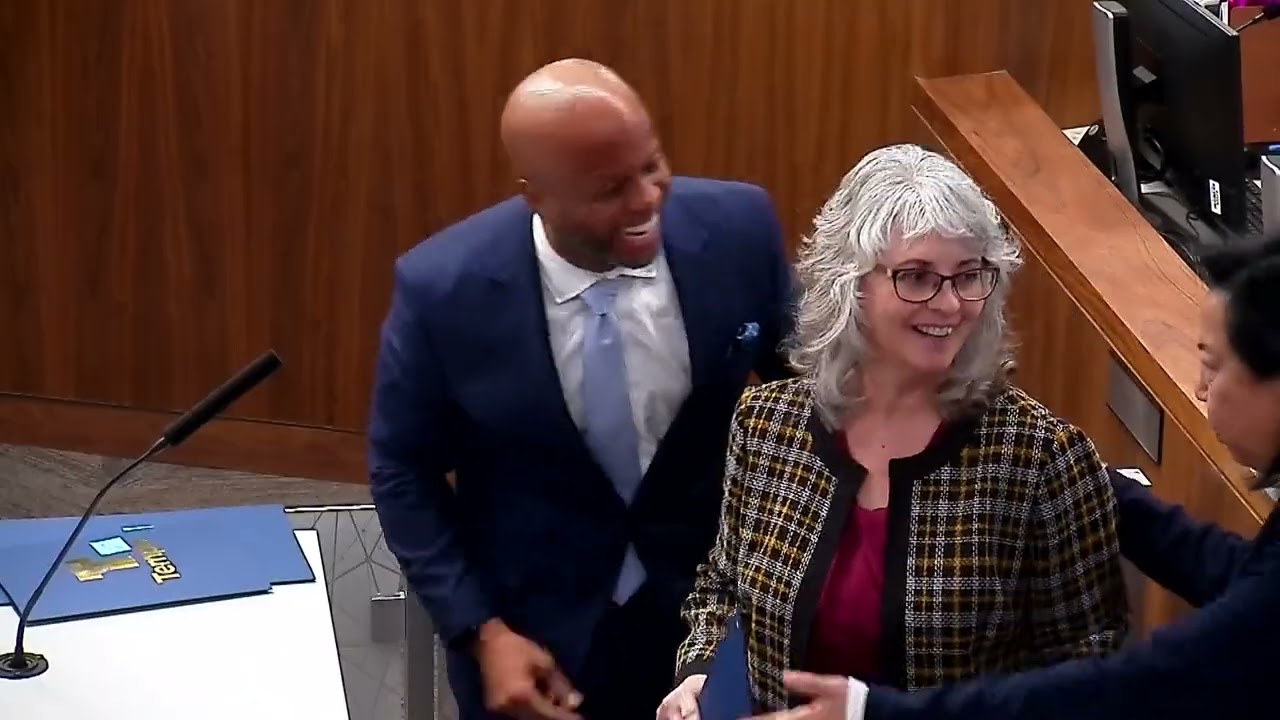
Tempe rejects South Pier referendum dispute amid accusations of unequal voter treatment standards
Tempe city council meeting featured significant controversy over South Pier development referendum process, with six public speakers expressing outrage at city's inconsistent treatment of citizen-initiated versus developer-initiated referendums, along with routine administrative approvals and staff recognition.
City Council Faces Accusations of Double Standard on South Pier Referendum as Democratic Accountability Row Intensifies
The Tempe City Council convened on February 3, 2023, amid extraordinary public outcry over what six speakers characterized as a deliberate contradiction: the city had fought in court to prevent voters from deciding the fate of the South Pier development at Tempe Town Lake—a fight it lost before the Arizona Court of Appeals—yet months later approved an identical referendum when the Arizona Coyotes developers requested one. The council did not vote on the matter, did not defend its actions, and left unresolved whether it would appeal the court's rejection to the Arizona Supreme Court. The meeting also included recognition of two departing city staff members and routine administrative approvals.
Key Speeches
"It is very upsetting that the city wasted so much taxpayer money fighting for its own borders in court to argue that they should have the only say and that they are not listening to almost 5 voters were signing that this petition. Tempe city council should respect the Democratic process listen to the voters and not pursue another appeal. Enough taxpayer money has been wasted. The South Pier project should be put on the ballot for the next general election." — Magdalena Acosta, citizen-organizer, Phoenix resident
"It's reprehensible that not only did the City of Tempe fight to thwart the will of Voters with ludicrous claims though the South Pier project could not be referred to voters but then mere months later turn around and made a deal with the coyotes developers to refer that project to voters. The city joined the developer in claiming their own form was somehow deficient an argument which the court of appeals has since rejected. Then the city changed their form before they asked the coyotes to file referendum. Why is the path forward for developers like a red carpet and it's so hard for City residents to have their voice heard?" — Morningstar Bloom, researcher, Worker Power organization, Los Angeles resident
"Frankly I am appalled at the city's actions. Nearly 5 000 Tempe voters signed a petition so that voters could decide whether the South Pier project was right for our city and then the City of Tempe then spent months and months fighting Us in court. I just don't I don't get it why are you guys fighting us? I really don't I don't understand. So now the Arizona court of appeals has ruled in our favor and the city says they're still deciding on whether to appeal to the Supreme Court. This is an absolute dumpster fire." — Mandy, Tempe resident
Timeline
- Initial petition drive: Citizens collected approximately 5,000 signatures on referendum petition opposing South Pier development.
- City litigation (past): City of Tempe challenged referendum petition in court, arguing the petition form was deficient and should not be allowed on the ballot.
- Court of Appeals ruling: Arizona Court of Appeals rejected the city's "deficient form" argument, ruling in favor of the petition's validity.
- Developer referendum (months later): After the court ruling, the city approved a referendum request from Arizona Coyotes developers for the identical South Pier project.
- Public comment (tonight): Six speakers addressed the council in the open-call public appearances portion of the meeting (item 6), all raising the double-standard complaint.
- City response: Corey D Woods and council members offered no verbal rebuttal; the city manager made no statement. Council moved on to other agenda items without discussion or vote on the referendum controversy.
Public comment details:
- Number of speakers: Six citizens addressed the double-standard issue (Magdalena Acosta, Morningstar Bloom, Jewel Valenzuela, Mandy, Andrew Marwick, and Mackenzie Kephart).
- Dominant theme: Accusations that the city applied different legal and procedural standards to citizen-initiated and developer-initiated referendum requests, wasting taxpayer money on litigation it lost, then reversing position when the Coyotes requested the same outcome.
- Secondary themes: Environmental concerns (water usage, desert landscape transformation, lush vegetation requiring irrigation in an arid region); affordability (South Pier development will feature high-end residential units, pricing out working-class Tempe residents); gambling concerns (Coyotes arena will introduce sports betting, raising risks for ASU students whose cognitive development is incomplete until age 25); and process integrity (erosion of democratic confidence in city government).
Opposition
Number of speakers: Six speakers opposed or criticized the city's referendum handling.
Main concerns:
-
Double standard in referendum treatment: City fought citizen petition with "deficient form" argument (rejected by Court of Appeals), then accepted identical form from developers months later without resistance.
-
Wasteful litigation: City spent hundreds of thousands in taxpayer dollars litigating a position the court ruled against, yet may pursue further appeal to Arizona Supreme Court.
-
Procedural reversal: City changed its referendum form after losing in court, then asked developers to file under the new form—suggesting the original rejection was pretextual.
-
Democratic erosion: Citizens' constitutional right to petition for a ballot measure was litigated away; developers' identical request received a "red carpet" treatment, signaling that wealth and corporate status trump ordinary residents' voice.
-
Environmental impact: South Pier will transform the desert landscape with lush vegetation and green space requiring massive water usage during a region-wide water shortage; ASU students will lose views of the Papago Mountains and stunning sunsets.
-
Affordable housing void: High-end residential development will price out working-class residents; one speaker noted Tempe rental prices had risen from $550 per month in 2011 to current market rates.
-
Gambling risk to youth: Sports betting at the Coyotes arena poses particular risk to ASU students whose prefrontal cortex (decision-making region) does not fully develop until age 25; one educator warned of 10-year consequences of gambling addiction.
Most compelling arguments:
Morningstar Bloom's statement that "the path forward for developers is like a red carpet" while citizens must litigate their constitutional rights crystallized the perceived hypocrisy. Mandy's description of the situation as "an absolute dumpster fire" and her plea—"why are you guys fighting us?"—conveyed genuine bewilderment at the contradiction. Jewel Valenzuela's reference to her vote to remove a previous mayor partly on grounds of stopping "giblets" (possibly "giveaways"), only to see the city move forward with the Coyotes deal, captured a sense of electoral betrayal.
Organized groups: No formal organization was identified. Speakers appeared to represent a loose coalition of Tempe residents and Arizona-based advocacy groups (Worker Power was mentioned by Morningstar Bloom). Magdalena Acosta indicated she had "spoken to hundreds of voters and collected hundreds of signatures," suggesting grassroots organizer involvement.
Support
No speakers addressed council in support of the city's referendum handling or in favor of the city's litigation strategy. No council members publicly defended the city's position. No staff member offered a rebuttal to the allegations.
Project Details
- Case number / Referendum petition: Not stated in transcript.
- Project name: South Pier at Tempe Town Lake.
- Developer / Applicant: Arizona Coyotes (National Hockey League franchise).
- Location: Tempe Town Lake, Tempe, Arizona.
- Project scope: Mixed-use development featuring residential units, green space, and landscaping transformation of a desert site into lush vegetation and recreational amenities.
- Current status: Pending voter referendum on next general election ballot (per speaker references and staff silence suggesting this is the scheduled outcome).
- Previous version / Changes: Citizens' petition form was rejected by the city as deficient; the city later modified the form and accepted an identical referendum request from the Coyotes developers.
Vote Breakdown
South Pier referendum / double-standard complaint: No vote was taken. The matter was not on the council's formal agenda as a voting item. It was raised during public appearances (item 6), during which council members are prohibited by Arizona open meeting law from discussing or voting on non-agenda matters.
Other votes taken tonight (all routine, all passed 7-0):
- Item 4a1 (approval of meeting minutes): 7-0
- Item 4b1-4b3 (board commission and committee meeting minutes): 7-0
- Item 7a1-7a4, 7b1, 7c1-7c2 (consent agenda, miscellaneous items, awards, resolutions): 7-0
- Item 8a2 (intergovernmental agreement with Regional Public Transportation Authority for East Valley bus operations and maintenance facility lease): 7-0
- Item 8a3 (job order construction contract addendum for on-call general construction services): 7-0
Vote alignment: Corey D Woods, Vice Mayor Doreen Garlid (listed as "Garland" in transcript; canonical name is Doreen Garlid), Councilmember Jennifer Adams, Councilmember Nikki Amberg, Councilmember Arlene Chin, Councilmember Berdetta Hodge, and Councilmember Randy Keating all present and voting on routine items. Individual votes on consent and non-consent items not named in transcript (standard practice for unanimous votes).
Outcome & Next Steps
South Pier Referendum: The council took no formal action on the referendum dispute. Corey D Woods' office reportedly is "considering" an appeal to the Arizona Supreme Court, though this was not stated at the meeting by the mayor or any council member. The general expectation, based on speaker references and city silence, is that the referendum will proceed on the next general election ballot, allowing Tempe voters to decide the South Pier project's fate. However, no timeline, election date, or formal adoption of this position was announced during the meeting.
Continuance / Follow-up: The matter is not scheduled for council discussion or vote on the next agenda (February 16, 2023). Unless the city files an appeal to the Arizona Supreme Court (a process that could take weeks or months), the referendum is expected to move forward administratively toward the general election.
Staff and Administrative: The council received proclamations recognizing Carla R. Reese (departing City Clerk) and acknowledged the departure of Council aide Paul Smith Leonard (moving to Arizona Secretary of State's office). These are final announcements; no further action is required.
Controversies & Context
Historical Background
The South Pier project at Tempe Town Lake has been a point of public contention for over a year. In summer 2022, citizens organized a referendum petition opposing the development, gathering nearly 5,000 signatures. The city challenged the petition's validity in court, arguing that the referendum form was deficient under state law.
In late 2022, the Arizona Court of Appeals ruled against the city, rejecting the "deficient form" argument and validating the petition. The ruling was a clear legal defeat for the city.
Months later—according to speaker testimony—the city approved a referendum request from the Arizona Coyotes developers for the same South Pier project. Speakers alleged that the city had also changed the referendum form after losing in court, then invited the developers to file under the modified form. This sequence led critics to conclude that the city's original legal fight was pretextual or designed to delay rather than to enforce a genuine procedural requirement.
The Double Standard Allegation
The core controversy is that the city applied markedly different treatment to two referendum requests for the identical project:
- Citizen petition: City litigated the form as deficient, spending hundreds of thousands in taxpayer dollars, and lost.
- Developer petition: City approved the referendum without apparent resistance or legal challenge.
Speakers and organizers characterized this as a betrayal of democratic principle—ordinary residents must fight city hall to exercise their constitutional right to petition for a ballot measure, while corporations and wealthy sports franchises receive expedited, unchallenged approval.
Arizona Court of Appeals Ruling
The Arizona Court of Appeals' rejection of the city's "deficient form" argument was a decisive loss. One speaker noted that the city "changed their form before they asked the coyotes to file referendum," implying that the original rejection may have been unfounded or pretextual. The court's ruling vindicated the citizens' petition and undercut any legal justification the city might have offered for the differential treatment.
Potential Further Appeal
One speaker noted that "the city says they're still deciding on whether to appeal to the Supreme Court." Corey D Woods made no public statement on this at the meeting. If the city pursues an appeal to the Arizona Supreme Court, it would represent a third layer of litigation (city v. citizens, then court of appeals reversal, then potential supreme court appeal) on what speakers characterized as a settled legal question. Such an appeal could delay the referendum further and incur additional taxpayer costs.
Environmental and Social Justice Concerns
Secondary to the procedural dispute, speakers raised substantive concerns about the South Pier project itself:
- Water usage: In a region confronting a severe, multi-year water shortage (three years prior, Apache Stronghold and other advocates had warned of water cuts coming to the region), the development's "lush vegetation" and green space transformation will require significant irrigation, compounding strain on already-depleted aquifers and Colorado River allocations.
- Affordable housing: The development is market-rate residential, pricing out working-class residents. One speaker noted that Tempe rental prices had skyrocketed from $550 per month in 2011 to current rates, pricing out lower-income residents and widening the affordability gap.
- Landscape and quality of life: The development will obstruct views of the Papago Mountains and the desert sunset—natural amenities that define Tempe's character and draw residents and tourists alike.
- Gambling and youth risk: The Arizona Coyotes arena will feature sports betting. One educator warned that ASU students' prefrontal cortex development is incomplete until age 25, and early exposure to gambling can create 10-year patterns of addiction and poor decision-making.
Coyotes Ownership Instability
Public commenter Andrew Marwick detailed a troubling history of the Arizona Coyotes organization:
- 27-year tenure in Arizona: The franchise has been in the valley since 1996 but has not won a Stanley Cup and maintains a poor win-loss record.
- Operating losses: The organization has accumulated "upwards of a billion dollars in operating losses" over 27 years.
- Glendale bankruptcy and lease break: The Coyotes filed bankruptcy and broke their lease in Glendale approximately 5–6 years ago, leaving Glendale stranded without relocation protection and breaking a yellow Marina lease agreement.
- Unstable ownership: Since the NHL took over operations post-bankruptcy, the league has paraded multiple billionaire owners, none of whom lasted long. George Gosby held ownership briefly (approximately 2 years) before dying by suicide at his Calgary residence around 5 years ago—an event Marwick cited from Gosby's wife's memoir to illustrate the organization's instability. Andrew Barillaro lasted approximately 3 years. Current owner Alex Morillo has been in place for roughly 3 years.
- Systemic dysfunction: Marwick characterized the Coyotes as "an organization that has tormented Glendale for the last 20 years" and expressed concern about repeating the pattern in Tempe.
Marwick's testimony suggested that approving a referendum for a Coyotes-anchored development carries significant financial and civic risk, particularly if the franchise's pattern of losses and ownership instability continues.
Governance and Electoral Integrity
One speaker (Jewel Valenzuela) referenced that she and her community had voted out a previous mayor (she named Mark Mitchell, though the current mayor is Corey D Woods, who took office in July 2020) partly because of concerns about "giblets" (possibly "giveaways" or corporate subsidies). She expressed dismay that the current council was proceeding with the Coyotes deal despite that electoral mandate.
Another speaker (Mackenzie Kephart) indicated that her decision to move to Tempe and become a registered voter was motivated by a desire to participate in "big decisions" affecting the city's future. Her frustration—"if the city continues to use my taxpayer money to fight me instead of letting me be a part of the city I will move on"—captured the risk that the city's litigation strategy may drive away newly engaged residents.
Duration
- Public comment (item 6): Approximately 20 minutes for six speakers (each limited to 3 minutes by policy; some may have used less).
- Total meeting: Approximately 1 hour (from 6:09 P.M. call to order to 7:00 P.M. adjournment).
Staff Recognition and Departures
Carla R. Reese, City Clerk
Mayor Corey D Woods presented a proclamation recognizing Carla R. Reese's departure from her role as City Clerk of Tempe, a position she held since April 16, 2019. The proclamation detailed her career:
- 28 years of public service across multiple Arizona municipalities: Casa Grande (public safety communications manager), Litchfield Park (city clerk department director, emergency management coordinator), Tucson (public safety communications superintendent), and Northwest Fire District (special district clerk).
- 2020 Arizona Clerk of the Year award from the Arizona Municipal Clerk's Association.
- Professional credentials: Master municipal clerk, certified municipal election official, Arizona-certified election officer, certified public manager, FEMA advanced professional series, lean six sigma professional, and others.
- Education: Bachelor of Science in legal studies, Master of Public Policy (concentration in law).
- Leadership in professional associations: 13-year member of The International Institute of Municipal Clerks and Arizona Municipal Clerk's Association, including current service on the executive board of directors.
The proclamation highlighted her contributions to public engagement, staff development, and innovative approaches to municipal governance. Corey D Woods noted that Reese assured him she would remain a Tempe resident and would "call" him if needed going forward, suggesting an amicable departure.
The council and audience applauded. Reese declined to make remarks on the record.
Paul Smith Leonard, Council Aide
Councilmember Doreen Garlid and Councilmember Berdetta Hodge delivered remarks during the announcements portion (item 9) honoring Paul Smith Leonard, a council aide who departed City Hall on the day of this meeting. Leonard is moving to a position as Communications Director for the Arizona Secretary of State's office, where he will work under Adrian Fontes (the statewide elected secretary of state).
- Garlid's remarks: She noted that Leonard was her aide and had been "great here at the city," very supportive of council members and staff. She expressed frustration (in jest) that Fontes had "stolen" both Paul and her chief of staff, indicating she would discuss this with Fontes the following week. Despite being ill for the week and unable to say goodbye in person, she wished him well.
- Hodge's remarks: She echoed Garlid's thanks, presenting a slide showing photos of Leonard at various city and community events, describing it as "a slide to embarrass Paul as much as we can." She thanked him for his service and expressed that she would "truly miss him."
- Navarro's remarks: Councilmember Joel Navarro offered brief thanks to Leonard, calling him a "great partner" on committee staffing and wishing him success.
No formal proclamation was issued for Leonard, though the recognition suggested respect for his contributions.
Other Notable Items
Teen Dating Violence Awareness Month: Corey D Woods issued a proclamation for February 2023, highlighting that approximately 10% of U.S. adolescents report experiencing physical dating violence annually, and that the City of Tempe's CARE 7 victim advocates and youth specialists are working to educate youth and connect families with resources.
Black History Month: Corey D Woods issued a proclamation for February 2023, acknowledging the contributions of Black Americans and noting organizations such as the African American Advisory Committee and Tempe Black Employee Alliance that have educated the community since 1995.
Workforce Development and Career Readiness: Councilmember Randy Keating highlighted the "Career Ready Tempe" program (originally created by former Councilmember Arredondo Savage), which connects young professionals with work opportunities and helps businesses meet their staffing needs. Application deadlines are March 15 (businesses) and April 1 (students). Randy Keating also referenced "College Connect," another program aimed at supporting ASU's "Achieve 65" goal of increasing the percentage of Arizona adults with a postsecondary credential.
Super Bowl Festival at Tempe Beach Park: Councilmember Joel Navarro announced a FanDuel Beach Party on February 10, featuring a performance by the band The Killers, tailgating games, and appearances by NFL figures including Rob Gronkowski, Shannon Sharp, and Darius Butler. Tickets are available via FanDuel (some free with sports betting activity) or general sale.
AARP Foundation Experience Corps Volunteer Tutoring: Vice Mayor Jennifer Adams promoted the Tempe program, which has served over 3,000 at-risk elementary students since 2006. Volunteers tutor in early literacy skills; no special skills or experience required. Training and support provided. Six informational sessions scheduled for spring at Tempe Public Library (3500 South Rural Road).
Flower Power Park: Jennifer Adams reported on the conversion of a downtown dirt lot (corner of 7th Street and Mill Avenue) into a temporary beautification project featuring recycled painted trash containers as planters, gravel, creative signage, bistro tables, and fence art by local artist Rebecca Ross. The project was sponsored by Core Spaces and Tempe Tourism Authority. The "flower arc"—a fence where visitors could add flowers—is currently out of commission but expected to return in late February.
Bulk Trash Collection Schedule: Councilmember Arlene Chin reminded residents that the City of Tempe offers bulk and uncontained trash collection on a schedule available at tempe.gov/bulk-trash. Jennifer Adams added a reminder to place items out on the first morning of the collection window, as trucks sometimes arrive early.
Analysis
The February 3 meeting will be remembered as a governance credibility moment. Six speakers—none of whom appeared to be coordinated as a formal opposition group, though their talking points were consistent—articulated a coherent and damaging critique: the City of Tempe used the courts to block ordinary residents' democratic petition rights, lost that litigation, then reversed course and approved the identical petition when a wealthy developer requested it.
The council's silence on the matter is notable. No council member offered a defense of the city's litigation strategy. No staff member explained the procedural rationale for the differential treatment. Corey D Woods, who has been in office since July 2020, did not respond. This absence of rebuttal may be read as tacit acknowledgment that the critics' characterization is accurate, or as a deliberate choice to avoid inflaming the controversy further.
The referral to the Arizona Supreme Court—mentioned by speakers as a possibility the city was "still deciding on"—looms as a potential flashpoint. If pursued, it would signal that the city intends to continue litigating a position the Court of Appeals has already rejected, consuming additional taxpayer funds and deepening public perception of a rigged process favoring developers over residents.
The environmental and affordability concerns raised by speakers are serious but secondary to the procedural complaint. Water usage in an arid region experiencing historic drought, the loss of desert vistas and quality-of-life amenities, and the absence of affordable units in a high-end development are substantive policy debates that could be resolved through a transparent referendum process. Instead, the process itself has become the scandal.
The Coyotes' ownership instability and history of financial losses—detailed at length by Andrew Marwick—add an additional layer of risk. If the franchise continues its pattern of losses and leadership turnover, Tempe could find itself the new Glendale: abandoned by an unstable sports organization after committing public resources and political capital to its arrival.
The departures of Carla R. Reese and Paul Smith Leonard are routine administrative matters, but they occur against a backdrop of governance stress. Reese's 28-year career in public service and her 2020 Clerk of the Year award suggest she leaves with institutional credibility intact; Leonard's move to the Secretary of State's office may signal ambition or a desire to exit a politically contentious environment.