Prescott defers vice-chair vote, faces major opposition to Sundog Connector road project
Prescott General Plan Committee meeting featured significant public opposition to Sundog Connector road project and MLK Committee proposal to add anti-discrimination language after survey documenting widespread discrimination experiences in the city.
Prescott General Plan Committee Defers Vice-Chair, Hears Sundog Connector Opposition and Discrimination Survey as Future Transportation and Civil-Rights Amendments Take Shape
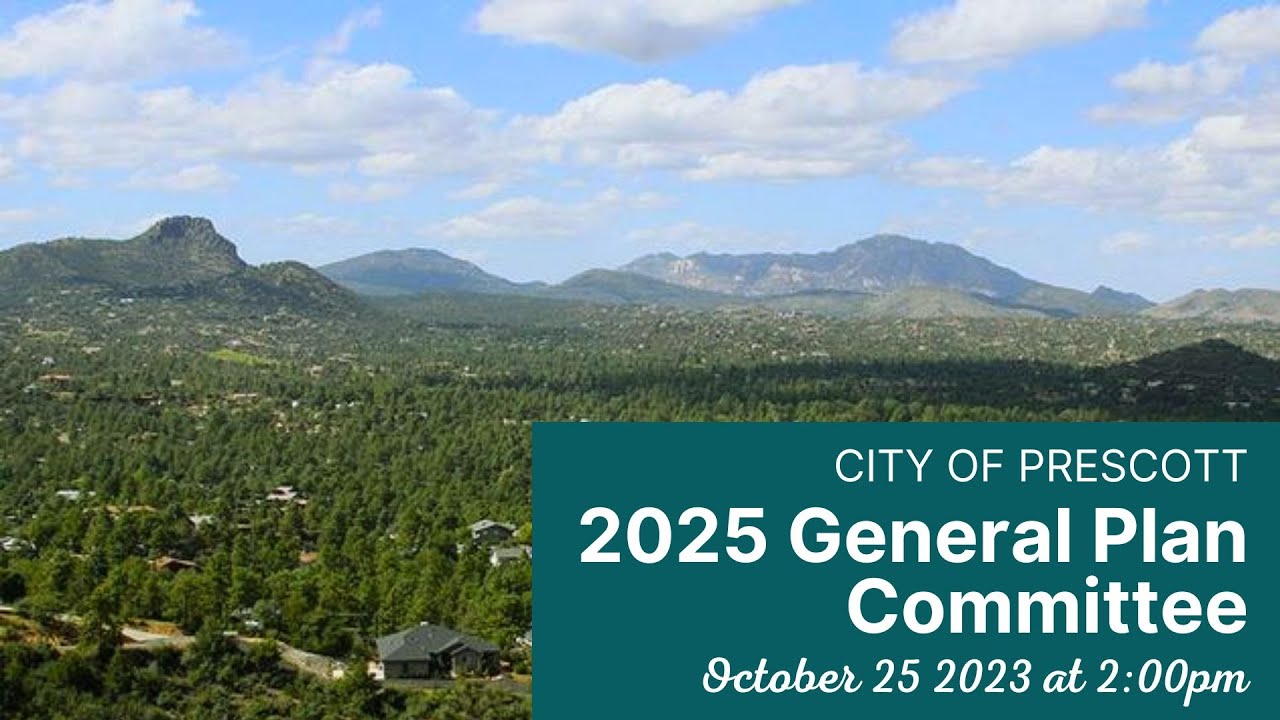
The Prescott General Plan Committee met on October 25, 2023, to review updates to the circulation (transportation) element, discuss an anti-discrimination language proposal from the Martin Luther King Committee based on a survey of discrimination in the city, and plan the final phase of the general plan update heading toward an August 2025 voter referendum. The session revealed sharp public opposition to a planned regional road corridor and exposed unresolved questions about the enforceability and scope of any future anti-discrimination ordinance.
Sundog Connector Opposition
Mike Parish, representing a coalition called "Save the Dells," along with the P Hill HOA and Prescott Valley Citizens Alliance, opened the public-comment period with a dramatic appeal to remove the Sundog Connector from the general plan. Parish stated that approximately 200 residents attended a recent SIMPO (Southeastern Arizona Yavapai Metropolitan Planning Organization) open house, nearly all wearing stickers opposing the road.
"We realize it's not in your court right now that simpo is studying it but we want it out of the general plan. We do not want this. We think it's counter to the IGA trying to make the regional park." — Mike Parish, Save the Dells coalition
Parish argued that the road project is mutually exclusive with the city's effort to acquire land for a regional park under an intergovernmental agreement. According to his statement, the city voted on October 24 to fund purchase of the first parcel (approximately 2,200 acres), but any appearance that the road will be built would scare off sellers and bidders.
"If any developers sense that this road is going through you'll never get that land. It's just not going to happen. So I think that they're mutually exclusive—you can't do the IGA, you can't do the road." — Mike Parish asked attendees to raise hands showing opposition; numerous hands went up throughout the room. He emphasized that the citizen coalition "are not going away" and requested that the committee work to remove the road from the 2025 general plan update. Committee members acknowledged that SIMPO's regional transportation planning is outside their direct jurisdiction but noted the citizen request.
Circulation Element Presentation and Regional Roads Planning
Ian Mattingley, the city's transportation manager and traffic engineer, delivered a comprehensive presentation on updates to the circulation element—a foundational document describing the city's roadway system, public transit, pedestrian and bicycle facilities, and long-range transportation planning. Mattingley explained that the existing 13-page element, last updated in 2015, lacks detail on the current roadway system's performance, future developments, and regional coordination. The revised element will include new sections on street system evaluation, truck routes, and detailed maps of planned regional corridors.
Great Western Corridor and Future Roadways
Mattingley highlighted the Great Western Corridor, a planned controlled-access facility running from State Route 89A near a water-tank site (between Prescott and Prescott Valley) as an alternative route serving development in the northern part of the greater Prescott area. He showed maps with yellow and green highlights indicating future roadways, including connections from Granite Dells Parkway and planned extensions in subdivisions like Gredell Estates.
When asked by Councilmember Mary Frederickson about the weight given to SIMPO recommendations, Mattingley clarified that SIMPO is a planning agency representing its member communities through a technical advisory committee and an executive board of elected officials. He emphasized that the regional transportation plan uses five-year-cycle data, traffic modeling, and zoning to project conditions 10 to 20 years ahead (currently modeling to 2030 and 2045, soon to be updated to 2035 and 2050).
Traffic Modeling and Public Concerns
Rod Moyer raised concerns about the sophistication of traffic projections, noting that development on Prescott's north end may not generate proportional traffic into downtown because new employment and shopping will concentrate in the north. Mattingley acknowledged the concern but defended the model's accuracy over five-year intervals, citing his 20-year experience with SIMPO. He stated:
"These regional transportation plans are done every five years and they are updated with whatever the most recent data is. The growth, what developments have come or not come… They've been pretty close." — Ian Mattingley, Transportation Manager
Gary Warab asked whether the circulation element addresses stormwater capture and groundwater recharge, highlighting Tucson's success with curb cuts and first-flush stormwater retention (the first half-inch now captured for all new development). Mattingley noted that such detail is outside the circulation element's scope but suggested it belongs in public works engineering standards. Warab countered:
"When we're talking about new streets, new roads, and new developments, to me it should be mandated that all new developments capture storm water as well as housing capture rainwater." — Gary Warab, Committee Member
Don Michaelan asked how the city determines whether to use traffic signals or roundabouts. Mattingley explained that the city has traffic control and roundabout warrant criteria in its general engineering standards, noting that roundabouts cost more upfront but have lower long-term operating costs (a few thousand dollars per year difference) and superior safety benefits due to the elimination of red-light running.
Timeline and Next Steps
Mattingley stated that the Pedestrian Bicycle and Traffic Advisory Committee (PBAC) continues reviewing the circulation element, with a final draft expected "by the end of the year or early next year" (2023–2024). Once approved by PBAC, the element will come to the General Plan Committee for review and comment in early 2024.
Anti-Discrimination Language Proposal and Discrimination Survey
Jim Hbling, representing the Martin Luther King Committee, presented a proposal to add anti-discrimination language to the general plan's Community Quality element. His presentation was grounded in a survey of 247 respondents conducted by MLK Committee members, distributed through LGBTQ+ organizations (Prism Network), colleges (Embry Riddle, Yavapai College, Prescott College), homelessness-service coalitions, and other community groups.
Survey Results
The survey asked respondents whether they had experienced discrimination while in Prescott. Key findings:
- 64% (158 of 247) reported experiencing some form of discrimination
- 57% (133 respondents) said they had been made to feel unwelcome due to race, ethnicity, sexual orientation, gender expression, religious practice, age, or mental/physical health condition
- 38% (89) reported being subjected to slurs or jokes
- 29% (68) reported receiving poor service in places of business
- 20% (48) reported being treated unfairly by employers
- 90% (174 of 194) said they would spend money in a city with a non-discrimination ordinance
- 80% (152) said they would recommend such a city as a vacation destination
Hbling stressed that respondents could select multiple discrimination categories, so percentages exceed 100%. Of 108 open-ended comments provided, 68 (over 60%) described discriminatory experiences.
Testimonials
Hbling read one first-person account included in the comments:
"So many of us cannot even step outside the doors of our own homes without being subjected to racial, homophobic, or misogynistic slurs from our neighbors. City of Prescott and Prescott Valley consistently make one thing clear: the worst of us can act with complete impunity for here white is right, specifically white men." — Anonymous survey respondent
Hbling also cited a separate survey by the Yavapai County Community Health Services organization on LGBTQ+ healthcare access, which found that 62% of respondents had been refused healthcare in Prescott or Yavapai County because of their LGBTQ+ status. One commenter noted being accused of lying when seeking help and told the provider "does not assist with personal medical agendas." Another described being shamed by pediatricians and avoiding disclosure of queer identity to healthcare providers out of fear.
Proposed Wording
The MLK Committee proposed the following language for inclusion in the Community Quality element (subsection 12.3.1):
"Prescott is a city that values the quality of life for all its inhabitants and embraces the cultural diversity of its residents. Prescott is home to people of varying backgrounds, cultures, and perspectives, and this diversity keeps the city vibrant and is an asset that we all can cherish. Prescott is therefore committed to ensuring that all people within its borders feel welcome. As such, the city will not condone discrimination or harassment of individuals based on race, ethnicity, sexual orientation, gender expression or identity, religious practice, spiritual practice, age, or mental [or] physical ability." — MLK Committee proposed language
Committee Discussion: Enforceability and Free-Speech Concerns
Several committee members and city staff raised questions about the enforceability of such language and potential conflicts with free-speech rights. Rod Moyer emphasized that the survey showed respondents would respond to a non-discrimination ordinance, not merely general-plan language:
"You had information about people that would feel better about Prescott if it had an anti-discrimination ordinance. Yes. I want to make sure you understand that a general plan is not an ordinance." — Rod Moyer, Committee Member
Hbling acknowledged the distinction, characterizing the general-plan language as "baby steps" toward an eventual ordinance.
Terry Sappio raised a more pointed concern about enforceability and constitutional limits, noting that many of the survey comments referenced political disagreement with the Republican Party, President Trump, and conservative groups:
"I read through this and all of the comments, and the references to a city ordinance—what would that look like? How would it be enforced, and would that impinge on the rights of other citizens to their freedom of speech? Many of the comments I read had references to the Republican party, President Trump, and other conservative groups that they disagreed with and made them feel uncomfortable. So where does everybody should be treated fairly, including people that have a different view?" — Terry Sappio, Committee Member
Hbling responded that 11 Arizona cities already have non-discrimination ordinances that define what constitutes discrimination and establish a complaint and hearing process under the city manager's office. He acknowledged that details remain to be worked out and that case law—including a U.S. Supreme Court case involving Denver's anti-discrimination ordinance and a bakery refusing to make certain cakes—shows the potential for constitutional challenges.
Don Michaelan asked whether general-plan language would meaningfully reduce discrimination. Hbling replied:
"I can hope so. The general plan is voted on by the public, and so if we can get these words out there and have the public vote on it and say that they are willing to accept these words, I feel that's a step in the right direction." — Jim Hbling, MLK Committee
Tammy DT (noted in the transcript as planning staff) clarified that Community Quality is a catchall element without a single responsible department, drawing from Economic Development, history, and other areas. She suggested that the vision statement or Community Quality element could accommodate the language when staff drafts those sections in the coming months.
This item was designated for discussion only; no formal action was taken.
Physical Setting and History Element Format Discussion
George Worley, planning manager, presented the format that will be used to review updated general-plan elements. Elements will be distributed in advance with numbered pages and paragraphs to facilitate comment. The committee discussed the possibility of "live editing" during meetings but noted technical and logistical challenges. One proposal involves reserving a different room with better audiovisual setup, though the city's current meeting room (used for televised and recorded sessions) is the only option currently available.
The timeline for element updates is compressed: elements will arrive January through July 2024, with a final draft due by August 2024 to allow statutory public-comment periods and council review before the August 2025 ballot.
Chelsea Walton, interim community development director, reported that a citizen survey initiated by the city manager's office will be concluded in December, providing additional data points for the committee to consider. The city will also coordinate council goal-setting (scheduled for January or February 2024) with the general plan to ensure alignment.
Vice-Chair Deferral and Transition
Matthew Propst, deputy city attorney, recommended deferring the nomination and selection of a new General Plan Committee Vice Chair, noting that city council policy (not state or city charter requirement) holds that the council appoints both the chair and vice chair. Propst stated that Ted Gambogi, the current chair, is departing to City Council, and the current vice chair will serve as acting chair until the council makes official appointments.
The committee unanimously approved a motion to defer the vice-chair nomination to the next meeting, pending council action.
Vote Breakdown
- Item: Approval of September 27, 2023 Minutes — Unanimous approval
- Item: Deferral of Vice Chair Nomination — Unanimous deferral
No individual votes were recorded; decisions were made by voice vote.
Outcome & Next Steps
The committee approved the September minutes and deferred the vice-chair appointment to allow City Council to make formal appointments of both chair and vice chair. The circulation element update will continue through PBAC with a final draft expected by end of 2023 or early 2024. The anti-discrimination language proposal was accepted for discussion but requires no formal action at this stage; the staff will consider it when developing the Community Quality and Community Vision elements for the general plan.
The next regularly scheduled General Plan Committee meeting is November 29, 2023 (the Wednesday after Thanksgiving). By that date, additional citizen survey data and website comments (400+ survey responses, 100+ written comments) will be compiled and distributed to committee members for consideration.
Major general-plan elements (Physical Setting & History, Community Quality, Land Use, etc.) will be presented for committee review from January through July 2024, with a final draft due by August 2024 to meet the statutory timeline for the August 2025 voter referendum.
Controversies & Context
Sundog Connector Opposition
The Sundog Connector has appeared in Prescott general plans since at least 2006. SIMPO is currently studying it as part of regional transportation planning. However, citizen opposition has crystallized around the argument that approval of the road would undermine the city's concurrent effort to acquire land for a regional park. Citizens argue that developers sensing road approval would avoid selling land to the city at favorable terms. The city voted on October 24 to begin purchasing parcels under an intergovernmental agreement for the park, making the timing of the opposition significant.
The opposition coalition represents multiple organized groups (Save the Dells, P Hill HOA, Prescott Valley Citizens Alliance) and claims to speak for approximately 200 residents who attended the recent SIMPO open house. The committee acknowledged that SIMPO's planning falls outside their immediate jurisdiction but noted the citizen request and the need to consider any removal or reconsideration of the road in the general-plan update process.
Discrimination Survey and Civil-Rights Concerns
The MLK Committee's survey documents widespread discrimination across multiple categories: race, ethnicity, sexual orientation, gender identity, religious practice, age, and health status. Over 60% of written comments describe specific discriminatory incidents, including racial and homophobic slurs, employment discrimination, and healthcare refusal. The healthcare refusal data (62% of LGBTQ+ respondents denied care in Prescott/Yavapai) is particularly alarming and suggests potential violations of federal nondiscrimination protections in healthcare.
However, the proposal to add general-plan language raised constitutional and enforceability questions among committee members. Terry Sappio and Rod Moyer pressed Hbling on how a future ordinance could enforce anti-discrimination rules without infringing free-speech rights, especially given that some survey comments reflected political disagreement with conservative figures and policies. The conversation highlighted the gap between aspirational general-plan language and the mechanics of actual enforcement, a gap that city staff and legal counsel will need to address as the plan moves toward council review.
Hbling's response—that 11 Arizona cities already have such ordinances—was met with cautious acknowledgment but no commitment. The potential for litigation (Hbling cited the Denver bakery case reaching the U.S. Supreme Court) was noted but not resolved.
General Plan Update Timeline
The city faces a compressed schedule: elements must be drafted and approved by staff and the General Plan Committee by August 2024 to allow statutory public-comment periods, hearings, and council review before the August 2025 ballot. This timeline means that major policy shifts (anti-discrimination language, stormwater capture, transportation equity) must be decided and drafted within the next nine months. The committee's format for reviewing elements—advance distribution, numbered pages, open-ended discussion—is still being refined.
Duration
- This meeting: Approximately 3.5 hours (estimated from extent of discussion and number of agenda items)
- Key items: Sundog Connector opposition (~10 minutes), Circulation element presentation and discussion (~60–75 minutes), Anti-discrimination language proposal and discussion (~45–60 minutes), Physical Setting & History format discussion (~15 minutes), administrative items and departing member remarks (~30 minutes)
Other Notable Items
Citizen Survey and Website Comments (400+ responses, 100+ written comments): Tammy DT announced that the city is closing its general-plan website survey and compiling results and comments to be shared with the committee for consideration. The comments were collected over several months, including periods after a snowstorm when some residents were venting frustrations, and will be provided in both written format and word-cloud visualization.
Departing Committee Member Remarks: Ted Gambogi, departing to City Council, urged the remaining committee members to prioritize communication of the general plan to the public. He emphasized that when voters approve the plan in 2025, they should understand its contents so that future development proposals can be evaluated against it, preventing the pattern of "surprise" objections when projects align with the general plan but neighbors object anyway. He praised the committee's competence and the city's staff, and encouraged residents to engage directly with the planning process rather than relying on biased secondhand sources.