Phoenix completes $42.5M HUD transformation, replacing 577 public units with 1,000+ mixed-income homes
Phoenix Housing Department is transforming the Edison East Lake community with a $42.5M HUD grant, replacing 577 public housing units with 1,000+ mixed-income homes across multiple completed and under-construction projects.
City of Phoenix Completes and Expands Choice Neighborhoods Transformation in Edison East Lake with $42.5M HUD Grant
The City of Phoenix Housing Department is executing a major neighborhood revitalization in the Edison East Lake community, replacing 577 outdated public housing units with more than 1,000 brand-new mixed-income homes while simultaneously expanding green space and community facilities. The initiative is powered by a $42.5 million Choice Neighborhoods grant from the U.S. Department of Housing and Urban Development, one of the most competitive federal funding sources for neighborhood transformation.
The project fundamentally reimagines public housing not as isolated, aging complexes but as integrated, mixed-income communities with commercial, health-care, and recreational anchors. Two properties have already opened; two more are under construction; and a repurposed health-care facility is being developed as a neighborhood hub.
Project Overview
The Choice Neighborhoods Initiative targets one of Phoenix's most economically disadvantaged neighborhoods by replacing vacant or deteriorating mid-20th-century housing stock with contemporary mixed-income residential communities designed to serve households at multiple income levels. The strategy combines rental units with for-sale townhomes, adaptive reuse of underutilized institutional buildings, and significant public green space—all within walking distance.
The $42.5 million HUD grant provided the financial foundation for acquisition, demolition, remediation, and new construction across multiple phases spanning several years.
Completed Projects
Saluna (177 units)
Saluna, which opened in 2022, was the first property to deliver under the initiative. It converted a once-vacant lot into a 177-unit community with units ranging from one to five bedrooms. The development includes a community room, team space (likely "team space" refers to shared work or gathering areas), playgrounds, and a resident-designed art plaza. The inclusion of varied unit sizes and dedicated community gathering spaces reflects the mixed-income approach—accommodating both families and individuals while supporting resident engagement and connection.
Harmony at the Park (369 units)
Harmony at the Park replaced public housing constructed in the 1940s with a more contemporary mixed-tenure community. The property delivers 325 rental apartments and 44 townhomes for home ownership, offering residents a choice between renting and building equity through purchase. Amenities include a pool, community gardens, and multiple community spaces designed to foster resident interaction and neighborhood cohesion. The townhome component is significant because it creates a path to homeownership for working families, traditionally underserved by public housing programs that offer only rental options.
Projects Under Construction
Uso (364 apartments + public park)
Uso is currently under construction and will contribute 364 apartments to the neighborhood. The development integrates a public park with sports courts, gardens, fitness equipment, and walking paths. This pairing of housing with dedicated green space is central to the Choice Neighborhoods model—creating not just homes but livable communities with outdoor recreational and gathering areas.
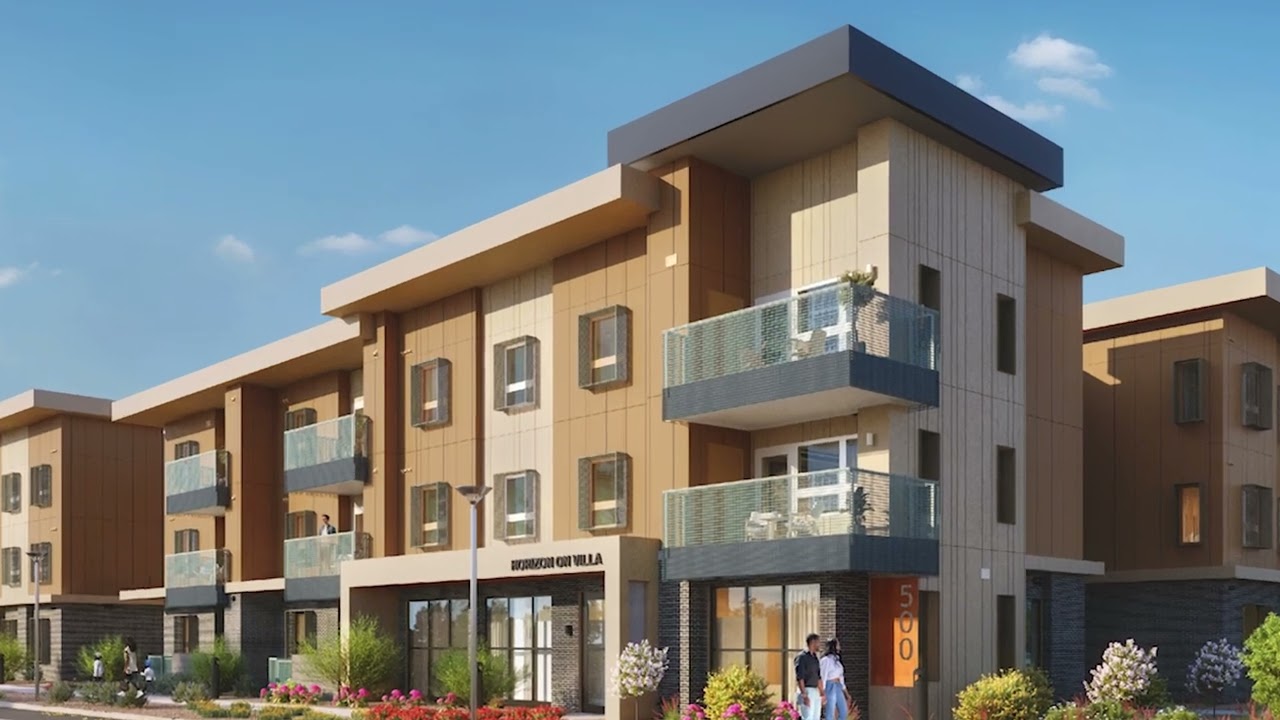
Horizon on Vio (109 rental homes + adaptive reuse community center)
Horizon on Vio will deliver 109 rental homes alongside a community center created through the adaptive reuse of five existing buildings. The center will house classrooms, a dental clinic, and tech spaces, providing residents and neighbors with access to health care, education, and digital resources. Adaptive reuse—retrofitting older buildings rather than demolishing and rebuilding—both reduces environmental impact and preserves neighborhood character while allowing buildings to serve new community purposes.
D'Ach Moth Center: Adaptive Reuse Health and Workforce Hub
At the geographic and functional heart of the neighborhood is the D'Ach Moth Center, a former children's hospital reimagined as a multipurpose community hub. The center will house health-care services, digital access programs, workforce training and development programs, and a commercial community kitchen. The commercial kitchen is designed to support both food entrepreneurs and nutrition programming. This adaptive reuse of a significant institutional building (a former hospital) signals a broader commitment to retrofitting existing assets for community benefit rather than abandoning them.
Green Space and Recreation
Nearly 9 acres of new and expanded green space are planned across the neighborhood. The Edison Park expansion and a new linear park will include:
- Youth sports field
- Skate plazas
- Basketball courts
- Picnic areas
- Playgrounds
- Shaded walking paths
This investment in green space and recreational infrastructure is notable because public housing neighborhoods historically lacked quality outdoor recreation, and the addition of nearly 9 acres represents a significant quality-of-life upgrade for residents. The variety of amenities (skate facilities, youth sports, basketball, walking paths) is designed to serve residents across age groups and activity preferences.
Project Details
Funding source: U.S. Department of Housing and Urban Development (HUD) Choice Neighborhoods Initiative Grant
Grant amount: $42.5 million
Applicant / Lead agency: City of Phoenix Housing Department
Neighborhood: Edison East Lake, Phoenix, Arizona
Scope of transformation:
- 577 outdated public housing units being replaced
- 1,000+ brand-new mixed-income homes
- Multiple tenure types: rental apartments, townhomes for sale, adaptive reuse community facilities
- ~9 acres of new and expanded green space
Unit breakdown across completed and planned projects:
- Saluna: 177 units (completed 2022)
- Harmony at the Park: 325 apartments + 44 townhomes (completed)
- Uso: 364 apartments (under construction)
- Horizon on Vio: 109 rental homes (under construction)
- Total: approximately 1,019 units (exceeding the 1,000+ target mentioned)
Outcome & Implementation Status
The initiative is in active implementation with staggered openings. Two major properties (Saluna and Harmony at the Park) have been completed and occupied. Two additional residential communities (Uso and Horizon on Vio) are under construction. The adaptive reuse of the former children's hospital as the D'Ach Moth Center is in planning/early development phases. Green space expansion and linear park development are underway or planned.
The timeline reflects a realistic, phased approach to neighborhood transformation—avoiding the disruption of wholesale simultaneous construction while maintaining momentum over multiple years.
Significance and Model Implications
The Choice Neighborhoods Initiative represents a significant federal commitment to mixed-income housing integration and neighborhood revitalization. By replacing outdated public housing with mixed-income communities, the City of Phoenix is attempting to address the concentration of poverty and the isolation of public housing that characterized much of 20th-century public housing policy. The inclusion of for-sale townhomes, health-care facilities, workforce training, and extensive green space reflects contemporary best practices in community development.
The scale—replacing 577 units with 1,000+—means the initiative is not simply maintaining existing public housing stock but expanding affordable housing while creating economic diversity within the neighborhood. The adaptive reuse components (the D'Ach Moth Center, community facilities within Horizon on Vio) demonstrate commitment to preserving neighborhood assets and institutions rather than wholesale demolition and rebuilding.
The $42.5 million HUD grant is highly competitive; only a limited number of communities receive Choice Neighborhoods funding nationwide. Phoenix's success in securing this funding reflects both the severity of need in the Edison East Lake neighborhood and the strength of the city's revitalization proposal.
Community and Housing Policy Context
Public housing in the United States has historically been segregated, concentrated, and undersupported. The Choice Neighborhoods Initiative was designed to reverse these patterns by funding comprehensive, mixed-income neighborhood transformations. The Edison East Lake project embodies this approach: demolishing or reusing older, isolated public housing complexes and replacing them with integrated, mixed-tenure communities embedded in revitalized neighborhoods with parks, health-care, and economic opportunity anchors.
The emphasis on mixed-income housing (rather than all affordable or all public housing) reflects research suggesting that economic integration and mixed-income neighborhoods produce better outcomes for low-income residents than concentrated poverty neighborhoods.
The commercial community kitchen at the D'Ach Moth Center reflects growing recognition that community development requires not just housing and parks but economic opportunity—space for food entrepreneurs, informal businesses, and skills training.
Other Notable Elements
The resident-designed art plaza at Saluna indicates community engagement in the design process—a deliberate effort to ensure residents have voice and ownership in neighborhood transformation, not just passively occupy housing designed by outsiders.
The variety of unit sizes at Saluna (one to five bedrooms) accommodates both individuals and families, expanding the range of residents the neighborhood can serve.
The inclusion of dental care at Horizon on Vio's community center addresses a known gap in health-care access for low-income residents.
The youth sports field and skate plazas suggest intentional programming for young people, reflecting recognition that neighborhood revitalization must serve all demographics and life stages.
Duration and Source
The presentation describing the initiative did not include a specific meeting format, vote, or formal council action. Rather, it appears to be an informational or progress-reporting presentation by the Phoenix Housing Department detailing the status and scope of a multiyear, federally funded initiative. No votes, controversies, or public comment were recorded in the materials provided. The absence of controversy or formal action is notable in itself—this initiative appears to represent a broad consensus on the value of mixed-income housing and neighborhood revitalization.
View source transcript ▼
Source: Transformation of the Edison-Eastlake community. — September 26, 2025. Auto-generated YouTube transcript; may contain transcription errors.
[Music] The City of Phoenix housing department is leading a major transformation in the Edison East Lake community. It's powered by a $42.5 million choice neighborhoods grant from the US Department of Housing and Urban Development. One of the biggest changes, new housing. The city is replacing 577 outdated public housing units with more than 1,000 brand new mixed income homes designed for dignity built for opportunity centered on community. The first property, Saluna, opened in 2022.
A once vacant lot is now home to 177 units ranging from 1 to five bedrooms. There's a community room, team space, playgrounds, and a resident designed art plaza. Just a few blocks away, public housing from the 1940s has become Harmony at the Park. It includes 325 rental apartments, and 44 town homes for home ownership. Residents enjoy a pool, community gardens, and multiple community spaces. Two more communities are being built right now.
Uso will bring 364 apartments and a public park with sports courts, gardens, fitness equipment, and walking paths. Horizon on VIO will offer 109 rental homes, plus a community center with classrooms, a dental clinic, and tech spaces, all created through the adaptive reuse of five existing buildings.
At the heart of the neighborhood is a D'Ach Moth Center, a former children's hospital, now re-imagined as a hub for health care, digital access, workforce programs, and a commercial community kitchen. On top of all the new housing, nearly 9 acres of new and expanded green space are coming to the neighborhood. The Edison Park expansion and a new linear park will feature a youth sports field, skate plazas, basketball courts, picnic areas, playgrounds, and shaded walking paths.
This is more than a revitalization. It's a commitment to housing, to neighborhoods, and to people. The city of Phoenix is building a stronger, more connected community for generations to come. If you'd like to see more about these properties, go to our website at phoenix.gov. GV/choice neighborhoods.