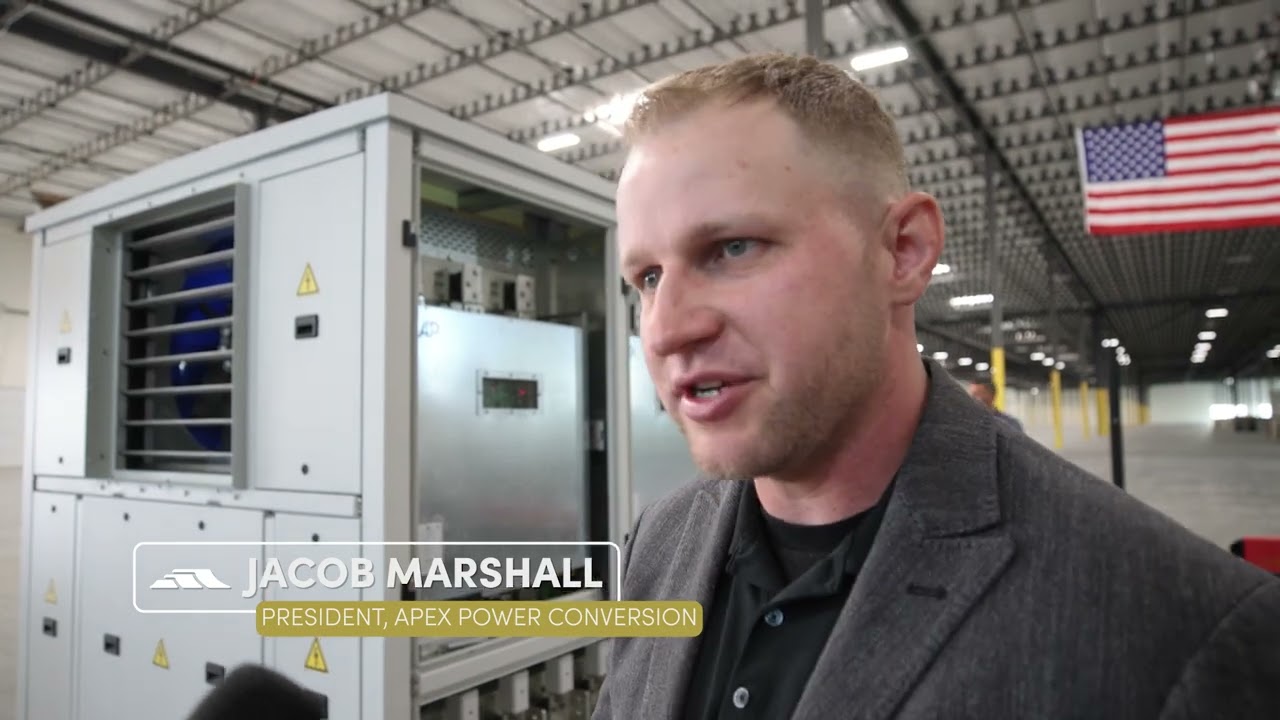
Mesa approves Apex Power Conversion headquarters, projects 700 jobs in Elliot corridor
Apex Technology announced approval of a major power conversion manufacturing facility in the Elliot technology corridor expected to create 700 jobs and produce 3,333 units annually by 2029.
Mesa Approves Apex Technology Manufacturing Facility in Elliot Corridor; 700 Jobs Projected by 2029
Mesa has approved a major power conversion manufacturing facility for Apex Technology in the Elliot technology corridor, a project expected to employ up to 700 people by 2029 and produce 3,333 units annually for renewable energy and energy storage markets. The facility represents a significant employment anchor in a corridor city planners have cultivated for high-wage, technology-sector investment.
The approved project will manufacture sheet metal, magnetics, semiconductors, and robotic components as part of an integrated power conversion system destined for renewable and energy storage projects. The facility is positioned to serve growing demand in the clean energy sector, with production targets ramping to 3,333 units per year by full operation.
Project Details
- Applicant / Developer: Apex Technology
- Location: Elliot technology corridor, Mesa
- Project type: Power conversion manufacturing facility
- Workforce projection: Up to 700 employees by 2029
- Annual production: 3,333 units per year (at full capacity)
- Product scope: Power conversion systems; components include sheet metal fabrication, magnetics, semiconductors, and robotics integration
- End markets: Renewable energy and energy storage projects
Key Speeches
"Apex is a technology business that will employ up to 700 people by 2029. And it's located in a technology corridor. This is exactly the kind of vision we had for the Elliot technology corridor. High wage, high value jobs in a technology industry." — City speaker
"This space is going to be a wall-to-wall shrine to excellence in power conversion manufacturing. We will be building this system from the ground up. Sheet metal, magnetics, semiconductors will have an excellent workforce and robotics all playing their roles. 3,333 units per year coming out of this facility going to renewable and energy storage projects." — City speaker
"What helps us attract companies like Apex are great partners. We have partnerships with education institutions from Mesa to ASU Polytechnic to help prepare a workforce so that when Apex looks to expand, we have a ready workforce to come in and make that possible rapidly." — City speaker
"I've been front seat to all of the opportunities here, the ASU capabilities, the SRP infrastructure, how well solar panels do in the Arizona desert. And to me, it would be much harder to explain why we would ever go anywhere else than stay here and be where we should to do the job we were always trying to do." — City speaker
Workforce and Education Partnerships
City leadership emphasized partnerships with local education institutions—including Mesa Community College and ASU Polytechnic—as a key competitive advantage in attracting Apex. The facility's construction timeline and ramp to full employment over four years provides a window for workforce development programs to prepare candidates in manufacturing, electronics, and robotics.
The availability of SRP infrastructure, established solar manufacturing capabilities in the Arizona desert, and proximity to ASU's engineering and technical programs were cited as regional assets that informed Apex's decision to locate in Mesa rather than pursue other regional or national options.
Elliot Technology Corridor Strategy
The approval represents validation of Mesa's long-term strategy to position the Elliot corridor as a high-wage technology manufacturing and innovation hub. City planners have prioritized attracting companies in advanced manufacturing, clean energy, and technology sectors—differentiating the corridor from traditional industrial zones by emphasizing workforce quality, capital investment, and technology adoption.
Apex's commitment to integrated manufacturing (handling sheet metal, magnetics, semiconductors, and robotic assembly in-house) aligns with this vision: the facility will function as a vertically integrated manufacturing operation rather than an assembly-only or distribution center, creating higher-skill employment and greater value retention within Mesa.
Public Comment
Not stated in transcript.
Opposition
Not stated in transcript.
Support
Not stated in transcript.
Vote Breakdown
Individual votes not stated in transcript. Approval implied by language of announcement.
Outcome & Next Steps
Apex Technology's facility has been approved for development in the Elliot technology corridor. The company has committed to a phased buildout with employment targets reaching 700 people by 2029. No continuance, reconsideration, or conditions are referenced in the available record. The next phase will likely involve site planning, permitting, and construction commencement; workforce development pipeline coordination with ASU Polytechnic and Mesa Community College will proceed in parallel.
Duration
- This item: Duration not stated in transcript
- Total meeting: Duration not stated in transcript
View source transcript ▼
Source: Apex Power Conversion Opens U.S. Headquarters in Mesa — May 21, 2025. Auto-generated YouTube transcript; may contain transcription errors.
3 2 1 cut. Apex is a technology business that will employ up to 700 people by 2029. And it's located in a technology corridor. This is exactly the kind of vision we had for the Elliot technology corridor. High wage, high value jobs in a technology industry. This space is going to be a wallto-wall shrine to excellence in power conversion manufacturing. We will be building this system from the ground up.
Sheet metal, magnetics, semiconductors will have an excellent workforce and robotics all playing their roles. 3,333 units per year coming out of this facility going to renewable and energy storage projects. What helps us attract companies like Apex are great partners. We have partnerships with education institutions from Mesa to ASU Poly Technic to help prepare a workforce so that when Apex looks to expand, we have a ready workforce to come in and make that possible rapidly.
I've been front seat to all of the opportunities here, the ASU capabilities, the SRP infrastructure, how well solar panels do in the Arizona desert. And to me, it would be much harder to explain why we would ever go anywhere else than stay here and be where we should to do the job we were always trying to do.