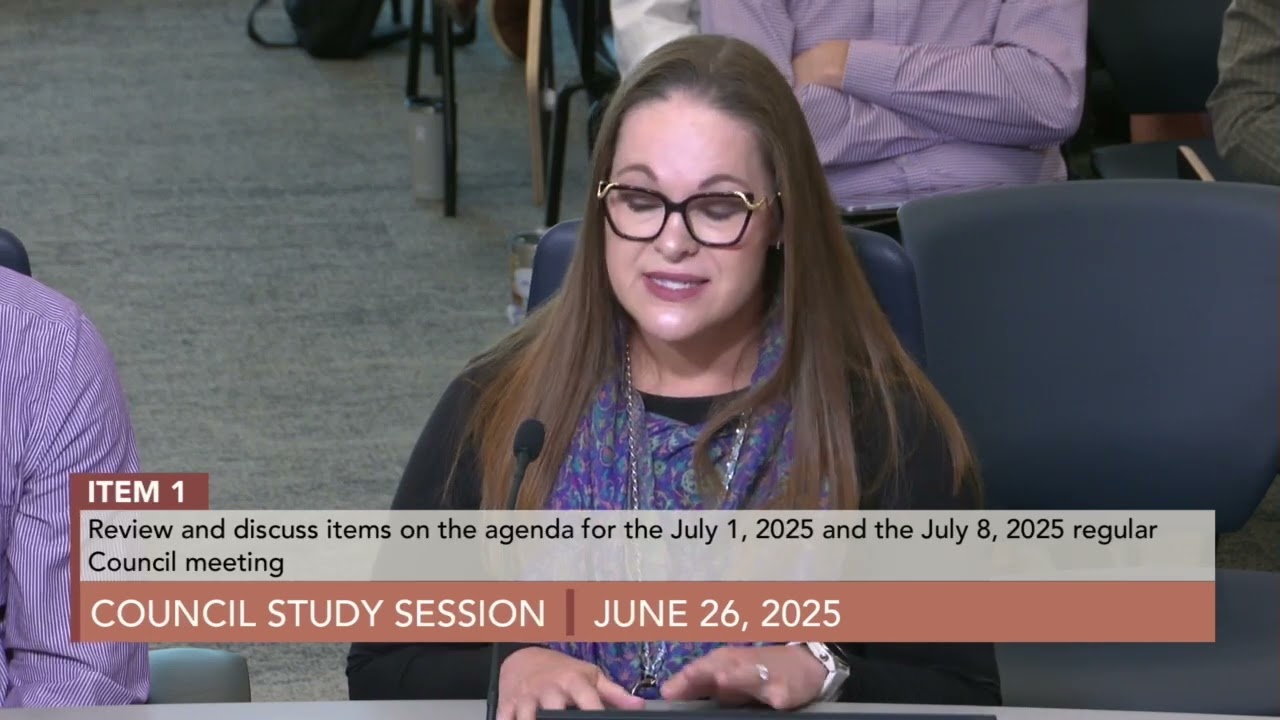
Mesa advances data center restrictions, explores redevelopment incentives, expands ASU campus partnership
Mesa City Council study session addressing data center development regulation strategy balancing economic growth with residential impact mitigation, home occupation code clarification, and comprehensive redevelopment area initiatives.
Mesa City Council Charts Path on Data Centers, Redevelopment Tools, and ASU Expansion While Debating Economic Priorities
On June 26, 2025, the Mesa City Council study session proved unexpectedly substantive, combining strategic-level guidance on three major initiatives—data center regulation, citywide redevelopment strategy, and Arizona State University campus expansion—with pointed debate over process timelines, economic return on land, and the city's long-term competitive positioning. The meeting ran roughly four hours and showcased genuine tension between development acceleration and what some council members framed as necessary economic diversification.
The session opened with a question from Councilmember Jen Duff on the Medina Station tax incentive package, revealing administrative adjustments still pending final financial modeling. But the meeting's substantive weight centered on three presentations: data center standards, redevelopment area priorities, and ASU's Mesa City Center next phases.
Data Center Text Amendment: Zoning Shift and Controversy Over Process
The most contentious item was the proposed data center text amendment, which the Planning and Zoning Board had recommended 6-1 on June 25 (after continuing from a June 11 hearing to allow additional citizen outreach). The amendment would create a formal definition and development standards for data centers, moving them from light industrial (LI) zoning—where 15 existing data centers sit over 1,500 acres and 15 million square feet—to General Industrial (GI) and Heavy Industrial (HI) zones, with approval only through a Planned Area Development (PAD) overlay.
Development Services Director Rachel Phillips and Jay O'Donnell, Director of Economic Development, presented the rationale: data center scale and proliferation over the past six years had been unprecedented; their unique operational characteristics (noise, energy/water demand, minimal job density) warranted specific standards; and land use compatibility demanded separation from residential districts. The proposal includes a 400-foot separation from residential zoning, a 60-foot height limit (exceeding the 50-foot limit in GI/HI but requiring PAD approval), design standards, sound monitoring, and a waiver process allowing existing LI properties three years to request continued permission under Proposition 207 (a state voters' protection for vested uses).
Industry Push-Back and Process Questions
Industry stakeholders objected on multiple grounds: they argued GI/HI zones represent less than 1% of city land (staff corrected to 4.2%, or 21.3% of employment districts); they contended the 400-foot setback was excessive; they criticized the 60-foot height limit as restrictive; and they questioned the adequacy of a two-week notification window (May 27 email to May 27 stakeholder outreach; June 11 PNZ hearing).
Councilmember Mike Goforth raised the process timeline explicitly: "I think it's been about a month. I mean, I think it's right. I think that seems sufficient. But I guess the only the question is initially did we give was two weeks enough time between the time we notified and... the time it was scheduled for PNZ which was June 11th?"
City Manager Scott Smith and attorney Jim Butler responded forcefully. Butler noted that four public hearings would occur by final action, and that the industry had been comprehensively engaged through one-on-one meetings beyond the initial email. Smith added:
"I mean, and I think we can speak to the way that we've handled this and I'm sure Jim could weigh in as well. Um, this is par for the course about how we handle situations like this." — City Manager Scott Smith
He emphasized that the same comments had been heard repeatedly since May 27, suggesting the timeline was adequate. Council did not mandate a minimum baseline timeline going forward, though the discussion flagged the issue for potential future consideration.
Economic Argument: One Job per Acre vs. Nine
A second major tension emerged over economic return. Council Member Adams asked for specifics on job and revenue impact, prompting extended remarks from City Manager Smith and Jay O'Donnell. Smith laid out the fiscal reality bluntly:
"We receive construction sales tax on the um facility once it's being constructed. But the way state statute's written, we only receive construction sales tax on the exterior of the facility. And Leanne can come up and and help uh you know, if I get over my skis on describing this, but um the interior construction improvements we don't um collect uh TPT on." — City Manager Scott Smith
He continued: "Then because of state statute, um we don't receive any measurable TPT u off of these facilities once they're in operation." Equipment is tax-exempt, interior construction is exempt, and ongoing lease income from data centers' internal operations faces no commercial lease tax. Smith noted that 15 data centers in 1,500 acres yield roughly 1,500 permanent jobs—contrast that with ten existing advanced manufacturers in Southeast Mesa occupying 335 acres and generating 2,980 jobs. The opportunity cost is stark: one job per acre versus nine jobs per acre.
Mayor John Giles framed the issue in aspirational terms, invoking the 2008 Gateway Strategic Development Plan:
"And one of the goals, goal number two said specifically to create a regional employment center with a mix of jobs emphasizing the attraction of a 100,000 highwage, highv value jobs. As a city, we stopped talking about that. And it's good to hear that number coming up again... Mesa should not be the battery pack that energizes everyone else's economic development. We deserve a diverse economic base, too." — Mayor John Giles
Vice Mayor Kevin Summers offered ground-level perspective on Eastmark (the massive mixed-use development on the city's east side):
"the East Smart community has really been sold as a vibrant mixeduse development that would include uh a variety of jobs uh walkable neighborhoods. Sustainability is deeply rooted within the uh documents... and the frustration that echoes out there as is that it's most of that vision hasn't been delivered. Uh the houses are great, but we're we're kind of focused on one industry. You can't even find a sit down restaurant out there." — Vice Mayor Kevin Summers
He concluded: "we don't want to be the data center Detroit when the industry changes and it does its technology to be left with holding the bag of large buildings that might not be reused."
Revisions and Support for Introduction
Despite industry objections, staff had revised the ordinance in response to feedback. Parking requirements were reduced from one space per 10,000 gross square feet to one per 5,000 for the first 200,000 square feet, then one per 10,000 thereafter. Provisions for accessory data centers within commercial-employment districts (where they support a primary use) were added. Substation screening was clarified; backup generator provisions were refined. The vote to recommend was 6-1, with staff not identifying the dissenting member.
At session's end, John Giles indicated support for introduction on July 1:
"Let me just say that I was deeply involved in the gateway strategic development plan... And one of the goals, goal number two said specifically to create a regional employment center with a mix of jobs emphasizing the attraction of a 100,000 highwage, highv value jobs... Mesa should not be the battery pack that energizes everyone else's economic development." — Mayor John Giles
Council moved to introduction on July 1, with final action scheduled July 8.
Water, Energy, and Design Mitigation
Councilmember Jen Duff raised water consumption concerns, noting that AI data centers require liquid cooling and that Mesa's large-water-user ordinance (approved last year, setting a cap on municipal water allocation to large users) creates effective deterrence. Tony Smith from Water Resources confirmed: "we're not seeing any uh data centers come in that want to be water cooled because we did restrict that water so low. um the notion that they'd have to go out purchase a large quantity of water, they'd have to expend that capital to do that."
Jen Duff also inquired whether data centers could generate on-site power via microgrids or natural gas generators. Chris, from Energy Resources, noted that air-permitting challenges and natural gas capacity constraints in Arizona would make this difficult, though Microsoft and Meta have pursued off-site nuclear partnerships. Jen Duff pressed on whether backup generators could operate during peak-load demand; the revised ordinance permits this during utility demand-response events.
Design standards elicited enthusiastic support from the mayor, who praised examples like Apple's and the Santan Power Plant in Gilbert:
"I think about uh Apple did a really nice job with that, but also the Santam power plant. Think about how tall that is. and they in Gilbert and they were able to use a combination of methods between landscape BMS uh trees walls on top all to um hide all four sides of that you barely know it's there." — Mayor John Giles
Home Occupation Code Clarification
A secondary but pointed item involved clarification of home occupation zoning language (Chapter 87 and Chapter 31). Staff reported that code compliance officers had struggled to enforce home occupation restrictions because a prior hearing officer had interpreted the code to require violation of all criteria to constitute a violation—the opposite of staff's intent. The amendment clarifies that violation of any provision violates the regulations.
Councilmember Goforth raised concern that the amendment might inadvertently harm legitimate home-based work (piano lessons, hair cutting, accounting) and expressed surprise that no substantial outreach had been conducted. Rachel Phillips responded that the clarification was not substantive—requirements remained the same—and that code compliance issues centered on auto repair, outdoor display of appliances, and similar nuisances.
Angelica Gavara, Code Compliance Director, provided examples:
"Um such some of some examples of some of those businesses are auto repair that's going on within a home. Um there was uh that's the one that really comes to mind and that is very challenging for our code officers to site on. They'll come out to the home, they'll speak with the resident and the resident will u make statements such as well I'm just repairing my my vehicle. They code officers come back next week. Well, I'm repairing my friend's vehicle." — Angelica Gavara, Code Compliance Director
Council Member Adams sought assurance that legitimate home businesses would not be affected:
"I'm the concern I have is uh ever since and possibly even before the pandemic, a lot of folks have had to move their professional occupation or their side gig, if you will, to their home. And while I'm I'm all for uh not supporting and taking action on the types of nuisance businesses you've described which disturb the quiet enjoyment of everyone around the particular location. I just don't want to put people out of business" — Council Member Adams
Staff assured that permitted home occupations (art studios, hair salons, accountants) would not face enforcement absent evident violations like outdoor equipment or non-resident employees. The amendment is scheduled for action July 1.
Redevelopment Areas Strategy: Focus, Tools, and Funding Gaps
In the second major presentation, Jeff Robbins of the Office of Urban Transformation, supported by Development Services (Nana), Economic Development (Jay O'Donnell), and others, outlined the city's redevelopment strategy. Having presented a framework in October 2024, the team identified specific focus areas: major business centers; East Main Street (Gilbert Road to city's eastern edge); Mckelpson Country Club area; aging arterial centers (Southern/Mesa-Val Vista, Brown/Higley, Power/Mcdow); areas near major public investments; downtown momentum and light rail corridor; and Fiesta and Asian districts.
Daily activities include property-owner outreach, feasibility analyses (a pre-submission consulting service offering market-viability and zoning pathways for stuck or newly listed properties), buyer cultivation, pre-submittal concierge service, and perpetual agreement management. Robbins highlighted several real-world successes, including resolution of a county-road-ownership issue that had stalled a residential development for years, facilitation of loans-of-intent (LOIs) for a nonprofit property, and most notably, guidance on the former county animal-shelter site (now slated for a hotel and housing project rather than the originally proposed mini-storage).
Tools Gap and Funding Constraints
Robbins and City Manager Smith identified critical gaps in Mesa's redevelopment toolkit. Arizona is the only state prohibiting Tax Increment Financing (TIF), a tool used nationwide—in Chicago, Atlanta, St. Louis, Kansas City—to fund redevelopment. Smith noted:
"Arizona is the only state in the nation does that does not allow tiff... there are states that have not tens, 20s, 50s, hundreds of tiffs just in their state alone." — City Manager Scott Smith
(Note: Smith misspoke regarding dates; the relevant intergovernmental agreement was 2024, not 2014, per the ASU section.)
Current tools include Government Property Lease Excise Tax (suited for some projects but complex for small infill parcels) and limited incentives outside redevelopment areas. There is no stable, dedicated funding for redevelopment-area plans. Council Member Goforth asked whether Arizona's constitutional bar on TIF could be overcome; Smith replied that 49 other states allow TIF and that legislative change would require a state constitutional amendment, a multi-decade effort in Arizona despite past advocacy.
The team presented a menu of potential tools—demolition-cost assistance, facade improvement grants (successful downtown), targeted infrastructure funding, adaptive reuse incentives, and branding/corridor initiatives (like the Asian district). Councilmember Spillsberry asked for concrete examples:
"Jeff, what do you have an example of something that another city or area, the nation has done that you're thinking about?" — Councilmember Spillsberry
Robbins referenced Denver/Adams County's Federal Boulevard corridor redevelopment (3-4 years of coordinated effort on street width, infrastructure, building code alignment) and Phoenix's Adaptive Reuse Program, which uses regulatory and planning tools rather than heavy funding.
Council directed staff to explore the menu in depth and return with formal recommendations and funding sources. Goforth emphasized:
"I think council, you're okay moving forward to get some feedback from Yeah. And I read a little bit about the what Morirana is doing. And so there are revenue ways to drive some revenues for some of this, you know, what we need to do for incentives." — Councilmember Goforth
No vote was taken; direction was consensus.
Code Compliance and Redevelopment Alignment
Angelica Gavara outlined an accompanying code-compliance strategy, training all 14 officers (previously one handled non-residential violations) to identify neglected properties in redevelopment areas, issue notices of violation with extended compliance timeframes, and provide education and outreach. The goal is voluntary compliance, relegating citations to last resort.
ASU Mesa City Center: Enrollment Surge and Next Phases
Rick Neymar, ASU's Enterprise Planning Office university planner, reported extraordinary success. The Mix Center, a 118,000-square-foot facility opened fall 2022, had set a goal of 750 students enrolled within five years; by year two (now), enrollment exceeded 1,500 students weekly (including 50 high school students from ASU Digital Preparatory Academy). Faculty and staff targets of 40 by year five were met at 65 by year three. Community events exceeded targets by tenfold (300 events versus goal of 25); entrepreneurship events at the Studios likewise exceeded by tenfold (200 versus goal of 20).
Economic Development and Innovation Zone
ASU established the "Mesa Center for Creative Technology," an eighth innovation zone, to build a creative-business cluster around Mesa City Center. This aligns with the city's redevelopment and economic-development missions, offering corporate visits (over 100), international visibility, and local partnerships (Oakland A spring-training scoreboard content with ASU students; Idea Museum collaboration).
Post Office Adaptive Reuse and Future Programs
Neymar previewed next phases, focusing on adaptive reuse of the downtown post office (Center Street), the former council chambers, and the property at 515 East Main Street. Conceptual renderings show converting the post office's loading dock into a public entry, adding shade structures, and creating the "lightwalk"—a shaded pedestrian corridor connecting the Music and Arts Center, Mix, convention center, neighborhoods, and up to University Drive.
Programs under exploration include expanded animation (upper-division programs from Tempe campus), a new collaborative gaming major, and continued expansion of film and immersive media. Neymar acknowledged: "we have almost zero information about the post office. We don't even have plans for the building the existing plans." The team plans detailed feasibility studies before returning with specific program commitments.
Project Details
Data Center Text Amendment:
- Case number: Not stated in transcript
- Applicant/staff: Development Services (Rachel Phillips, Director), Economic Development (Jay O'Donnell, Director)
- Attorney: Jim Butler (City of Mesa)
- Location: Citywide (restricts to GI/HI zones; affects 15 existing data centers in LI zones over 1,500 acres, 15 million sq. ft.)
- Current zoning → Proposed: LI → GI/HI (with PAD overlay); accessory uses in commercial-employment districts
- Key standards: 400-ft separation from residential, 60-ft height (exceeds baseline), design, sound monitoring, backup generator rules, application requirements
- Waiver process: Prop 207–compliant, three-year window for existing LI properties
PNZ Vote:
- Final: 6-1 for recommendation (one dissent not named in transcript)
- Yes: Majority of board members (names not individually stated)
- No: One member (not identified)
Home Occupation Code Clarification:
- Chapter 87 & Chapter 31 amendments: Clarifying that violation of any home-occupation criterion = violation of regulations (not "all criteria")
- Scheduled for action: July 1
Redevelopment Areas Initiative:
- Focus areas: Major business centers, East Main Street (Gilbert to eastern city edge), Mckelpson Country Club, aging arterials (Southern/Mesa-Val Vista, Brown/Higley, Power/Mcdow), downtown/light rail corridor, Fiesta and Asian districts
- Staff: Jeff Robbins (Urban Transformation), Nana (Development Services), Jay O'Donnell (Economic Development), Angelica Gavara (Code Compliance)
- No vote; direction: Council approved moving forward with feasibility analysis of incentive tools (TIF alternatives, demolition assistance, facade grants, adaptive reuse mechanisms)
ASU Mesa City Center:
- Location: Downtown Mesa (Mix Center, Studios, planned post office adaptive reuse)
- Mix Center: 118,000 sq. ft.; 1,500+ students weekly; 65 faculty/staff; 300+ annual community events
- Partnerships: Sydney Poitier New American Film School, Herbert Institute Design & Arts (immersive media), Orange J. Edson Entrepreneurship Institute, Mesa Business Builder programs
- Future sites: Downtown post office, former council chambers, 515 E. Main Street
- Next step: Feasibility studies on post office and adjacent sites; return to council with detailed program proposals
Controversies & Context
Data Center Economic Impact vs. State Incentives: The core tension was whether data centers, despite state-level incentives running through 2033, align with Mesa's long-term interests. State statute exempts equipment purchases and interior construction from sales tax; local property tax is not an option in Mesa. The result: construction sales tax only on the building shell (akin to a warehouse) and no ongoing TPT. One job per acre versus advanced manufacturing's nine jobs per acre. The city manager and mayor invoked the 2008 aspirational goal of 100,000 high-wage, high-value jobs and framed data-center dominance as a missed opportunity for economic diversification into aerospace, bioscience, and advanced manufacturing.
Prop 207 Waiver Complexity: The waiver process protects vested rights under Arizona's constitutional property-rights protections but creates a multi-year transition period. Some in the industry questioned whether just-cause showings would truly guarantee approval; staff maintained that the statutory standard is clear and that Mesa's prior drive-through waiver program (adopted similarly) faced no successful legal challenge.
Large Water User Ordinance as Effective Deterrent: Rather than regulate data center water use directly, Mesa's large-water-user cap (approved last year) makes water-cooled data centers economically unfeasible by requiring them to purchase additional water at retail rates. This aligns with Duff's stated preference—air-cooling is forced, despite consuming 40% more energy and producing noise (fans, mechanical cooling).
Redevelopment Tools Scarcity: Arizona's constitutional prohibition on TIF, combined with limited state-level incentives for adaptive reuse or brownfields, leaves Mesa reliant on regulatory tools (zoning flexibility, expedited review, adaptive-reuse code revisions) and existing mechanisms (GPLET, downtown redevelopment-area authority). The city pursued strategic partnerships (ASU, Simon Property Group for Medina Station) rather than broad incentive programs.
Process Timeline Sensitivity: The data center amendment's two-week initial notification window (May 27 email to June 11 PNZ hearing) drew council discussion but no binding change. Staff argued comprehensive one-on-one outreach and four total public hearings exceeded par; industry and some council members contended a four-week baseline would be prudent. The issue signals council's intent to monitor transparency in future text amendments affecting property rights.
Timeline
-
Data Center Amendment:
- May 27: Stakeholder email notification; draft amendments posted
- June 11: PNZ hearing (item continued to June 25 for further outreach)
- June 25: PNZ voted 6-1 for recommendation
- June 26: Council study session presentation and discussion
- July 1: Scheduled for introduction
- July 8: Scheduled for final action
-
Home Occupation Clarification:
- July 1: Scheduled for introduction and action (no formal public hearing required; clarification only)
-
Redevelopment Areas:
- October 2024: Initial strategy framework presented
- June 26: Focus areas and daily activities presented; council directed exploration of incentive tools
- Future: Formal recommendations on incentives and funding mechanisms to be brought to council
-
ASU Mesa City Center:
- 2016/2018: Initial IGAs
- Fall 2022: Mix Center opened
- 2024: Updated IGA (adding five potential sites, including post office)
- June 26: Progress update and next-phase preview
- Future: Feasibility studies on post office and other sites; return to council with program details
Other Notable Items
Medina Station Development Agreement: Jen Duff questioned final financial analysis on the $6.4 million tax-incentive package (construction sales tax at 100% reimbursement, retail sales tax at 50% over 10 years) and sought confirmation that anchors (Target, Dick Sporting Goods) and high-quality Arizona-based restaurants (two already announced: Cold Beer & Cheeseburgers and a second Arizona-based brand) would qualify. Staff confirmed final numbers would be ready before July 8 vote and that design guidelines require public art, particularly in restaurant row. Jen Duff expressed preference for Arizona-based restaurants to keep profits local; approved anchors already named.
Medina Station Site Plan Amendment to Condition of Approval: Councilmember Goforth sought clarification that modifying a previously approved site plan requires amendment to the condition of approval; staff confirmed this is standard practice and introduces no new requirements.
Duration
- Data Center presentation and discussion: Approximately 90 minutes
- Home Occupation clarification: Approximately 20 minutes
- Redevelopment Areas presentation: Approximately 70 minutes
- ASU Mesa City Center presentation: Approximately 45 minutes
- Total meeting: Approximately 4 hours (including agenda review, breaks, and Medina Station discussion)
View source transcript ▼
Source: Council Study Session - 6/26/2025 — June 26, 2025. Auto-generated YouTube transcript; may contain transcription errors.
Now we convene the Mesa City Council study session for June 26, 2025. Council member Heredi is absent and is excused. Council members Spillsberry and Adams are participating by Zoom and all members council members are present. Item one is review the council agendas we have for July 1st and July 8th. And let's go through this agenda in order. So if there's any questions on the July 1st agenda, let's go through that and then we can go through the July 8th agenda. with that. Any qu?
Yes, I have a question on item 10B, which is the Medina Station tax incentives. Um so, um the reports that are re provided don't have the final analysis report showing projected revenues. Um, will that be entered before we take a final vote? Good morning, Mayor and uh, Council Member Duff. Yes.
Um, we basically noticed our staff noticed uh, earlier this week there was a small discrepancy in the numbers that we had provided and so she's having to rerun her numbers and those should be back from her today. Okay. Um, so there's reimbursement of uh sales taxes up to we'll call it 6.4 million shy of that. Um, is that for everything or just sales tax, retail sales tax or just what's the break? Is that a combination of the construction sales tax and the retail sales tax?
Mayor, council member Duff. So on this particular development agreement that is a combination of the two items. Now, I will say the construction sales tax is being reimbursed at 100% of the non-dedicated sales tax for the entire project, but the retail sales tax is only being reimbursed at 50% of the non-dedicated sales tax that are attributable to the retail anchors and the restaurants uh from restaurant row in this project.
So, the rest of the project doesn't apply towards the retail sales tax, but on the construction sales tax, the whole project applies. Right. Right. So, um there was some detail in it that the retail sales tax tied to Dick Sporting Goods for 10 years. Um since retail sales tax sounds like it also applies to the other retailers and restaurant row, um why is that defined or how is that separated? I'm just want to understand that in a greater way.
So it's it's defined as um any taxable activity that is attributable to those particular retailers and restaurants. So if they are file when when they file tax returns um but when they file their tax returns um any taxable activity that the city is able to collect taxes from then they're able to utilize that tax towards the reimbursement and it's again it's 50% of the tax that the city would be collecting. Okay. So the 10 years is to the entire project.
It's just not to Dix as far as that tax exemption. Yeah. Uh mayor, council member Duff, so the 10 years applies to anything that so once they finish all of their conditions precedent and Dix is is the last one basically in that list. Then they have a 10-year period that's known as the economic incentive period in which 50% of their sales tax that's collected on those properties is able to be attributed towards that total $6.4 million.
If if they reach the $6.4 million before that, then the 10-year period will end, but that's the maximum amount of money it could be. Okay. So, just to kind of confirm my understanding, so let's say the construction sales tax rebate is $2 million. Okay? I have no idea what what it could be. So, that would mean a little over four million would be existing as far as the cap on the sales tax incentive that can be rebated on the entire project. Yes. Yes. That that is how it would ultimately work.
As long as that as until they reach that $6.4 $4 million, they get a combination of those two types of taxes. But once they reach that point, no matter where we're at in the economic incentive period, they're not allowed to gain any additional taxes thereafter. Okay. Um, how many restaurants are in the project? Is it five or eight? I meant to go back and it's uh, Mayor, council member Duff. Yes, it's we have a restaurant row of five restaurants. Five restaurants. Okay.
And I read the detail on on on that. Is there any way that we could make some criteria of I'm just that half maybe two or at least were Arizona restaurants. James uh mayor council member Duff that they have to be very specific types of restaurants in order to u qualify for the tax rebate. So it can't just be a generic restaurant. We require that they be midclass highquality restaurants.
There must be a hundred less of them nationally and there can't be another location located within 10 miles of the actual property in Mesa, Arizona unless it's in Gateway Airport because there's a specific restaurant they're trying to court. The goal of Restaurant row is to get a higher level of restaurants brought into that particular area that don't otherwise exist in Mesa or in that area. And so that's why we set out certain qualifications for what those restaurants must be. Okay.
And we already have one at least one. That's good. Two two right now. Arizona based cold beer and cheeseburgers in Arizona. Yeah. Yes. Both are Arizona and they've both been officially announced by Simon. Great. Great. I like I like your thinking. Yeah. Oh, but because the revenues um with a headquarters or you know based here stay in Arizona and are recycled and all their business activity at headquarters and local is local.
You know they're not the money the profits aren't going over to Minnesota and you know being recycled over there. So that's why I'm so I'm glad to hear that. Um, since we're giving sales tax incentives, can we make any requirement or anything for I don't know the aesthetics. I'd like to see some art somehow incorporated into the project.
Uh, mayor, council member Duff, they're actually in the design guidelines, there are some requirements for um public art in restaurant row specifically and then it is also one of the architectural features that can be used on other buildings within Medina Station. Great. Great. Because that's one of the things that I hear is that we need to as far as especially our entertainment restaurant. We need to have better aesthetics in our environment and and and a peopleplaced environment makes sense.
So, Miss Billsbury. Yeah. Um well, I I have just another question on the agenda. So, I don't know if we were done with that one. Okay. I just had raised my hand earlier. Are we through with this one? No. Okay. I have a quick question for you, Kelly. Remind me. I think we discussed this, but I can't remember. Why is Target a party to the agreement? Can you talk about that? So, the the Target property was actually um acquired by Target Corporation, council member.
And so, in order to have those retail sales tax and construction sales tax be attributable to the public infrastructure reimbursement, we need to have them be a part of the agreement. They don't It's different from Dicks. It's It's different than Dixs. Dixs is a tenant on this particular property. Target owns their portion of the property. Thank you. You all good, Miss? Yeah. Sorry. Go ahead. I have a question on Medina, but not the development agreement. So, I don't know. You want I'm done.
Well, let's go ahead and cover that. I just have um actually it's on the um the um site plan modification and could you just explain the amendment to condition of approval? I I understand obviously all the modifications makes sense but that one particular statement I don't really understand what that means. Uh, good morning, Mayor. Council member Go for Sorry, I was walking up. I think your question was about the language and amending conditions of approval.
So, when we or when council approves a site plan or a reasonzoning case and there's a site plan associated with that, there's a condition of approval um that requires compliance with the site plan submitted. So, if there's a major modification to a site plan that comes through, we need to amend that condition of approval because the site plan that was previously approved is changing. Okay? So it's nothing in addition to No, there's there's no sort of a technical Yes. requirement. Okay.
Thank you. Sorry, I wasn't here last week and I had a lot of questions. Sure. So on the tax incentive and the rebate that is done, sorry to go back to this again. Getting your steps in. Um so when it's a retail sales tax and taxes are remitted by the retailer to the state which then feeds down to the city. So then a rep a rebate is made is that we re make a refund and does that go to the retailer or is that go to the developer? Mayor council member Duff.
So the reimbursement will ultimately go to the developer because they're the responsible party for putting in the public infrastructure. So the purpose of the development agreement is to reimburse for the public infrastructure that the developer is required to put in. So once those taxes are paid to the city, um they'll be on a payment schedule based upon the development agreement. I believe it's once every six months once we have so many um locations that are already in operation.
and then whatever would have collected during that time period will then be refunded at 50% to the developer just to reimburse them for their public infrastructure. So that $6.4 million is based off of calculations that our engineering department and DSD did together along with the developer. Okay.
So, it's purely looking at the infrastructure costs that we're um rebating or having that incentive and to have that more so than the developer being able to offer leases at a reduced rate or something like that. I don't know however they would use the revenues.
and uh mayor, council member Duff, so one of the requirements under the statute to give these types of agreements requires that the developer would not have otherwise been able to put the project there in the same time, place, and manner but for the reimbursement.
And one of the reasons the developer has come out and they were um here at the last Thursday study session talking about it um or the 12th, pardon me, was because of the rebate they're a or the reimbursement, they're able to offer lower rents to those restaurants in order to attract some of those businesses. So, it does ultimately do that, but it's because they're being reimbursed for the public infrastructure that ultimately the city and the Arizona Department of Transportation ends up owning.
And I know this is going back past the point of of of return, but I assume the developer did look at existing lots within existing land or properties, superstition springs, I don't know, properties within our city that already had infrastructure and that would help boost rather than annaxation and installation of new infrastructure that we have to maintain and replace over time, let alone it's on cap water. But don't get me started.
Um but I a little bit of you know annexation of a a large portion of land um in an area that we have to add to our infrastructure liability. Um anyway I assume they look for opportunities. Sorry that's going to come in our RDA discussion today. I mean that's a good point. I I mean we've already approved annex annexation. So you know this is and we have the reszone here. I mean it's kind of past the point.
But if we want to encourage development without annexation and additional infrastructure obligations, right? That will be in that our you know redevelopment discussion and how we do that as opposed to Yeah, I would like to see that be the future direction rather than annexation because it is costly. Okay. Thank you. Uh, Mayor, Council Member Duff, the developer will be here on Tuesday.
So, if you have additional questions for them specific to maybe how they selected the site and things like that, they'll be able to answer those for you. All right. Any more questions on Medina? If not, Miss Spillsberry, go ahead. Sorry to miss you earlier. Oh, no. You're fine. I just wanted to ask Mary really quick on um all of those different proposed amendments. So, I think it's 7 A, 9 C, DE, and F.
Has there been any changes that we need to be aware of since you I'm assuming you met with all the council members had those presentations? Um thank you um mayor uh council members. Uh the only one of the amend the the tax amendments that have any modifications to them would be the data centers that is being introduced on the first. Um, other than that, the ones that are up for final action, there have been no additional changes since the they were introduced. Okay.
Are we planning on having that data center presentation or do you want to tell me what the changes? We're going to have the presentation. Okay. Yeah, perfect. I just I was just wondering if anything had been changed since we had met. So, thank you. Okay, Miss Go forth. I have a question on that. Um, you know, you briefed us on all of them, but I don't recall. I don't know if this is working. Is this working? Um, I don't remember being briefed on home occupation. Which one? Home occupation.
Um, 7A. if you could just tell me highlight the I mean I couldn't quite tell from the actual um text amendment what was significantly changing and how that was going to affect somebody that um currently engages in a home occupation. Yes, absolutely. So, good morning. Sorry, Rachel. And then what outreach did we do to notify anybody of this change? Okay. Um good morning, mayor, um council members.
So, um, the home occupation revisions were part of a zoning refinement ordinance that's before you, and that's time to time we we go through and we do some kind of cleanups to items that were were either kind of needing correction or are needing clarification. And the home occupation revisions is more of a clarification. What we've encountered is that um code compliance is having some difficulty enforcing those provisions because of the way it was written.
Um their hearing officer had interpreted that if not all of the criteria within that section were in violation that the person running the home occupation was therefore not in violation of the home occupation regulations. So, we wanted to go through and just clean that up and and make it very clear about what those requirements are. And so, we refined that language and made it very clear that any um violation of any of those provisions would be a violation of the regulations itself.
Um the outreach is done just through our normal process for text amendments. So, it was posted in the paper when it went to planning and zoning board. Um that was the public hearing that the public could come and speak on the item and then once again um it's available through city council this process here. Um but there was no specific outreach done on that because those provisions didn't really um substantially change in themselves.
It was just clarifying what they were and that they all applied. Okay. I'm I'm looking at it here and I'm seeing those specific and maybe I'm not maybe this isn't the actual um amendment, but those provisions are are um crossed out. It and it seems like what we it seems like we've made it a little bit more general. You can't negatively impact the surrounding character of the community. Am I not seeing the specific provisions that you're talking about? Um there's there's two different sections.
So one we modified the definition which is in chapter 87 and then um within chapter 31 which is specific uses and activities there is a section specifically for home occupation and that's where the criteria are for the various zoning districts. Um so I don't have the ordinance in front of me. So I'm looking at your report. So like a clearly incidental to residents use that was that's been crossed out. And that would be the definition that you're looking at. Okay, that's the definition. So, yes.
So, you would want to look at the um actual ordinance for the specific changes to chapter 31. Okay. So, you you don't have that one in the report. You only have the definition section. Okay. Okay. That makes sense. Okay. Thank you. Rachel, while you're there or Angelica, can you give us some example of enforcement challenges that uh code is experiencing or do we do we have that? Sometimes we get emails on this and it'd be nice to have a little bit more background. Thank you, Angelica.
Good morning, Mayor Council. Good morning, Mayor Council. Um thank you for the question. So yes, we are having some we have had some challenges with enforcement where we have our code officers that will receive a lot of complaints from adjacent residents um to a specific home where there are challenges where there are um homebased businesses that are being run that are um expanding out of that specific home.
Um such some of some examples of some of those businesses are auto repair that's going on within a home. Um there was uh that's the one that really comes to mind and that is very challenging for our code officers to site on. They'll come out to the home, they'll speak with the resident and the resident will u make statements such as well I'm just repairing my my my vehicle. They code officers come back next week. Well, I'm repairing my friend's vehicle. Um and there's car parts.
There's it's very obvious when there are um inoperable vehicles um around a home that um there is evidence of a home occupation that maybe isn't appropriate within that zoning district and they're able it's very easy for them to site on the inoperable vehicle violation. Um but it's more of a challenge to site on the home occupation. We had one case where most recently where one of our code officers did sight on that. Um there was an appeal that was filed by the resident.
Um that specific case, the resident was um running a retail sales of used refrigerators and washers and dryers. They would display them in their front yard. Um they had a uh truck that had a flatbed so that they could pick up and drop off easily. Um, but every time our code officers came by, um, you know, he was like, "Oh, I'm I'm I'm replacing flooring in my laundry room. That's why I have a washer and dryer outside." Or, "I'm repairing I'm replacing flooring in a kitchen.
That's why I have a refrigerator outside." He wouldn't necessarily have a sign on them, but the neighbors continual calls and complaints um is what um gives us a lot of information about some of the activities going on in the neighborhoods.
Now, the code officers come out, they inspect, but depending on what they see at that specific moment, um sometimes it's a challenge for them to be able to issue a citation or not, and in having conversations with these residents, um residents are not always um admitting to some of the activities going on.
Um and yet and so that poses a challenge in issuing a citation because if they cannot prove it um at a at a civil hearing um which is the appeal process for the resident then um it it poses challenges in enforcing. Okay. Thank you, Mr. Adams. I see your hand up. Yes. Thank you, Mayor.
Um, and I apologize if I've missed this somewhere in the documentation, but I understand the egregious violations that uh we've just been discussing, but I guess my question would go to what about someone that gives piano lessons in their in their basement, maybe sees three or four people a week to do that? What about uh someone that may uh uh do do hair in their kitchen and maybe has two or three clients a week show up?
these type of things where you wouldn't have the type of uh auto parts or appliances or numerous uh inoperable vehicles in front of the house. I I I'm feeling a little uncomfortable and would probably feel more comfortable if I if we saw a list of the types of businesses we're talking about here. Or maybe that's that may be a list that was 18 pages long. I don't know. But I'm just curious about uh maybe we could address the two examples I just gave. Yes.
So, I think I think Rachel's going to do that right now. Mayor, council members. So, w within the definition, there is a a short list of some examples of what would qualify as a home occupation, but as you described, some of those would be um some personal services such as um such as your your art studio, your um um hair, you know, a hair salon. Um sort of you were an accountant. an yeah, an accountant, someone that's using an office within their um within their home.
Um I'm trying to think of other examples off the top of my head. And just to add to that, um mayor, council members, um we receive very few complaints when it comes to those types of um homebased occupations. the ones that we're really um wanting to address and most concerned with are the ones that really are negatively affecting um a neighborhood where we're receiving multiple complaints, repeated complaints.
And what ends up happening is um often times a code officer will go out, inspect a property once, go back and inspect later that week or the following week. Um they try and go different hours just to see what type of activity they see. But um some of those businesses it's not evident that there is um in unauthorized activities going on in the home um and it makes it a challenge to enforce.
But some of the examples that you're referring to are the types of um home occupations that our code officers would not be looking to um issue a notice of violation.
So, the the resident that is um having somebody come in and cut their hair or hosting piano lessons wouldn't even know that we received a complaint because the code officer wouldn't make contact with them unless there are um very um evident signs from the street that there is other activity going on such as auto repair is the big one right now um that that we're trying to tackle.
And then like I said earlier, the um example where somebody has a refri constant items for sale in their front yard such as a refrigerators or washers and dryers or large appliances. Yes, I get the uh I get the challenge that you're you're facing. We've uh we've had some some instances like that that we've looked into in my district.
I'm the concern I have is uh ever since and possibly even before the pandemic, a lot of folks have had to move their their professional occupation or their side gig, if you will, to their home. And while I'm I'm all for uh not supporting and taking action on the types of nuisance businesses you've described which disturb the quiet enjoyment of everyone around the particular location.
I just don't want to put people out of business who have been forced to uh either develop a a non um a non-anoying side gig out of their third bedroom or or maybe I think an example was given an accountant who's chosen to work from home. So um those are my comments. Thank you. Appreciate the information. And and so mayor and council members, I just want to clarify that we are not substantially changing the provisions for home occupations. We are just trying to clarify those.
So within the section uh um the criteria is really to ensure that these home occupations are incidental to the main function of the residents being a home. So their requirements that they can't have um non-resident employees working from the home that they can't have outdoor storage of goods or outdoor display of goods. um that any sort of parking related with the home occupation would occur in front of the home.
So those are the type of violations that we're we're trying to catch and make sure that we can enforce so when people are operating outside of those parameters that we can work with them to come into compliance. Well, I was going to say I think this is one of those I think this is a situation where public outreach as well is is helpful as we know because we you know then we we can understand what people are really doing and how that's going to affect their home occupation.
Um, I think we do a really good job with most text amendments, but I'm a little bit surprised about this one that we didn't have a little bit more um, public outreach with those people that are actually um, engaging in a home occupation to make sure that this doesn't inadvertently cause them to have to change their business when we didn't intend for for, as you said, some of those non um, uh, neighborhood interfering um, activities. days. Uh so you you know what I mean?
Mayor and council member Goforth. Yes, I understand. Um but we we did not do outreach because we were not changing the requirements. We're just clarifying the language there to make sure that code compliance can enforce those because as I mentioned, there was a a hearing officer ruling that said if they did not violate all of these criteria, then that they were not in violation and that was not the intent or the spirit of the code. Okay, understood. That makes sense.
And Rich, if you if you look on page three of the council report, you'll get a a list of of some of the um occupations that are are um excluded. So, and are permitted, I guess I should say. Permitted. Yeah. Yeah. The reason I brought it up, I just want to make sure that there were no overreaching or unintended consequences for home occupation.
make sure everybody has the opportunity to work from their homes if needed because obviously, you know, costs and office space is expensive and sometimes it's cheaper to do it out of your home if you're a sole proprietor or maybe you have your wife helping you or whoever. But, uh, yeah, that's why I raise that. So, with that, council, any other questions on that? All right. So, I think we're still on July 1st agenda, correct? I have one more. Are we gonna have a presentation on this?
I think we are, right? Which one is it? Yeah, mayor and um council council member Go forth. Uh items 6A and 6B. We're we're missing some key staff uh today. So, the plan is to have a presentation on Tuesday during the study session to go over the plans for 6A and 6B. I should have noted that earlier. Okay, those on Zoom, any other questions about the agenda? Mayor. Yes, sir. Uh, just wanted to comment.
I've been critical of some recent four to zero PNZ votes, and I'm delighted to see that more than half of the PNZ recommendations of cases on this agenda are um nearly uh full agenda votes. So, uh feel if I'm going to criticize, I should compliment at the same time. So, it's nice to see those six to zero votes instead of four to zero votes. Very good comments noted. Anything else on the agenda? So, mayor, we Yeah, we stand ready to provide an a presentation on data centers. Okay.
Yeah, let's do that. Some of us followed the PNZ meeting yesterday. So that was very good discussion. Rachel, thank for your comments. And Mary, u I think we uh had a great meeting last night. I know Miss Goforth was there. So go ahead, ladies. All right. Well, good morning again, Mayor and Council. Um with me, I have Jay O'Donnell, director of economic development.
Um but on Monday's agenda um you have data center and P A text amendments on for introduction and then it is on the agenda for July 8th for action. So we wanted to uh give you a presentation um to um really discuss what is being proposed. Um so this text amendment um staff was directed to um to look into data centers and um address data centers because of their unique operations. So currently data centers are not a defined use within our Mesa zoning ordinance.
And so how they've been reviewed is they're interpreted to most closely resemble indoor warehousing and storage. So they have been um reviewed under that classification. But as you know, we have um seen many data centers come into the city over the last several years. It seems to be an increasing um interest in these. So over the past six years, we've had 15 data centers that have either been um constructed or are under construction or are approved.
And that um accounts for about 1,500 acres um within the city and 15 million square ft. Um we um went to the planning zone zoning board as the mayor mentioned last night. Um but we also attended uh the planning and zoning board on June 11th. That was originally when we went to them for their recommendation and they continued the item to June 25th to allow for additional um citizen outreach. Um but at la last night's hearing they did recommend that city council adopt the proposed text amendments.
Um I do want to mention that there's um one correction in in your uh agenda that we need to make. The vote inadvertently was marked as 6 and it is actually 61. So those will be uploaded after um study session today. So why we're looking at creating specific standards and a definition for um data centers is really um as I mentioned because of their unique operations and characteristics.
So the scale and proliferation of these um we've seen a rapid increase of data centers over the last few years and they are they're really large facilities. Um they merit um extra consideration as far as their design and their sighting because of the impacts they produce. Um, we also need to consider land use compatibility and community expectations.
We've received a a lot of concern from residents about um about the construction and um the continuing um location of data centers within the city because of their proximity to um residential um properties and the impacts that they have on those. um they also merit some some consideration for utility demand and coordination. So through these text amendments, we're able to have an early kind of look at some of the energy and water consumption that would be needed for the facilities.
And that would really allow for the city's providers to to have a little bit of foresight and be able to plan for the future knowing what is going to be coming into the city for development and knowing what they would need to provide as far as capacity. And then finally through the text amendments um really the goal here is to provide clear standards and predictability for those users.
So, we want to ensure that they're high quality design and that the applicants know what is expected when they come into the city for development. So, mayor and council, nice to be with you this morning. Um, I wanted to sort of just bring the economic development perspective to this this conversation. And when you consider future data center development from that economic development lens, we have to consider multiple facets of these projects. How does it fit in?
How is the industry poised to grow? What are the impacts and opportunities today? But then also looking forward 5, 10, 20 years into the future and what is the current environment today and what do we want it to be in the future. So our mission in the office of economic development is to attract and grow quality jobs and increase opportunities for our residents to have those jobs.
So we do that by developing a balanced approach to development and creating and fostering a diverse and sustainable economy. So you heard the numbers from Rachel, 15 data centers, 1500 acres, 15 million square feet. Um those numbers are unprecedented uh in in the last six years. It's been incredible development, but but the scale and the pace of data centers locating in Mesa really highlights the clear need to have some new standards.
So we we have welcomed data centers in in the past and we are not prohibiting data centers. We think it's time though now to strike a balance for where they go and how to help mitigate the impacts and consider utility capacity in particular and then the long-term infrastructure impacts in the city of Mesa. So we I do want to say that we recognize the value of data centers. Um we think that they are an absolute need for a balanced and diverse technology ecosystem.
Um they do bring tax revenue and indirect job growth to the city supporting additional jobs in construction, technology and finance especially during the early development phases of the projects. Um and data centers have been great community partners in education technology uh and conservation efforts as well. So we have been proud to work with leaders in these spaces including Apple, Google, Google, Meta.
Um but we also pursue higher density companies and job creators in industries that bring those high value, higher wage jobs to our community. advanced manufacturing, aerospace and defense, bioscience, healthcare innovation that generate more employment per acre, and they also help to build long-term economic vitality by supporting Mesa families.
All communities need to be smart about development, but especially now in Mesa for our residents and our existing companies as well as our prospective companies that we're trying to attract and grow. We we need to make sure that we're considering what works best for a balanced economy in Mesa today and looking ahead and and we need to determine in context how and where the data centers fit best.
Um things have changed dramatically over the last 10 years and this is why we want to re-calibrate and this text amendment is a reccalibration and allows us to update our strategies to ensure sustainable growth. So thinking about the right use in the right place and and that's what we're recommending now is is really consider the land use compatibility, land availability because land is a limited resource in Mesa.
uh utility demand again another limited resource the residential impacts are really important job creation and then broader sustainability concerns. So as a city we do think it's possible to be pro- environment and pro business. We can accomplish both. It's not one or the other. Balancing all of these pieces is is not easy, but it's a worthy investment of of time.
And we believe that this text amendment will support responsible, sustainable, and balanced economic growth for our residents and for the companies that we have doing business in Mesa. Um, so, mayor, council, I just want to briefly go through a summary of what the proposed text amendments entail.
Um so one as we discussed we would be creating a definition for data centers and what we're proposing is that data centers would be permitted within the general industrial and the heavy industrial districts with approval of a planned area development overlay by city council to specifically approve that land use. And they also would need to comply with the new standards that are proposed in uh section 113136. Um, and we want to just really make this clear for for the public.
This is not a proposal to ban data centers. Um, as Jay mentioned, we recognize the value in them, but it is looking at the compatibility and um, ensuring high quality design and looking at the the quality of that. Rachel, I just since you're on that topic, one of the things that were brought up by the comments last night was uh, why are we moving them from LI over to the general or heavy industrial use?
So, can you expand on that because um that was one of the comments that was kind of repeated yesterday. Um, mayor, absolutely. Um, so there's a couple different reasons why staff is not recommending it in the light industrial district. Um, one of those has to do with compatibility. Um, with our Let me I'm going to go. So, the prior data centers are in LI, correct? Let me show a I might be jumping ahead, but that's okay. Let me go to a backup slide and um and show you a map.
So, this shows where are the existing data centers are located within the city right now. Um what you see with the light blue coloring, that would be the light industrial district. Um and surrounding that the the purple and the yellow those are residential districts. Um so as I was mentioning one of the things that we are looking at is compatibility of land use. And as you can see a lot of our light industrial districts are next to residential zoning districts.
And so when looking at the the impacts of those we we really want to try to mitigate that on our residents. Um, another reason why we're not proposing it in the LI has to do with compatibility with the general plan.
So the the general plan um has different place types throughout the city and some of these uh regions they don't allow for indoor warehousing and storage because they really are meant to be regional employment attractors with corporate headquarters or um manufacturing components that really produce jobs. And then we we have different areas that are allocated for more industrial heavier industrial type of uses that you would see.
Um and that's really mainly located down south off of um Germaine um where you have Fuji and some other large users. So within those the zoning districts to be compatible with the the general plan place types LI um is not one that would allow for the indoor warehousing and storage. So that's another reason why we didn't recommend it through that.
Um, so it really has to do with compatibility with residentials and kind of the goals of of our place types through the city and what we're trying to develop as far as employment cores. Miss Goldford has a question. So the light blue is all the LI zoned. Where what colors the hi and the GI? They are darker blue. Um, they're going to be further south off of this map. You can start to see them on the very bottom south of POS. Okay. Yeah, Mr. Summers, I I'm going to chime in on that, too.
I think this industry has changed as well, the character, uh, and the size. And you look at this map that's still up. Apple, um, Comark, maybe even Sirrus one, you wouldn't even notice them. To pass them, they look like an office building. They're that they're small footprints, right? But when you look at what's being built now and what's being proposed now, these are industrial strength buildings, 100 ft high, probably 100 ft deep for all I know.
Uh the mass of some of these, if they're not tall, they are big. So what was once really looking like a a small office, a small building, nondescript that you would pass by and not even think about have really turned into mega projects within the district that more fit within a a heavier industrial use. There are probably some areas of blue throughout the city.
I mean, this is focused on my district because that seems to be where most of them are, but there are LI districts that aren't up against uh residential that might be suitable for a reason. So even though they are in an uh GI and hi if there is a suitable location that council thinks this is our control we can say yes you can do a reszone to a general industrial with a pad and here are the design the uh the design guidelines for that.
So I think the industry itself uh has changed considerably meaning we need to really pay more attention to what zoning this is appropriate in. And and mayor, if I could, um, also the way that this the, uh, tax amendments are written, there is that waiver option. So, the people who are currently in the LI district could today ask for a waiver to be able to allow that use on the site.
They would still follow the development standards, but they do have that option for three years to apply for the waiver. It doesn't mean they have to be entitled, but the waiver would have to be in place within three years. And so that what we're doing is we're allowing those people who have that right today to use that to do that use to be able to for three years ask for that that uh use to be allowed.
Maybe uh Jim, she did a really good job explaining that, but could you give the background on that waiver? What's why that's required? Um and it's it's based off state statute and a proposition that was passed um by the voters and it's frequently it's referred to as Prop 207. and and in order to make a change in the zoning code that affects use, uh we we provide waiverss. And so we did this with uh drive-throughs.
And if you remember that scenario, um there were a lot of people that came out that uh had concerns regarding our waiver process and the Prop 207 issue for drive-throughs. We adopted a waiver process in that ordinance. Um and since then, to my knowledge, we've not had I know we have not had anyone a legal claim or a lawsuit. And so it's it's worked out really well for for the city. We're including the the same Prop 207 waiver process.
We've actually made it more robust and refined it through this through this process. Um and so we'll be providing waiverss. It's um because of Prop 207, it's become sort of like moving a big boat now when you change the zoning code sometimes. So some of the changes won't take place for many years. So um you're still going to see data centers go in that LI for many years.
So that's there there's going to be more data centers and so um this is this is looking forward multiple years in some aspects as far as the reasonzoning and the use that that won't have an impact for years to come. Um the design standards will will be applicable sooner and so that that will help u mitigate the impacts of these um on adjacent property owners sooner. Thank you. May I? Yeah, one last question. So the waiver is attached to the parcel.
I mean it's good for the three years or whatever criteria the the waiver will the waiver runs with the land and so it will record on the parcel um and you have to request it within 3 years but it it doesn't then right until unless you reszone the property and then if you reszone the property to a new use or change the uses on the property then then you've you've altered that and so the waiver would be no longer applicable and that's I mean and that is established by the statute.
So many the the waiver and the requirements for the waiver, the application, the things you include in the waiver that were mimicking the statute. Um and so we're we're doing it the way that the voters approved it. Um and like I said, when we did this with um the drive-throughs, um I think it's worked out really well. Okay. And that is on se that's in section 12 of the uh this is the ordinance. This is the ordinance. Section 12 of the ordinance.
And it also speaks to why because there are still going to be permitted why having objective design standards is really critical uh for the other part of this discussion. Are you good now? Switch or you're never done. What about as far I think there were questions brought up if you do a site modification does that affect your waiver more than 5,000 square feet? I understood. So mayor council member go forth. It doesn't affect the waiver. It does not affect the use.
What what happens is you've got an if you've got an approved site plan and you develop to that site plan, there are no impacts. If that you do modify the site plan, depending on how substantial that change, if it's a major site plan modification, you would have to then follow the design standards. So, it depends what that change looks like in terms of whether or not they'd have to follow the design standards. Are we making that call on a case- by case basis?
There's a pretty clear what the major what a major. So, council member Go forth, there are criteria in the zoning code on what a ma minor and major site plan and so that applies regardless of this. Okay. Because there were a couple questions brought up yesterday. If I do this, that's you know trigger, right? Council member, go for it. That's why we'd have to look at it and evaluate it against the criteria in the code in terms of what's a minor or major.
And that that's no different than any other. That's correct. M major or minor modification. The same the statement you just made at the end was what I it's the same as every other Right. That's that's how we apply it for every other case. So that's um that and that's worked for every other case too. Every other type of development. Rachel, your turn. All right. Unless Mr. Adams, I see your hand up. Thank you, Mayor.
Um maybe not immediately, but before the presentation's over, um I'd like to maybe turn the focus before we conclude to the economic development impacts here. And uh that would probably be Miss O'Donnell's uh e area. I'm I imagine we can probably look forward and say, okay, if we didn't change any of these things, we can expect X um economic development benefits, jobs, TPT, revenue, so forth.
I'd like a little bit of a discussion on the after effects of these changes and where do we see uh if we see diminished economic fruits as a result of these changes, where do we see the increases and possibly even greater uh economic rewards moving forward? Well, it's a broad question, but I'm sure it's something that we've thought of, but I'd just like to hear a little bit about that. We'll let uh Rachel finish her on Why don't you finish yours and then Jay, you okay?
Give you some time to think. Okay. Um so, in addition to the waiver process, um I want to point this out as well. So staff recognizes that the the storage of data is incidental to many businesses and other cities that have instituted amendments or are looking to do that also recognize that. So within the proposed text amendments, we are um we are proposing some criteria for when a data center can be considered an accessory use to the to the primary function and use.
Um and if they qualify under those criteria, they would be permitted within the commercial employment districts and would not have to adhere to the development standards that are being proposed um within um 113136. Um within that section itself, we are uh proposing addition application requirements and on the screen you can see um what those are. Um example of some of that is a good neighbor policy.
Um, we're looking for a water consumption and thermal management report that really um has the applicant describe how they're planning on cooling their system, whether it's water or air cooled, and if it's water cooled, what that usage is. Um, another example is a electric and natural gas energy service report. And this would only be required if the um if the site was within the city's service area, but that would look at the um estimated demand.
So once again, that provides our our other departments kind of a a look into the future and and foresight to be able to plan um for what's coming into the city. And then finally, um I think an important one is um the requirement for our initial sound study. Um, so we really want to make sure that we're mitigating the the noise impacts of these facilities. Um, as as you're probably aware, they they do produce kind of this this constant background hum.
And so the initial sound study looks to establish what the baseline sound level is at the nearest residential zoning district or um, you know, use. That way we can make sure that that that baseline level at that residential district is not increased by the data center operations. And if we do see that they are, we can um require some additional mitigation. Rachel, before we get beyond there, there's a quite a few things here.
First of all, on water consumption, I would like to suggest that we restrict water as a cooling source. Of course, everybody needs water, but as a cooling method, I'd like to see a restriction of that. AI data centers, which all new data centers probably will be AI, they require liquid cooling. They run so fast and so hot. And there are some liquid emulsion probably things like that, but it also requires water.
I am concerned about allocating more water towards this use when we need water for other industries as well as our living. The unique thing I think about when we think about energy and water in Phoenix is the only way we can live in the desert. In a lot of other environments, AC maybe you're fine. You don't need the energy. um we don't have a lot of water sources and especially in this area it's um Colorado River water that we're supplying.
I'm I really am uncomfortable with supplying water as a cooling source especially in this cap area. So I'd like to suggest u that we restrict water as a cooling source because it's necess because of our water shortages um that are not getting easier um and um the requirements of water for AI data centers um are it has to be liquid cooled. Um and about do we allow other energy sources on site? Do we allow data centers to generate their own electricity?
Do we allow them to have um natural gas or some kind of micro grid source to generate energy on site? Um, or is that more handled under Well, we handle gas, but SRP would handle I don't know. I'm just a lot of data centers because there is a lack of energy nationwide are looking at doing micro grids on site and I don't know how what our position is on that. Mayor, um, council member Duff, um, we we do have staff from energy resources and water resources.
So I I might ask if they have any input to to the kind of ability for them to generate. Chris and Tony, you want to come up? I know they have backup generation for power outages, but I don't know about and do we do limited generators for only backup or do we allow it for when there's peak load requirements? I don't think they usually run diesel and the emissions from that is very dangerous for their residents. Also, mayor, we have a sustainable water ordinance that would apply to this.
So, if we could maybe get a little on that to the question. Sure. Mayor, vice mayor, council, I can speak to that. Uh, I would say the real safeguard you already approved last year, which was the large water user. That sets the cap for how much water can be used from our portfolio. And then all other sources would have to be procured by the the data center themselves. So, it would be their water rates.
they'd have to go purchase, turn over to us, and then we would um treat and deliver it for them, which we're doing currently for some of them for a couple. But even couple years before we did the ordinance last year and then subsequent to that, we're not seeing any uh data centers come in that want to be water cooled because we did restrict that water so low. um the notion that they'd have to go out purchase a large quantity of water, they'd have to expend that capital to do that.
They'd have to go through that whole process. It's it's either turn them towards looking at um electric cooling or maybe even just going somewhere else altogether. The which is a good issue because it preserves our water, but it goes back to some other problem which is it demands more power. I've seen some studies saying up to 40% more power to air cool it.
And by air cooling it, that's where you're getting the humming noise because of the power use and all the fans that are required to to cool it both inside and out. So that's it's my understanding that AI cannot be air cooled. It's you read up more than I did on that. That wouldn't surprise me though. I can ask someone more in the industry. That was my limited knowledge from reading and listening. Miss Go forth.
Well, I was going to say I but I think the large water user um policy takes care of your I mean we don't we don't regulate how people use their water. We just say if you use this much it's going to cost you more, right? So to say you can't cool use it for cooling, don't you? I mean we don't say to residents you can't use it to water your plants, you know, that's a waste of water, right? But we cap and we charge you more if you decide to use more.
Don't you think that that that really does that take care of your I appreciate the policy that we have and I think it does a job. Do I think that it's adequate to cover the shortages that were um you know embracing um the water credits are oversold anyway. They're we're just we're just getting oursel into a bigger situation. I think the discussion then goes back to the water policy as opposed to the data center ordinance.
That would be my Okay, we'll just talk about power for a minute, Tony, and then Mr. Smith. Morning, mayor and council. So, we've had requests for um data center type customers who are coming in looking to generate their own power before. So, that is a thing that's that's possible. Um I think with the current kind of status of Maricopa County in terms of air permitting, it's going to be very challenging.
Um and especially with the challenges with natural gas capacity in the state is also going to be very challenging. Um but it's possible. Um I think we saw Microsoft by 3M Island uh the nuclear plant to power their data center and Meta um working with a nuclear plant in uh the Midwest through Constellation. So on-site power is being discussed. Um but I think it's going to be pretty challenging here. So we'll see where it goes. And do we allow generators to other than for backup?
Do we allow it to run for peak loads? Do we allow it to assist? So mayor and council, I I think you know a lot of these are going to be in SRP's territory. So, it it it's going to depend on them allowing the interconnection. It's going to depend on the data center being able to get the air permit to operate a natural gas generator because it's probably going to be natural gas.
Um, so I guess from a utility standpoint, I don't see any real reason other than those challenges that it wouldn't be allowed um from a planning or or sort of city perspective. I'm I'm not too familiar with that. though. One thing I'd point out with the natural gas generators cuz we're restrict we have those as backup power at our plants and you run into an air quality issue. Yes.
So we can only can have so much run time um with those generators or we start to bump up against the thresholds on air quality. And mayor and council member Duff um within this ordinance we do address the use of backup generators. So in a couple slides I I will discuss what those parameters are. Any questions online? Mr. Adams, Miss Spillsbury. I'm good. I'm good, mayor. Thank you. All right. Vice Mayor, uh, also, uh, Southwest Gas services the area, so it's not Mesa Gas, too.
So, it's we don't control either of the services except for water. Um, who monitors the air quality? Is that county? It's the county. So, we don't do any of that. Do we know where the closest air monitoring is to the Uh, Vice Mayor Summers, I don't know where the closest is. They do inspections, so they come out to our facilities, they take measurements, they look at our records. So, they monitor it pretty closely. They monitor cities. Do they monitor the industries over here?
I would assume so because it's all feeds into water quality. I'm sorry, air quality. That's a that's a future meeting with me. Okay. Thank you. We'll talk about Okay, let's continue on. Okay. So in in addition to in addition to the um application requirements, we are also uh proposing a set of development standards. And on the screen you can see um the topics that are covered.
Um the first one is a separation from residential zoning districts uses or other uh sensitive uses and that is a 400 foot separation. Um, we're proposing a a maximum height of 60 ft that could be approved through a P80 overlay. Um there are requirements for the placement and the design, so the actual sighting of the building on the property and then requirements for architectural design.
And you can see some examples of those um different development standards here, but they um they entail um archite articulation requirements, glazing um and architectural features. Um there's also requirements for the location and screening of truck docks, loading areas, and service areas. um requirements for the fencing and freestanding wall design.
Um requirements for uh screening of mechanical equipment for screening of substations and then um utility standards um which include um the ability or or for the city to require the undergrounding of utilities. And then there are also a set of operational standards and this entails um some ongoing sound studies. So we have the initial sound study at the time of application that determines the baseline levels and then um within 30 days of receiving the certificate of occupancy.
They would need to provide another sound study um demonstrating that they are maintaining those levels. And then we would require an annual study for five years um after they've received their certificate of occupancy. And this just ensures that they are maintaining those levels. And also this accounts for um the fact that oftent times development gets you know phased and constructed in phases. So as it gets built out that they are maintaining those levels.
And then um as to the backup generators that were mentioned earlier, um there are requirements that if they were going to be using those on a u a normal operation basis that they would have to uh provide a notice to the public on a website and also a notice to our city's um public information office. Um, and then it establishes when they could use those generators for uh, normal operation hours.
And it includes exceptions for um, emergency outages or if they need to provide um, some um, additional emergency um, there's a certain term for it and I can't think of it off top of my head. I always forget it, but it's it's if the utility provider needs them to to contribute to the system because they're running at their peak load that they could use the generators at that point. I think saying peak would be good.
So with this, there's also proposed amendments to chapter 11, which is planned area development overlay districts. Um because staff is proposing that uh data centers be allowed only through approval of a planned area development overlay. Um we would need to modify that chapter to allow for land uses that are not normally permitted by the underlying zoning district to be approved through a PA AD.
And with this, we would also be adding requirements to just very clearly specify that if we do allow additional land uses through the PA AD, that they have to adhere to any additional, um, development standards that are within the zoning ordinance. Um, so for public outreach, um, staff has has really tried to do some extensive outreach and we've been very, um, intentional in how we've conducted this outreach.
So on May 27th, we we sent an email to all of our longrange planning email letting them know that the draft text amendments were posted on our website and invited them to go review those and provide comments. that was sent out to about 108 recipients. Um then for for the public outreach itself, staff met one-on-one with several stakeholders.
And as opposed to doing a general openhouse, this really provided us the opportunity to discuss kind of the merits, the concerns, and how this would specifically apply to individual stakeholders. And as staff, we if we feel like that really provided much more benefit than having just a public openhouse where we would be able to spend maybe a couple minutes addressing comments from each stakeholder.
So in this case, we were able to spend about an hour with each individual and really talk through how this would apply to them and um brainstorm any sort of revisions or ideas. So you can see what that initial outreach um where we heard what stakeholders we heard back from um before we went to planning and zoning. Um and then when the planning and zoning board um voted to continue the item, we sent an email out the next day letting stakeholders know that it was continued to the 25th.
Um offered to meet with them once again if they wanted to discuss anything in the amendments and we requested that they provide any feedback to us by June 17th. so that we could review their comments and incorporate any additional changes. Um so that email was sent out to about 363 recipients. So the the feedback that we received um from the the industry h has been consistent with the comments that we received prior to going on PNZ.
um the public, we received a lot more um input after um the June 11th hearing and the public is in favor of the amendments, but there was concern that this does not apply to Eastark and a desire for those regulations to apply to them. Um and it doesn't apply to Eastark because Eastark is a planned community district which basically allow which it allows them to establish their own zoning in a sense.
So they establish what the land uses are that are permitted and they establish their own development standards and in the plan itself it says specifically that they do not have to adhere to the Mesa zoning ordinance or any amendments that are made to it in the future. Um so all the comments that we I'm going to add on to that they have their own design review board and they have a staff member from the city on there.
So even though these don't apply there, we still have this see what the city is doing with standards. So there's an indirect benefit I think to that community. But the other part is there really isn't any industrial land left on the north side of uh the Eastmart community. It's all been it's all been used up. So that's that's unfortunate that we're not going to be able to influence that standard as much. Yeah. Um, so staff has tried to be very transparent with all the outreach we've done.
Um, so all the comments that we received up to June 17th, we've we listed those all in um an exhibit that you have which is called um public comment summary. So we listed all the comments and provided a response to all of those and then also indicated any revisions that we made. Um we also provided all emails that we've exchanged with stakeholders. So that is also in your um your packet for review.
So we received comments from over 175 residents in support of the text amendments and then comments from 37 industry stakeholders. Um those industry stakeholders represent about 27 organizations. We had 10 um one-on-one meetings with stakeholders. Um we provided 26 direct responses and um once again all responses have been provided in your packet and um just wanted to to show kind of what that looks like as far as engagement from from the stakeholder.
So it very much was substantial um very collaborative um really appreciate the feedback that we did receive. So, um, despite all of our efforts to to reach out and to clarify, there still are some, um, common questions that we've received.
And, um, we wanted to kind of go through those because a lot of them seemed to be a little bit of misinformation that was circulated amongst the industry and some other pieces were items that were already addressed, but I think talking points were still sent out. So, we continue to receive the same comments. So, one of them has to do with the the zoning restrictions and the proposal for it to be in the GI and HI.
And um we heard from the industry that they felt like this was overly restrictive and they said that it represents less than 1% of the land area in Mesa. Um and there was also concern that there's no guarantee that they would receive a waiver. Um the GI and hi, they actually account for 4.2% 2% of our land area in Mesa and that is also 21.3% of the employment districts themselves. So it is a substantial portion of the land that is zoned for industrial use.
As far as the waiverss um that is a a process that's established by ARS. So as long as they can show that they have just cause and they submit the documents that are required, they would be granted the waiver. Um and um and the waiver, as we discussed, would allow them to continue to have their projects reviewed as if it was considered indoor warehousing and storage.
We've heard a lot of comments about parking and that the um required parkings of one space per 10,000 gross feet overestimated the actual need for what the facilities needed. and they noted that this would just exasperate the urban heat island effect. So that was the calculation that was originally proposed but staff did based on comments go back and do some further research.
Um we had came up with that initial proposal based on what we had seen from deviations being requested from the industry through pads. Um but based on some of the recommendations, we've revised that to um a different calculation that you see on your screen, which is one space per 5,000 square feet for the first 200,000 square ft and then one space for 10,000 square feet thereafter.
Next, we heard a lot of concern over the the maximum height of 60 feet, saying that this was overly restrictive compared to other industrial and employment districts. Um but in fact the maximum height in the LI district is 40 feet and the maximum height in the GI and the HI is 50 feet. So this is actually allowing them to go over what the maximum height is if city council approves that through a planned area development.
Um and when we look at our existing data centers um in the city right now, we see that a lot of them are already complying with this requirement. 10 out of 15 of those meet the 60 foot limit. Um, next we heard that the um, setback requirement was excessive and that they didn't think there was need for that given the other mitigation um, requirements that are built into the development standards. Um, this is kind of some misinformation. It is not a 400t setback. It is a 400 ft separation.
So that 400 feet would not be measured from the property line of the data center property itself, but it would be measured to wherever the closest residential property line or usees. Um, and as you can see, um, there there are impacts of these facilities and despite being located substantial distances away, they they do still impact our residents. So there are some photos on the screen that are provided from residents.
And in this example, um, the facility is about 200 feet away and it has a building height of around 70 feet, but you can see there there's still significant glare and, um, and impacts to those residents. So, we really want to make sure that we're that we're considering that. And when we looked at the separation requirements, once again, we looked at other municipalities um, to see what they were requiring. So Morirana is also requiring 400 feet and then 100 feet from non-residential uses.
Tempe is proposing 500 feet and Phoenix is proposing 150 ft and then if it's within 300 ft of residential some additional standards. So this is consistent with is consistent. Miss go forth. So I don't So this must be one of the five that is not at the um doesn't meet the proposed maximum height. Correct. That's correct. How did I mean how did we So we approved we approved that deviate is 70 ft. That's correct. Was this was this residents already there when we approved that? Yes, they were.
And did did planning recommend that approval? Um there was a recommendation overall for approval of the project. Yes. I can't even understand why. It was through a planned area development. So, as as you're aware, they they say that the offset they have higher quality design that justifies that. Um, but I think when we I think when we see these start being built, we can really understand what that means, what these impacts mean.
And once again, the the size of these really contributes to that as well. They're not smaller facilities. They're they're very large. And mayor council, this is actually one of the ones in Eastark. So the designer review was done through their DRC rather than the design review board. Yeah. This wasn't us. This was the It was them. Yeah, it was them. Wow. Okay.
So, we've also heard from the industry that the the design requirements that we are proposing are excessive and they're inconsistent with our underlying zoning districts. Um but staff really was asked to to look at proposing additional development standards to address compatibility to mitigate impacts to address the the unique size of these facilities and to ensure high quality development.
Um so yes we are proposing um unique development standards specific to this use to to try to mitigate impacts, make them more compatible and to really ensure that they're high quality. We also heard about the acoustical sound studies that the thresholds were unclear and the ambient noise could rise over time and that these really should be based on decibel levels.
Um with the initial sound study as I described it would be establishing the baseline levels at the residential property line and because we understand the context can be very different depending on where you're located. if it's adjacent to an arterial roadway, the those baseline levels might be higher than a different property. Um, so this just really addresses the the unique location and ensures that those aren't being raised or impacted over time.
So what staff did do um for revisions is um with the waiver process, our our legal department worked very hard to make a lot of revisions to clarify provisions for folks. So there were various sections that were added to just clearly state what um was applicable to various areas like Eastark. um for accessory uses.
There was a comment from some of the planning and zoning board um that they should not be required they should not they should be allowed to be in a standalone building and so we removed the requirement for that. um substation screening um based on some conversations with with SRP and various stakeholders. We clarified that it's only the ground mounted equipment that needs to be screened and not any poles massing that's connecting to the overhead system.
And we also provided various design options for the design of that screen wall based on what the ultimate height would be. um for backup generators based on conversations with SRP. We revised that to allow it during the electric utility demand response events. Um there was requests for additional architectural features to be considered. So we uh revised that to allow the planning director to approve others.
Um for sound studies, we just made some minor clarifications about when these would be um required and some changes u to who conducts this. I was used to be an acoustical engineer. Um changed that to acoustical consultant. Undergrounding utility clarified this only applies to on-site or adjacent. Um mechanical equipment. We we made sure that it was clear that we're prioritizing that to be located away from the public realm and that when possible it would be at the rear sides of buildings.
um electric and natural gas service reports clarified that it only applies if you're within the city service area and um with that I'm happy to answer any other questions and I think you also have your I do well before we do that Mr. Smith, did you have some comments? I mean, earlier I think you were going to say something and you may have forgotten, but if not, I'll roll over to Jay.
I think Council Member Adams asked for some economic uh impact and jobs and diversification, why we're doing that in that area. It was regarding the water. The It's not just a policy. The it's in the ordinance as far as the cap on the on the water and once you become a large user, you have to go acquire the water.
Um, and the history of that was about 10 years ago we passed it with a higher cap and then a couple years ago we came in with the lower cap and it is an ordinance and as Chris mentioned since then we have not had um anybody come in but we can always look at you know if it need be to lowering that again as far as so it's not just an it's not just a rate increase for large users.
It's also you have to actually go acquire water rights at that point and we lowered that just a couple years ago and since then we haven't had um a data center or any user come in under that that higher number. Good. Let's go to Miss Billsberry. Okay.
I was trying to find look in the slide, but where you have all the feedback from all the different um community participation, does it specifically say um what the residents are all I assumption is that the residents are all wishing to limit data centers as well. I just did it did you specifically say like what feedback we've gotten from residents? I I know we have a lot of industry feedback and maybe Scott Do you have something to say about that? Um, some of the words I can't repeat.
Um, so Mayor, um, council member Spillsberry, so the feedback that we received from the public was in support of the tax amendments. They support, um, additional design criteria. Um, and as I mentioned, there was just some concern that this doesn't apply to ESMARK and and Mayor Council, if I can, the they are summarize all of the comments that we received in exhibit 8 as part of the packet. Oh, exhibit eight. Exhibit eight. That's correct. A or Okay. I I guess I just need to go look at it. Okay.
Eight. Eight is in the number eight. Okay. Because I mean, I know we've gotten a lot of emails. um from the industry which makes sense that they would have a different view than the people who are living in the neighborhoods right around there.
So I you know trying to balance this out between what makes sense for neighborhoods and residents and quality of living versus the industry is you know something we all have to consider and I just I I didn't feel like I had a I have gotten as much feedback on the residents view of this. So I'll go look at those. Mayor and council if I can correct myself it's actually exhibit seven seven. Okay. Anything else? Yeah, I could I could comment. Oh, sorry. I was going to make sure Julie was done.
Oh, sorry. Go ahead, Drew. Oh, no. I was just going to say I really appreciate I feel like this has been done very thoughtfully and very thoroughly to try to make sure we kind of cover every side and aspect to it. And I think a lot of changes have been made in reference to concerns. So, I I just appreciate the process that this has gone through. Vice Mayor, you want to sure reply? Yeah, I I could just give you uh kind of the the flavor of the neighborhood out out there.
the the East Smart community has really been sold as a vibrant mixeduse development that would include uh a a variety of jobs uh walkable neighborhoods. Sustainability is deeply rooted within the uh documents that we have at the planning department on this. um truly live, work, play, learn community. And the frustration that echoes out there as is that it's most of that vision hasn't been delivered. Uh the houses are great, but we're we're kind of focused on one industry.
You you can't even find a sit down restaurant out there. Um it's if you're going to find a job, um you're still going to get in your car and drive. I this the diversity of the jobs and our economic base out there is absolutely fundamental to the future of the city, the health and vibrancy of the city. We don't want to be the data center Detroit when the industry changes and it does its technology to be left with holding the bag of of large buildings that might not be reused.
Um that that is the concern.
um from a from a design perspective concern I've kind of touched on that a little earlier is these went from the small years Apple's not not very big um Komark is actually a really nice building when you see that it's turned to an industrial scale building and that is really impacting the quality of life of the residents that are out there for So, um, what mostly I've heard, uh, from the public industry as well as last night, we heard that, um, the process has been great.
Like, you all have been super responsive. It's been a great back and forth. You you've revised and changed the ordinance based on on feedback. The only thing I keep hearing is the amount of time for the process that that and and people are still asking for more time. I think it's been about a month. I mean, I think it's right. I think that seems sufficient.
But I guess the only the question is and maybe the discussion is initially did we give was two weeks enough time between the time we notif the email went out on the 27th that we notified and the time it was scheduled for PNZ which was June 11th. I mean is that was that and then and not even everybody from P&Z showed up. So I I have to ask were they notified that this was coming? Did they know that?
And then and and do we think two weeks is is is sufficient to notify everyone, get everyone's feedback. Again, you all did a fantastic job meeting one-on-one, spending the time with people, but is two is two weeks sufficient? I I am not even really as concerned with four weeks because I think four I think that's a pretty objective yes, but I'm not sure about the two weeks. We'll have Mr. Butler respond to that. Yeah. mayor and and please uh if if staff has more to add, please do.
Um Mary and Rachel, but I can't even get into how this is the irony this is dripping with that when someone in an industry wants something, we move too slow. But now we're moving too fast. I guarantee you the the day on May 27th that email went out to stakeholders, everyone in the industry knew within 24 hours what was being proposed here. We met one on- one. These ladies and gym staff and Nana and I I met with people. Government relations met with people.
It was all hands- on deck to meet with industry. Not and that doesn't even mention the count and the members of the council that met with industry. It was all hands- on deck talking to industry, assuring those that had made investments that those investments were safe and educating people on a lot of misinformation that was out that was out there. Um, and this has been framed by some, I think intentionally, that this is an anti-data center movement. It's not anti-data center.
We we've shown our commitment. 15 million square feet,500 acres. We're not anti-data center, but as Jay alluded to, we're pro- diversifying the economy. We're pro biotech. We're pro aerospace and defense. We're we're pro- advanced manufacturing. And that's what we're talking about is a balanced economy as the vice mayor just just referenced. So, and I don't think nobody's questioning it. I'm just saying we all we're all in agreement.
Two weeks is plenty of time for industry and everybody to get their feedback addressed and and for us to move forward. I I would I would certainly argue that it's now been a month. Um by the time this is over, there will be four public hearings on this. Um it's far more robust than some other communities have done. As maybe going forward, a month is the the reasonable time, not two weeks. I mean, maybe maybe it's introduced, sent out to industry, and by the time it gets to P&Z, we give a month.
I I would do we not want to I I would argue that if we'd given six weeks right now, there would still be claims that it was rushed or I I just think some folks aren't satisfied with what we're doing and they misinterpret what we're doing. And frankly, they're taking an industry scale view on something that we're trying to personalize for Mesa. We feel like we've done our part for the industry. We love the industry. There's been some great partners in that.
We see what Meta and Apple and Google and others have done in our community and they've been good community partners, but we've done our fair share. And now, if we're going to get to the 100,000 highwage, high value jobs that we've been talking about for two decades now, we've got I'm not talking about the substance of it. I'm talking about the process. I'm just talking about the process. Is it Are we comfortable with the process? I I I certainly am as city manager.
I I mean, and I I I think we can speak to the way that we've handled this and and I'm sure Jim could weigh in as well. Um, this is this is par for the course about how we handle situations like this. And Mayor, Council Member Goforth, what what I would add is if we were seeing new things coming up at this point, I would maybe step back and say, wait a minute, these are new ideas that are coming at us.
These are new concerns that are coming at us, but we're essentially hearing the same thing, which is why Rachel summarized them in the the presentation today because we're not really hearing anything that's really different from what we've started heard from the start of the process. Again, I don't know if having a a rule of four weeks makes sense because I think every project is different. Um, but I think I would totally agree, Mary. Sorry to interrupt, but should we have a baseline?
should we say at le minimum this is what we're going to do and everyone can count on that it's predictable they know they have this much time and council member go forth we can look at something like that again I don't want to necessarily like put everything in the same box because not every text amendment is the same so but it's something we can look at and again if we were hearing new comments I'd be more concerned that we were rushing this but the comments that we received Rachel was commenting on uh or or responding to comments yesterday but they were the same comments that we've heard all the way back as far from May.
So, we've been effective. We've addressed the concerns. We've addressed the comments. And I I think it may be that the industry may not agree with what we're recommending, but that doesn't mean that it's been rushed. Yeah. And I I would say four weeks seems like plenty of time. It just And definitely you're not hear understood. You're not hearing anything new.
I'm talking about though the whole just kind of taking a step back and looking at the whole process and maybe we should have when we're changing PE property rights everybody appreciates that that fact and that we and and any text amendment right that there maybe should be a baseline of we're going to do these three things every time. You know, maybe the text amendment varies and we're going to add some we're going to do one-on- ones where maybe on this one we wouldn't.
But at the very minimum, the public can count on these three steps. I just throw it out there. Mayor Council, Council Member Goford, both um Scott and Mary, it's been a while since I've been on this meeting.
Uh, Mayor Council Member Go for both Mary and Scott alluded to this, but I want to speak to instances where we have agency through the private sector or through a private developer to actually make a change to our zoning ordinance because of a significant major industry coming to the city that we really in support and we have to really quickly turn around and makes those changes.
So having a baseline we typically do have a baseline but again citizen participation is not one size fit all we have to look at the effectiveness and the timing and all that so I see what they are saying but we also have to be cognizant whereas so many times the industry themselves wants us to move quickly where we are really running around quickly to make a change so we have to be cognizant of those situations as Mr. Adams, are you okay? Well, thank you, Mayor.
Um, if we're to the point where, and if I should qualify this, if Miss O'Donnell feels prepared to answer my my question about, what are we going to replace the uh jobs creation, revenue, TPT, with? I'm I'm at this point more anxious to hear about what our thoughts and plans are moving forward, assuming that we put this uh these measures in place.
So, and Jay, if you're not ready for that, I can wait on it, but uh she she's had she's had 20 25 minutes to prepare and Jay, we just have to wake her up. May she she's ready to go. Council member, mayor and council, I Jay will do a great job of explaining um the industry that we're targeting, but let's just level set some of the discussion too as it relates to the the revenue on on this. And this again, this is going to sound anti-data center, but it's not.
We just have to speak truthfully about what we see from this industry. We receive construction sales tax on the um facility once it's being constructed. But the way state statute's written, we only receive construction sales tax on the exterior of of the facility. And Leanne can come up and and and help uh you know, if I get over my skis on describing this, but um the interior construction improvements we don't um collect uh TPT on.
So basically, it's like a warehouse is the amount of a big warehouse, but a warehouse nonetheless is what we receive on the construction sales tax site. Then because of state statute, um we don't receive any measurable TPT u off of these facilities once they're in operation.
we sell utilities um to these facilities and you know if it's water then then it's something that we you know but if it's electricity that goes to SRP and and then you know some some sales tax maybe off of that but it's it's not you know we see economic impact numbers and I don't I don't doubt that industrywide or or statewide um but as far as what it brings into the city of Mesa to allow us to do our essential services that's that's a a whole different discussion. Leanne, if you could. Yeah.
So, the equipment that goes inside to run these data centers, millions of dollars of equipment inside is all exempt. The data centers can purchase it tax exempt and the installation of all that is exempt. So, state statute has exempted it on both sides. Um that's why we get the construction on the shell itself.
But as all the construction to permanently attach all that equipment to put it inside, they purchase it from all the big vendors um you know the computer companies and stuff all tax exempt. So we don't get any of that tax on that. So a lot of the internal as saying the um internal stuff is exempt um as we install it. And then the ongoing sales tax we would get would only be if they are they leasing some of the stuff to non-affiliated companies.
But if they're doing it these for themselves and they're leasing it to their own companies to run their companies and stuff, there's no commercial lease or um tax and stuff with that either. And from what I understand the all the computing equipment, all the interior or everything that equipment is replaced every 2, three, four years, something like that. So millions of dollars are exchanged and bought and we are receiving no tax.
Now we're a city that depends on sales tax and here we have 14,000 acres or 1400 acres, I'm sorry. And I mean it's just a huge land mass in which the city doesn't get any economic return. We're not providing any jobs. One job per acre. Um no sales tax, no property tax because Mesa doesn't have a property tax. Um when we look at we've talked about this on developments as they come forward. We're running out of land.
We have to be very choosy especially looking at our budget and the things we need to do. We had to make really smart choices about how our land is used. Looking at the sale, retail sales tax we depend on. We're doing that attraction strategy because we realize we depend on that because if we don't, that means we have to raise taxes on our residents. We need to be really smart about who we're bringing to the table and what kind of return they're bringing to our city.
And beyond all of that, there's a huge amount of infrastructure. Again, I'll go on infrastructure, water, sewer, lines, all that. Guess who's maintaining it? Guess who's and replacing it when it needs time. And again, no revenue. So, this is one of the reasons we have so many data centers in Mesa is or in Arizona, especially Mesa. In Mesa, we have the highest per capita rate of data centers of I think any city in the United States. But is because of these incentives of the state.
That's another conversation. But diversification of our economy is important. The revenues that we get back from those decisions ultimately important. I know Jay is like please someone let me talk. Hearing that then Jay can you summarize your combats for Yes, I will. Mayor Council member Adams, thank you for your question and Scott actually stole my thunder. my the way I was going to end because there there is a very attractive incentive that exists at the state level and it goes through 2033.
So that is a long runway of time for data centers to come into the state and locate here. But we we are really looking at the highest and best use um for today and going forward whenever we're looking at these projects. So you do have to be fairly judicious and consider the opportunity cost. So what what is eating up the most land um very quickly and again we are not prohibiting data centers.
In fact last night at at PNZ u one of the speakers from the data data center coalition said there are 60 data centers in the state 15 of them are in Mesa. That's a very large percentage that we as a community are taking. And and again we we've welcomed them. Um, a couple of our neighboring communities, uh, I won't name names, but one of them have has six data centers and another community has none.
So, we are we are taking our fair share and, um, we'll continue to probably have more, but we want them in the right places um, and and with the right use. So just broadly to give you numbers and I I can't I don't have an economic impact analysis right now but we did look at those 15 data centers in the 15 million square feet over 1500 acres roughly. There are about 1,500 permanent jobs being created. Contrast that or compare it to existing 10 existing employers in Southeast Mesa.
They're in 2.5 million square feet, 335 acres, and they represent 2980 jobs. So, that just kind of gives you an idea of the density of um advanced manufacturers uh that are that are in Southeast Mesa compared to the data centers. And I think that's the the question um from a strategic perspective is making sure that we're getting that permanent highdensity job creation for these largecale projects. That's all I have right now. Mr. Adams, does that suffice you for now? Yes.
I think it was u nice and concise and just important that we keep in mind where we're planning to go since um some of these things have changed but uh really really appreciate that Jay and I know you'll have more information more specific as we go. Thank you mayor and council member Adams.
One more thing, um, we we are next fiscal year going to be doing a new strategic plan for economic development and we we have been able to adapt and and you know move a little bit and modify our strategies as um we've been attracting additional industry and diversifying the economy of Mesa. But I think it's a really good opportunity to look at market trends, how things have changed over the last five years, what is left for development.
We will continue to focus on attracting highquality jobs for the different areas in Mesa. And then we also will continue with the retail attraction strategy because that's another piece that residents have been very excited about. And we need to make sure that as a community we're competitive um for attracting companies and and these highquality jobs, but also for our residents because residents are choosing where they want to live and and grow families.
Well, and I know that the vice mayor wants to see some good restaurants down in that area, too. So, sounds good to me. Yeah, we should keep stealing them. Okay. Well, thank you. Does that suffice everybody for now? Could I uh just make some comments? I' I'd like to move this forward for introduction on the first of the next meeting. Um there were some redline changes I support. Um we reduce the parking standards.
There's an irony to that by the way that we've done that, but that's going to uh prevent them from having to go through um what's the appeal process? I can't remember. The board of BA Yeah, sorry. A special use permit. That's a special use permit. So, that's going to cut some time on them because they don't need the the parking. Um, let's see if there's anything else. Interestingly, there is a citizen participation component to this, but it doesn't, again, it doesn't spell anything out.
Um, it just says that you will hold two meetings. It doesn't say like how far apart they have to be or anything. To your point, uh, do we want to be more specific on that or do we want to leave it flexible? I don't think we need to address that right at the moment. Um, and then it says something about what I'd like to uh think about too is when it talks about walls allowing a combination of things for screening. Um, BMS I think would be great landscape BMS.
I think about uh Apple did a really nice job with that, but also the Santam power plant. Think about how tall that is. and they in Gilbert and they were able to use a combination of methods between landscape BMS uh trees walls on top all to um hide all four sides of that you barely know it's there. So it's it's really good design. So just a wall in and of itself isn't necessary.
I think there are other ways more flexible ways that we can use to to help with some screening and shoot if they're going to be moving dirt that they can create some BMS with that. I think that would be great if we can um add that in there. And then just in closing, mayor, I want to say that I was deeply involved in the gateway strategic development plan and uh Mr. Butler, I think, was involved in that too back in the day.
And one of the goals, goal number two said specifically to create a regional employment center with a mix of jobs emphasizing the attraction of a 100,000 highwage, highv value jobs. As a city, we stopped talking about that. And it's good to hear that number coming up again because that is an aspirational goal.
And in that strategy itself, it said that we would continue to re uh review it to ensure that standards and targets are amended over time as new challenges, strategies, and technologies arise. And that is exactly what we're doing with this ordinance. And in closing, I you know, I really appreciate the state of Arizona, you know, pursuing the industry. Proximity does matter when it comes to some of the data centers in certain instances.
I see why a high-tech industry like this is important to the overall economic strategy of the state, and the state should continue to support that. It just shouldn't all concentrate in one location. Mesa should not be the battery pack that energizes everyone else's economic development. We deserve a diverse economic base, too. And I think this is important to to one making sure we have that, but also that those that we do welcome into our community are good neighbors.
So, with that, I have nothing else. Okay. Thank you, ladies. And I just I just want to circle back and make sure that on the council meetings for July 1st agenda and July 8th agenda. Are there any other questions for either of those? Mayor, I I will clarify too. We we wanted to go ahead and give you all a early preview of the July 8th agenda. We're going to review that again on Tuesday, July 1st, and we'll have a few presentations then as well.
So, we're glad to answer questions or you can ask them offline um between now and Tuesday if you'd like just in the name of time. Yeah. Well, why don't we do that? Okay. So, we have two more presentations. If that Let's roll over to item 2A's presentation, receive an update on the redevelopment area, RDA priorities and initiatives. And let's have a break. Thank you. Okay, everyone. Let's uh let's reconvene and council members online, are you still good to go? I'm good.
Thank you for your patience. Good to go, Mayor. Roger that. And happy things. All right, Jeff, you have a great team. Donna, the two Jeffs, Jay and Angelica. Angelica, where's Okay, she's over there. All right, proceed on. Good morning, Mayor Council. Good morning, Mayor and Council. Um, good morning. I am pleased to be here to kick off the much ant much anticipated discussion on redevelopment areas and direction we're going to go. Let's be let's be reasonable.
Um, um, you know, to be successful, go ahead to the next slide. Um to be successful redevelopment is going to take the concerted effort of many people in the city. Um we have a really strong core team that has been meeting for months. Representing that core team today with us today is is uh Nana from development services, Jay O'Donnell from economic development, myself and Jeff Robbins from urban transformation team.
I also want to recognize that that that there's the dayto-day that has to go on with redevelopment and there's a strong team behind us as well. Um Rachel Phillips is I think Rachel's still here. Thank you. And and Amanda Elliot um welcoming Amanda to her new position with the city. She got to thrown into the redevelopment team really quickly.
Um this team is really um started to gel well and we're really excited to be able to to to start talking about um what's next in redevelopment and and to start get the discussion going with council. Go ahead to the next slide. Oh, where' the mayor go? I mean, come on. He'll be back. You may really great. You know, last year the city of Mesa, you know, we crossed a milestone in that um the amount of developable land in the city has went has dropped below 10% for the first time.
That means that redevelopment, um, adaptive reuse and infill is going to become even more important for the future and how we're going to help elevate Mesa. Uh, so the idea of elevating Mesa through redevelopment is our goal today. Now, with that shameless plug, um, I am now I'll be happy to hand off to to Mr.
Robbins to to to give us an update on our redevelopment efforts and then, um, somewhere along the way, we'll have a cameo from Angelica Gavara to talk about redevelopment and co- compliance. Uh well, thank you Jeff. We are excited to be with you. The last time we presented to you is back in October of 2024. And at that meeting, we just introduced uh the strategy for our redevelopment program.
And one of the key components of that program was the idea of focus areas that we can't be everywhere all at once. And if we want to really create momentum and change, we've got to pick places where where we're going to concert our efforts. At that time, we didn't know exactly where those focus areas were going to be, but we said we'd come back to council.
Uh we've been trying to get back to you and we we're finally here and excited to be with you to talk about those uh those focus areas and some of the work that we're doing within them right now. Um so without further ado, I'm going to jump in. Uh just please be aware that we've spread out we're calling the categories of our focus areas over four slides. So if you don't see one that you were hoping to see on the first slide, it may be coming.
And again this is from our last presentation talking about our strategy from focus areas and then how do we drill down and and start working on specific sites. Um our our first and foremost category of focus areas are major business centers. These should be of no surprise.
Um, economic development especially has been focusing on these areas for many years and and we will continue to do so and uh these are led out by economic development and development services and the office of urban transformation provide a support role in uh supporting redevelopment here. We're also concentrating on areas where the land value exceeds the value of the improvements on them. And this was really a data exercise.
is we went to the county, we pulled data, uh we're able to kind of compare those two data sets and then map it all. And so we were looking for clusters of areas where there's lots of properties where you've got land that's very valuable, maybe an improvement that's very old. Not always, but most time it's telling us that there's an improvement there that that's aged and it's prime for redevelopment.
And so we we looked at where those were and we started saying, "Okay, well, it seems to be clustering around what we're calling for the purpose of today, East Main Street." So that is Main Street from Gilbert Road all the way to the eastern edge of the city. Big area, but that's where we the data led us. The other area we're focusing on is the Mckelpson Country Club areas.
So um to describe that, it's think of the intersection of Mckelpson Country Club, few blocks to the west, few blocks to the south, east, north. I want to clarify, we're not going into the neighborhoods there. Our focus really is on the commercial along the arterials. Uh, but this was another place where we saw some opportunity and where the land values are starting to exceed the improvements there on. The next category that we're focusing on are our aging arterial centers.
Uh, I want to be very clear, we're not suggesting we're coming in knocking down all of these strip centers. It's it's it's going to look different.
it's going to be customized what we do as a city based on the needs of each of these uh these commercial centers and it depends on where we can bring value but it starts with a conversation and so we're reaching out to shopping centers um there's a strip of them along southern between Mesa and Val Vista there's four major ones we're we're going to start reaching out to and then Brown and Higgley area and uh this one's maybe not truly aging but Power McDow there's some land there that hasn't been developed and we know northeast Mesa is hungry for quality retail.
So, we are uh going to start that conversation and see where we can add value. That may be something we we kick over our partners for retail attraction in in the office of economic development. Next are um this is a twofur on this slide, areas near major public investments and our redevelopment areas.
Of course, one one of the things that we've noticed as we've been going out into the community that that's been exciting to us is that uh there is a lot of momentum that's continuing to reverberate out from downtown. Before the office of urban transformation existed, there was just downtown transformation and we were limited to within the downtown square mile. But the uh the positive effects of what's happening in downtown go beyond that artificial barrier.
And so we were having a lot of interest from developers wanting to build, renovate, invest in properties uh that going beyond that downtown square mile. We want to take advantage of that and support that. Also, the light rail corridor. So this is now Gilbert Road west to the western edge of the city. So if you're tracking, it's all Main Street. That's our first focus area. Uh we think of that as the spine of the city. And the spine needs um to be strong for the whole city to be strong.
and we're going to go to every property in that area over the next year, year and a half to uh make contact, find out where we can add value. Um and then of course the Fiesta and Asian districts. These are two very special parts of our redevelopment areas where we want to continue the momentum that has been building there and and we know much more to come. Yes, Mayor Miss Spillsbury has a question. Jeff, oh, thank you.
I wasn't sure if you saw um what how far east do you consider Main Street in your area?
that you're looking at uh mayor council member Spillsbury we're going all the way from the western edge of the city all the way to the eastern edge so it's the entire entire main street is really so even like past simon as long as and again we're not going into areas that are um controlled by the county we run into some county islands when we get out too far east but as long as it's city property and it's going out east yes we're going as far east as a city border wonderful that makes me very Mayor, council members, we're glad to make you happy.
I I'm looking up into the sky as I'm talking to you, and I I don't mean to be doing that, but seems to be where your voice is coming from. Uh um so I'm going to go back. Let me make a a point here. We talked about the business centers. Those are always going to be focused to the city. Some of these other ones, we're kind of testing the waters. We're going to go out, make the contact, see what we get back. It may be that those areas that we thought were prime free development aren't ready yet.
The market's not there, and that's okay. Uh there's other parts of the city that we're going to go to next, and we're not going to stop until we we we find places where we can really concentrate and get that momentum going. But, um this is a new program, and we're kind of exploring where we are needed the most, and we we'll go where we are needed the most. Okay. So, recent activity, um, we we've been working at this now for for a year and, uh, we haven't been with you in a while.
So, I I we thought it'd be a natural question for at least one member of council to wonder what is it that we're actually doing on a day-to-day basis. And that's a very, very fair question. So, um, one thing that we like to say is that while the program of redevelopment is new to Mesa, Mesa is not new to redevelopment. We have a long history here. These are some of the projects that we brought to you last time uh that we presented to you, just as a reminder that we have experience doing this.
And and the only thing that's really changing is instead of maybe waiting more for these projects to come to us, we're going after the projects. We're trying to induce that development and have more of this um value add to existing property in the mea in in the city. So, what is that we do on a day-to-day basis? We do a lot of things, too much to fit on one slide, but this is the I'll describe it as the foundation if we're going to have a successful redevelopment program.
This is the bread and butter. It's it's what we need to do to um if we bring in new tools later on, this is what we would be using those tools for is beginning to build relationships with property owners and with buyers. Um so again, we're going out to all the property owners, property owners especially that have properties that are prime for redevelopment.
And then I think the thing that that I want to share with you today, mayor, council, that that's the most exciting that that came as kind of a surprise was our feasibility analyses. This is a service we've been providing uh primarily to brokers and property owners and they kind of fall into two categories. It's properties that have been stuck for a very long time. They've been on the market for a few years and they cannot move it.
These are very challenging properties for a number of reasons and they just they can't move forward. And we found tremendous interest and uh positive reception from either property owners or again the brokers representing them trying to help them think how the heck do they move forward? And then the other piece of this is new properties coming to market.
And often they may not have uh the right zoning listed on their uh their listings or they may not maybe be pitching it in a way it makes sense from a market perspective but maybe it doesn't really make sense from a land use perspective. And you got to have both those things work for a development to happen. So it's it's that consulting with them to say, "How can we help you make this market this property so that you get a successful buyer in the city gets what we need, you get what you need.
This is win-win." And so it's it's um think of it as the work that happens before the pre-middle. That's kind of a gap that we're discovering and where we're providing extra value. Once we know those buy or the sellers, the property owners, we're also at the same time cultivating a pool of buyers.
And this is us just honestly reaching out and saying, "Hey, did you know that Mesa has a program where we want to help you invest in our city?" And when they respond reciprocally and say, "We want to invest in Mesa. Can you help us to navigate where there's opportunities?" um we will take those new opportunities that we're finding by co contacting property owners and immediately feed that to our buyers and say, "Hey, you've got a whole region maybe to be monitoring.
You may not have seen this come up, but we're excited about this. Take a look." And that process has resulted in several letters of intent to buy and we're hoping to continue to grow that network and that connecting service um to attract investment in our city.
Um we of course once we start working with a property owner a buyer it doesn't end once we get to the presubmitt this is where we really start bringing in more and more Nana's team uh Mary's team and we provide concier service from cradle to grave it's especially for new new developers who don't know the city or just maybe haven't developed before.
it can be kind of intimidating and having a partner, a point of contact that guides them through um it's elevated service and that's what we want to provide always here at the city. U and then finally once we get to the end if there are agreements we would manage those in perpetuity. So those are that's our bread and butter. That's that's really what we do. We do more things but this this captures probably 80% of our daily activities.
So now um I'm going to walk through a few examples of what this looks like uh in practice. Please note, uh, we've used kind of dummy names, kind of filler names for some of these projects. These property owners may not want the spotlight. We were sensitive to that. So, um, we aren't providing the addresses and that was intentional. Uh, this was a property, you can just see from the aerial, it was kind of a dumping site and this is kind of a nuisance probably for the neighbors.
We reached out to the property owner and said, "Hey, what what's going on? How can we add value?" and he said, "Oh, I've been trying to develop this site for years, but my neighbor owns the public road to the west of me." Well, that doesn't make any sense, right? The how how can they own the p the public road? Um, but if you go out to the Maricopa County site, indeed, they own the road. It didn't make any sense. So, we worked with real estate here in our engineering department.
We worked closely with them. We worked with the county. And it turned out it was simply an error. And so, this person's been waiting to develop this for years. Was very intent. I've been told you're going to need an army of lawy lawyers to fix this and tons of money. We were able to resolve it in about 2 weeks. The property owner immediately moved forward and has now submitted a a presubmitt for a very nice residential community in this space.
So, we were able to go in resolve something with our knowhow and lift this neighborhood. Um, we call this one our nonprofit site. This has been a big lift. Lot of energy put on this one. It's a it's a larger site. another one where we were just in the right place at the right time. We reached out to the property owner. Um, as a matter of fact, I met him at a general plan meeting randomly uh the owner of this uh site and and so we we already connected and he said, "Please, we're nonprofits.
We don't necessarily know how to sell our land. Um, you know, you know, the the land um management and real estate side, can you be part of our advisory team?" So, we've worked very closely with them to help them understand what they could do with the property to to then again connect them to buyers. They've received LOIs for their property. And as of this week, I met again with a new very serious buyer. We had a great meeting on site with the buyer with the property owner.
We walked it together and we're we're excited to see where this goes in the next month. We're we're hoping for the best. Um, but of course, at this point is where the city kind of steps back and we say, "All right, we we've done the introductions. You guys have to figure out the deal now. Uh this is one where nothing major has materialized but it's so representative of the work we do sometimes. This is a very narrow small site.
Uh um the property owner bought this property wanted to do something with it but it had a lot of challenges from a land use perspective and so they were feeling frustrated. They didn't know they didn't feel like they were allowed to do anything with their property. So, we brought them in, sat down with them, and we gave them pathways to success by analyzing our own code. We we have that knowhow.
And uh I don't want to speak for them, but I feel like they left the meeting feeling like, oh, okay, we we have a path forward now. And the city more than that, we wanted to let them know as a property owner in our city, we want you to be successful. This one, I share the name specifically with the permission of the property owner.
Uh this was a this was a great example of where u council member Heredia actually made the introduction for us and uh we were able to go out meet on site with the property owner and help them figure out some of the uh the dominoes that need to fall first from a zoning perspective from a general plan perspective to allow them to do infill on this property. And then it was in that conversation we discovered they have a major vacant suite that needed to be filled.
So we um we we helped to plug them in through the retail coach through Jay's team and then we also were able to connect them to a buyer who wanted to do a joint venture with them. So it's all these connections that came through by just having a conversation and connecting people to resources. Um this is a uh this is one that makes me very excited and I'm glad we were having this meeting this week and not last week because this just came through presubmitt.
This was an old county site and it was an animal shelter. The county ended up demoing it and putting it out on on the market for an auction and um the first auction didn't go but there was a buyer who was interested. The challenge here and this is really important mayor council for for us to be aware of is that in order for them that buyer to move forward is a very expensive land. He needed to know that what he wanted to do could happen.
And so, uh, Mary and Rachel, every single one of us actually here at the DAS, we sat down, met with them, talked through again the paths to success, still got to go through the process, but helping them understand that that we want you to invest in our city and there's a way to get there. Um, that confidence led the buyer to go ahead to make a a bid at the auction. They won the property and they are now proposing a a new hotel and highly customized housing on this site.
Uh we're excited to walk through this with the with the owner and to to make this a reality. I'm going to just pause Mr. Robbins for a second here. I want to note that that it's because of this team and and working together that that that what you see as a four-story hotel is not a four-story mini storage. Uh because that's what was originally proposed as the additional use to make this land valuable, the the development valuable enough to make the purchase possible.
It's this team that was able to get it to hotel. A lot of credit goes to Mary. She had the first meeting and laid down the law. She's she's she's a good enforcer. [Laughter] evidence that what we're doing is working, that what we're digging is needed and and valued. And what we're seeing is these are real listings that are that are out now. And the the brokers are are pointing developers and buyers directly to us in the listings. And we're not asking them to do this.
They're doing it on their own because they see value in having the city as a partner. It helps reduce risk and concern from buyers who who may feel like there may be an adversarial relationship. And we can we can derisk that and say, "No, we are we are a partner. We want you to to develop and invest in our city. Uh so mayor mayor council uh Jeff's this is a that was a good uh segue. Jeff, we have to think about redevelopment from a very comprehensive approach.
The city has many arms doing many things and so many of them are important that they work together in order to really facilitate redevelopment. This is a conversation uh that this body has had for a long time. and very relevant and important one.
So, we wanted to make sure we touched on this about how what we're doing connects to the other departments and how we're continuing to to grow those partnerships with their other departments um even with organizations outside the city so that we can really move the for the work forward in a coordinated way.
Um, so our our approach, we talked about this a little bit, is the initial focus area engagement going out to property owners, but then there's an evaluation that happens by the core team um about what the site can do, what we what needed. Uh, sometimes that results in a referral for for retail attraction. Um, there's often a a conversation about infrastructure and I I think of the infrastructure conversation in really two different ways. There's a macro and a micro.
The macro is when we're looking at, let's say, the Asian district, we want to think about this entire area, we want to lift, we want to develop, is there uh the resources in the ground to be able to support these developments when they come in. And so we think about that from a very long range planning and our our utilities do a great job of that. But then there's also the micro level. And our city has done a very good job over the years of providing the utilities where they need to go.
But there are still places in the city uh ran into this this week where we had somebody come in wanted to develop. It's not a huge retail site. It's a very small parcel, but to them having to pull resources, the utilities to their site, it's a big lift. And not only that, it was complicated. I had to go through other properties. There was major other um blocks that that made it cumbersome for them to get that utility run. And so it's um we've been having I want to make sure make it clear.
We've been having very productive and thoughtful conversations with other departments about what is the solution here. Is it always that um the the developer has to make these polls because if they do this site may never develop. So we're thinking through what to do about that.
I don't know if we have a solution yet, but we're we're trying to be aware of these situations and and think about is there a tool that we don't currently have in our toolbox that can help us to to bridge that gap so that sites that are currently not developed that should be developed can develop. Um and then finally, code compliance. When when we have buyers and investors that that buy a property, they are buying the property, but they're buying the neighborhood.
And so when you have a neighborhood that is safe, when you have a neighborhood that feels uh clean, you have a neighborhood where you feel your neighbors care about their properties, that's where people who do care want to go too. And so uh code compliance is an important piece of that. And I'm going to turn this over now to our our code director um Angelica Gavar to talk about how the code compliance aspect is is cooperating with and working very closely with our redevelopment efforts.
Thank you, Jeff. So code compliance really does complement urban revitalization. Um we start by identifying neglected properties. From there we encourage maintenance and small-cale redevelopment or and reinvestment really within properties. Um which in turn helps improve safety and helps reduce crime but also helps protect property values and it really helps the investor confidence.
Like Jeff said, um when these uh people are coming in looking at properties, even before they buy, they are looking at the surrounding neighborhoods and looking at what is going on in that neighborhood and if there's any challenges that they see, it may deter them from being interested in a specific piece of property.
So part of what we're trying to do is partner with um the redevelopment office, go into some of these redevelopment areas and um help improve the situation by identifying the violations really to help build the trust and signal the city's commitment with redevelopment. Um to start along that process, the redevelopment office staff went out and did preliminary eval evaluations of properties within the redevelopment areas and they found these very common violations on the properties.
Now this is just a very informal preliminary evaluation. There have been no code violations or cases that have been opened at this time. It was more to have an assessment and be able to determine what is the uh scope of the work that we're going to need um to do within these areas. And we we actually found um many many violations. They're all outlined on this slide here.
Um, and so in response to some of the comments that we've heard from council in the past regarding code compliance, specifically at our last uh budget presentation, um we've outlined an approach here to be able to one uh work with our code officers to provide them additional training so that they can all handle non-residential code violations. um where we had one code officer in the past handling those, we're now going to have um all 14 of our code officers addressing non-residential properties.
Um and so as part of our approach within the redevelopment areas, um we're going to start out by inspecting properties, providing notices of violation, providing extended inspection time frames, and then providing outreach and education to the property owners and to the tenants of the properties. um many times they don't, you know, they receive a notice of violation and they don't understand specifically um how to address that violation.
And that's where we want to be there to help them with that process, help answer their questions because many times um it's their lack of understanding of how the code applies that really creates the violation of the code. But if we help them understand how it applies better or if they do a certain uh store a certain, you know, item on their property in a different location, then it would bring it into compliance. So, we want to be there to be able to help with them, help them with that.
Um, and our focus is continues to be voluntary compliance to help educate property owners and tenants on our codes. Um, and only use citations as a last resort. Uh so so mayor council u one of the things that again we've been trying to do over the past year is is find out where the needs are in our community and then to develop solutions responses so that we can plug those needs and and move the work forward for redevelopment.
And um I think generally what we've realized too is that I I've had too many conversations where I've reached out to a property owner, we've had a great conversation and they've said, "Well, can you help me with this and this and this and and I I don't have anything in the toolbox to offer them." Um when we look nationwide, uh and I'm sure you've been at conferences and you've you've heard all about tax increment financing.
This is arguably the most common and the most powerful tool across the United States for economic re redevelopment. Arizona is the only state in the nation does that does not allow tiff. And so when you uh go to cities that use these a lot, Chicago, Atlanta, St. Louis, Kansas City, and you see some of the really spectacular um public areas that have been created or some of the things they've been able to track and you wonder why why don't we have that? Chances are TIFF played a role.
Um there are states that have not tens, 20s, 50s, hundreds of tiffs just in their state alone. And um so so the reason we bring this up is uh council not to advocate for that. That's something that would have to happen on a state level. Rather, it's to paint the picture that we need to be aware of every other tool we can use and and use those tools because we don't have the biggest most powerful tool at our disposal.
Um we do we use government property lease excise tax that is a tool in our toolbox and we we do use that um we state that there's uncertain future and there's um there's always eyes on on this tool and and as with any kind of tool it's something that when the state regulates it they they examine that frequently. Um it's not suitable for every single project.
We we have again a lot of these small parcels especially in West Mesa where we have our redevelopment areas where because of the complexity of an of a a development agreement a giplet lease and that knowhow it's just not appropriate for some people who want to come in and adaptively reuse an old building. So we can't use it there. And when you look at what's in the redevelopment areas it's mostly small parcels.
So yes we can use it in the redevelopment areas but certainly not in most of the redevelopment areas. And then we have to consider that our redevelopment areas are only 4% of the city. So a fraction of the 4% is where we can apply uh giplet leases and we can't do it in um most of the rest of the city. Uh I don't want to belver this one, but there's no industrial development authority. That's not a a huge deal not having a local one.
We have a state one and um we've recently learned more about those that um it's something that's not not a tremendous issue but we just wanted to make it aware that we don't we don't have a local one and don't necessarily want to advocate for for uh renewing ours. Um there are limited redevelopment or incentives. I've talked a little bit about this about uh incentives outside the RDAs.
There are some tools we can use but again for for small properties which are a lot of the parcels of Mesa, we don't have tools that are appropriate for those. So scale it's a scale issue. Um the other thing that we've um discovered over the past year working on this is that that there's really no stable funding source to rep uh implement the redevelopment area plans.
And before they were um the office of urban transformations to manage they were the office of economic developments and uh they I think OED did a great job trying to move these forward but there's a lot of things that are called out in the recommendations and the plans that require funding and there's there's no way to fund those things. So we've had to be creative. we've had to be very incremental, but that's the status.
Um, and then finally, when it comes to the state, there there is a focus not necessarily on incentives that help redevelopment, but jobs, facilities, and workforce, which which are great goals. We we we support that. But, um, other states, especially in the rust belt, they have incentive programs that are for redevelopment purposes, for brownfields, for and we don't have those tools at the state level either.
So our our toolbox is a a bit sparse, but what we are um excited about is that there are things that are working here in Arizona and other cities. And so we have examples of tools that are being applied. I don't want to say all of these are appropriate for our our situation for Mesa. We are our own city, but it's a worth looking at these to say, could they apply? Could a version of them apply? Is there is there something we can do to adapt this to meet our unique needs here in the city?
And there's also programs nationwide, things that are working and uh you know, we we love following our local cities, but why not? Why can't we go outside and see if there's something creative that is going to help advance us and elevate our city?
So, um, where we're at, council, is, uh, I think we're we're coming to you to to ask permission if we can go forward and to start exploring what Mesa needs and to to come back to you and to have a discussion about um, different tools that we think that could give us the ability to to be more successful in driving investment to our city. Thank you, Jeff. We're going to let Miss Spillsberry. She's the first one that has her hand up. Thank you. Um, this is exciting.
Jeff, what do you have an example of something that another city or area, the nation has done that you're thinking about? Um, Mayor, Council Member Spillsbury, I'll talk I I'm going to open this up to the actually the whole group here. I we have so much talent and experience here um at at the dis. Um, so I'm let the group go first and then I'll uh then I might jump in. Council member Mayor, Council Member Sbury, can you clarify what example specifically you looking for?
Because redevelopment and revitalization is multifaceted. There's so many options and incentives. Some of the intensive um some of them come through the development standards incentives and other things the development processes some comes through the financial incentives and all that.
So if you're looking at example for what I can say example from the development perspective there's been so many examples where you look at your corridor areas that needs revitalization or redevelopment and look at your development standards create an infield development plan look at your infrastructure and make sure that all the things that needed to support redevelopment your building code um are all basically updated or in place to really support and incentivize redevelopment.
So there's so many example. I can speak for my own example.
When I was in Colorado, one of the things that we did, those of you who go to Denver, there is um there is a whole corridor between Denver and Adams County and it took about 3 to four years where Adams County that I used to work for continuously met with the city of Denver and look at the whole federal boulevard and looked at the street width, all the infrastructure needs, all the buildings, what are the bags that are needed to really make redevelopment a viable option.
So that is one option incentive that basically we looked at and there are other economic incentives that I think they can speak about. Mayor, council member Spillsbury, I'll just give you a couple of of examples.
I think one of them is here in Mesa when you talk about the uh branding of these corridors and and specific districts that the Asian district was one of the recommendations that was in the redevelopment area plan and we um we grabbed on to that and really I think have run with it with very limited funding and resources. So thinking about how we might want to do that in other areas of the city would be um would be important to look at.
And then um just recently we have um encountered a property owner who has currently an entertainment use um in an area of the city that could be considered for um redevelopment mixeduse um opportunity, but they were looking at a green field site because it's easier to develop.
and we're trying to get them to stay where they are and figure out a way to assist them in redevelopment redeveloping because they would have to scrape um a portion of their building and try and stay open while they're doing some of the redevelopment. So, it's um this is one of those areas where if we had some program to assist, we could also potentially incentivize them to do some interesting other things on the site as well.
Um from a mixeduse perspective and mayor, council, um council member um Spillsberry, by the time I finish saying which ones I think are important for us to explore, we'll have probably covered everything that's on this slide. Um the one of the things that we hear a lot demolition cost. A lot of these places are very old. They're expensive. They're they're built long enough ago that they might have asbestous or or lead.
And so demolition costs can be a significant component of a redevelopment um projects um total budget. Um we've been successful in downtown with facade improvement. We've been doing very significant facade improvement downtown, but if you go in other places, um, a refresh of a a retail strip uh retail center with with new facade can make a big difference. I I I joke that that and you can put lipstick on a pig, right? And it will improve it. Um, and and that can lead to greater leaseups.
um something that's new that we've just started talking about and from really from our experience in downtown, but Council Member Spillsbury, you you've conveyed to us um you know, specific examples in your district that cause you real concern about properties that have been vacant for a very long time.
And that vacancy can often lead to real detraction or to the neighboring property owners and really impacting the ability of neighboring property owners to be successful in leasing up or or reinvesting. So, I By the time we're done, I think we want to be able to come to you with a a a menu of of options for us to consider. Um, of course, this will require some funding. So, we'll have to talk about that as well.
But I I think by the time we're done, we want to have a very significant um menu of options available for us, you know, tools in our kit that we can go and help attract those development and that reinvestment in our redevelop in our redevelopment areas. So Jeff, I see like 10 examples here between the next two slides.
Are you suggesting then we capture some of these and move forward or just give you direction to move forward and come back to council for what you found out in the industry that helped facilitate our redevelopment uh programming? Yeah. Yes, mayor. Exactly. This is a this is this is a a 30,000 30,000 foot view.
We we've started looking at these, but we really want to be able get council support to really start diving in and then bringing back formal recommendations of which programs we think we should be able to put in place. Mayor, I I Yeah, I think for um as Jeff alluded to, obviously the there'll be budget implications to this.
So we want to see where where will we get the most bang for the buck and and that's that would be the next um process that these folks would undertake working with property owners and others to really understand those challenges at a deeper level and uh and then seeing which programs if the city's going to make an investment in that where where where can we really maximize that investment yeah and I just want going back to the tax increment financing you know we don't have that in the state if that's valuable then why aren't we lobbying our legislature for that?
So, that might be something to do unless they feel otherwise. Well, Miranda's on her way up, but let me tell you, someone who was down there for 21 years, we've been trying to convince the legislature there there's a reason why 49 other states allow t tax increment financing. It It is literally crazy that the state of Arizona does not allow that. So, but for 21 years and we've been beating our head against the wall. So, okay. Yeah, fair enough.
And mayor, it would require an it is a constitutional requirement that that so it's it's beyond just state legislature. It it it goes to amending the state's constitution. Okay. Well, we could talk about that later. I think council, you're okay moving forward to get some feedback from Yeah. And I I read a little bit about the the what Morirana is doing. And so there are revenue ways to drive some revenues for some of this, you know, what we need to do for incentives.
And so anyway, I I know they're looking at everything, but it's not necessarily just a general fund thing, but it is a revenue source to create some incentives. Anyway, I don't want to get into it, but please go for it. That was kind of my going to be my comment slashquest. I' I've read a little bit about Phoenix adaptive breeze um program.
Does it involve needing funding or is it just sort of a a change of the code and uh and and some personnel that are that are specific to those activities and and promoting and encouraging reuse. Uh Mayor, Council Member Goforth, uh I'm not an expert in the program, but what you described is generally how it works. They this is this was one of the earliest uh versions of this in the nation. They went and looked at their code.
It's um I'm I'm going to probably kick this over to Mary and Nana very soon because this is something that they're looking at. Um but it's it's how do we look specifically at these difficult infill sites? They have a different calculus. They absolutely do. They think about is there contamination? Is there an existing building? Their math is just different than if they built on pristine desert.
And so they have they have different challenges and um we we need to always go back and look and be mindful is okay um if this is if something's going to get built on this very unique oddly shaped property when we think of I'm going to just throw one example setbacks does that make the site undevelopable? And and what you often see in cities when you drive past a lot and you're like that lot's been there for 20 years. Why hasn't that been developed?
There's lots of reasons but it may simply be that the math doesn't work. And chances are there's been a buyer that's analyzed that site 35 times and every time they go and they run the numbers and they figure out it's just a math game. Development's math game. And when they come and the math doesn't pencil, they walk on.
So it's it's how do we think about the math of development in a way that's going to allow those sites to pencil so we can actually get something built and instead of a dumping lot, something that's useful to the community. I guess my point is not not every program is going to require funding. Right. Right. Yeah, I think it is about what tools in the tool box, right?
Some will be regulatory, some will be just assistance um planning and DST have a robust um concierge service trying to help small businesses. Is it something like that with property owners? And and then yes, can some of our seed money into certain programs leverage further investment from a property that might need um a little bit of extra effort to get to get off the ground on a redevelopment project. And will this stay under So where are is this one department hatter?
How are you guys structured? Right now you're just kind of collaborating from three different departments, but will it eventually become I don't I'm just curious. Maybe you don't know that, but mayor, council member, go forth. Remembering back to the the 2024 budget approval, um you approved the addition of of two positions within the office of downtown transformation, which then converted to the office of urban transformation.
The the the leadership of the reevelopment program will come out of the office of urban transformation. But it is this this group is here recognizing that one department even if you made a redevelopment department that department by itself would never be able to accomplish these goals. So it will require economic development development services planning. It's going to require our utilities. It's going to require solid waste and and fire and police. It's all of those things.
So um we are just the I guess the tip of the iceberg of the of the amount of effort it's going to take with it throughout the entire city. So two position you're one right Jeff. Who's the other one? I can't. Um, mayor, council member Go forth, that's Madison Cox.
She's a specialist and and so she really the person who most people are going to meet for the very first time if they're a property owner is Madison because she does a lot of the initial contact um with the property owners and um builds that relationship and then typically we'll once they've signaled that they want to work with the city then she and I will kind of have a handoff meeting but she's an integral piece of what we're doing and I want to just qualify that a little bit council member Goforth there are there are seven people in the office of urban transformation, including myself.
Um, previously we were we were holding a bright line between those who working in downtown redevelopment and those working in urban transformation outside of downtown. We're going to remove that bright line between and we're going to be a team working on downtown and redevelopment together. We're going to go where the demand leads us. And so don't think that we only have two positions. We have seven positions that are going to be focusing on redevelopment.
So council just hearing uh consensus uh have them move forward come back to Mr. Butler. Does that sound appropriate? I agree. And and Mr. Adams, Miss Fsbury, we good with that? I I I agree. I think from a from a 30 40 50,000 foot view, I think we're heading in the right direction. Um, there may be some things that uh we can move forward with sooner than later that may not require a tremendous amount of funding.
And I'm sure that uh some folks out in the development and redevelopment community in the private sector would be excited about the opportunities here and can probably bring a lot to the table to uh to move some of these projects and concepts forward as well. So yeah, I think uh I I'd be happy to hear the next steps. Great. Thank you, Miss Spillsberry. You feel the same way? Yeah, and I was just going to say we're going to go through those last three slides still. Okay. All right.
Well, thank you. Just checking. We didn't miss those, right? Pardon? Oh, I just I didn't miss those last three slides, right? We have a few more slides. Mayor Council, we have a few more if you want us to zip through those quickly. Okay, go ahead. We'll skip right to the end. Um, just a reminder, we've talked a little about this throughout the presentation, but everything we do starts with willing owners.
Uh, there may be sites that we would love to have redevelop, but if we don't get a response, that's where our story ends, and we we have to wait. Uh, we are looking at the the big word of the day, which is uncertainty and market conditions. It is a challenging environment for redevelopment and we're going out hitting the pavement and a lot of times we're getting the comment that we're in a wait and see mode and and that's that's where we're at with lending and and investment.
Um state and federal regulations talked about some of the state incentives we have. We we are dependent upon um some of the changes coming down to us that we we just have to react to the best we possibly can. And then we talked about tools and um mayor council member go forth this one's for you. We know you love uh measure measurability. We love that too. And so u we want to talk about that. It's very important.
We want to know that we're being successful in what we're trying to do here and and having results. We really break our measuring into two different phases. Phase one is uh simply what we can control which is how many contacts we're doing and and and how many com it's not conversations but how many of these feasibility analyses we're doing. It's it's stuff that our production right now and of course qualitative feedback.
But once we start transitioning projects from prospects to projects and and getting things built, uh we'll be able to start tracking some of those really mainstay fundamental uh economic development uh uh KPIs, capex, units, square feet. We're going to be looking at tax base, how what we're doing is is changing taxing over the over the over the long term. And then we had to throw MCAP in there.
When we think of adaptive reuse, the the greenest building that's out there right now is the one that already exists. And so how can we take a building uh reuse it and and be smart with our resources? So mayor now now we are done. All right. I think we've covered most your questions. So thank you. Thank you. Thank you. All right. Item 2B is here.
presentation on the development of Arizona State University facilities in downtown Mesa, including the next steps for the downtown post office property. Jeff, Stephanie, Rick, and Elaine. Thank you. Welcome, Rick. Spent the morning with us, haven't you? All good. Did you take the light rail here? Uh it uh no uh but it only has to do with where I have to go after here. So not not because I couldn't take it from my house here. You usually have taken it. So yeah, I usually do. Yeah. Thank you.
All right. Well, good morning again, mayor and council. Um now I am now pleased to be joined by Stephanie M, um downtown transformation project manager and Rick Neymar with ASU. Um unfortunately um we we we hit the clock and Elaine Beer wasn't able to stick around for us, but we like to recognize the efforts that she put into this presentation, this discussion as well. Um we're really happy to come and be able to talk about um ASU Mesa City Center and and next steps.
Um but before we go into the next steps, I just want to um set the stage and remind everybody how we got to where we are today. It was back in 2018 when the city and ASU entered into our first intergovernmental agreement. Actually, I'm sorry, our second intergovernmental agreement, the 2016 one we forget about.
Um, and as through that 2018 intergovernmental agreement that we were able to develop the mix center at Mesa City Center, um I'm sorry, the mix center um at Mesa City Center plus the plaza plus the studios, which you can't see because the mix center is so large. Um, since that time we've continued our discussions and um, we we updated and and and approved and adopted a new intergovernmental agreement in 2014 which identified additional sites in downtown for future ASU development.
Um, particularly is we have three potential development sites in which uh, we're going to talk about one of those specifically today. Um, the post office. Um, we also have the parking lot at the the public library and the municipal building at 55 North Center. The 20 24 IGA also identifies two partner locations, the council chambers and 515 55 East Main Street, which we're going to talk about a little bit as well today.
Um, and importantly for ASU, um, we have yet to bring that to council, but we will be bringing forward at some point a lease amendment um, that will allow ASU to have ownership of the building as well. Um, in which they currently don't have it's a 100red-year lease essentially. This lease uh amendment would allow them to have ownership of the building upon the retirement of all the public debt on the building.
Um since the Mix Center is the home to the Sydney Portier New American Film School, I thought we'd take a a film intermission. Um and let uh let Rick talk about what's been going on at the Mix Center and and and where we're going from there. Great. Uh greetings from ASU. We just graduated a record 21,000 students. It's pretty amazing. Um, uh, so I'm Rick Neymar. I'm with the enterprise planning office, the university planner at, uh, Arizona State University.
And I've been pleased to be working with you all from my first day at ASU in the fall of 2015 to today. Uh, we've accomplished a lot together.
And want to start by just thanking you, mayor, and council members and city staff and the residents of Mesa for not only your support at the Polytenic campus, but also uh your tremendous investment here uh in one-of-a-kind facilities at Mesa City Center that are advancing learning, research, uh impact in film, immersive media, and other creative technologies.
And today we're going to outline some of our joint successes as a result of this historic collaboration between the city and ASU and talk about how we can continue to advance this transformational vision for the future. By the way, it's not lost on me that uh you were talking about diversifying your economy during that data center conversation and of course this is an unbelievable redevelopment that that we're working on.
So the topics that you covered during the last couple hours really weave into this. So uh thanks uh to your uh and our investment, the media and immersive experience center known as the mix opened in the fall of 22 hosting hundreds of students who are making films, designing virtual worlds, uh video games and other immersive media of all kinds.
the this building is 118,000 square feet and it's really become the convergence point for academic innovation for industry partnership creative workforce development um and the largest uh programs that we have in the mix degree programs are in the Sydney Poatier New American Film School as Jeff mentioned and then we have graduate immersive media programs that didn't even exist uh when we um uh were thinking about what to do here.
Um, and those are in the Herber Institute uh for Design in the Arts. Um, when we were planning our collaboration, we set ourselves a goal for five years from the mix opening to have 750 students engaged in the center within that five years. And as you see, um, go back one slides. Oh, we're missing a slide. It is missing. Oh, okay. I'm sorry. There was a graph uh that was in there.
that shows that in year two just enrollment alone alone we busted through uh that goal and so we're really excited that en enrollment has achieved our goal um and so we have currently 845 students enrolled in those degree programs but more importantly there are approximately 1,500 students a day I'm sorry uh just generally at the mix on a on a given week. Um, and so it's not just the degree programs, it's also students participating in projects, research, special events, and things like that.
And another thing we didn't anticipate, 50 high school students from the ASU digital preparatory academy are also immersed there at the Mix Center every every week. So, uh, this is another set of graphs here. It takes faculty and staff to make a a place like Mix uh, do its job. And in our agreement, we set a goal of having 40 faculty and staff by year five. Um, we are already at the end of year three at 65 faculty and staff. So again, we have gone farther than we expected.
And we've also established six research centers in the building and more to come. Um, of course, as part of our agreement, ASU has all responsibility for the operating costs of the building, the electric bills, etc., and also all of the costs of the programs, which are substantial when you're talking about that number of faculty and staff.
We also set collective goals for community events that we this wasn't supposed to be just about internal educational opportunities and we set a goal of having 25 community events per year at the mix. This year we hit 300. So over 10 times our goal. Um, and in addition to the mix, uh, you know that we launched the studios at Mesa City Center where on the first floor are Orange J.
Edson entrepreneurship and Innovation Institute provides resources and programs to support current and aspiring entrepreneurs and an inclusive community space. It's geared toward Mesa community members, um, our own students, faculty, and staff interested in launching new ideas. And we're happy to share this with um your economic development departments, Mesa business builder programs now that have moved in on the lower level and uh the second level.
And it's a great uh mix of of programs happening there. Again, our we set a goal to have 20 entrepreneurship events a year. And so far uh uh this year we've exceeded our goal with 200. So 10 times our goal. So maybe we need uh better uh bigger more challenging goals, but we didn't know. We were going into it. Um well, we'll just say a thousand then. Okay. Thank you. Thank you. I like I like tough goals.
I used to come home with straight A's and my dad would say, "Don't they give A+es?" Um when uh one of our principal goals at the mix was to attract and also provide financial assistance for students from the city of Mesa who are um you residents here. Today we have 54 students who are studying at the mix who receive scholarship assistance through the university and one of those is Jesus Leiddesma and I didn't say it wrong he pronounces his name Jesus and not Jesus.
Jesus is a first generation college student and his financial support has enabled him to pursue dual degrees in filmmaking practices and healthc care compliance and he's part of the Barrett honors college as well. He serves on the mix cent's community action board and has been a student worker at the studios and his honors thesis entitled a conversation on stuttering has been recognized for raising awareness and fostering empathy around speech differences.
And you know, I just use him as an example of somebody whose life has changed as a result of your investment and our investment to help students uh access our our resources, overcome barriers, and achieve academic and personal success, but also give back to the community. And so, it's it's just really a fantastic it's one of many. So, um, I I developed this slide a while back because I I really think it's important to talk about that we don't just come in and offer classes and graduate students.
We are allin with your community uh in a multiaceted approach in collaboration and um you know, we focus on community impact and professional development opportunities for your city staff. We want to be your partners in research, in innovation, in economic development. And I mean, just a couple of examples, uh, at the Mix Center, we developed a technology to work to create a tool during your general plan update to, um, help power the community input for that uh, for immersive media.
Speaking of immersive media, you selected one of our faculty's works to be part of your um this council chambers art program, an immersive media experience or of digital media experience in public art. So I think that you know there are hundreds of examples but those are just two of you know the ways in which we go beyond just uh teaching and learning.
So um one of the big biggest ways we create create uh community impact uh within the mix uh building itself is getting the community into the building. Uh we had those 200 plus events this year. The mixversary as an example had over 500 community guests in attendance. And we also were trying to project Mesa onto the global stage. Uh as an example, our mix team uh connected attendees at an international conference on live coding in Barcelona, Spain uh with Mesa.
So it's exciting to be able to do that. And then we're trying to drive economic development to showcase uh what is here. This technology is a real attractor. We've had visitors from all over the world. We've had more than a 100red corporate visits. And we've also been a great model for other higher education institutions.
One of them, I'm sure Jeff will remember Oregon State came down here because they have a partnership with NVIDIA to develop something like this and they were just completely blown away and want to want to copy and improve on what we've done. Um we also partner with the community a lot. We had um uh for instance the idea museum which is you know a local gem partnered with them uh with our students to figure out how to develop immersive media storytelling for family uh uh programs there.
So that's the kind of thing that we're trying to do in connection. Um and then we also do a lot of work in collaboration with private companies both local and national engaging our students in doing work that will improve their work. Um I mean something national local is the Oakland A spring training scoreboard at Hoocom Stadium. They asked us to get involved in helping them develop content and new ways to uh project images.
So it you know that's just you know a a testament that investment in these cutting edge technologies also has local impact. Uh recently you know we're also very focused on entrepreneurs as I said and recently we organized our uh uh the East Valley Innovation Night in partnership with you all and others and thank you Vice Mayor Summers for uh coming and and joining us for that. hundreds of of uh 240 attendees from the broader East Valley Innovation uh cluster.
So just really really great great work. Now in addition to programmatic change, we also wanted to build upon your investment in light rail and the and the Mesa Art Center um to help ASU be a catalyst for progress in the transformation of downtown's main street and downtown at large.
Nobody can deny that Jeff and his team have had to go into hypers speed since the announcement of the ASU collaboration with hundreds of millions of dollars of private investment, 1,200 new housing units, dozens of new bars and restaurants and retail establishments and much more to come. We believe uh your investment in the ASU facilities was a big part of that and developers testify to that constantly. Yeah.
Um and then also you may be aware that ASU um has um where anywhere we have a campus or a significant presence uh in the valley or elsewhere, we try to establish an innovation zone zone as an economic development attractor for companies that want to collaborate with or just be near ASU faculty, researchers, students. Examples are Skyong and Novas. will be back in the fall talking about the polytenic campus innovation zone.
Well, we added an eighth innovation zone here in downtown Mesa at the Mesa City Center so called the ASU Mesa Center for Creative Technology because we want to collaborate with uh Jeff and his team, Jay and her team to build a creative business cluster uh around the Mesa City Center. So, um physically, what are we talking about today? This is sort of the map of all of the Mesa City Center and the key uh areas that we're focused on. What's our next step?
We are we're looking to kind of create a second and third act here. Uh adding on to the mix in the studios. Um while our IGA talks about five SA sites, I think we're going to talk mostly about three of them with uh special focus on the post office um on Center Street. Um but also a little bit related to the former council chambers and the 5155 Main Street site. Uh two of them are adaptive reuse opportunities and one is a redevelopment site.
So, just to wet your appetite, Jeff is going to talk a few more minutes about the post office, but uh wanted to show you a conceptual idea around the post office building. Um where you could take the loading dock and turn it into the front door connecting our our uses there with the rest of the Mesa City Center. We hope to continue to accommodate retail postal services in the building.
And our preliminary concept also, you can see it has a shade structure uh on the on the back of the post office and along that po that runs north to the convention center and south to the mix to create a hospitable and welcoming connection. Um, and then this is um the connector that we're talking about that really could go all the way from the MAC all the way up uh to the amphitheater in University Drive and even connect to the neighborhoods if necessary.
But the idea here is to create a very welcoming uh uh pathway that is shaded during the day and lit up at night. We like to call it the lightwalk. um and really create excellent connectivity for uh walkers and other active transportation. And we think this will really help with this redevelopment. Now, people like Mayor Freeman always ask me, if we build more space, what programs will you be bringing? And the truth is, we don't know specifically yet.
But um uh as we dig dig into these buildings, dig into how much space can become available, what the spaces can accommodate, we will be able to identify some pretty great programs in the creative technology area to come here. If you think back, as I've mentioned, immersive media wasn't even a thing when we were envisioning the mix center. And then we started to realize, you know, that there was something beyond Pokemon Go.
Um and um so uh and we also to be fair we really have almost zero information about the post office. We don't even have plans for the building the existing plans. So that said we have listed a menu of options. It could be all of them could be some of them or it could be something else that we haven't listed yet. But our our goal is to continue to expand on film, expand on immersive media, but also we have a growing uh animation program on the Tempe campus.
Uh we think we can easily bring our upper division programs here uh in animation and also we are working on developing a new collaborative gaming major. Um and we have a lot of students and faculty members engaged in the gaming world. So we think that's a real opportunity as well. Um and you know when we come back and finish our studies we will be very specific about uh which ones of those will be here.
And then uh lastly just to give you a sense these are the kinds of spaces that we're going to need to develop in order to accommodate these things. So if we have you know VR classrooms then we have the ability to expand those programs. So I think I'll stop there. Thank you for your collaboration thus far. I'll turn it back to Jeff so he can talk about the meat of what kind of direction we're hoping to get from you today and and then we'll go from there. Before we do council, any questions?
Miss Bilsbury? No, just I love all of that. Thank you. It's exciting. Okay, just to note, Mr. Adams left at about 10:39. He had a prior commitment, so he's gone. Okay, Jeff. All right. Well, Mayor Rick has done a great job of uh telling you why we want to have this conversation and and I have the less exciting job of telling you how. Um just to remind everybody, we should start talking about the post office first as that is uh the most pressing uh site that we're working on.
Um the post office ownership reverted back to the city on June 1st of this year. Um you may remember just a few weeks ago, we brought forward a a lease with the post office with a three-year term. So, we have a we have a we have the post office that's currently um our tenant in our in the building that we own. But Rick is absolutely right. We know next to nothing about that building besides the age of its systems which are as old as the building.
Um there are no built plans of how that building is built. So, we are at a at a little bit of a disadvantage. Um I will note that in um early earlier this year we brought forward an amendment to the IGA to ex to extend the the the development determination period the time frame in which we have to agree upon a plan with ASU by a year. Um I think there was some questions as to why we needed that extension and the reality is working with the post office has been a a a an experience.
Um and um it took that year that full year to be able to negotiate the lease with the post office just to get to the point where we could be landlord. So now we have we have good contacts of the post office and we will be able to to move forward with them. Um but before we can do that um we have to um agree um to jointly develop um with ASU. When was the building built? It was you have a date 19 53 years ago. 53 years ago. So it was 72. Yes. It was um 52 years old. 53 years old. 53. Yes. Gotcha.
Y. So ASU and the city have to agree to jointly develop the post office. Um I think that we're fairly confident that that is a direction that council wants to go. So with that direction, the the I'm going to just skip forward here. With that direction, there is a responsibility from the of the city to take the next step and hire the consultants necessary to develop a conceptual plan.
Not only is it a conceptual plan, but is as built plans to so we can just get a lay of the land of the building itself. Um we estimate the cost could be range up to half a million dollars for that design um effort.
Um, and one of the things that we wanted to point to is that we would like to to have that conceptual design consider the post office beyond its boundaries and how it has an impact that when Rick was talking about that lightw walk that connects the amphitheater, the convention center down to the mix center and um the art center, we'd like to look at that context and there's a there's a multiple benefits in our mind is you heard a presentation on the convention center and feasibility of convention center.
One of the one of the things that the consultants noted in that feasibility study was connection to downtown and the convention centers is something that detracts the ability for us to benefit from the conventions and the and the conferences that are happening there by attracting those um visitors to our downtown to to to take advantage of the the bars and the restaurants. So, we'd like to look at how maybe as part of um this overall project we could uh improve that area as well.
Actually, mayor, I can pause there if um before going on to the next um to make sure and I'm going to go back one to to also note we ASU and the city, it has been our intent from day one to incorporate and and retain a retail component of the post office in this building.
USPS has expressed their willingness to consider retaining a retail only post office, but they will not commit to anything until we have gone through this design process and shown that we can meet their meet their uh uh the demands or their their their needs for space, parking, you know, drop off locations, things along that line.
So we will work closely in partnering with uh the post office as we go through this conceptual design process to make sure that we are uh going down the path that we'll that they'll want to go down with us and if not if if that is not the case that we can react fast to be able to make sure that we can retain a retail component somewhere in downtown.
Well part of it's our uh due diligence you know for a financial commitment to make sure that this building is we're able to leverage it for future development. I mean, a 53 year old building. We're looking at the Mesa Police Headquarters uh refurb there at what 80 or how many millions? But anyway, regardless, we we have to make a financial commitment to take the next steps to move forward for ASU and even for the post office.
And and I've always enjoyed, you know, us that live close by the post office, having a retail component here, I think, is essential for a downtown uh community. So, with that, uh, council, I don't know if there's any discussion on that, unless we'll let Jeff move on. Well, before I move on, mayor, I just want to make sure that the council is comfortable with us taking that next step, bringing on the consultants necessary to be able to get to the conceptual design.
The conceptual design then will feed into developing an initial project budget that we'll have to bring back and discuss how we are funding and what proportions are between the city and ASU. I mean, we also, if we go forward to the next step, we also have to start negotiating a a lease of the building so that we can come back to you hopefully by June 1st of next year with all that information. Multiple stops along the way, I'm sure. Council, you we okay to move forward with that?
Okay, Miss Bsbury. Yes, I'm good with that. Thank you. All right, you have those marching orders, Jeff. Great. Thank you. Um, next we want to just talk about the former council chambers a little bit. That is considered a partner site by the IGA. Um, the IGA um has contemplates that the city and ASU will enter into a non-exclusive license agreement. Essentially, we'll have a joint use of the of the facility.
Um, and that the city would be responsible for doing any design and construction in order to make the improvements to the council chambers that would make it useful not only for the city to be able to use it um ongoing use it, but us as well as um for ASU programming. Um it that license agreement would require that ASU's use is supporting the academic programming that we already have today at the mix center.
We have taken the city has taken that very initial stage of initiating the design process. So, at this point, the update is that our next steps are we're going to start engaging with RI with Rick and the ASU team to make sure that we're putting together a design that works for both of us and then hopefully work out the terms of that of that license agreement. So, we'll be able to bring that forward to council in the next several months as well.
The next site um that we want to talk about today, I'm very excited about talking about this site. Um it's got a lot of uh complexity to it. Um but the 5155 East Main Street building um This is this is a site um that we we completed a feasibility concept um internally several months ago when we presented that to council. Upon completing that feasibility concept, you know, ASU has has expressed additional interest in the site.
Private developers have expressed additional interest in that site to the point that I think it's uh appropriate for the city and ASU to start exploring the next steps. Um so, um yes. H bulldozer. Yes. Um the the the the first step though is that we have to as a partner site um that would mean that the city is going to be in control and develop the site ourselves.
Um I think the the first step is to determine whether or not the city wants to look at that as a joint development opportunity or an ASU development opportunity um to move it forward. Most likely that is the most viable path forward. So, as a recommendation, I think that that is how Rick and I and and and Stephanie and Elaine as we work through this and talk about it that we be looking at as a joint development of some type. Um, we do have to do that in writing.
So, we will work on that as our next step is to put that commitment into writing. Um, unless council would like us to take a different direction. Um, once we do make that commitment in writing, we have a five-year period um in order to be able to get back to you with what the plan would be. Jeff, so are you are you talking about it for selling the the parcel or a leasing the parcel and we own the ground lease? Uh, mayor councel that is that is all to be determined.
I think we're too early in this in the stage to be able to give those um recommendations. We want to be able to to take the time and really be able to flush out what is the the correct path forward and come back to you with a recommendation that would include ownership or leasing. All right. Very good. Yes, Miss Go for And what's the other option that the city just goes it alone? The city has the option of if we treat it this the terms that we created to make the IGA work.
If we continue to treat it as a partner location, that means the city is the developer. We could go out and find a a a private developer to work with us, but it is one where it would be solely at the city's cost. Um, and it also is the city is committed and obligated to offer space to ASU, but under a a partner develop partner location development, ASU is not obligated to take any space. As a joint development, ASU is obligated to take space. Okay. Well, we could enter to P3 possibly.
Yes, we could. Okay. Um, so I've already started if I could jump in really quick. Sorry. I'm sorry, Julia, I just saw your hand. That's okay. Um, when this was presented to us before, was that the understanding or that was that kind of how we were leaning before?
Um, mayor, council member Spilsbury, yes, we we actually ASU Rick and his team were actually um engaged during that feasibility concept development to make sure what we are bringing forward was going to be compatible with with potential academic use by ASU. Okay.
If I can if I can just add, mayor and counciloman Spursbury, the um in order to achieve the kinds of program growth that we talked about uh on one of my slides, uh the post office and the and the council chambers use wouldn't be able to really get us all the way uh to where I think we want to want to head. And so the ability to partner with you in some way uh for these building this this larger building will allow more square footage for us to be able to really expand those programs.
And there are multiple ways we can get there. We have to evaluate on our own terms, you know, leasing versus the option of where we are the developer and we ultimately end up owning the land because ASU program usually doesn't do a lot of programs where we, you know, lease for 50 years or something. We we uh generally prefer to own and occupy our spaces, but a big building like this might be a little harder for us to occupy the full thing.
So we just need to study all the options and come back uh with whatever our best recommendations are. So we are kind of still thinking though like you know some of those preliminary um plans where there was like retail on the bottom or tied in with the Mesa Art Center and then floors where there would be classroom space and Yes. possibly even Yeah. Okay. Council member Spillsbury, you just stole my last slide. Oh, I'm sorry. Yes, that must be why I was thinking about it.
Um no, but thank you for that. Um, I've already mentioned our next what we'd like to have the next step is for a city and ASU to go and explore what our options are, come back to you by the end of the year with our recommendations on how we'd like to move forward.
I do want to note though that regardless of whatever option we bring forward as as a recommendation, the viability of redevelopment of this site is likely to require commitment from not only ASU but also of the city in order to make um office the office market is the office market today.
And in order to have a private development partner, if that is the case to move forward, they're going to need commitments that a certain amount of space is going to be leased in order to make the project financially viable.
While Saying that though, we are also going to make sure that any of any redevelopment that could happen here is going to include space that not only supports the Mesa Art Center and their their need to have a food service component, but also event space that they can have for pre-unctions um fundraising. Um and then council member Spilbury, as you mentioned, the first floor retail that is going to be an extremely important component of any redevelopment.
RIGA um does does would allow um for ASU to have leasing obligations for that, but in no case does the city give up this the control over the approval of what happens there. So we are very cognizant that what happens on the first floor as a retail or restaurant needs to support down not only the art center but the broader downtown and that we would have the ability to approve any leases to ensure that we are comfortable that the uses are are supportive of our broader goals.
It's been a long day so I'm happy to get to this last slide with any further discussion or direction from council. Sorry to go last. I just have one more comment on slide 21. I that talks about the city's responsible for design and construction improvements to the former council chambers. I'm just saying that kind of similar to what we did with the mix center, right? When we back in the day, the city helped with the design of the mix center and then uh and we constructed it too along with ASU.
So there was a partnership involved there. Can you is there similarities there to what you know we're we're doing today what we did at the mix or um or maybe maybe I take this one too. Um mayor on I I think as it relates to the former council chambers we we definitely we know that the city could still get a lot of benefit from um that space. We use it today.
we use the you uh we will be moving some of our boards and commission meetings over here but uh we have weekly meetings uh that that we have in in that space in the theater style uh amphithe or that that type of room is conducive to trainings and other things that we do as as a city. So we definitely know that there's a use that the city still wants out of that building.
And so if we can collaborate with ASU to find a win-win situation for some of their classroom space or their activities that they're trying to do, that that's the conversation that that we need uh to have right now and we think it would complement. But the city could definitely um use that space. That's not excess space at all as it relates to that building. Very good.
And mayor, I would just say that um I would consider the council chambers more akin to the partnership that we have at the studios with ASU where we have a license agreement with ASU for the studio space, but we we as a city own the building. So we were responsible for all the design and construction cost as the owner and then we license the space to ASU. The IGA that we have with ASU does not contemplate ASU ever having an ownership stake here.
So the city will continue to be the the prop property owner which does lead to the one of the reasons why we have the design and construction cost commitments as well. Okay, very good. Hearing no of other questions. Thank you, Miss Duff. That's a comment. I'm so excited. I mean, it's taken a while to get here, so I have to say something. This is like the highlight of my day or probably my year. But anyway, we'll see how it goes.
Thank you very much for pulling this all together and having this uh lightw walk connecting the assets from Mesa Art Center all the way up the convention center and it can expand beyond. Um just was it yesterday we had a meeting with the downtown Mesa merchants and one of their comments was how do we get people from the Mesa AMP and the convention center to our downtown? We need that connection. Even though it's two blocks, it feels that currently along center is not really an inviting walk.
This is as well as it'll connect all the between city and ASU and all our other assets have this corridor that really connects it and leverages it and it really gives a definition a place for our arts and innovation district to to u prosper.
So we appreciate ASU as a partner in bringing in the creative technologies but we also see that as an opportunity to leverage that for not only our assets of how we use you know the Mesa Amphitheater, the convention center and the existing things but also from our education getting into the incubation entrepreneurship to build new businesses.
is especially around the digital arts because they have all the education and the people gathering in this one area to be around studios as part of the Mesa business builder as part of that. And so we are creating new businesses for Mesa, not only attracting businesses and I look forward to possible business partnerships that ASU is known for and and through their schools and and attracting businesses to really leverage the technology and education.
This is a vast field that is changing um very quickly and it's well beyond entertainment. It's into defense and um businesses and everything. the the digital learning and world and and uh is integrated into absolutely everything and I think we can see that every day even through AI imaging but um more in the immersive um environment of VR and AR and um and film and all that kind of stuff.
So I am super excited because I think of um ASU is an important partner but is the bigger vision of pulling everything together through economic development through our city resources and those collaborations is powerful and the vision that was set forth um many years ago when um Mayor Giles, you know, first introduced the innovation district and we added on the arts because arts is very important to Mesa.
and accelerating that with ASU in the to the digital world is only um you know creating even more momentum a vortex of creativity I think so thank you uh I look forward to actually making next steps hopefully we can make some progress at the post office I think that's been the biggest thing that has slowed down the momentum um over the last year or so um and and looking at those future assets um and getting that vision into place, that intention into place, that plan into place because it will take years to make the full.
But this also shows our commitment so business partners and other people looking to invest and Mesa can understand beyond our lovely downtown merchants, we have an economic development, business, education investment as well going on and and that's huge. So, thank you everybody for all your work. I know it's taken a lot to get here. Thank you. With that, Mr. Butler, did you want to add any comments to this process?
Thank you for getting this on the agenda and for future discussion and let's get going with this. Yeah, Mayor, Council, thank you. No, I I would maybe argue with Council Member Duff about who's more excited to see this uh move forward. You know, we it's been well over 10 years ago that we've been talking about some of these efforts today.
in in back in 2018 when the Brookings Institution was here and really helped anchor us with the the concept, I guess pun intended, of an anchor institution that was needed to drive innovation and economy downtown. So, you know, you can bring retail, you can bring restaurants, but unless you have an anchor institution that feeds that, that keeps people coming down here, you're not going to see the economic benefits that come from that.
And that's what our relationship with with Arizona State University is all about. It's about the economy. It's about jobs and it's about transforming this into um all the economic uh benefits that Rick spoke about that these programs bring to the digital economy and those are the type of job jobs and job creation education that um we have to compete nationally and internationally for. So uh this is an important next step and a lot of these projects check multiple boxes.
When we talk about 5155, one of the great things about that is that we have aging facilities for city staff right now that we have to do something about in the years to come. The South Center campus is past its useful life and uh the U municipal building at 55 North Center is uh you can ask anyone who works in there uh what their belief of that facility is.
And so the ability to leverage public private partnerships and and uh creative ways that we can go about looking at space uh here in the downtown that keeps our employees in in new modern facilities I think is is a win win win as it also benefits and partners with ASU to to get that synergy together between our two organizations. So, this is truly what an anchor institution is meant to do.
And uh and council member Duff has, you know, been along on this ride along and and I would just say this this now spans three mayors. You know, this that's how long this conversation's been going on and and it will it will transcend all of us as well hopefully because that's the intent of this is that it will be a truly transformative um institution and relationship for downtown Mesa. So, um, we're excited to move forward and Jeff's going to be really busy.
So, the only thing I'm going to add, Jeff and Rick, is shorten the timelines. Yeah. Okay. I don't want, you know, a year from now. That's too long. Mayor, I can promise you that you're going to see us more multiple times in that next over the course of that time. Mayor, we've heard you. I think Jeff alluded to the fact that this agreement actually calls for a fiveyear horizon. you will we'll be back before the end of this calendar year to to talk to you about next steps on this on this project.
All right. Well, thank you everyone. Thank you. Thank you. Okay. Hearing nothing else. Item three is to acknowledge receipts of minutes of various boards and committees. Thank you, Vice Mayor, Miss Duff. All in favor say I. I. I. Julie, I thank you. Motion passes. Next is current events and conferences attended. C. Council members, do you have anything to share? Miss Spillsberry? We'll start with you if you'd like. Um, at three and a half hours in, I Does anyone care?
Um, I'm trying to pull second. I know. I'm just Let me go through a couple things. Um, I was able to read the proclamation at the East Valley Junth celebration on your behalf, mayor. So, that was a neat celebration to be a part of um at the Mesa City Plaza. And then, um Monday, we had a really great conversation, Council Member Duff, um Mr. Butler, and Jay O'Donnell with economic development with the um we serve government affairs committee all about Mesa.
We got to brag about Mesa and talk about challenges and concerns. So, that was a great opportunity. Um, I also was able to visit the IAN summer program at Kino Junior High and I believe Council Duff did that yesterday. Um, and we'll leave it at that. Thank you, Miss Goldfors. You're good. Miss Duff, I'd like to add on just one thing. Um, on Tuesday, the mayor and I were at Moses Lake Industries, a new business in District 4 along Baseline Road.
Um, opening a new um, plant and R&D uh, development around the microchip for the plating um, I don't know enough about this. The plating for the micro chips to work the Anyway, I get the idea, but I don't know how to explain it. Um but a a huge investment and I look forward to their expansion in Mesa. Appreciate um them coming to Mesa, choosing Mesa so that they could be closer to their customers like Intel and TSMC. And we look forward to um another ribbon cutting and more expansion with them.
Thank you, Vice Mayor. You're all good. I'll just share with you I was in Tampa, Florida for the US Conference of Mayors with our city manager, Mr. Butler and that was a great time. I served on a panel as well as a committee. Attended the Oakland A's ribbon cutting. Mr. Hersburg and I flew up to Las Vegas. Oakland A's broke ground on a new stadium where the Tropicana was and we were there for what a seven-h hour turnaround. It was maybe a 4 hour.
It was uh quite good coming from Florida and then going to uh Las Vegas. But that was a great time. Uh Mr. Mr. Butler, can you share with us a schedule of future meetings? Yes. Uh, mayor and council, we will meet on Tuesday, July 1st with study sessions starting at 4:45 just so that we can review those um two two items that council member Duff had asked about along with the agendas for that night and also July 8th. So, staff will be prepared to go over the July 8th agenda on on Tuesday.
So, because of that, we'll be able and because I've kept you here way too long, we'll be able to cancel next Thursday's uh study session on July 3rd. So, you can start uh your early prep for the Arizona Celebration, the Wilm Arizona Celebration of Freedom here uh at the Mesa Convention Center from 6:00 to 10:00 p.m. on July 4th. And uh we look forward to having a lot of Mesa residents down in downtown to celebrate the 4th. And then council meeting on July 8th.
and then council meeting on July 8th and then you get a break. All right. I don't know if there's ever a break, but okay. I I'll entertain a motion to adjurnn. Thank you, Miss Goforth. Vice Mayor, all in favor say I. I. I. Thank you. We are adjourned. Thank you. Have a great rest of the day.