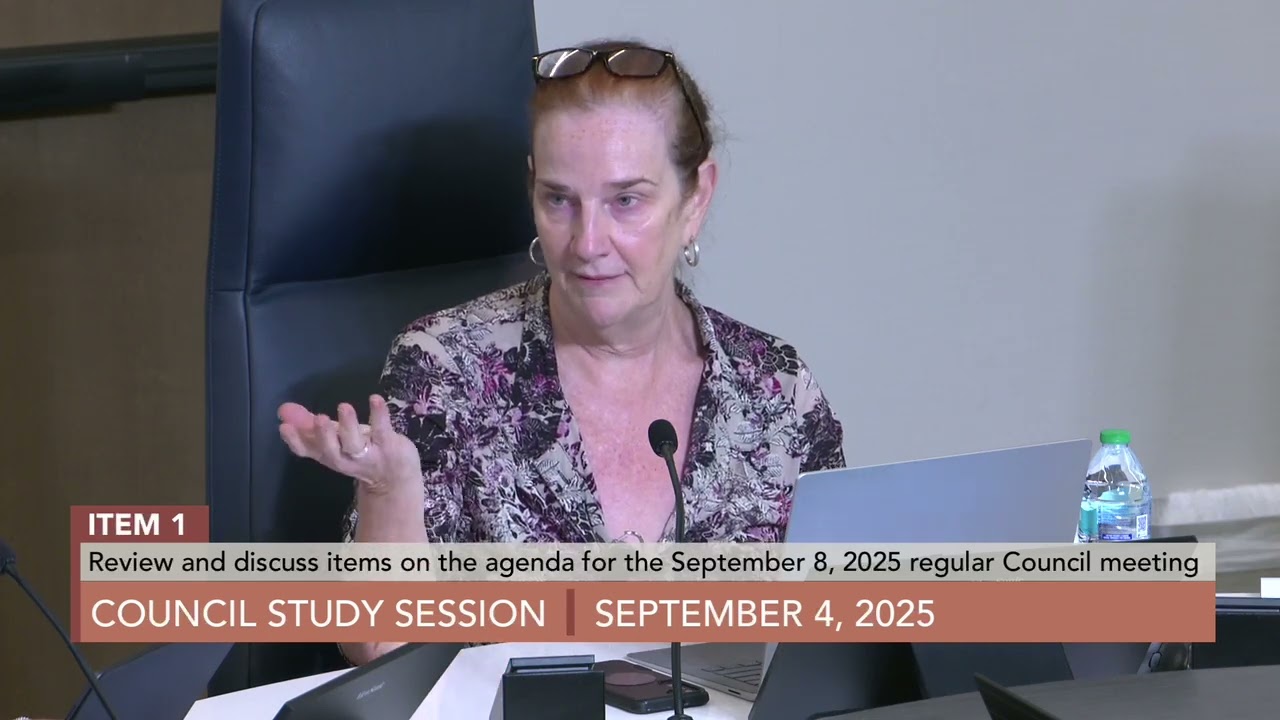
Mesa approves ASU Innovation Zone framework, advances Center Street redesign despite parade route debate
Mesa City Council study session approved framework amendments for ASU Innovation Zone partnership and advanced detailed design for Center Street pedestrian/bike corridor project while addressing parade route compatibility concerns.
Mesa Council Advances ASU Innovation Zone Framework and Center Street Redesign Amid Parade Route Tensions
Mesa City Council's September 4 study session approved two significant downtown initiatives and reviewed a long-stalled mixed-use development on Site 17, setting up Monday votes and detailed design work. However, discussion of the Center Street project revealed underlying council anxiety about reducing vehicular lanes and accommodating large parade floats through a proposed roundabout—a tension that will persist as design progresses.
Key Speeches
"This zoning needed to be in place before we could finalize our agreements with ASU. If you want to think about in practice today, it's the Novvice. It's the Novas corridor in Tempe where you see that the partnership between Tempe and ASU that gave uh parameters for how ASU could develop in that area and then ASU has that flexibility to go and within following within those guardrails go and develop uh as you know the market u necessitates." — Jim Butler, Development Services Director
"Yesterday I had a meeting with President Crowe, uh Mr. Butler and I and uh they're excited about moving a downtown campus here in Mesa and this provides a lot of flexibility not only Novas but Skyong to as part of their developments too and I really think this is important for us to move forward with this uh opportunity zone for them." — Mayor John Giles
"I totally um appreciate your thought on the parade, but I guess I would just caution building a street for one event that happens a year, right? So, 99% of the time, this let's let's build it for that 99%." — Council Member [identified in transcript as supporting forward design]
"Between Pepper and University is the only four-lane road that we have in the square mile... Center becomes the center of our downtown I think will really help with development... they took nine blocks of a five lane road and they transformed it into a pedestrian friendly um project... attracted over $270 million in local economic output and attracted $130 million in private development." — Council Member David Luna, citing Lancaster, California precedent
Timeline
Employment Opportunity District Amendment (Item 6A):
- Staff presentation: Rachel Phillips (Assistant Planning Director) explained the two-part amendment: repeal and replace Chapter 14 of zoning ordinance and amend Section 11861A (use type classifications). District designed to create flexible regulatory framework for political subdivisions (including ASU) to develop mixed-use projects combining governmental and commercial purposes.
- Key context: District previously used only twice in Mesa (POS Employment Opportunity District and Google/Red Hawk project). Requires minimum 140 contiguous acres; fewer than five parcels in Mesa currently meet threshold, though more could if land annexes.
- Council discussion: Council Members Jen Duff and Francisco Heredia asked about job creation requirements and applicability to school districts. Butler clarified that political subdivisions must enter development agreements specifying parameters (e.g., commercial-to-residential ratios). John Giles noted meeting with ASU President Crowe and expressed enthusiasm for downtown campus expansion.
- Outcome: Study session approval; scheduled for introduction Monday, September 8. Development agreement with ASU to follow within months if council adopts amendment.
Culdeac Mixed-Use Development, Site 17 (Item 5A):
- Applicant presentation: Attorneys Jeff McVey and Jimmy Takio presented ground lease, development agreement, and option-to-purchase for three-phase residential project. Phase 1: 144 for-sale townhome units (construction to commence by 2027); Phase 2: 225 units; Phase 3: 425 units. Total: 794 units. Commercial space: 25,000–50,000 sq ft. Residential amenity space: 25,000–50,000 sq ft. Significant open space included; public access agreements to green space granted.
- Negotiations: McVey confirmed negotiations finalized early this week; documents marked "draft" pending finalization. Substantial business terms remained consistent with council direction from prior months; recent negotiations focused on minor points (e.g., park hours). Council Member Adams asked if city gave up substantive terms; McVey assured no material concessions beyond "dotting eyes and crossing tees."
- Public access: Culdeac responsible for maintenance of open/green spaces; public access through easement.
- Outcome: Study session approval; scheduled for council vote Monday, September 8.
Center Street Capital Improvement Project (Item 2A):
- Staff presentation: Eric (Transportation) presented proposal to redesign Center Street from Main Street to University. Goals: enhance pedestrian and bicycle travel, provide gateway to downtown, connect convention center to downtown, reduce speed limit to 25 mph. Project elements include: wider sidewalks (focus between Second and Main), separated curbside bike lanes (6.5 feet), 4-foot buffer between bike lanes and parking, 4-foot buffer between parked vehicles and travel lanes, parallel parking retained, proposed roundabout at Second Street.
- Traffic data: Current capacity 15,000–20,000 vehicles/day; actual traffic counts highest section just under 10,000/day. Two-lane configuration sufficient. Feasibility study conducted in 2023–2024 confirmed traffic operations would remain viable.
- Parade route concern: Mayor and Council Members Spillsbury and Jen Duff expressed anxiety about roundabout compatibility with parade logistics. Eric and Butler noted roundabout is only design detail requiring further engineering; street width otherwise adequate. Parades currently use Center Street staging area in parking lot and north of University; roundabout may require design modifications to accommodate large vehicles.
- Connectivity: Jen Duff raised concern about isolated bike lane; Eric confirmed existing bike lanes continue north of Main; future connections to canal path expected over time.
- Public comment: None recorded during study session; public outreach planned as part of detailed design phase.
- Council discussion: Extended debate over parking, traffic volume during convention center events, parade accommodation, and benefits of walkability. David Luna cited Lancaster, California project generating $270M economic output and $130M private investment; presented case for prioritizing pedestrian experience over single large events. Council Member Spillsbury expressed concern about traffic congestion during concerts and convention center capacity growth. Agreement to move forward with detailed design and engineering study of roundabout feasibility.
- Outcome: Direction given to proceed with detailed design phase using 2024 bond funds ($7 million allocated for streets projects). Engineering to study roundabout feasibility for parade accommodation; public outreach planned; utility conflicts to be identified; cost analysis to determine buildable scope.
Minutes Acknowledgment (Item 3):
- Unanimous consent to acknowledge receipt of meeting minutes; passed unanimously.
Opposition
No formal organized opposition documented in study session. However, Council Members Spillsbury and Jen Duff expressed reservations:
- Parade route compatibility: Roundabout design unclear for large vehicle access during Mesa parades (held twice annually).
- Traffic congestion: Concern about reducing four lanes to two during convention center events, concerts, and peak periods.
- Convention center capacity growth: Worry that reduced lanes will limit future expansion and attractiveness of venue.
- Bike lane safety debate: Jen Duff noted receiving conflicting feedback from cycling advocates—some supporting separated lanes, others questioning delineator safety.
- Isolated design segment: Jen Duff raised that wider sidewalk/bike lane segment will lack north–south connectivity without parallel improvements elsewhere on Center Street.
Most compelling arguments against:
- Council Member Spillsbury: "I just get nervous about when we have concerts and large events at the convention center and how bad the traffic is backed up already with four lanes of traffic. So, I just want to make sure we're really looking at that and we've figured out other ways to get traffic in and out of that area."
- Jen Duff: Concern that isolated project will feel disconnected; questioned pace of public engagement given years of delay.
Support
Council Member David Luna strongly advocated forward:
- Presented Lancaster, California case study: nine-block five-lane road transformation generated $270 million economic output, $130 million private development, 800+ permanent jobs, doubled tax revenue, reduced traffic collisions.
- Emphasized downtowns are "place for people"; vibrant downtown requires walkability and bikeability, which drives development and community connection.
- Noted Mesa Arts Center operates with single-lane access without congestion; convention center would benefit from exciting, walkable environs rather than highway-like corridor.
- Personal testimony: Living car-free in downtown East Mesa fostered community connection and inspired civic engagement; similar streetscape design would replicate benefits.
Mayor John Giles supported advancing design:
- Emphasized between Pepper and University is Mesa's only four-lane road in square mile; Center Street is sole north–south connector for regional pedestrian/bicycle connectivity.
- Historical context: When McDonald's was downtown center, development followed; Center Street now is downtown center but "feels like a highway."
- Envisioned Center Street as connective tissue linking hotel, convention center, Serine House, ASU post office, and other downtown assets; currently disconnected.
Council Member Francisco Heredia supported design advancement:
- Noted significant development pipeline (Grid Crust opening end of year, east-side projects) will converge on Center Street.
- Acknowledged "anytime you change something, there's going to be pluses and minuses, but we think we can get a lot more pluses than minuses."
Support themes:
- Economic development precedent (Lancaster model).
- Community placemaking and walkability as downtown revitalization engine.
- Safety for all users (pedestrians, cyclists, vehicles).
- Existing traffic data justifies lane reduction.
- Mesa Arts Center operates successfully on constrained street.
Project Details
Employment Opportunity District Amendment:
- Case/Item: Item 6A, Chapter 14 Title 11 (Mesa Zoning Ordinance)
- Applicant/Entity: City of Mesa (text amendment); ASU partnership driving need
- Type: Rezoning/regulatory framework text amendment
- Purpose: Expand Employment Opportunity District flexibility to political subdivisions (including ASU) for mixed-use development; create intergovernmental agreement pathway for projects combining governmental and commercial land uses
- Minimum area requirement: 140 contiguous acres (reduced from prior 160 acres)
- Current statute: District designed for large-scale employment campuses; previously used twice (POS Employment Opportunity District, Google/Red Hawk)
- Precedent cited: Novas corridor in Tempe (ASU partnership model with retail, restaurants, Class A office, mixed-use)
- Next step: If council adopts amendment, ASU will submit development plan and intergovernmental agreement within coming months
Culdeac Mixed-Use Development:
- Case number: Site 17 redevelopment (specific case number not stated)
- Applicant/Developer: Culdeac (developer name; legal entity not fully stated)
- Attorneys: Jeff McVey, Jimmy Takio
- Location/Address: Site 17, Mesa (specific street address not stated in transcript)
- APN: Not stated in transcript
- Project type: Ground lease, development agreement, option to purchase
- Zoning: Not stated in transcript
- Phases:
- Phase 1: 144 for-sale townhome units; construction commencement deadline 2027
- Phase 2: 225 residential units
- Phase 3: 425 residential units
- Total units: 794 residential
- Commercial/amenity space: 25,000–50,000 sq ft commercial; 25,000–50,000 sq ft residential amenity
- Open space: Significant green space; public access easement granted
- Maintenance: Culdeac responsible for open/green space maintenance
- Incentives provided by city: Not detailed in transcript
- Changes from prior presentations: No substantial changes; negotiations focused on finalization and minor points (e.g., park operating hours)
Center Street Capital Improvement Project:
- Item: Item 2A (presentation only; no vote this session)
- Location: Main Street to University Street, downtown Mesa (approximately 0.5 mile)
- Current configuration: Four lanes (two each direction); 77 feet pavement width between curbs in some locations
- Proposed configuration:
- Two lanes (one each direction)
- Separated curbside bike lanes (6.5 feet wide)
- 4-foot buffer between bike lane and parking
- 4-foot buffer between parked vehicles and travel lanes
- Parallel parking retained
- Turn lanes at Main, First, University intersections
- Proposed roundabout at Second Street
- Widened sidewalks (focus between Second and Main for convention center gateway)
- Shade elements
- Speed limit reduction to 25 mph (from current, not specified but implied 30+)
- Project scope: Originally conceived as longer corridor (Broadway to canal); refocused on this segment as highest priority
- Funding source: 2024 Mesa bond program ($7 million allocated for streets projects)
- Current traffic data: 10,000 vehicles/day peak (capacity 15,000–20,000); traffic analysis shows two-lane configuration sufficient
- Related studies: Downtown micromobility and parking study (led by Jeff's group); convention center master plan
- Design standards: Separated bike lanes with buffering; wider sidewalks; comparable to First Avenue (which has 30 mph speed limit)
- Parade route: Center Street currently used; roundabout feasibility for large vehicle accommodation to be engineered in detailed design phase
- Next steps: Detailed design phase using 2024 bond funds; engineering study of roundabout; public outreach; utility conflict identification; cost-buildability analysis
Vote Breakdown
Minutes Acknowledgment (Item 3):
- Final: Unanimous (passed)
- Individual votes: Not stated in transcript; verbal "I" responses recorded but not attributed by name
No other votes taken during study session. Employment Opportunity District amendment and Culdeac project approved in study session format (direction given) but scheduled for formal council votes Monday, September 8.
Outcome & Next Steps
Employment Opportunity District Amendment:
- Study session approved advancing to council introduction Monday, September 8.
- If council adopts amendment, ASU will submit development plan and intergovernmental agreement within months to finalize partnership terms and project parameters.
- Text amendment enables political subdivisions (including ASU) to develop mixed-use projects on 140+ contiguous acre parcels with regulatory flexibility.
Culdeac Site 17 Development:
- Study session approved advancing to council vote Monday, September 8.
- Ground lease, development agreement, and option-to-purchase documents marked "draft" will be finalized by Monday; Phase 1 development agreement template to be replicated for Phases 2 and 3.
- Project will unfold over multiple years; Phase 1 construction must commence by 2027.
- Represents long-awaited resolution to Site 17 redevelopment stalemate.
Center Street Capital Improvement Project:
- Direction given to proceed with detailed design phase.
- Engineering to study roundabout feasibility for parade accommodation (primary unresolved detail).
- Public outreach planned; utility conflicts to be mapped; cost-to-buildable-scope analysis required.
- Design work funded from 2024 bond program ($7 million streets allocation).
- Additional council updates expected through Sustainability and Transportation Committee.
- Mayor indicated this will not be final discussion; design details (roundabout, delineators, bike lane specifics) will be revisited.
Controversies & Context
Center Street Roundabout and Parade Route: The most contentious discussion centered on a proposed roundabout at Second Street. Mayor John Giles, Council Members Spillsbury and Jen Duff expressed concern that roundabout design details remain unclear and may incompatibly reduce street width for parade floats. Eric (Transportation) and Jim Butler repeatedly assured council that pavement width exists for parade logistics and that roundabout is the only design element requiring further engineering study. However, Jen Duff noted uncertainty: "I think that's something we need to take a real hard look at. I'm kind of a traditionalist on these things. We've done this in Mesa for many, many years." John Giles countered that best-of-both outcomes are achievable but remained cautious: "Just making sure... we can still have the best of both."
Traffic Capacity and Convention Center Events: Council Member Spillsbury expressed discomfort with reducing four lanes to two, citing "how bad the traffic is backed up already with four lanes of traffic" during concerts and events at the convention center. She worried the redesign would "become an issue where people don't even want to come down here because it takes so long to get in and out of traffic." By contrast, Eric and transportation data showed current traffic demand (under 10,000 vehicles/day) is well below two-lane capacity (10,000+/day), and the micromobility study found lane reduction would not affect traffic speeds. David Luna argued for prioritizing the 99% of time when no special events occur: "Building a street for one event that happens a year, right? ... 99% of the time, this let's let's build it for that 99%."
Bike Lane Connectivity and Delineator Safety: Jen Duff raised skepticism about isolated design segments lacking north–south connectivity ("will it just be the people who live in this area that can use it on their bikes?") and flagged conflicting advocacy feedback on delineator safety. She noted someone with cycling expertise warned that delineators "are not safe for cyclists which is the opposite of what we've been hearing" and requested deeper investigation. Eric acknowledged connectivity will take years to build out but emphasized the project must start somewhere.
Project Timeline and Momentum: Jen Duff expressed frustration with the project's extended deliberation (five years of discussion). She urged: "I also feel like we've been dragging this project for years and years at this point. So, I would want it to move quick so we can actually use this money... let's not drag this on for longer than necessary." John Giles echoed the urgency, noting "some council members won't be around forever," and wryly alluded to Vice Mayor Summers' stated one-and-a-half-year timeline for the fire station project.
Downtown Revitalization Philosophy: David Luna presented a comprehensive pro-pedestrian argument grounded in economic development, public health, and community building. He cited Lancaster, California precedent showing a street redesign generated $270 million in economic output and 800+ permanent jobs, and shared personal testimony about car-free living in downtown East Mesa fostering civic engagement and community connection. His position: "We don't realize... how much just walking or biking from place to place in a small geographic area, how much I connected with people... I fell in love with the community." This framing positioned the Center Street project as essential to realizing the council's stated goal of a vibrant downtown, implying that maintaining the status quo guarantees stagnation: "If we want that vibrant downtown... yet we're not going to make the change and we're going to stay with the status quo, we can't be surprised when our downtown doesn't change."
ASU Innovation Zone Context: John Giles emphasized the strategic importance of the Employment Opportunity District amendment, noting a meeting with ASU President Crowe. Jim Butler positioned the Tempe Novas corridor as a successful model for university–city partnerships creating mixed-use environments. The amendment represents groundwork for a broader downtown transformation strategy linking ASU, convention center expansion, hotel development (Serine House), and residential infill.
Duration
- Center Street presentation and discussion: Approximately 60–75 minutes (extended debate with multiple council members)
- Employment Opportunity District presentation and discussion: Approximately 20–25 minutes
- Culdeac presentation and discussion: Approximately 10 minutes
- Total study session: Approximately 120 minutes (2 hours)
Mayor noted hard stop at 8:45 AM due to separate commitment (state fire school); did not appear to reach that constraint.
Other Notable Items
Fire Station 224 Groundbreaking (East Valley Quarterly Meeting): Council Member Jen Duff noted recent groundbreaking for Fire Station 224 in Southeast Mesa to improve response times and safety; Vice Mayor Summers indicated one-and-a-half-year construction timeline. Council Member Goforth attended East Valley quarterly collaboration meeting at Mesa Gateway; toured airport with Brian O'Neal and Ryan Smith discussing development.
Mesa Arts Center "Club 48" Membership Program: Jen Duff attended performance at Mesa Arts Center and highlighted new "Club 48" exclusive arts experience program offering members deeper engagement with artists, gelato, and community connection.
Whimo Manufacturing Facility Tour: John Giles toured Whimo manufacturing facility in South Mesa (Magna manufacturer producing Whimo vehicles; approximately 200 employees). Mayor Harkey from Chandler attended; friendly rivalry noted over Whimo's Chandler origin versus Mesa manufacturing presence.