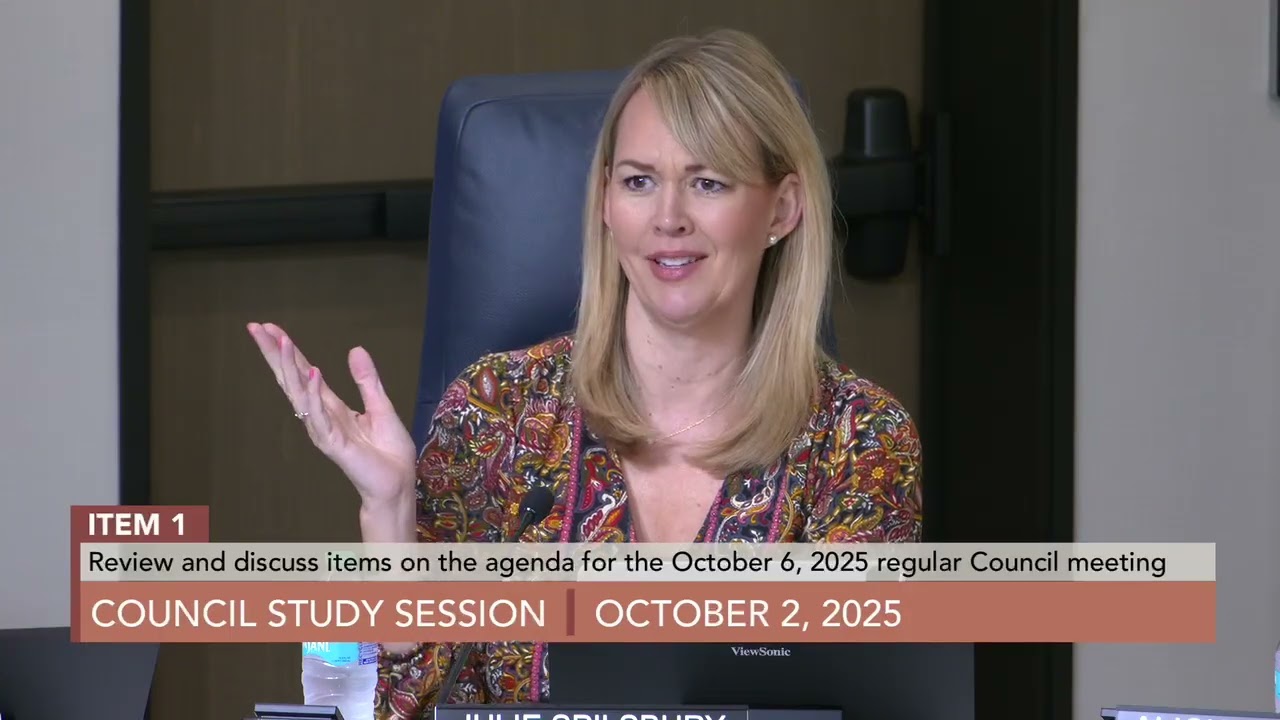
Mesa advances Habitat for Humanity partnership to develop three affordable homes on city parcels
City council study session featuring presentation of Habitat for Humanity partnership to develop three vacant city-owned parcels in Washington Escobedo neighborhood into permanently affordable owner-occupied homes with strong community support.
Mesa Council Endorses Habitat for Humanity Plan to Build Permanently Affordable Homes and Stabilize Washington Escobedo Neighborhood
On October 2, 2025, the Mesa City Council held a study session to preview a landmark partnership with Habitat for Humanity to develop three city-owned vacant parcels in the Washington Escobedo Heritage neighborhood into owner-occupied homes that will remain affordable in perpetuity. The presentation, led by city redevelopment staff and Habitat leadership, generated substantive council discussion and strong community endorsement, setting the stage for formal approval of development and purchase agreements expected in early 2026.
Key Speeches
"This is called lasting affordability and Habitat would guarantee to buy back these homes every single time the families wish to sell them." — Todd Rogers, CEO, Habitat for Humanity Central Arizona
"It is home ownership. It's attainable. It's affordable and it shall remain that way into the future, many years to come." — Deborah Bradley, Chief Operating Officer, Habitat for Humanity Central Arizona
"They're very engaged like you said, and I think the number one overall concern I've heard from them is watching the development downtown and feeling like they're going to be gentrified. They're going to be priced out. They're going to be pushed out. This is a way of keeping that community intact by offering that lasting affordability." — Jeff Robbins, Redevelopment Administrator, City of Mesa
Timeline
-
City redevelopment analysis: City purchased three narrow parcels in mid-1980s as part of broader neighborhood revitalization initiative; marked as development candidates in new redevelopment lens applied ~2024.
-
Community engagement: Habitat partnership identified; city conducted outreach in August 2025, sending English/Spanish flyers door-to-door to approximately 150 homes, coordinating Spanish translation services, and recruiting neighborhood board participation for August 28 public meeting.
-
Presentation at study session: Jeff Robbins presented property maps and historical context; Todd Rogers discussed Habitat's 40-year valley presence and 1,243 homes built; Deborah Bradley detailed the "lasting affordability" ground-lease model; Marbel Salto outlined neighborhood home-repair program; Cynthia Skura reported survey results.
-
Council discussion: City council members asked detailed questions on resale valuation, sweat-equity time commitments, lot sizes, construction costs, entitlement timelines, and community engagement depth; no opposition voiced.
-
Direction: Vice Mayor indicated no formal vote required at study session; council discussion framed as guidance for staff to proceed with development agreement and purchase-and-sale agreement drafting.
Opposition
No organized opposition or public comment opposing the project was present or documented. Cynthia Skura reported that the August 28 community meeting survey of approximately 20 residents present yielded "overwhelmingly" strong support on all three questions and "we didn't receive any opposition."
Support
Number of speakers in favor: Multiple city staff and Habitat officials presented; no formal public comment period recorded.
Main themes from community survey:
- Excitement about Habitat for Humanity returning to the neighborhood after 40-year partnership
- Strong support for permanent affordability mechanism preventing market-rate displacement
- Enthusiasm for neighborhood home-repair program to stabilize existing homeowner base
- Concern about gentrification and displacement—permanent affordability model directly addressed this fear
- Recognition of the Washington Escobedo neighborhood's historical significance and identity
- Interest in sweat-equity and volunteer participation opportunities
Council member statements affirming support:
- Council Member Spillsbury emphasized the decision is "about what's best for the neighborhood" and community stewardship, not maximizing real estate proceeds.
- Jen Duff highlighted the project's alignment with the city's balanced housing plan, noting that lower-income housing is "our biggest area of need."
- Council Member Adams commended the neighborhood as "a very tightly woven community" and noted the "pretty good ratio" of 20 attendees from 150 homes.
Project Details
-
Applicant/Developer: Habitat for Humanity Central Arizona, represented by Todd Rogers (CEO) and Deborah Bradley (Chief Operating Officer); partnering with City of Mesa
-
City Staff Lead: Jeff Robbins, Redevelopment Administrator; Cynthia Skura, Community Engagement Administrator; Mary Yung Koprowski Brown, Planning Director (addressed zoning/infill district questions)
-
Location: Washington Escobedo Heritage neighborhood, along University Drive between Center Street and Mesa Drive, Mesa, Arizona. Specific parcels: (1) west side of North Serin; (2) southeast corner of East Fifth Place and North Serin; (3) northeast corner of North Lewis and East Fifth Street
-
Current Zoning: Single-family residential, subject to Infill Development 2 (ID2) district overlay adopted in 2019
-
Proposed Use: 3–6 owner-occupied single-family homes (exact number pending entitlement process and feasibility of two-story construction, which may require a special use permit under ID2 overlay)
-
Unit Specifications: Range from 1,200 to 1,600 square feet per home, depending on lot dimensions and setback requirements; green building standards with Energy Star and LEAD compliance
-
Purchase Price: $40,000 per parcel; $120,000 total
-
Habitat Contribution & Total Project Cost:
- Habitat purchase cost: $120,000
- Construction cost (estimated for three units): $1,200,000
- City funding contribution: $400,000
- Total Habitat/city investment: ~$920,000
-
Permanent Affordability Mechanism – "Lasting Affordability":
- 99-year renewable ground lease retained by Habitat
- Below-market initial purchase price
- Restricted resale formula based on area median income (30–80% AMI target) and family size
- Zero-percent interest mortgages
- 1.5% simple interest equity appreciation
- Habitat buyback guarantee—Habitat purchases home at restricted price when owner sells
- No forced time commitment to remain in home; sweat equity requirement of 400 hours per buyer (on-site construction or neighborhood repair participation)
-
Secondary Program – Neighborhood Revitalization (Home Repair):
- Targets existing homeowner-occupied homes in Washington Escobedo census tract (low-to-moderate income)
- Affordable repairs: roofing, HVAC, electrical, plumbing, paint
- Funding: $120,000 reinvestment of property sale proceeds
- Homeowners participate in sweat equity (work hours) alongside Habitat crews
- Goal: stabilize neighborhood and enable existing residents to remain
Vote Breakdown
No formal vote was taken during the study session. The meeting was a presentation and discussion only, with council indicating direction to proceed with drafting agreements. The final vote on the development and purchase-sale agreements is anticipated in early 2026.
Outcome & Next Steps
Immediate next steps: City staff will draft a development agreement and purchase-and-sale agreement with Habitat for Humanity, incorporating the partnership terms and conditions discussed. These documents will be presented to the council for approval in early 2026 (specifically referenced as "January, February" timeframe by Vice Mayor and council members).
Timeline to construction: Once council approves the development and purchase-sale agreements and the sale closes, Habitat will begin the entitlement process (architectural design, site planning, zoning/special-use-permit applications under the ID2 overlay). Construction is anticipated to commence in late 2026 into 2027.
Community participation: City departments and professional organizations within Mesa are invited to participate in volunteer build days (termed "team builds") alongside Habitat volunteers and homebuyers fulfilling their 400-hour sweat-equity requirements. The city council jokingly discussed potential participation, with the Vice Mayor noting no power tools or ladders for elected officials, "only floor level" work.
Property assessment: Council Member Spillsbury requested that city real-estate staff provide historical information on whether the three parcels have been subject to any offers from private developers or investors during the 40-year city ownership, to better understand the market viability of the land. Staff agreed to research and report back.
Controversies & Context
Gentrification concern: A substantial undercurrent of the neighborhood's support relates to fear of displacement and gentrification. Jeff Robbins acknowledged, "I think we just have always felt we need to be very good stewards of any property in that particular neighborhood. We're sensitive to the ideas of like you said, you might be able to sell it to a developer for a different price point, but how invested is that developer in the community and the fears about being priced out, gentrification, other things that could happen in a neighborhood that's got a lot of history in this city."
Historical context: The Washington Escobedo neighborhood was designated as Mesa's first "heritage neighborhood" (approved by council in 2019) despite not containing historic buildings; the designation recognizes the area's unique cultural and residential history. The city originally purchased 54 parcels in the mid-1980s and 1990s for revitalization, partnering with Habitat to build homes. The three current parcels were never developed, likely because they are narrower than typical single-family lots and historical construction practices made small-lot infill impractical.
Affordability crisis context: Jen Duff framed the project within the city's balanced housing plan, noting that "very difficult to find projects to satisfy" the lower-income housing need, which is "our biggest area of need." The lasting-affordability model represents a direct response to Arizona's housing-cost crisis and gentrification pressures in historically working-class neighborhoods.
Market value vs. community value: Vice Mayor and Council Member Spillsbury articulated the tension between market return and community stewardship, stating the decision is not primarily "a money thing" but rather about "what's best for the neighborhood" and preventing it from being sold to market-rate developers who may have no long-term commitment to existing residents.
Renter vs. owner assistance: Council Member Spillsbury questioned whether the city can assist renters in the neighborhood with repairs to rental properties, noting that "some of the neighborhoods by me the bad ones are the ones that are renters that the owners aren't taking care of." Staff clarified that Habitat's neighborhood revitalization program is restricted to owner-occupied homes only, a limitation Spillsbury noted but accepted.
Duration
- Item 2A (Habitat partnership presentation and discussion): Approximately 90 minutes (roughly 1:30 p.m. to 3:00 p.m. based on meeting structure and question depth)
- Total study session: Approximately 2.5 hours (includes agenda overview at item 1, liquor-license discussion, transit/Arts & Culture questions, meeting logistics, and closing remarks)
Other Notable Items
Item 1 (Agenda Preview & Liquor Licensing Changes): Staff briefed council on a procedural change from the Arizona Department of Liquor Licenses and Control, which reduced extension periods for applicants from six months to 60 days. This is expected to result in more initial denial recommendations on future agendas, though many applicants will cure defects before council votes. A Walmart liquor license application was mentioned as an example of an initial denial that the applicant has now cleared.
Item 4C (Arts & Culture – Labor Contracts): Jen Duff inquired whether the city incurs costs when touring Broadway shows require hair and makeup labor at the Mesa Arts Center. Staff (Risky, acting director of arts and culture) clarified that touring shows either provide their own crews or pay the city a fee for supplemental labor; the city acts as a "pass-through" and makes a modest revenue margin.
Item 5B (Transit Micro Shelters): Discussion of 40–50 modular micro shelters funded by federal earmark and Arizona congressional delegation funding. The single existing example is at Center and First Avenue. The goal is to provide shade at 80% of bus stops via a combination of shelters, trees, and building overhangs. Jen Duff requested a map of proposed locations.
Item 6A (Extension Street Improvements & Bike Lanes): Extension Street between Baseline and University is currently undergoing mill-and-overlay resurfacing and concrete ramp/curb upgrades (ongoing). Following completion, striping and delineators for the previously approved bike-lane project will be installed. Northbound direction will be reduced to one lane, and speed limit on the segment between Baseline and Southern will be reduced from 40 mph to 35 mph. Delineators will be white (matching First Avenue design), spaced 25–30 feet apart.