Glendale approves $2.9 million Bonsel Park renovation, Glen Lakes Park naming amid firefighter cancer bill dispute
Workshop session approved Bonsel Park master plan renovation and Glen Lakes Park naming community outreach, but was dominated by contentious council debate over firefighter cancer legislation process and accusations of mayoral campaign opportunism.
Glendale Council Workshop Approves Parks Projects Amid Fierce Firefighter Cancer Legislation Dispute
The Glendale City Council workshop of October 25, 2023, approved three consensus items—renovation of Bonsel Park, community-driven naming of a new 10.7-acre park, and state legislative direction on firefighter cancer claims—but was overtaken by sustained internal conflict over process, mayoral conduct, and allegations that the mayor and staff colluded to circumvent council oversight and rebrand a council member's policy idea as mayoral initiative.
Bonsel Park North Master Plan Design Concept
The council reached swift consensus on a comprehensive redesign of Bonsel Park (59th Avenue and Bethany Home Road), directed by consultant team Heidi BGA and John Kennedy of Parkson Recreation.
Project Details
- Location: 59th Avenue and Bethany Home Road
- Budget: Approximately $2.9 million (preliminary estimate), drawn from three Capital Improvement Program (CIP) projects
- Removals: Roller hockey court, racquetball courts, volleyball courts, and fencing surrounding the F-18 aircraft display
- Renovations: Tennis courts and basketball courts (like-for-like improvements)
- Protections: New pickleball courts, aircraft display, restroom building (recently replaced), playground, and historic palm tree drive
- New amenities: Passive turf areas, mini pitch area, four fitness stations along a new walking loop, revitalized F-18 display with runway/landing pad concept, multiple new access points, and LED lighting throughout
Consultant Presentation
The design concept prioritized protecting historic features while modernizing active recreation. BGA explained: "What will be removed are the roller hockey court, the racquetball courts, the volleyball courts and the fencing concrete around the F-100 aircraft display. What we're going to renovate the tennis courts and the basketball courts. What will be protected are the new pickle ball courts, the actual aircraft display, the restroom building, the playground area and the historic drive with palm trees."
Community outreach preceded removals. According to staff, "We did perform a specific survey with targeted user groups of the park mainly focusing on the racquetball courts, and the feedback and data that we received showed support for the removal of the racquet ball courts. In addition to that outreach, this was also run through the Parks Recreation Commission as well."
Controversy Over Runway Designation
Council Member Leandro Baldenegro raised an aviation-technical concern about the project's labeling of the F-18 display approach as "Runway 73." He explained that aviation runway designations are compass headings with the last zero dropped: "If you're landing due east instead of 90 degrees, it would be Runway 9. You're landing straight south, it would be Runway 27, not 270. That airplane pad is due west, and so if that was a runway that it was on, it would be Runway 18 or it would be Runway 9."
Leandro Baldenegro recommended correcting the designation if the intent was to maintain aviation authenticity, noting that "if you get pilots out there, they're going to notice that really quick." The presenters acknowledged the feedback and committed to working with the consultant to address accuracy.
Splash Pad Clarification
Council Member Lauren Tolmachoff raised confusion about budget line items referencing "Bonsel Park splash pad." Staff clarified that the CIP project "small splash pads" actually designated three separate splash pads (A, B, and C) at $500,000 each, and that the Bonsel Park project was reprogramming funds from that allocation to other amenities. Staff stated: "There is no planned splash pad in this master plan for Bonsel, just wanted to make sure we understood that."
Vote and Direction
The council approved the project by consensus. Mayor Jerry Weiers directed staff to return with corrected runway designations and finalized design drawings, with a commitment to address council feedback before proceeding to construction drawings.
Glen Lakes Park Naming Process: Community Outreach Direction
The council approved direction for staff to pursue community outreach for naming a new 10.7-acre park being developed on the former Glen Lakes Golf Course (55th Avenue and Northern).
Project Details
- Location: 55th Avenue and Northern Avenue
- Developer: Purchased entire former golf course parcel, is constructing subdivision and park as dedicated amenity
- Park size: 10.7 acres
- Amenities (turnkey completion): Tot lot, play area, park benches, pet stations, free-play grass area, 10-foot concrete trail, landscaping, irrigation, play equipment
- Expected completion: Winter 2023/2024
Parks Director Jim Burke explained the development transaction: "They bought the entire parcel, they've gone through the development process, the zoning, they're building the subdivision. When they're complete with the park improvements, they'll rededicate that to the city as a city park."
Two Options Presented
Staff presented two naming approaches:
Option One: Council directly names the park (e.g., "Glen Lakes Park"), with Parks Commission review and final council approval.
Option Two: Staff facilitates community outreach to gather naming suggestions, presents findings to Parks Commission, and brings recommendations to council for final approval.
Council Preference
Council members overwhelmingly preferred Option Two, emphasizing community voice and Parks Commission involvement. Jerry Weiers noted: "I personally think if we left at Glen Lakes, I think that would make the most sense, but I do really believe that the Parks Commission should actually lead that conversation." Council Member Ray Malnar echoed: "Historically we have used option two, and I prefer that we continue to do that and give the community, the surrounding community the opportunity to weigh in. I too like Glen Lakes, but what I like doesn't matter—it's what the community would prefer this park to be called."
Council Member Turner supported the process: "This park actually serves as the water retention area for the subdivision as well, so that taxpayers citywide will be taking care of that neighborhood's water retention needs."
Vote and Direction
The council approved consensus direction for staff to proceed with Option Two: facilitating community outreach and Parks Commission input before final council naming approval.
Firefighter Cancer Legislation: Contentious Council Item of Special Interest Process Dispute
The workshop's final and dominant agenda item revealed sharp internal council conflict over process, mayoral conduct, and legislative scope regarding firefighter cancer claim protections. The debate consumed over one hour and involved accusations of campaign opportunism, staff collusion, and circumvention of council oversight procedures.
Timeline of Events
May 9, 2023: Council Member Lauren Tolmachoff filed a Council Item of Special Interest (COISI) requesting discussion of Arizona Revised Statute loopholes preventing cancer claims when firefighters had recurrent cancers or precancerous conditions. She sought both a city policy discussion and a state law discussion.
May 2023 Council Response: Jerry Weiers, with council majority support, declined to move forward, arguing that discussion should end after September when the legislative window would close.
Late September / Early October 2023: Without council knowledge or advance notice, city management and the mayor pursued a similar state legislative initiative, reportedly implementing city policy on recurrent cancers.
October 25, 2023 Workshop: The issue returned as a COISI brought by Jerry Weiers, proposing state legislation addressing recurrent cancer exclusions. Intergovernmental Programs Director Ryan Lee and Mr. Stoddard presented the scope: 90 hours of work, bill language drafting with HR, fire department, and attorney's office; identification of a bill sponsor; coalition-building with stakeholders; and legislative outreach for 2024.
Key Speeches and Testimony
"I'm curious why this didn't sound like a good idea when I brought it up. I have the minutes from the meeting right here where I brought up specifically recurrence. Mr. Phelps said that after September there would be no reason to have this conversation after September because the window would have been closed." — Council Member Lauren Tolmachoff
"I think it's shameful to make a campaign issue out of the health and safety of our firefighters, and I believe that's what this is." — Council Member Lauren Tolmachoff
"The fact is we are where we are. We're having a discussion. You either support it or you don't. I'm not going to allow any more discussion on what happened months ago." — Mayor Jerry Weiers
"It is in my opinion inappropriate and unprofessional for a council member to deny a council member an item of interest from another one and then take credit for it months later and ask for the same item of interest but change it a little bit. And that's what Jerry Weiers did. And it is inappropriate. It is unprofessional. It is uncalled for. And it divides this council." — Council Member Dianna T. Guzman (referred to as Vice Mayor Clark in transcript)
"I will support this because it mirrors the image and intent of Council Member Tomachoff's Council Item of Interest that I supported at the time, and I was at a loss for why anyone else wouldn't. And why we would be told that there was no need for a policy on this and there was no need for us to have a discussion that might involve a statewide change in our statutes, and then less than two weeks later, a policy was rolled out addressing this very issue—Lauren Tolmachoff very issues—and we weren't given the courtesy of being told it was happening." — Council Member Ray Malnar (referred to as Council Member Turner in transcript)
"I'm deeply disappointed that Council Member Clark insisted on making her comments personal, derogatory, and maybe I need to look and see whether that's a violation of our code of ethics or our code of conduct." — Council Member Ray Malnar
Council Member Tomachoff's Core Allegations
Lauren Tolmachoff articulated three primary complaints:
-
Dismissal of her May COISI: Jerry Weiers and the council majority rejected her request for any discussion—not just policy adoption, but educational discussion of state law loopholes—on the grounds that the legislative window would close after September.
-
Substantive incompleteness: She emphasized that Arizona's cancer presumption law contains two loopholes: recurrent cancers (addressed in the current proposal) and precancerous conditions (not mentioned in the mayor's scope). She stated: "There are precancerous conditions that could cause somebody to be excluded from a cancer claim because it can be considered a pre-cancer condition. So I think this doesn't go far enough."
-
Alleged collusion and circumvention: Within weeks of the council declining her item, city management announced a policy on recurrent cancers without council notification or discussion. She asserted: "There was a signing ceremony in the city manager's office to do a city policy, and literally it's just... I think it's shameful the way it transpired because our firefighters at the time thought that they were being dismissed."
Council Member Guzman's Process Criticism
Vice Mayor Dianna T. Guzman expanded the critique, linking the firefighter issue to a broader pattern of COISI mishandling. She alleged collusion between staff and the mayor's campaign, stating under legislative privilege: "There is something going on and it does feel to me like it's campaign related and that there's collusion going on." She referenced a separate COISI regarding an amphitheater business plan that was also not handled according to policy.
She further stated: "We certainly should have been told during the time that we were discussing it in an open meeting so that not only would we know but the public would know as well."
Council Member Malnar's Support for Tomachoff
Council Member Ray Malnar read from May meeting minutes and criticized the mayor's reversal. He stated: "Council member Lauren Tolmachoff brought this item up of interest and it was absolutely appropriate then, it was absolutely appropriate today. Had we all on this dais just agreed and gave consensus, we would have already been done with this and you would have been at your work already, you would have been working with legislators and trying to find a bill someone to carry the water for us. However, that didn't happen."
He then pivoted to criticism of the mayor for reversing position: "It is inappropriate and unprofessional for a council member [meaning the mayor] to deny a council member an item of interest from another one and then take credit for it months later and ask for the same item of interest but change it a little bit."
Ray Malnar also referenced a deceased firefighter: "We did have an individual who passed away on the Glendale fire, and I had a conversation with the mayor and it wasn't a really good one, and he didn't support, and others didn't support. Neither did the city manager. I asked you, sir, to cover him [provide benefits]. I asked you to cover him, and you said no. I asked the mayor if he would have a meeting called a special meeting so we can have this discussion. He declined. All of a sudden, this is a great idea. It is a great idea, but it divides this council."
Mayor Weiers' Response
Mayor Jerry Weiers contested Tomachoff's characterization of his prior position, arguing that the city had already administratively decided to protect recurrent cancers through city policy and that the current effort was to encourage statewide adoption: "What I was referring to in that dialogue was that we administratively here in the city of Glendale had already made the decision, with the concurrence of the council, to not have this be an issue. What this specific effort is to do is to take the lead policy that the city of Glendale has done and to work with the state legislature to include, to encourage all fire departments to do this. So they're two different things."
He also stated his refusal to revisit the historical dispute: "The fact is we are where we are. We're having a discussion. You either support it or you don't. I'm not going to allow any more discussion on what happened months ago."
Intergovernmental Programs Director Ryan Lee's Technical Input
Ryan Lee, arriving late to the workshop, provided technical insight into legislative drafting and stakeholder coordination. He explained: "From a technical perspective, there is a path forward. Now, politically with the makeup of the legislature, that's not my place to make any promises and whether we can deliver the legislation at least in the first year, but there's certainly within the ability to write law—there's a way that we can address this."
Lauren Tolmachoff raised the precancerous condition issue, Lee acknowledged: "Lauren Tolmachoff, to your point—wanting to catch that early now—moving forward, what we need to do is evaluate, and we will provide an update at the legislative agenda presentation in November, right now we need to find a bill sponsor."
Lee confirmed broad stakeholder support: "There are a couple of stakeholders who generally would oppose legislation like this, but the majority cities, our firefighters associations, the league of Arizona cities and towns, even the county—we've met with different stakeholders and they all have a willingness and a desire to work with us on this legislation."
Council Member Turner's Ethics Concern
Council Member Ray Malnar (referred to as "Turner" in the transcript) raised a separate ethics concern regarding Dianna T. Guzman tone: "I want to note that in this discussion we just had regarding the mayor's COISI, Lauren Tolmachoff, El Dama, and myself made a point to keep our remarks on message and dealing with the question at hand and the policies and implications of it. And I'm deeply disappointed that Council Member Clark insisted on making her comments personal, derogatory, and maybe I need to look and see whether that's a violation of our code of ethics or our code of conduct."
Dianna T. Guzman responded by asserting that Jerry Weiers regularly used the special interest period for commentary rather than formal items, claiming "that's all this is. If it's good for the goose, it's good for the gander. Live with it. You're out of line."
Scope and Budget
The approved scope included:
- 90 hours of intergovernmental programs work across multiple departments
- Bill language drafting in coordination with city HR, fire department, and attorney's office
- Identification of a bill sponsor from the 2024 legislature
- Coalition-building with stakeholder organizations
- Legislative outreach including contact with the Governor's office
- Update to council on November 28, 2023, during presentation of the 2024 proposed legislative agenda
Precancerous Conditions Debate
A key substantive disagreement emerged over legislative scope. Lauren Tolmachoff emphasized that Arizona's cancer presumption statute contains a gap regarding precancerous conditions—documented medical conditions (e.g., polyps found during colonoscopy) that have not yet progressed to cancer diagnosis but could be used to deny future claims. She argued: "If we're going to pursue this, why would we leave another loophole in this law where it doesn't say what happens if somebody has a documented diagnosis of what could be considered a precancerous condition? It's not just a recurrence that could create a problem for somebody. It's that as well."
Jerry Weiers indicated openness to this point when responding to her concern: "If that's something that you want brought up, bring that up and we'll do that also."
Vote and Consensus
The council achieved consensus to move forward with the legislative initiative as scoped by staff. The Mayor stated: "We have a consensus, move forward?" and council responded affirmatively.
Downtown Campus Reinvestment Project (DCRP) Business Support Plan
The council received an informational presentation on comprehensive business support initiatives during the downtown campus construction, with no formal vote required.
Presentation by Economic Development
Director Jesse Peterson and Deputy Director Daniel Saelan (referred to as "Daniel Sailan" in transcript) presented a multi-faceted strategy to maintain downtown vitality during construction.
Business Assistance and Training
- Continued Local First Arizona contract: 150+ technical assistance hours and tailored workshops already fully utilized in initial phase
- New agreement: Extended technical assistance, additional workshops tailored to construction-phase challenges, and distribution of award-winning Small Wonders map
Construction Fence and Wayfinding
The construction scrim would feature:
- Merchant logos at nominal cost
- Wayfinding signage directing customers to downtown businesses
- Campus history timeline
- Project contact information and QR codes directing to DCRP website
- Coordination with Oakland Construction to maximize communication
Downtown Events and Activation
- Live concert series: Relocated from amphitheater to downtown lot (monthly, continued)
- Glendale Glitters: Moved to Civic Center Plaza for 30th anniversary with expanded December lighting throughout downtown
- Annual chocolate affair and arts/culture festival: Continued
- Private event producer partnerships: Two months of proof-of-concept resulted in private producers planning November events and beyond
- Downtown event funding program: Rollout anticipated to attract and facilitate events through special events division budget allocation
Marketing and Promotion
- Print media and social media campaigns emphasizing downtown is "open for business"
- Small Wonders map distribution (digital and print) through Local First Arizona network
- Broad downtown district marketing beyond event-specific promotion
Construction Worker and Employee Impact
- Daily construction workers: 50–100 from Oakland Construction, primarily present early morning to mid-afternoon
- City employees downtown-based: 400+ employees working downtown daily (court, police main station, attorney's office, library, Civic Center, special events division, various departments), separate from facilities operations across Grand Avenue
- Private downtown employees: Bank of America building houses 100+ state and private office employees
Communication Plan
- Weekly downtown email blast via Deputy Director Daniel Saelan
- Door-to-door merchant outreach as needed
- Emergency bulletin protocols for urgent issues
- QR code on construction scrim directing to DCRP website
Council Member Turner's Questions on Schedule and Events
Council Member Ray Malnar questioned the project's schedule status and specifically asked about cancellation of summer events at the amphitheater: "So the 400 employees are there, 400 employees based downtown or that you can be on any given day you can find 400 employees working downtown?"
He further asked about the Murphy Park amphitheater band series: "Residents and business people have asked me, you know, if we still haven't closed down the Murphy Park in the amphitheater, why was it so important to cancel the band program and to move Murphy Park, Murphy Live at Murphy Park October events out of Murphy Park when it would have provided a superior venue in their minds?"
Deputy Director Daniel Saelan (referred to as "Daniel Sailan") explained: "For example, the storage of all equipment that was used in the amphitheater—so we had to make a decision a number of months ago as to the timing of this. But we're still shooting for an end of 2024, into 2025, opening for the downtown campus."
Resolution of Band Series Question
Deputy Director Saelan clarified that the band director was unavailable: "I received emails and some text messages from a former mayor, Elaine Scruggs, and she inquired with me about the band, why the summer band wasn't being played. And so I, Mr. Phelps, and I met several times on that trying to make it happen. However, we found out and I spoke with the manager of the summer band that they didn't have a director, and they couldn't put together or assemble a band for this summer."
Outcome
No formal vote was required. Staff presented the plan for council awareness and indicated ongoing implementation and coordination with downtown merchants and construction management. Monthly updates are anticipated.
Other Notable Items
Housing Authority Achievement: City Manager Phelps reported that the Department of Community Services recently received "high performer" status from the Department of Housing and Urban Development for 100% utilization of emergency housing vouchers. Only four of 18 Arizona housing authorities achieved this metric. Glendale was one of the four, fulfilling council priority to accelerate homeless housing assistance.
Lauren Tolmachoff CIP Scoring Matrix Request: In the council special interest period, Lauren Tolmachoff raised a request to revive a CIP scoring matrix—an interactive budgeting tool previously published in city budget books—to allow uniform merit-based categorization of capital projects. She noted the tool had been dismissed years ago due to technical issues and requested council discussion about restoring a standardized scoring process as budget season approached.
Duration and Attendance
- Workshop start: October 25, 2023
- Estimated duration: 90+ minutes (firefighter cancer legislation debate alone consumed over one hour)
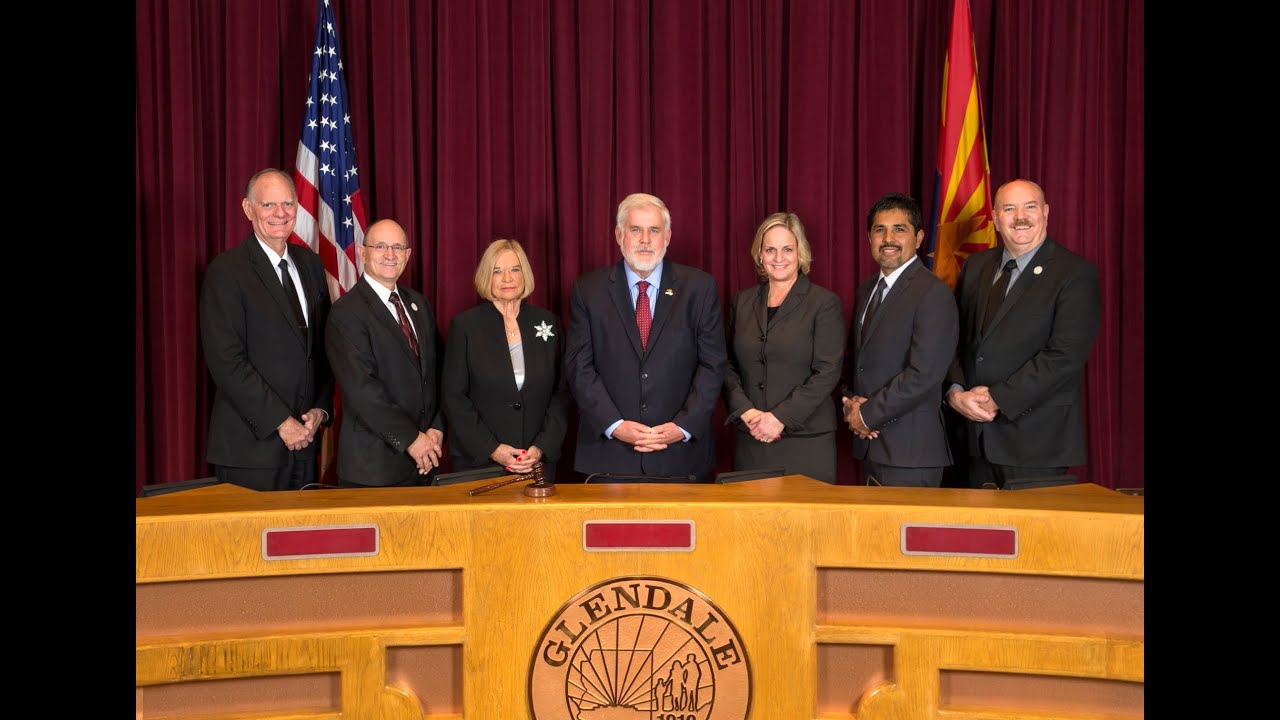
- Attendance: Mayor Jerry Weiers; Vice Mayor Dianna T. Guzman (referred to as "Clark" in transcript); Council Members Leandro Baldenegro (referred to as "El Dama"), Lupe Conchas Jr.. (referred to as "Hugh"), Ray Malnar (referred to as "Turner"), and Lauren Tolmachoff (referred to as "Tomichoff")
- Absent: None noted
Controversies and Context
The workshop exposed significant internal council conflict centered on process, mayoral conduct, and firefighter protections.
Allegation of Process Manipulation
Council Lauren Tolmachoff, Dianna T. Guzman, and Ray Malnar alleged that Jerry Weiers and city staff deliberately circumvented the council's item-of-special-interest protocol. Specifically:
- In May 2023, Lauren Tolmachoff filed a legitimate COISI requesting discussion of both state law loopholes and potential city policy responses to gaps in Arizona's firefighter cancer presumption statute.
- Jerry Weiers and the council majority blocked discussion, with Jerry Weiers arguing that the legislative window would close after September.
- Weeks later, without council notice or discussion, city management announced a city policy on recurrent cancer claims—the exact remedy Lauren Tolmachoff had proposed.
- In October, Jerry Weiers reintroduced a virtually identical item as his own COISI, framed as a state legislative initiative.
Campaign Opportunism Accusation
Lauren Tolmachoff and Dianna T. Guzman asserted that the mayor weaponized a legitimate firefighter health and safety issue for campaign purposes. Lauren Tolmachoff stated: "I think it's shameful to make a campaign issue out of the health and safety of our firefighters, and I believe that's what this is." Dianna T. Guzman, speaking under protection of legislative debate, alleged "collusion" between management and the mayoral campaign to suppress the original council item and then rebrand the initiative months later.
Substantive Scope Disagreement
A secondary but substantive dispute emerged regarding legislative language. Lauren Tolmachoff and staff (Ryan Lee) acknowledged that Arizona's cancer presumption statute contains at least two categories of exclusions:
- Recurrent cancers: Cancer that returns; currently not always presumed occupational in origin even if the initial diagnosis was presumed occupational.
- Precancerous conditions: Documented medical diagnoses of pre-malignant conditions (polyps, dysplasia, etc.) that have not yet progressed to cancer but could be cited to deny future cancer claims.
The approved scope addressed recurrent cancers but did not explicitly commit to legislative language covering precancerous conditions. Lauren Tolmachoff argued this left a loophole. Ryan Lee indicated openness to exploring this during subsequent stakeholder discussions but did not commit to inclusion in the bill language scoped for November.
Broader Code of Conduct Concerns
Vice Dianna T. Guzman raised a meta-concern about how COISI items are handled, alleging a pattern of inconsistent treatment. She cited a separate amphitheater business plan COISI that was not handled according to policy. This suggested to her (and to Ray Malnar) a systemic problem warranting review under the city's code of ethics or code of conduct.
Tone and Decorum
Council Member Turner (Ray Malnar) expressed disappointment with Vice Mayor Clark's (Guzman's) tone during the debate, describing her remarks as "personal" and "derogatory" and suggesting they may violate ethics or conduct codes. Dianna T. Guzman responded that Jerry Weiers regularly used the special interest period for commentary and that she was entitled to do the same.
Jerry Weiers moved to shut down further discussion of historical events, stating: "I'm not going to allow any more discussion on what happened months ago."
Consensus Despite Disagreement
Despite the acrimony, the council ultimately achieved consensus to move forward with the firefighter cancer legislation initiative. This suggests that, while process and credit-taking were contested, the underlying policy goal—protecting firefighters from cancer claim denials—commanded broad support. Ray Malnar, despite his criticism of the mayor's conduct, stated: "It is a great idea, but it divides this council."
Vote Breakdown
All three substantive items passed by consensus:
- Bonsel Park North Master Plan Design Concept: Consensus to move forward; consultant directed to address runway heading accuracy
- Glen Lakes Park Naming Process: Consensus to pursue Option Two (community outreach and Parks Commission input before final council naming decision)
- Firefighter Cancer Legislation COISI: Consensus to move forward with state legislative initiative as scoped; estimated 90 staff hours; update November 28, 2024 legislative agenda presentation
No individual votes were recorded; consensus was indicated by council affirmation.