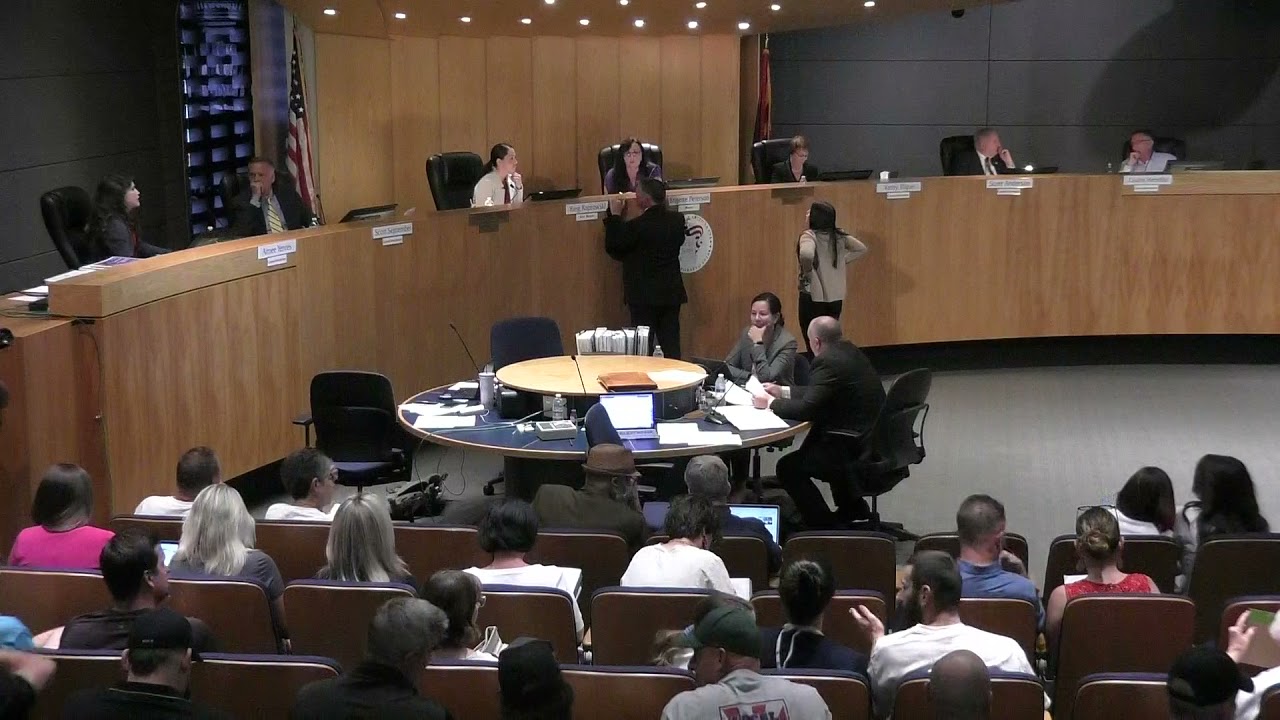
Gilbert Council Defers Santan Adventure Park Go-Kart Decision Pending Noise Analysis
Gilbert Town Council heard contentious design review appeal for Santan Adventure Park's outdoor go-kart track amid resident opposition over noise impacts, alleged process defects, and code adequacy concerns, with decision pending.
Council Delays Decision on Santan Adventure Park Go-Kart Appeal; Residents Challenge Noise Studies, Process Defects, and Code Adequacy
High-stakes design review appeal over 22-car outdoor go-kart track adjacent to Greenfield Lakes and Cottonwood Crossings remains unresolved after contentious hearing; council signals conditional approval path pending staff review of noise ordinance.
On the evening of June 16, 2021—the last meeting held in Gilbert's old council chambers before a year-long remodel—the Town Council convened to hear an appeal of the Planning Commission's April 7, 2021 decision approving a design review for Santan Adventure Park's Phase 1. The development, occupying 2.4 acres at the southwest corner of Knox Road and Santan Village Parkway, includes an 18-hole miniature golf course, a 22-car gas-powered go-kart track, a splash pad, and three support buildings. What should have been a routine design review appeal became a referendum on Gilbert's noise ordinance, the adequacy of pre-application public notice, and whether a developer disclosed its true plans to the community.
The appellant, Randy Nelson, a Greenfield Lakes resident whose bedroom window sits 50 feet closer to the proposed go-kart track than the distance from the council chamber's front door to the municipal office building next door, opened with a plea grounded in common sense. He argued that in his 20 years in product sales, his job was to accentuate the positive and suppress the negative—exactly what he accused Santan Adventure Park Holdings (SAP Holdings) of doing. The developer's representative had failed to mention go-karts in a 2016 neighborhood meeting, instead presenting only miniature golf, an outdoor maze, and a splash pad. When asked directly by Nelson if go-karts were planned, Ben Cooper of SAP Holdings responded: "Not at this time."
Key Speeches
"My career was always in consumer product sales… every salesman's job is to accentuate the positive and pass over the negatives… we have the same exact situation with your SAP salesman… it was the buyer's job to understand those unstated negatives." — Randy Nelson, appellant and resident, Greenfield Lakes
"We have submitted two studies one a model that was the first study that was submitted and the second study is an actual real-life study from a real life go-kart track both of those studies have concluded that it does and will meet the town code… quite frankly there's been no evidence submitted by the appellant to meet their burden of proof that we won't." — Sean B. Lake, Pew & Lake, PLC, representing developer
"This code is antiquated and not aligned with other noise codes across the united states specifying indoor sound pressure level limits is highly problematic… the town of gilbert is unique and highly irregular… a 20 dB level difference between indoor and outdoor sound levels implies a minimum of 75 dBA is allowed to enter residential properties… so to put this in context the town of gilbert is allow sound pressure levels entering residential land uses that would not normally be considered acceptable for livestock." — Dr. Lance Willis, principal acoustical engineer, Spendyarian and Willis Acoustics
"I know we're not allowed to talk about hours I'm hoping that in the negotiations with the neighbors perhaps there could be some reduced hours to ensure more quietness at night… what i'm trying to do is protect the neighbors from something that was agreed to prior to when we got here and stay within the restrictions of the noise concern that it was the only thing we're able to address today." — Councilmember Kathy Tilke, proposing conditional approval framework
Timeline
- 2015: Gilbert Parks and Recreation Department issued RFP for recreation amenity on the Crossroads Park parcel.
- October 19, 2016: Neighborhood meeting held at Greenfield Junior High. Developer presented miniature golf, outdoor maze, splash pad. When resident Randy Nelson asked if go-karts were planned, Ben Cooper stated: "Not at this time." No second neighborhood meeting was ever held after the developer later added go-karts to the plan.
- February 14, 2017: Town Council approved the lease agreement with SAP Holdings. The lease required construction to commence within two years (extended to March 2, 2021 via amendment). As of June 2021, no construction had started—a fact highlighted by residents as potential lease default.
- April 7, 2021: Planning Commission heard design review case as a public hearing item and voted 5-2 to approve, with generic conditions requiring adherence to approved exhibits and commercial/industrial site plan notes.
- April 19, 2021: Appeal filed by Randy Nelson on three grounds: (1) no second neighborhood meeting was held despite substantial project modification; (2) outdoor go-karts should be converted to indoor; (3) noise study was insufficient.
- May 25, 2021: Dr. Lance Willis, acoustic expert hired by appellants, submitted letter identifying modeling errors in the original MD Acoustics study and claiming a 13 dB discrepancy in updated projections.
- May 26, 2021: Developer's attorney, Sean B. Lake (Pew & Lake, PLC), submitted response to appeal. Developer's acoustic consultant, Mike Dickerson (MD Acoustics), submitted updated real-world noise study conducted at an operating go-kart facility in Palm Springs, California on April 30, 2021.
- June 9, 2021: MD Acoustics submitted updated noise study and sound pressure level projections based on real-world field measurements.
- June 16, 2021: Town Council convened at 5:15 p.m. for a 60-item agenda spanning 2,900+ pages. Public comment on Santan Adventure Park began approximately 6:30 p.m. after communications from citizens segment. Hearing lasted approximately 4 hours.
Applicant presentation: Stephanie Bobenheim, Town of Gilbert planning staff, provided overview of project history, phasing plan, site plan, prior approvals, grounds for appeal, and two noise studies. She confirmed that design reviews do not require neighborhood meetings (only zonings and specific plan amendments do), though the developer chose to hold one in 2016 outside the formal design review process.
Staff recommendation: Town staff recommended upholding the Planning Commission's approval of the design review project.
Public comment: Approximately 20 speakers addressed the council over three hours. The first segment (communications from citizens, limited to one minute per speaker) included allegations against Mayor Bridget Peterson regarding ethical misconduct and preferential treatment toward developer Howard Morrison in an unrelated Morrison Ranch apartment project—outside the scope of the Santan appeal but reflecting broader resident frustration with council-developer relationships. The second segment (public hearing comments on the Santan appeal, allowed four to six minutes per speaker) consisted almost entirely of resident opposition focusing on noise, air quality, traffic, property values, and process defects. One speaker (Jordan Lake) spoke in favor of the multi-family housing component in Morrison Ranch but did not address the Santan appeal directly. No speakers supported the Santan go-kart project.
Council discussion: Council members asked pointed questions of both the appellant's expert (Dr. Willis) and the developer's attorney (Sean B. Lake) regarding burden of proof, code interpretation, the distinction between quantitative (Section 4261) and qualitative (Section 4264) noise standards, the enforceability of "reasonableness" provisions, and potential compromise solutions (trees, wall, mufflers, electric conversion, noise monitoring). Councilmember Kathy Tilke circulated a draft motion with stipulations designed to impose conditions rather than reverse approval. The council indicated no immediate vote would be taken; further analysis was needed.
Opposition
Number of speakers against: Approximately 18 public comment speakers opposed the go-kart project or challenged procedural and ethical issues.
Main concerns:
-
Inadequate noise study and conflicting expert testimony: Appellant's expert (Dr. Willis) identified modeling errors in the original MD Acoustics study and a 13 dB discrepancy in the updated study. He argued that the predicted 61 dB outdoor noise level at nearest residences (equivalent to normal conversation at 6–10 feet) would be unacceptable for sleeping and that a six-foot decorative wall cannot block line-of-sight from upper-story bedrooms.
-
Antiquated noise code: Dr. Willis testified that Gilbert's code (55 dB daytime / 45 dB nighttime indoor limits) is inconsistent with other jurisdictions (Carlsbad, Palm Desert, Palm Springs, Colorado, Oro Valley) and would allow sound pressure levels unsuitable even for livestock. He advocated for adoption of ANSI S 12.9 standards.
-
Inadequate sound wall: Residents rejected the proposed six-foot decorative CMU wall as insufficient because (a) it does not block line-of-sight from two-story homes on sloped terrain; (b) trees alone are ineffective without a solid barrier; (c) a functionally effective wall would be 15–20 feet tall and unsightly.
-
Process defect: Missing second neighborhood meeting: Residents argued that the 2016 neighborhood meeting presented no go-karts and the developer explicitly stated "not at this time" when asked about them. Gilbert Land Development Code Section 5-204(f) requires a second neighborhood meeting if an application is "substantially modified" from the original presentation. The developer added go-karts after the lease was signed in 2017, yet no second meeting was held. Town staff countered that design reviews do not require neighborhood meetings; such meetings are mandatory only for zonings and specific plan amendments.
-
"Bait-and-switch" tactics and lack of good-faith engagement: Residents alleged that the developer deliberately withheld mention of go-karts from early discussions to avoid neighborhood opposition. A Change.org petition garnered 800+ signatures in less than five days after the Planning Commission meeting revealed the go-karts. The developer's letter claiming "good neighbor policy" was mocked as semantics and a cover for deliberate deception.
-
Environmental and public health impacts: Residents cited air pollution (one go-kart running one hour ≈ one car driven 350 miles), stress on residents with PTSD from simulated airplane crashes and explosion sound effects, and degradation of property values in an established residential community.
-
Lease default and moot appeal: One resident (Ross Pfaff) argued that the original 2017 lease required construction within two years, extended to March 2, 2021. As of June 2021, construction had not commenced, triggering a default that should void the lease and return the parcel to the original general plan, rendering the design review appeal moot.
Most compelling arguments:
- The 13 dB discrepancy between the original and updated noise studies undermines confidence in the developer's acoustic analysis.
- A 61 dB outdoor noise level at nearby residences, maintained for 15 hours per day (8 a.m. to 11 p.m. weekdays, midnight weekends), is materially different from ambient roadway noise (which is transient) and contradicts Gilbert's own qualitative code (Section 4264) prohibiting "unnecessary excessive noise" that disturbs the peace or causes discomfort to a reasonable person.
- The 2016 neighborhood meeting did not disclose go-karts; the developer's later addition of go-karts constitutes a "substantial modification" requiring a second meeting under the town code, which was not held.
- 150+ go-kart tracks in 111 southwestern towns are located away from residential neighborhoods; Castle Golf's 35+ other projects are not adjacent to homes. This project is an anomaly.
Organized groups: No formal organization is evident in the transcript, though residents of Greenfield Lakes and Cottonwood Crossings appear coordinated, with several residents citing preparation of written materials, site visits to similar facilities, and prior meeting attendance.
Support
Number of speakers in support: One public comment speaker (Jordan Lake) spoke in favor of multi-family housing in general and criticized the anti-development sentiment among some residents, but did not directly support the Santan go-kart project. No speakers testified in favor of the go-kart track itself.
Main arguments from developer's attorney and expert:
-
Compliance with town code: Both noise studies (the original MD Acoustics model and the updated real-world study based on field measurements at a Palm Springs go-kart facility) conclude that projected interior noise levels will be 31–41 dB—well below Gilbert's 55 dB daytime and 45 dB nighttime indoor limits.
-
Appellant's burden of proof: The appellant has not met its burden to establish that the design violates the noise ordinance. The appellant's expert has not concluded that the ordinance is violated; he has only criticized the methodology of the developer's studies and expressed opinion that the code itself is inadequate.
-
Quantitative standard is controlling: Section 4261 sets a quantitative, measurable standard (decibel limits); Section 4264 (prohibiting "unnecessary excessive noise") is qualitative and difficult to enforce. The code itself defines "community noise standard" by reference to 4261's decibel limits. Once a project complies with 4261, it meets the standard set by the town.
-
Real-world field study superior to modeling: The developer's updated study is based on actual measurements of an operating go-kart facility (with the same or similar equipment), not a theoretical model, and is more reliable than a study relying on incomplete or disputed modeling assumptions.
-
Ongoing enforcement and mitigation: Even if the council approves tonight, the tenant must comply with the town code going forward. If noise violations occur, the town has remedies under the lease (Section 5.2 requires the tenant to report complaints; Section 11–12 allow the town to issue notice and terminate the lease upon failure to remedy within 30 days).
-
Voluntary concessions: The developer has offered to use Honda super-silent mufflers, refrain from using loudspeakers and sirens, and install a decorative wall and additional landscaping—demonstrating good faith and commitment to being a good neighbor.
Project Details
- Case number: Design Review 2182 (appeal of Planning Commission approval).
- Applicant/Developer: Santan Adventure Park Holdings (SAP Holdings); operator Castle Golf; represented by Sean B. Lake, Pew & Lake, PLC.
- Location/Address: Southwest corner of Knox Road and Santan Village Parkway, Gilbert, Arizona. Within the larger Crossroads Park parcel (Arizona Ice facility is also on the parcel).
- APN: Not stated in transcript.
- Current zoning → Proposed zoning: Not a zoning case; design review only. The parcel is zoned/permitted for recreation/amusement use per the 2017 lease.
- Density/units/square footage: Phase 1 occupies 2.4 acres (of 4.5-acre total site). Phase 1 includes 18-hole miniature golf course, 22-car outdoor gas-powered go-kart track, splash pad (~100 square feet), concession building, go-kart canopy, and maintenance building. Crossroads Park has 976 total parking spaces; Santan Adventure Park Phase 1 shares 68 spaces with Arizona Ice; Phase 2 will require 28 additional spaces.
- Changes from previous version: Original 2016 neighborhood meeting presented miniature golf, outdoor maze, and splash pad—no go-karts. Developer later added go-karts to the plan. Updated noise study (June 9, 2021) based on real-world field measurements in Palm Springs, California replaced the original modeling study.
Vote Breakdown
Final: No vote taken. Council deferred decision pending further staff analysis and potential conditions.
Votes on other matters (not related to Santan):
-
Consent calendar (items 1–21, 23–50): Approved 7-0 (motion by Councilmember Kathy Tilke, second by Vice Mayor Yung Koprowski).
- Appointments: Michael Bailey to Veterans Advisory Board; TJ Claussen to Redevelopment Commission.
- Item 22 (traffic signal contract) removed and continued to August 3.
-
Public hearing items 51–53, 56: Approved 7-0 (motion by Councilmember Kathy Tilke, second by Councilmember Amy Yantas).
- Item 55 removed and continued to August 3.
Outcome & Next Steps
No decision was rendered during the June 16 meeting. Council signaled intent to impose conditions on approval—including a decorative wall, additional landscaping (evergreen trees), Honda super-silent muffler installation, prohibition on amplified speakers and sirens, and a quarterly noise study for the first year—rather than outright reversal of the Planning Commission's decision. Councilmember Kathy Tilke circulated a draft motion with stipulations, framing approval with conditions as a middle path that respects both the existing lease and resident concerns.
Critical open questions:
- Whether a six-foot decorative wall combined with trees can provide meaningful sound attenuation to upper-story bedrooms on sloped terrain with direct line-of-sight to the track.
- Whether the town code should be amended to align noise standards with other jurisdictions (e.g., outdoor rather than indoor limits) and whether such an amendment would trigger liability claims by the tenant if compliance becomes impossible.
- Whether Section 4264 (qualitative "reasonableness" standard) should be invoked to override Section 4261 (quantitative decibel limits) or vice versa, and how such disputes would be enforced by police or adjudicated in municipal court.
- Whether a second neighborhood meeting is required under Gilbert Land Development Code Section 5-204(f) for design reviews (staff says no; appellants say yes).
Town Attorney Christopher Payne clarified that both Section 4261 and Section 4264 can be enforced, but that 4261's quantitative standard is objective and predictable while 4264's qualitative "reasonableness" standard requires police discretion and, if contested, municipal court adjudication. He noted that if the town updates the noise ordinance in the future, the tenant must comply with the new standard; the lease contains no grandfather clause. A violation of the updated ordinance would entitle the town to enforce the lease's default and termination provisions.
Council indicated a follow-up hearing may be scheduled; no continuance date was announced.
Controversies & Context
Noise Study Disputes and Code Interpretation
The crux of the appeal centers on two competing acoustic studies and fundamental disagreement over what "compliance" means.
The original study (MD Acoustics, date unclear): Used a theoretical model based on anticipated go-kart engine noise. Projected interior noise levels at nearby residences: approximately 40 dB (far below the 55 dB daytime / 45 dB nighttime code limits). No field measurements were conducted. The Planning Commission questioned the methodology during its April 7 hearing.
Dr. Lance Willis's critique (May 25, 2021 letter): Willis identified multiple deficiencies:
- The original study assessed only go-kart engines, ignoring gearboxes, tires, and other operational noise sources.
- It did not account for PA systems, sirens, whistles, or sound effects from the miniature golf course.
- It used incorrect calculation of sound pressure levels and failed to account for line-of-sight blocking by terrain and walls.
- It did not specify the height of sound sources, critical for determining whether a wall can block noise to upper-story windows.
- The acoustic model did not agree with manufacturer data sheets.
The updated study (MD Acoustics, June 9, 2021): In response to Willis's critique, MD Acoustics conducted field measurements at an operating go-kart facility in Palm Springs, California on April 30, 2021. They measured eight "super silent muffler" go-karts at four time intervals. Key findings:
- Noise at 290 feet (the furthest receptor studied): 58 dB.
- Noise at 24 feet (near the track): 76 dB.
- Projected interior noise at nearest residences: 31–41 dB (table 4), far below code limits.
- With a proposed six-foot CMU wall on the south side of the track, noise reduction of unspecified amount; exact contours not provided.
Willis's response to the updated study (June 2021): Willis acknowledged the field study was more reliable than modeling but remained critical:
- The 13 dB increase from the original to the updated study ("from significant underestimation to now a completely different noise assessment") raises questions about the original study's credibility.
- The height of go-kart sound sources and the effect of the wall are still not documented; it is unclear whether a six-foot wall will adequately block line-of-sight from upper-level windows.
- A six-foot wall is typically a privacy wall, not a sound wall; sound walls are usually 15+ feet tall and must completely block line-of-sight.
- The updated study assumes no loudspeakers, sirens, or whistles will be used; the developer's letter hedges this with "if ambient music is used… should not fall far below the ordinance standards"—a subtle admission that some amplified sound may occur.
Councilmember Hendricks's challenge to Willis: Councilmember Lauren Hendricks questioned Willis's credibility, noting that he did not conduct independent field measurements, had not measured ambient noise from Santan Village Parkway, the railroad, Crossroads Parks ball fields, or the SRP power plant, and had not given a definitive conclusion on whether the design violates Section 4261. She pressed Willis on whether he could opine whether the go-karts meet the code; he responded that the studies are incomplete and that he relies on the more stringent ANSI S 12.9 standard, not Gilbert's code.
Code Interpretation: Section 4261 v. Section 4264
A secondary but significant dispute concerns the relationship between two noise code provisions.
Section 4261 (quantitative standard): Specifies that noise inside a closed residential structure shall not exceed 55 dB during the day (5 a.m.–10 p.m.) or 45 dB at night (10 p.m.–5 a.m.), measured more than 15 minutes in duration and more than twice in one hour. This is a civil violation with a monetary fine.
Section 4264 (qualitative standard): States that "notwithstanding any other provision of this chapter… it shall be unlawful for any person without justification to make or continue or cause or permit to be made or continued any unnecessary excessive or offensive noise which disturbs the peace or quiet of any neighborhood or which causes discomfort or annoyance to any reasonable person of normal sensitiveness." This is a petty offense (quasi-criminal) enforceable in Gilbert Municipal Court with fines up to $2,500 and continuing violation liability.
Appellant's argument: The developer and town staff fixate on 4261 because it is objective and measurable; however, 4264 is also enforceable and arguably more protective. The word "notwithstanding" in 4264 means that even if a project complies with 4261, it can still violate 4264 if it causes discomfort or annoyance to a reasonable person. Residents argued that 8 dB increase above ambient conditions (53 dB roadway baseline → 61 dB go-kart + roadway) for 15 hours per day, seven days a week, is unreasonable and unnecessary.
Developer's argument: Section 4261 defines what "community noise standard" means by reference to decibel limits; once that standard is met, 4264 is satisfied. To invoke 4264, one must look to the town code to understand what is "reasonable," and the code itself specifies the standard via 4261.
Town Attorney Payne's clarification: Both sections apply. Section 4261 is a civil violation enforceable by code enforcement officers with a sound meter. Section 4264 is a quasi-criminal offense enforceable by police and adjudicated in municipal court; the determination of "reasonableness" relies on evidence and testimony from affected parties, not on the sound meter reading alone. The "notwithstanding" language means that 4264 can be applied even if 4261 is technically complied with, but doing so requires proof that a reasonable person of normal sensitivity would be disturbed.
Councilmember Hendricks's concern: Noted that "reasonableness" statutes exist throughout Arizona law and are enforceable; there is nothing unique or unenforceable about 4264. She emphasized that the developer cannot be held to a higher standard than existed when they applied, but acknowledged that the two code sections create tension and should be clarified in a future ordinance revision.
Process Defect: Neighborhood Meeting Requirements
Appellant's argument: Gilbert Land Development Code Section 5-204(f) states: "If the application is substantially modified from what was presented at the neighborhood meeting, a second neighborhood meeting shall be held to present the modified application." The 2016 neighborhood meeting presented miniature golf, outdoor maze, and splash pad. When Randy Nelson asked if go-karts were planned, Ben Cooper answered: "Not at this time." The developer later added go-karts to the plan. This is a substantial modification requiring a second meeting.
Town staff response: Section 5-204(f) applies only to zonings and specific plan amendments, not design reviews. Design reviews are not required to include neighborhood meetings; the 2016 meeting was held outside the formal design review process, at the developer's discretion, as part of the lease negotiation. No second meeting was mandated.
Legal status: The town attorney did not substantively weigh in on this issue, and the council did not vote to overturn the approval on this ground. The issue remains unresolved.
Lease Default Argument
Resident Ross Pfaff's argument: The 2017 lease required construction to commence within two years; an amendment extended the deadline to March 2, 2021. As of June 2021 (3+ months after the deadline), construction had not started. The lessee is in material default. The town should void the lease and return the parcel to its original general plan allocation, rendering the design review appeal moot.
Council response: This issue is outside the scope of the design review appeal and was not addressed by the council during the hearing. The lease default is a landlord-tenant matter between the town and SAP Holdings, separate from the design review process.
Ethical Concerns Regarding Mayor Peterson (Separate from Santan Appeal)
During the general communications segment (the first 15 minutes of the meeting, separate from the Santan appeal), multiple residents raised allegations that Mayor Bridget Peterson improperly disclosed sensitive information to developer Howard Morrison and granted preferential treatment due to campaign donations. Speakers included Jessica Gillespie, Brandon Riff, Berna Holtzman, and B. Hurley. Key allegations:
- Mayor Peterson donated $6,000+ to Morrison's campaign and he served as a campaign co-chair.
- Peterson allegedly leaked sensitive FOIA-released emails to Morrison regarding the Morrison Ranch multi-family housing project, identifying specific residents who opposed the project.
- Peterson named a resident by name to the developer, allegedly putting that person "in the crosshairs" and creating safety concerns.
- Multiple speakers called for ethics investigations, Peterson's recusal from Morrison Ranch decisions, and Peterson's resignation.
- One speaker (Brandon Riff) pledged up to $10,000 to fund a PAC to remove Peterson from office.
Council response: No action was taken during the meeting. Mayor Peterson did not respond or defend herself on the record. These allegations are noted in the transcript but were not addressed substantively by the council and are separate from the Santan case.
Duration
- Santan Adventure Park item (Item 54): Approximately 4 hours (6:30 p.m. to ~10:30 p.m.), including appellant presentation, expert testimony (Dr. Willis via Webex), developer presentation, public comment (approximately 20 speakers, four to six minutes each), council discussion, and questions.
- Total meeting: Began 5:15 p.m. Total duration not stated in transcript; estimated 5+ hours based on agenda size (60 items) and Santan item duration alone.
Other Notable Items
Communications from citizens—ethical concerns regarding Mayor Peterson: During the first segment, residents raised allegations that Mayor Bridget Peterson improperly disclosed confidential information to developer Howard Morrison and granted preferential treatment due to campaign donations in an unrelated Morrison Ranch multi-family housing case. No action was taken.
Consent calendar and board appointments: Council approved items 1–21, 23–50 by 7-0 vote, including appointments of Michael Bailey to the Veterans Advisory Board and TJ Claussen to the Redevelopment Commission. Item 22 (traffic signal contract) and Item 55 were removed and continued to August 3, 2021.