Gilbert approves $545M North Water Treatment Plant reconstruction amid Tier 3 drought preparation
Gilbert council retreat focused on Colorado River drought response strategy and major $545M North Water Treatment Plant reconstruction project to ensure water security and resilience during anticipated Tier 3 water shortage.
Gilbert Confronts Colorado River Tier 3 Shortage While Launching Historic $545M Water Plant Reconstruction
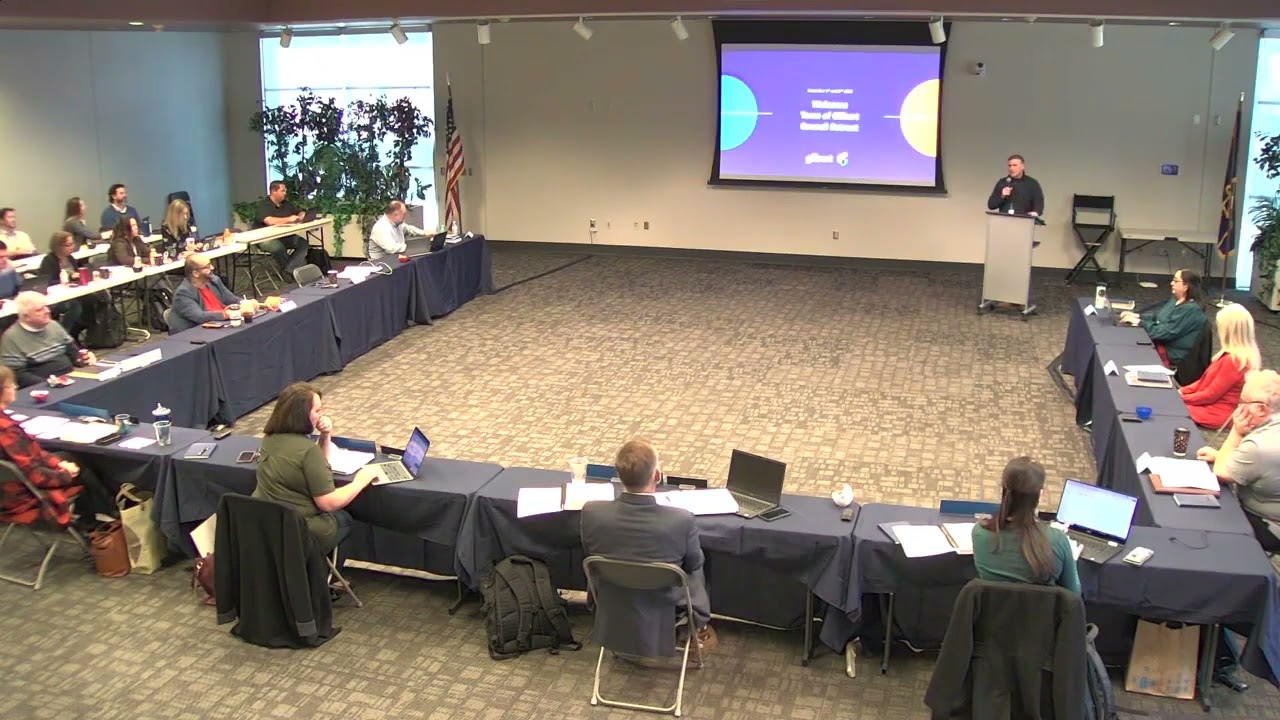
On December 2, 2022, Gilbert's town council convened for a two-day strategic retreat dominated by the convergence of two existential infrastructure crises: the Colorado River's accelerating drought and the critical need to rebuild the town's aging North Water Treatment Plant. The session revealed how water scarcity and aging treatment infrastructure are forcing simultaneous action on multiple fronts—conservation, well acceleration, capital spending, and regulatory compliance—all while the town continues to grow toward buildout.
Mayor Patrick Banger opened the retreat with an unusually candid assessment: "We're in the age of infrastructure," he said, laying out the stakes plainly. "We have a lot of needs across our water systems our Wastewater systems our transportation systems our Park systems our Municipal facilities." He emphasized that the town is in "the last decade" of buildout, landlocked on all borders, and facing a wave of infrastructure investment unavoidable.
Colorado River Drought: Tier 2A Now, Tier 3 Expected in 2024
Lauren Hixson, Water Resources Manager, presented the blunt reality: Gilbert is already operating under a Tier 2A shortage (effective January 2023) and "we fully anticipate to be in a tier three" in 2024. The town has activated Stage 1 of its Water Supply Reduction Management Plan—voluntary education and conservation—since June 2022.
The presentation detailed the cascading crisis. Lake Powell, which supplies water through the Colorado River via the Central Arizona Project (CAP), sits at approximately 3,528 feet elevation. The critical threshold is 3,525 feet; below 3,490 feet the dam cannot operate turbines efficiently and becomes a "fire hose" problem for downstream Lake Mead management. The two reservoirs are in a race toward "Deadpool," the elevation at which neither lake can produce water or power.
"We've been under this new regulation since the beginning of the year and so far so good the team has kept us within compliance despite the increased challenges and we're doing well but this is requiring kind of an all hands on deck approach." — Gene Jensen, Capital Project Supervisor
Hixson emphasized that federal Reclamation projections rely on optimistic assumptions—what she termed "hopeful hydrology"—that don't align with observed watershed conditions. The agency initially projected a 2 to 4 million acre-feet voluntary conservation need; by August 2022, Reclamation announced it would consider unilateral cuts if states didn't deliver. As of the retreat, mandatory reductions remained "highly likely" but not yet imposed.
Councilmember Mike Scott offered sharp criticism of federal inaction: "they've been cowards they've done nothing." He stressed that the upper basin states—Wyoming, Colorado, New Mexico, and Utah—are not cooperating, citing a Wyoming rancher's quote: "when it rains and snows in Wyoming that's Wyoming's water not anybody else's." Scott called for state-level advocacy and multistate negotiation.
Water Supply Resilience: Worst-Case Scenarios and Well Acceleration
Water Manager Rebecca Hamill presented the mathematical reality in stark terms. Gilbert currently has 104 MGD of firm production capacity to serve a maximum day demand (hottest summer day) of 78 MGD—a comfortable 75 percent utilization ratio.
If CAP supply disappeared entirely (a "short-term cap shortage"), removing the 24 MGD from the Santan Vista plant, the town would have only 80 MGD of capacity against 78 MGD demand—a dangerous 97.5 percent utilization and immediate Stage 3 drought triggers (92 percent) or Stage 4 (99 percent).
The solution: accelerate well projects and add 12 MGD of "resiliency supplies" in the short term, moving the ratio to a manageable 85 percent. In a long-term scenario where CAP supply is cut in half, Gilbert would need both the original 12 MGD well acceleration plus an additional 12 MGD—24 MGD total—to maintain current service levels into buildout.
Hamill noted the brutal timeline constraint: "three-year construction timeline" for each well from acquisition through drilling, casing, and commissioning. Wells scheduled for FY23 funding would not come online until FY26; those starting in FY24 would arrive in FY27. Gilbert is therefore moving existing capital projects forward, staggered to maintain workforce and avoid deployment gaps.
The town's long-term resilience strategy rests on three pillars: operational resiliency (well acceleration), regional partnerships (water exchanges to buffer interim shortages), and portfolio sustainability (ensuring long-term assured water supply). Underpinning all is water conservation and efficiency—reducing demand to extend existing supplies.
North Water Treatment Plant: $545M Reconstruction to Address Quality and Capacity Crises
The centerpiece of Gilbert's infrastructure response is the reconstruction, not rehab, of the North Water Treatment Plant—a 45 MGD facility serving roughly 150,000 residents today, projected to serve 250,000 at buildout. Gene Jensen presented the business case and project status.
The facility faces four converging crises:
1. Regulatory Compliance. Gilbert's population growth crossed a 250,000-resident threshold, requiring new drinking water quality standards under the Stage 1 disinfection byproduct (DBP/TTHM) rule. The plant, designed decades ago for stable water quality, now operates under volatile watershed conditions. A 2018 facility condition assessment identified 70 million dollars in structural rehabilitation needs alone—not treatment upgrades, just keeping the walls and systems standing.
2. Water Quality Volatility. The Rodeo-Chediski Fire (2000) burned hundreds of thousands of acres in the Salt-Verde watershed, permanently altering runoff quality. The plant treats three water sources—Salt River, Verde River, and groundwater—and weather pattern shifts mean it no longer swaps between rivers in predictable April/October cycles. Instead, it may shift multiple times per week. Salt River water is more prone to form disinfection byproducts; Verde water carries color and elevated arsenic; groundwater can aggravate DBP formation. The plant was never designed for such volatility.
3. Groundwater Preservation. The North Plant uses groundwater as a buffer, but that strategy wastes up to 7,000 acre-feet of renewable surface water annually. As Colorado River scarcity looms, groundwater must be preserved as an insurance policy for deeper droughts.
4. Site Condition. Beyond the 70 million dollars in structural repairs, the facility assessment flagged underlying construction quality issues suggesting future financial strain.
The staff ultimately rejected three alternatives—do nothing, regional partnerships, and phased rehab—and recommended full reconstruction with a boost to 60 MGD capacity (not the original 45 MGD).
Value Engineering and Cost Control
In June 2022, facing extraordinary construction inflation (the Phoenix metro had recorded 13 percent inflation in August 2021, highest in the nation), the town paused design and launched an intensive 90-day value engineering effort. Over six days in June, roughly 50 people crowded the Public Safety Training Facility to systematize creative alternatives.
"we generated over 150 additional ideas...there's pages and pages of review for every idea...we literally left no stone unturned because we actually considered whether or not landscape should be included." — Gene Jensen
The team developed three cost models:
- Balanced model: honors original project objectives, best-value commitments, and long-term resiliency. Cost: $545 million. Life-cycle lowest cost.
- Scope model: defer optional treatment processes to future upgrades. Cost: $575 million (not tested because deferred capital would compound future costs).
- Capital model: bare-minimum 60 MGD with minimal redundancy and emergency generation. Cost even higher and operationally risky.
Remarkably, the balanced model—the most comprehensive—is the lowest life-cycle cost option. The February 2021 cost estimate was 457 million; June 2022 showed 575 million (25 percent escalation from prior estimate). Value engineering reduced the overrun to 21.6 percent, nearly aligned with the Mortensen industrial construction index of 21.5 percent for the Phoenix region. The team continues to value engineer (e.g., repricing ozone systems after 15 months of on-site piloting, exploring two larger presedimentation basins instead of four smaller ones).
Five-Package Construction Sequence: Building Backwards
Instead of the original three-package model, the project is now split into five, allowing overlapping procurement and construction while the 45 MGD facility remains online. The sequence:
- Package 1 (purple, ongoing): solids handling facility, expected online early March 2023.
- Package 2 (approved June 2022): underground and deep structure piping.
- Package 3 & 4 (new split, replaces old Package 3): treatment complex, chemical building, and GAC (granulated activated carbon) polishing unit.
- Package 5: remodel and repurpose existing buildings; new presedimentation tanks.
The team literally builds the facility in reverse and demolishes as it proceeds—a credit to construction sequencing and operations coordination. The five-package approach cuts the schedule by 2.5 months and saves 3.5 million dollars by avoiding idle contractor time.
Timeline: The facility is expected to come online in early 2026, approximately 60 days later than originally projected but ahead of Stage 3 shortage certainty.
Upcoming Milestone: Planning Commission Special Use Permit
The project will be presented to the Planning Commission the following week for a special use permit (SUP), required for certain construction types including agrotainment, planned developments, and major utilities. The SUP hearing will address site impacts, Nichols Park adjacency (the plant sits immediately west of the park), and design compatibility. A rendering was not yet finalized, but the team emphasized minimal impact to the park through fencing and structure siting.
Public Works Advisory Board: New Infrastructure Oversight Body
In a secondary but significant discussion, Mayor Banger proposed creating a Public Works Advisory Board to study, assess, and recommend on infrastructure projects across transportation, water/wastewater, solid waste, and sustainability.
The rationale: infrastructure projects are complex, and a body of community members with professional expertise in engineering, utilities, planning, and allied fields could provide valuable vetting and recommendations to council, similar to the Transportation Advisory Task Force that guided the recent transportation ballot initiative.
The proposed board would be:
- Seven to nine members (council directed staff to define scope before settling size)
- Advisory only, non-binding
- Appointed by mayor and council, two-year terms (though council suggested three-year terms for consistency with other boards)
- Gilbert residents with professional/experiential backgrounds in relevant areas
Scope areas include transportation, water treatment, wastewater treatment, reclaimed water, storm water, solid waste, hazardous waste, and sustainability.
"as we look at the development we have to kind of figure out how is this going to fit in there and again fit into that context of the area" — Planning & Development Services staff, discussing infill development
Councilmember Yung Koprowski volunteered as liaison to a working group tasked with refining the proposal. The group will report back at the Spring 2023 strategic retreat (late April or early May) with a scope of work, member recruitment timeline, and operational framework. If approved, the board could be seated by May/June 2023 and hold its first meeting in August 2023 (fiscal year 24 begins July 1).
Potential scope expansions raised during discussion included feasibility studies for major infrastructure alignment (e.g., the controversial Docatel Road alignment project that affects multiple utilities and resident property). Staff will explore adding ad hoc review authority for such corridor studies.
Land Use 2.0: Infill, Redevelopment, and Mixed-Use Zoning
In a longer presentation covering infill development, redevelopment, and mixed-use zoning, staff gave a detailed overview of recent projects and the emerging need for flexible zoning tools.
Infill development is the development of vacant or partially developed parcels fully abutting developed properties. Redevelopment is new construction on pre-existing use sites, revitalizing economic and social fabric (e.g., Heritage District).
Recent examples included:
- The Carson (2.8 acres, Gilbert Road south of Town Square): rezoned from shopping center to multi-family medium, 40 units, 14 dwelling units per acre, with careful setback buffering from adjacent single-family homes to the south.
- Wyatt Apartments (10 acres, Gilbert Road south of Public Safety facility): office to multi-family medium, 216 units, 21 DU/acre, three stories, with landscape and parking setbacks protecting adjacent single-family to the east.
- Andrew Lucia Villas (14 acres, Val Vista and Ray): very tight two-story development, 101 units, 7 DU/acre, with open-space buffer and walking paths addressing neighborhood concerns.
Staff acknowledged that infill and redevelopment come with density, setback, traffic, architectural compatibility, and land-development code flexibility challenges. Concerns include:
- Density and transition to adjacent uses
- Building setbacks and height compatibility
- Traffic impacts and sight-line alignment
- Architecture and neighborhood character
- Land Development Code inflexibility (e.g., 40-foot setbacks may be immutable despite project design merits)
- Access (single vs. multiple entry points, fire/emergency access)
- Shaped/constrained lots and land price viability
Mixed-Use Zoning Ordinance Coming January 21
Staff is introducing a mixed-use ordinance to council in a study session on January 21, 2023. The proposal creates three mixed-use zoning districts (small, medium, large) allowing vertical or horizontal integration of two or more distinctive uses—e.g., retail with residential above, or commercial and multi-family on the same site—in a cohesive, pedestrian-oriented environment.
The ordinance arose because developers seeking mixed-use flexibility (e.g., ground-floor coffee shop with residential above) have no clean zoning tool; currently, multiple zoning districts must be layered, creating legal and operational confusion.
Examples of Gilbert mixed-use developments include epicenter at agritopia, Gilbert Town Square, and Heritage North. A current project south of epicenter (southwest corner of Higley and Ray, 15 acres) exemplifies the problem: 3 acres of general commercial, 8 acres of multi-family, 2.9 acres of shopping center, requiring three separate zoning districts rather than one mixed-use designation.
The ordinance includes design guidelines and allows property owners or developers to opt in by requesting rezoning to mixed-use (not mandatory rezoning by the town). Council has seen the draft; the Planning Commission recommended approval. It is currently under review by the Urban Land Institute's redevelopment group and regional zoning attorneys for feedback.
Guest Quarters and Secondary Dwelling Units: Affordable Housing Flexibility
In high-level remarks on accessory structures, staff noted that Gilbert already allows:
- Guest quarters (temporary, non-paying guests): allowed in all zoning districts with an administrative use permit (AUP), one per lot, within building envelope, no kitchen, shared utilities with primary home.
- Secondary dwelling units (potentially rented): allowed in all districts with AUP, one per lot, can be attached or detached, full kitchen allowed, additional parking required.
The town was among the first to partner with Lennar Homes on "next-gen homes" with two kitchens, allowing elderly parents or adult children to maintain privacy while sharing a free-flowing structure. Councilmember Bobbi Buchli raised concern that guest quarter restrictions (no kitchen, shared utilities) may prevent multigenerational housing where elderly parents want to cook independently without triggering full secondary dwelling unit review. Staff acknowledged the gap and indicated willingness to review code provisions.
Development Process Transparency and Neighborhood Notification
Staff emphasized the town's effort to streamline and publicize the development review process. Key steps:
- Pre-application meeting (if no existing zoning/general plan): mandatory neighborhood meeting first, staff pre-app consultation.
- Design review path (if properly zoned): staff review → Planning Commission approval.
- Rezoning/general plan amendment path: neighborhood meeting, pre-app, Planning Commission and Council public hearings, then design review.
The town has published a "What's Developing Nearby" map on its website showing neighborhood meetings, projects under review, planning decisions, building permits, and active construction. Mayor Banger and staff urged council members to promote this tool to constituents and HOAs, as neighborhood associations remain largely uninformed about projects (HOA representatives rarely attend Planning Commission despite letters of notification).
Yung Koprowski suggested requiring developer and HOA representatives at pre-application meetings and providing council members with neighborhood-meeting timelines to enable rapid council response to constituent concerns. Staff indicated this is possible and will be discussed further.
Duration and Notability
The retreat spanned two full days (December 2–3, 2022), though the transcript covers December 2 presentations. The water and North Plant sessions alone consumed roughly 4 hours; land-use and development-process discussions added another 2+ hours.
Notability score: 7 reflects the meeting's significance as a comprehensive strategic planning session addressing:
- Imminent water shortage (Tier 3 by 2024) and emergency conservation/acceleration strategies
- Historic $545M water infrastructure reconstruction with novel five-phase construction and value engineering achievements
- Creation of a new advisory infrastructure board
- Ordinance rollout for mixed-use zoning and infill/redevelopment strategy
The convergence of Colorado River crisis, aging-infrastructure rebuild, and evolving land-use policy makes this retreat a watershed moment for Gilbert's next decade of buildout and climate adaptation.