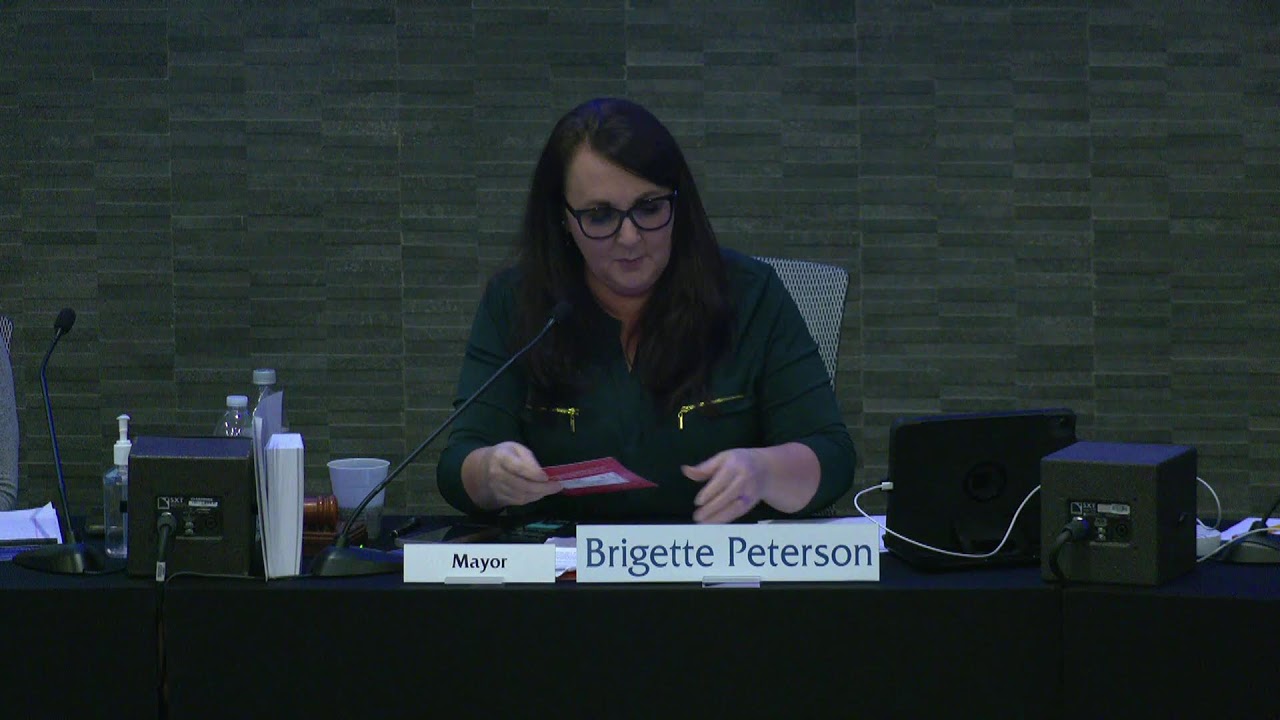
Gilbert defers 302-acre Ranch industrial rezoning vote to November 15 amid opposition
Gilbert Town Council heard overwhelming community opposition to proposed Ranch industrial complex rezoning before its November 15 vote, approved Gabriella Point PAD zoning, and confronted ongoing free speech lawsuit concerns.
Gilbert Council Defers Polarizing Ranch Industrial Rezoning and Faces Call to Settle Free Speech Lawsuit to Avoid "Reed v. Gilbert" Redux
The November 2 Gilbert Town Council meeting exposed two deep fractures in town governance: a proposed industrial complex that residents say violates the general plan and belongs nowhere near homes, and a mounting free speech lawsuit that an incoming councilmember warned could cost taxpayers hundreds of thousands of dollars to defend. The council took no formal vote on The Ranch rezoning, deferring that decision to November 15, but the 36 written public comments in opposition—all read or summarized into the record—painted a portrait of residents who feel the town has abandoned its own planning documents in favor of developer interests. In a striking parallel, Councilmember Jim Torgeson and incoming Councilmember Chuck Bongiovanni both highlighted a separate lawsuit over the removal of citizens holding signs at a prior meeting, calling for a settlement that Chuck Bongiovanni said would cost "one dollar and two cents"—a dollar as penalty and two cents "because you didn't respect them enough to listen to their two cents in the first place."
The Ranch Industrial Complex: 302 Acres of Conflict
The centerpiece of the evening was the proposed rezoning of a 302-acre property near Morrison Ranch from residential use to 95% light industrial. Developer Mike Shernin, representing Indicap, and landowner Dale Morrison propose a massive industrial park featuring 900 truck bays and approximately 4 million square feet of concrete tilt-up buildings. The Planning Commission voted 4–3 to recommend approval, but the narrow margin and commissioners' own stated reservations—that the proposal "doesn't fit," that it's "problematic," and that "more work can be done"—set the stage for public testimony that was both prolonged and intensely personal.
A resident submitted 36 written comment cards, nearly all in opposition, before the meeting. Vice Mayor Bobbi Buchli ensured each was read aloud or summarized into the record. The comments ranged from safety concerns to property-value questions to accusations that the developer and the town had breached an implicit covenant with Morrison Ranch homebuyers who relied on the general plan. Residents used phrases like "sold out to the highest bidder," "bastardization," and "dirty money" to describe their perception of the process.
Key Opposition Speakers and Arguments
Eleven residents spoke during the open-comment period, each allowed three minutes. The most detailed and data-driven opposition came from speakers who invoked the general plan, questioned the developer's background, and challenged the town's legal obligation to demonstrate "substantial conformance" to adopted planning documents.
Sean Monahan, a 28-year Gilbert resident and childhood friend of Mayor Scott Anderson, framed the issue in business terms:
"The most successful business transactions are always a win-win. The ranch has it is currently proposed is a win-lose." — Sean Monahan, Morrison Ranch resident
Monahan urged the council to defer and work toward a redesign that would serve all parties. He also corrected a Planning Commission assertion: the property remains undeveloped not because of zoning but because the landowner has used it as a feedlot and has imposed a condition that all 302 acres must be sold as a single transaction.
Brian Mosley, another Morrison Ranch resident, presented a more pointed challenge, asserting that the town has broken faith with homeowners:
"The town should support the general plan and those things that are in it." — Brian Mosley, Morrison Ranch resident
Mosley also criticized the Planning Commission for failing to instruct the developer to improve the plan when the applicant explicitly offered to do so.
Shanna Mosley shifted to emotional terrain, asking council members to honor the safety and quality of life her four children depend on:
"The things my kids are most grateful for will be taken from them if this Ranch project um is a result and the rezone go through as currently planned noise traffic and trucks will cause their quality of life that they enjoy and their safety to deteriorate." — Shanna Mosley, Morrison Ranch resident
Daniel Payton dissected the landowner's narrative. He noted that the property has been zoned industrially since 2009 without attracting a buyer—a fact the applicant attributes to unsuitable zoning. But Payton uncovered what he called the "self-imposed hindrance": the landowner operated a feedlot on the property and owns a 6,500-head dairy farm 2,500 feet away. When that dairy ceased operations in June 2022 and sold in September 2022, the property suddenly became ripe for a massive industrial complex.
"If I'm going to sell my house and I tell you I will only sell my house if I can sell my house my two cars my two dogs and my timeshare to a single buyer would any of you feel bad for me if I can't sell my house for 10 years?" — Daniel Payton, Morrison Ranch resident
Ryan Handelsman then presented a bombshell: a detailed financial history of Indicap CEO Mike Shernin. According to Handelsman's research, Shernin was a real estate investor who filed for personal bankruptcy, abandoned a Dallas Police and Fire pension fund to the tune of $200 million, incurred a $2.5 million IRS lien for unpaid taxes, lost two homes to foreclosure (one carrying $5.9 million in unpaid debt), was sued and ordered to pay $3.8 million in damages in 2015, and has failed to keep any company afloat for more than two years. Handelsman also cited a podcast admission by Shernin that he helped a mentor cheat on taxes.
"Does this seem like a proud story that the town would like to do business with?" — Ryan Handelsman, Gilbert resident
Handelsman concluded: "This developer has a proven track record of failure and he's trying to sell the town on a dream. It's dirty money and Gilbert's better than that."
Stephanie Evans raised concerns about noise and pollution studies:
"We have some general outlines but is I mean we have a traffic study but can there be a noise study?" — Stephanie Evans, Morrison Ranch resident
Support for The Ranch (Minimal Public Expression)
No speakers came forward to defend the rezoning or the developer during the public-comment period. The applicant and landowner did not address the council directly. This absence was conspicuous given the intensity of opposition.
Council Response and Deferral
The council did not vote on the rezoning. Instead, the meeting's procedural handling—reading 36 written comments, hearing 11 speakers, and then moving to other agenda items without a motion—effectively deferred the decision to the November 15 meeting scheduled for the council's formal vote.
Councilmember Scott Anderson, who grew up near the Monahan family, used his response time only to clarify a factual point about geography, not to defend the rezoning.
The Free Speech Lawsuit and Chuck Bongiovanni for Settlement
In a separate and equally dramatic address, Councilmember Jim Torgeson confronted the council over a pending lawsuit arising from the removal of citizens holding signs at a prior meeting. Jim Torgeson is the only person in the room with courtroom experience on this issue—he has testified before the Arizona Supreme Court on free speech matters.
"I am the only person in this room that has any business talking about court proceedings with signage in the free and free speech I'm the only person in this room including your own Council that is ever set foot in a quarter regarding that." — Jim Torgeson, Gilbert resident
Jim Torgeson characterized the lawsuit as avoidable and urged an apology:
"There's a problem yes we have a problem there's vitriol there's people that are angry they don't feel they're being heard but to sit there and say somebody quietly in the very back of this room holding a sign is disruptive is ludicrous." — Jim Torgeson, Gilbert resident
Jim Torgeson also reported ongoing vandalism to his home—paint splattered on his front door the day after his previous public comment, and again the Saturday before this meeting.
Incoming Councilmember Chuck Bongiovanni (to be sworn in January 10) then delivered a scathing indictment of what he called "hashtag Gilbert kindness"—a sarcastic reference to how council members had treated citizens. Chuck Bongiovanni alleged that during an investigation into the free speech issue, a town council member claimed not to have seen signs 70 feet away or to have known who was holding them before "kicking those citizens out of the meeting."
"That is complete and utter hashtag Gilbert kindness." — Chuck Bongiovanni, incoming Chuck Bongiovanni praised Councilmember Scott Anderson for apologizing publicly for his actions at a prior meeting but then pivoted to the crux of his argument: the lawsuit can be settled with one apology.
"The latest lawsuit will go away with one simple thing an apology in one dollar. Now I don't want to hear about people hating people or people targeting people or any witch hunts if there's enough there to perceive an Ethics complaint or a lawsuit then perception is reality." — Chuck Bongiovanni, incoming Chuck Bongiovanni urged the sitting council to swallow pride rather than let taxpayers foot the bill for litigation:
"You can swallow your pride or you can walk away and swallow another Diet Coke. If you make the wrong decision, hashtag Gilbert kindness will always be known as complete and other BS." — Chuck Bongiovanni, incoming Councilmember
The council took no action on the free speech lawsuit during this meeting, but Chuck Bongiovanni intervention signals that the incoming council may prioritize settlement.
Gabriella Point PAD Zoning: Uncontroversial Approval
In stark contrast to The Ranch, the Gabriella Point Planned Area Development received no public opposition and was approved unanimously. The project is a 39-acre site at the corner of Higley Road and Warner Road, already zoned multi-family for approximately 20 years. The applicant, represented by attorney Scott Anderson, requested only a modest height increase—from 40 feet to 56 feet (16 feet higher)—for three buildings on the western edge of the property, subject to strict conditions: no increase in total unit count, no increase in density, a 1,100-foot buffer from adjacent single-family residential to the east, 230 feet from the north property line, a 40-foot street setback, and a maximum of four stories. In exchange, the town receives a significant increase in required open space.
Scott Anderson made a brief appearance:
"The staff have given you an excellent report." — Scott Anderson, attorney for Gabriella Point
He confirmed that "condition J locks in everything to the open space," assuaging Councilmember Kathy Tilkey's concern that open space requirements would not slip during the design-review phase.
Scott Anderson also noted that Morrison Ranch residents had been consulted and were "supportive" of the project. Mike Crone, representing the Franco families (the developer), was present but did not speak.
Vote: Unanimous approval (no individual votes recorded in transcript).
Keystone Annexation: County Island in Petition Phase
The third public-hearing item was the Keystone annexation, a 15-acre county island on the south side of Warner Road between Power and Wrecker roads. Principal Planner Ashley McDonald presented a procedural overview. The applicant filed a blank petition on October 6 and held a public hearing tonight (required under Arizona law) to solicit input from surrounding property owners. No vote was requested.
The property is currently zoned Maricopa County Airport District 3 (light industrial, warehousing, lumber yards). Once the applicant collects signatures from property owners (a process that may begin on November 6, 30 days after filing), the town will consider a general plan amendment and rezone to multi-family, increasing density from 5–8 dwelling units per acre to 8–14 dwelling units per acre. McDonald expects the rezoning and general plan amendment to return to council on December 13.
No public comments were submitted on the annexation.
Water Conservation MOU: Colorado River Basin Commitment
Councilmember Scott Anderson requested a presentation on the Colorado River Basin Municipal Water Providers memorandum of understanding, which the town was asked to sign. Water Resources Manager Lauren Hixson highlighted Gilbert's conservation achievements: a 20% reduction in per capita potable water demand since 1997, despite adding population. The MOU commits the town to expand conservation programs—turf removal rebates, smart irrigation controller rebates, increased recycled water use, and ornamental grass reduction.
Hixson noted that the MOU is significant because major basin cities (Denver and others in Colorado River Basin states) have signed on at a time when basin states are "not in much of a mood to cooperate with one another." Scott Anderson framed this as a major regional step on a vital resource issue.
Vote: Unanimous approval.
Timeline of The Ranch Proceedings
- Planning Commission vote: 4–3 to recommend approval (commissioners noted project "doesn't fit," "problematic," and requested more work; applicant offered to revise; commission declined to instruct revision)
- Planning Commission meeting: held "a couple weeks ago" (late October, approximately)
- Tonight (November 2): Public hearing; 36 written comments read into record; 11 speakers heard; council took no formal vote; decision deferred
- Next council vote: November 15, 2022
Opposition to The Ranch
Number of speakers against: 11 live speakers; 36 written comment cards (all in opposition)
Main concerns:
-
Violation of general plan: The proposal contradicts Morrison Ranch's development agreement, signed by landowners 25 years ago, and the town's own character-area objectives for the region. Residents argue the town should enforce its own planning documents.
-
Incompatibility with residential neighborhood: The proposed 95% light industrial use is fundamentally mismatched with existing homes. No buffer, no transition zone, no setback separates industrial from residential.
-
Safety and traffic: 900 truck bays will generate massive truck traffic at an already congested intersection (Elliott/Power). Residents cited danger to children and schools nearby.
-
Noise and pollution: Undefined tenancy means unquantified noise and air-quality impacts. No noise study has been conducted; applicant cannot name specific tenants.
-
Property-value destruction: Homeowners built their lives and invested life savings based on the general plan's promise of compatible development. The rezone threatens resale value and quality of life.
-
Developer's financial history: Ryan Handelsman presented evidence that CEO Mike Shernin has a documented record of bankruptcy, pension-fund abandonment, tax liens, foreclosures, lawsuit judgments, and company failures—raising questions about the wisdom of approving a $200+ million speculative development from such a source.
-
Self-imposed landowner hindrance: The property has been zoned industrial since 2009 without finding a buyer because the landowner has operated a feedlot and dairy farm on it. Once the dairy sold, the property became available for industrial conversion—not because zoning was the obstacle, but because the landowner's own use was the obstacle.
Most compelling argument: Residents and Planning Commission members alike agreed the proposal "doesn't fit." The commission's 4–3 vote, coupled with commissioners' own stated doubts and the applicant's explicit offer to redesign, created a narrative that the council could defer, instruct revision, and return to a win-win. Instead, the council (per residents) let the item slip without action.
Organized opposition: Morrison Ranch Homeowners Association (implied by the coordinated, data-driven testimony and shared talking points); Elliott Groves residents (adjacent subdivision).
Support for The Ranch
No speakers came forward in favor of the rezoning during the public-comment period. The developer and landowner did not address the council. This silence is itself notable given the intensity of opposition and the high stakes of the project.
Project Details
- Case number: Not explicitly stated in transcript for The Ranch rezoning; docket number would be assigned by planning staff
- Applicant / developer: Mike Shernin, Indicap
- Landowner: Dale Morrison
- Attorney for applicant: Not identified in transcript
- Location / address: Morrison Ranch/Elliott Groves area, corner of Elliott and Power roads (intersection mentioned repeatedly)
- Current zoning: Residential
- Proposed zoning: 95% light industrial
- Acreage: 302 acres
- Industrial buildings: Approximately 4 million square feet of concrete tilt-up structures
- Truck bays: Approximately 900
- Changes from previous version: Residents reported the plan changed "even as late as last week" before this meeting; specific revisions not detailed in transcript
Vote Breakdown
The Ranch rezoning: No vote taken on November 2; decision deferred to November 15.
Gabriella Point PAD (Z22-04):
- Final: Unanimous approval (7–0)
- Individual votes not stated in transcript
Water Conservation MOU:
- Final: Unanimous approval
- Individual votes not stated in transcript
Outcome & Next Steps
The Ranch: The council deferred its vote to November 15, 2022. The planning-commission recommendation to approve (4–3) stands, but no motion was made at the November 2 meeting. Residents have two weeks to prepare further opposition or to advocate for council deferral and redesign. The applicant may revise the proposal; no indication was given that revision is planned.
Gabriella Point PAD: Approved unanimously with conditions. Open space requirements are locked into the decision; specific design details proceed to Planning Commission design review.
Keystone Annexation: Public hearing held November 2; petitions to be collected beginning November 6; general plan amendment and rezoning anticipated for December 13 council hearing.
Free Speech Lawsuit: No formal action taken; lawsuit remains pending. Chuck Bongiovanni call for apology-based settlement signals the incoming council may pursue settlement in the new year.
Controversies & Context
The General Plan as Contested Document
The central controversy is whether Gilbert's general plan is a binding commitment or a suggestion. Morrison Ranch homeowners assert they bought into a covenant: the town promised (through the general plan) that Morrison Ranch would develop as a cohesive residential and commercial community. The Ranch proposal—95% industrial, 4 million square feet, 900 truck bays adjacent to homes—shatters that promise. Residents argue that if the town approves this, the general plan is meaningless; every developer can ignore it if they offer enough money.
Landlord's Self-Created Problem
Daniel Payton's analogy stuck: if a homeowner refuses to sell unless all five family members, two cars, and a timeshare sell as a package, then complains the house won't sell, should the town rezone the house to industrial because the property is "underutilized"? The landowner has kept the property in feedlot and dairy use for 13 years; only after selling the dairy does industrial redevelopment suddenly materialize.
Developer Financial History
Ryan Handelsman's 2008 bankruptcy filing and subsequent financial troubles of Mike Shernin raise a separate governance question: should the town approve a 302-acre, $200+ million project from an applicant with documented bankruptcy, pension-fund abandonment, tax liens, and litigation losses? The applicant has offered no rebuttal to these facts in the public record (as transcribed).
Free Speech Litigation and Reputation Risk
The pending lawsuit over removal of sign-holding citizens echoes the town's loss in Reed v. Gilbert (2015), a U.S. Supreme Court case in which Gilbert's traffic-sign ordinance was struck down as viewpoint discrimination. Jim Torgeson and Chuck Bongiovanni both invoked that precedent, warning that a repeat loss would be costly and embarrassing. Chuck Bongiovanni argument—that a one-dollar settlement with an apology would prevent hundreds of thousands in legal fees—may persuade the incoming council, which takes office January 10, to prioritize closure over litigation.
Incoming Council Dynamics
Chuck Bongiovanni, who will be sworn in January 10, has already signaled a shift in tone and priorities. His sharp criticism of sitting council members' conduct and his direct call for settlement suggest the incoming council may take a more resident-friendly or at least more transparent approach to governance.
Duration
- The Ranch public-comment period: Approximately 90 minutes (36 comment cards read + 11 live speakers × 3 minutes, plus procedural time)
- Total meeting: Not stated; meeting recessed for executive session at the end
- Gabriella Point PAD (from presentation to vote): Approximately 30 minutes
- Keystone Annexation: Approximately 15 minutes
- Water MOU: Approximately 20 minutes
Other Notable Items
Consent Agenda & Redevelopment Commission Appointments: Council moved Item 20 (appointment of TJ Claussen and Beau Bigelow to the Redevelopment Commission) to the consent agenda and approved it unanimously.
Financial Achievement: The town received its 31st consecutive certificate of achievement for excellence in financial reporting from the Government Finance Officers Association (GFOA) for the fiscal year ending June 30, 2021.
Staff Recognition: Gilbert Pineda in development services celebrated 35 years with the town (second in tenure only to Benny Ruiz in fire, who has 37 years); Benny Ruiz is nearing retirement but will be rehired in a new role.
No Shave November: Councilmember Scott September encouraged male council members and staff to grow beards in November to raise awareness of men's health issues.
Light the World Machines: Mayor Bridget Peterson announced that on November 18, the Church of Jesus Christ of Latter-day Saints will kick off "Light the World Arizona" giving machines at Water Tower Park, benefiting five local organizations: Ascend Midwest Food Bank, Gathering Humanity, Special Olympics Arizona, House of Refuge, and African Girls Hope Foundation. Machines will remain through January 1.
Budget Report Q4 FY2022 / Q1 FY2023: Council approved the quarterly budget report 6–1, with Councilmember Lauren Hendricks dissenting. Specific reasons for dissent not stated in transcript.